


Is Tashkent, Uzbekistan Safe? A 2026 Travel Safety Guide
The Tashkent Metro, the conservative-but-secular code, summer 40°C heat, the Uzbek tourism opening since 2017, and the realities of Central Asia's most-modernised capital.

Tashkent — population ~2.6 million, the capital of Uzbekistan — is Central Asia's largest and most-modernised city. The 1966 earthquake destroyed most of the old city; the rebuild produced the Soviet-modernist cityscape (wide boulevards, monumental architecture, the famous Tashkent Metro). Crime against tourists is rare; the city is calm and walkable; English support has improved dramatically since the 2017 tourism opening but is still limited outside major hotels and tourist sites.
The honest concerns are mostly about climate and the still-developing tourism infrastructure. Tashkent summers are brutally hot — July-August routinely 38-42°C with low humidity (continental dry heat). The country's culture is conservative-Muslim but secular in the public sphere (alcohol legal and openly available; women not required to cover hair); modest dress expected at religious sites. The Uzbek soum currency is volatile (large notes, recent denominations); cards work at hotels and chains but cash dominates. Since 2017's reform-driven tourism opening, visa-free entry was extended to most Western nationalities — the country is genuinely accessible now in a way it wasn't a decade ago.
The US State Department lists Uzbekistan at Level 2; UK FCDO has no specific Tashkent advisories. Both note the standard regional context (terrorism risk in Ferghana Valley areas; Tashkent itself unaffected).
| Night safety | 66/100 |
|---|---|
| Scam / petty-crime risk | Medium |
| Violent crime (tourists) | Low |
| Most common scams | pickpocket precautions at Chorsu Bazaar; chaotic Tashkent train station area |
| Safer neighbourhoods | Central Tashkent, Yunusobod, Mirzo Ulugbek |
| Data sources cited | 4 |
| Last verified |
What the score means — 77/100
- Personal safety (90) — high. Tashkent is calm; standard pickpocket precautions at Chorsu Bazaar.
- Transport (86) — Tashkent International Airport (TAS); Tashkent Metro (4 lines + ground-rail extensions); Yandex Taxi dominant; HSR (Afrosiyob) to Samarkand 2 hr.
- Healthcare (76) — Tashkent Medical Academy and several private clinics; serious cases medevac to Istanbul, Dubai, or Moscow (politically dependent).
- Air quality (70) — moderate; winter PM2.5 from coal heating and dust events; summer cleaner.
Tashkent Metro — one of the world's most beautiful
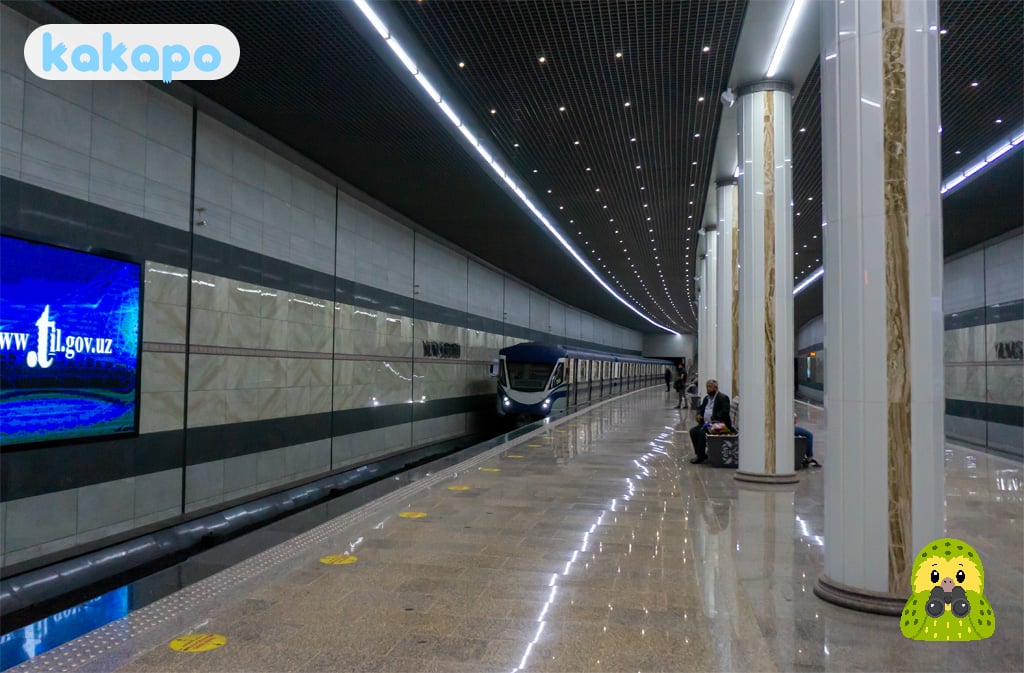
- The Metro: opened 1977; 4 lines + 2 above-ground ring lines; 50+ stations; one of the world's most artistic transit systems (each station has unique theme — cosmonauts, poets, agricultural collectives).
- Famous stations: Kosmonavtlar (cosmonauts theme — busts of Yuri Gagarin etc); Alisher Navoi (medieval Persian poet); Mustaqillik Maydoni (independence square); Pakhtakor (cotton-pickers).
- Photography: was prohibited until 2018 (Soviet-era underground military-shelter status). Now permitted; photo essential for any Tashkent visit.
- Cost: UZS 2,000 (~$0.15) per ride flat fare; tap card or buy paper ticket at booth.
- Hours: 05:00-00:00; trains every 5 min in central; less frequent late.
- Safety: well-policed, well-lit; female-only carriages at front during rush hour.
- English signage: improved since 2018 reforms; Cyrillic and Latin-script Uzbek + Russian dominant.
- Walking-tour worthy: dedicated "Metro tour" with hotel concierge or Caravanistan guide is a Tashkent must-do.
Conservative-but-secular dress and conduct
- Cultural baseline: ~88% Muslim (Sunni); Soviet-era secular legacy strong; women in modern Tashkent dress in Western/business style; older women wear traditional Uzbek embroidered dresses.
- Tourist dress: shoulders + knees covered preferred in public; sleeveless and shorts OK at hotel and Western restaurants; mosques require head-covering for women (scarves provided/sold) and modest covering all-over.
- Mosques: Khast Imam Complex (the Caliph Uthman Quran — one of the world's oldest); Minor Mosque; Hazrati Imam Mosque. Modest dress; remove shoes; quiet.
- Photography of people: ask before photographing; older women may decline; not a culturally photo-shy society but courtesy expected.
- Public conduct: holding hands as married couple is fine; same-sex public displays are not advised (homosexuality is technically illegal in Uzbekistan; enforcement against discreet visitors very rare but the legal risk exists).
- Alcohol: legal and openly available; bars and licensed restaurants. Ramadan fasting widely observed but eating in public is not criminalised.
- Drugs: zero tolerance; harsh penalties for even small possession.
- Photography of military, government buildings, presidential complex: prohibited.
Summer heat — 40°C continental dry
- July-August: 35-42°C; low humidity (continental dry); sometimes 45°C+; full sun all day.
- Heat-stroke: tourists from cooler climates underestimate; ED admissions in summer.
- Defences: aggressive hydration; indoor mid-day breaks (Mega Planet Mall, Tashkent City Mall); avoid outdoor activities 11:00-16:00 in peak summer; cotton long sleeves (paradoxically cooler).
- Best windows: April-June (warm, mild evenings, spring blooming) and September-October (post-summer, still warm, harvest season).
- Cool seasons (Dec-Feb): -5 to 10°C; light snow; pleasant for sightseeing if dressed warmly.
- Sandstorms: occasional spring dust events from Aralkum desert (former Aral Sea); air quality drops; outdoor activity reduced.
Uzbek soum currency reality
- Currency: Uzbek soum (UZS). $1 ≈ UZS 13,000 (volatile).
- Large numbers: standard restaurant meal UZS 80,000-200,000; hotel night UZS 700,000-2,000,000+. Newest 200,000 note (2024) is the largest single bill; most transactions involve thick stacks of 50,000s and 100,000s.
- Cards: Visa/Mastercard accepted at hotels and chain restaurants; cash dominates everywhere else. ATMs at major banks; daily withdrawal limits often UZS 2-5 million per transaction.
- Currency exchange: 2017 reforms unified exchange rate (no more black-market premium); now exchange at any bank or licensed kassa for the same rate. USD and EUR most easily exchanged; Russian rubles also accepted.
- Don't bring large USD denominations to exchange casually: USD 100 bills must be in pristine condition (no creases, marks); pre-2013 bills sometimes refused.
- Tipping: 10% in restaurants if not on bill; round up.
- Don't lose receipts: declared cash on entry must match cash on exit (or differ by amount of declared receipts).
Post-2017 tourism opening — what changed
- Pre-2017: Uzbekistan was difficult to visit — visa required for most nationalities, hotel-registration paperwork mandatory daily, currency exchange tightly controlled, Lonely Planet readers reported daily friction.
- Since 2017: President Mirziyoyev (took office December 2016 after Karimov's death) introduced reform agenda. Visa-free entry extended to ~90 nationalities (including UK, EU, Australia, NZ, Canada, Japan, Korea, Singapore — but NOT US, which still requires e-visa).
- e-Visa: introduced 2018; quick online application for nationalities not in visa-free list (including US citizens) — usually approved 2-3 days; ~$20 for 30-day single entry.
- Hotel registration: simplified; most hotels handle automatically; no need for daily-registration paperwork that used to be required.
- Currency unification: 2017 reform ended the black market; exchange at the official rate is fair.
- What this means for visitors today: Uzbekistan is genuinely tourist-friendly in 2025-2026 in a way it wasn't a decade ago.
- Caveats: reforms are reversible (Mirziyoyev term ends 2026; succession unclear); confirm visa rules close to flight date.
Areas — Mirzo Ulugbek, Yunusobod, Old City
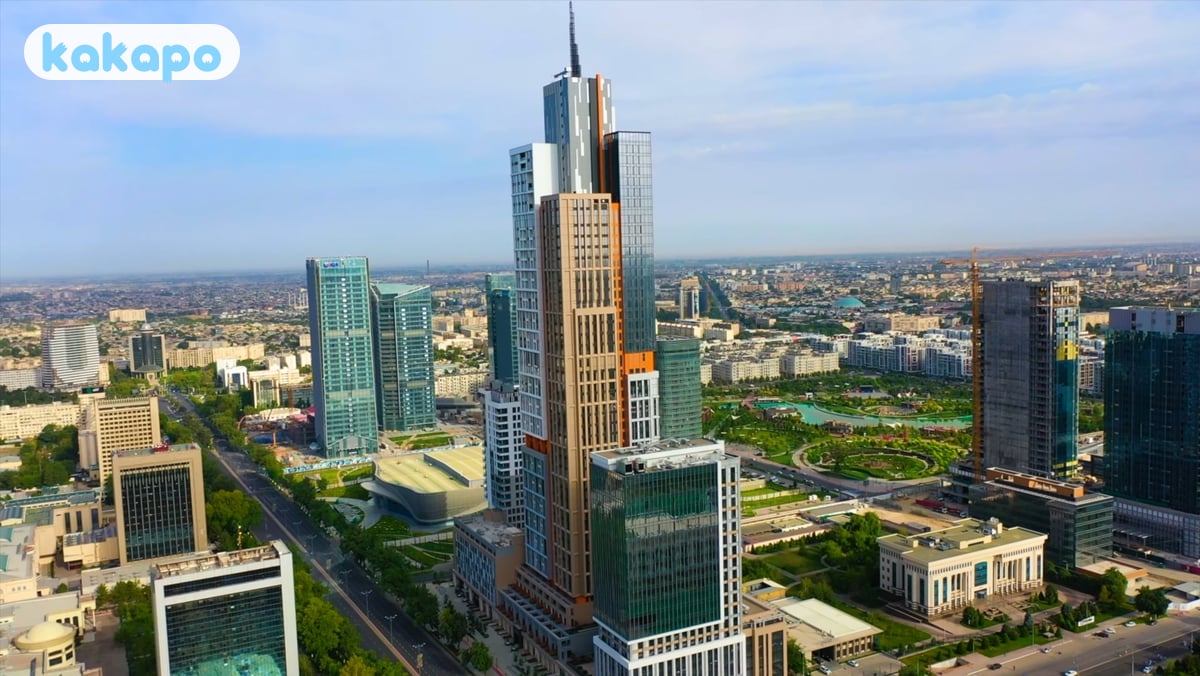
Recommended bases: Central Tashkent (around Amir Timur Square) — Hyatt Regency Tashkent, Hilton Tashkent City, InterContinental Tashkent (the modern Tashkent City complex); walking distance to museums and metro hubs. Yunusobod / Mirzo Ulugbek — modern residential; mid-range hotels; Khast Imam Complex day-trip. Old City (Eski Shahar) — restored heritage area near Chorsu Bazaar; boutique stays.
Stay aware: Chorsu Bazaar at peak crowd times — pickpocket precautions. Tashkent train station area — chaotic; standard precautions.
There are no genuinely dangerous neighbourhoods in central Tashkent.
Samarkand, Bukhara, Khiva — the Silk Road circuit
- The classic Uzbekistan circuit: Tashkent (1-2 nights) → Samarkand (2 nights) → Bukhara (2-3 nights) → Khiva (1-2 nights). 5-7 days total.
- HSR (Afrosiyob) Tashkent-Samarkand: 2 hours; UZS 220,000 (~$17) economy / UZS 360,000 first; daily departures. Modern; comfortable.
- Tashkent-Bukhara HSR: 3.5 hours via Samarkand.
- Khiva: longer journey; train Bukhara-Urgench then short transfer; or domestic flight Tashkent-Urgench.
- Tashkent itself: not the Silk Road monumental city; visitors typically spend 1-2 nights then move to Samarkand. Khast Imam Complex, Chorsu Bazaar, Tashkent History Museum, Hazrati Imam Square are the central highlights.
Money, food, emergency numbers
- Currency: see money section above.
- Food: Uzbek cuisine — plov (rice pilaf with lamb), shashlik (grilled meat skewers), lagman (hand-pulled noodle soup), samsa (savoury baked pastries), non bread (round flatbread). Reputable: Plov Center (Central Asian Plov Center near TV tower — the famous central plov institution); Caravan Restaurant.
- Tap water: technically drinkable but locals universally filter; bottled at hotels.
- Visa: most Western nationalities visa-free 30 days; US citizens need e-visa (apply online ~$20).
- Emergency: 112 (universal); 102 (police); 101 (fire); 103 (ambulance).
- Hospitals: Tashkent Medical Academy (+998 71 252 2510); private International Medical Clinic (+998 71 144 1144) for English-speaking care.
- Tashkent International Airport (TAS): 12 km southeast of city centre. Direct flights from Istanbul, Dubai, Moscow, Seoul, Tokyo, Frankfurt, London. Yandex Taxi to city centre UZS 30,000-50,000.
- SIM: Beeline, Ucell, Mobiuz at TAS or any Beeline office; ~UZS 20,000-50,000 for tourist data; passport required.
- Don't engage with anti-government conversation: Uzbekistan retains restrictions on political speech; foreigners have been deported for online posts critical of the government.
Frequently asked questions
Is Tashkent, Uzbekistan safe to visit in 2026?
Yes — Tashkent scores 84/100 here. The US State Department lists Uzbekistan at Level 2 and UK FCDO has no specific Tashkent advisories (both note the standard regional context — terrorism risk in Ferghana Valley areas, unaffected for Tashkent itself). Crime against tourists is rare; the city is calm, walkable, and Central Asia's largest and most-modernised capital. The honest concerns are climate and the still-developing tourism infrastructure: brutally hot summers (July-August 38-42°C continental dry heat), the Uzbek soum currency reality (volatile, large notes, cash dominant), and the post-2017 tourism opening that has dramatically improved access but is still finding its rhythm. The 1966 earthquake destroyed most of the old city and the Soviet-modernist rebuild defines the cityscape.
Is Tashkent safe at night?
Yes — Tashkent is genuinely calm at night with comfortable solo walking including for women, and the metro runs until midnight with female-only carriages at the front during rush hour. The standard pickpocket precautions apply at Chorsu Bazaar during peak crowds and around the chaotic Tashkent train station area. There are no genuinely dangerous neighbourhoods in central Tashkent. The late-night considerations are practical: Yandex Taxi dominant and supports foreign cards in-app, alcohol legal and openly available in bars and licensed restaurants (Uzbekistan is conservative-Muslim but secular in public — older women wear traditional embroidered dresses, modern Tashkent women dress in Western/business style), and Ramadan fasting widely observed but eating in public is not criminalised. Same-sex public displays are not advised — homosexuality is technically illegal in Uzbekistan, enforcement against discreet visitors is very rare but the legal risk exists.
What scam should I watch for in Tashkent?
Tashkent's scam economy is genuinely thin since the 2017 reforms unified the exchange rate (the old black-market premium is gone). The remaining patterns are minor: USD 100 bill rejection if the bill isn't pristine (no creases, no marks, pre-2013 bills sometimes refused), so bring crisp post-2013 notes for any exchange; the cash-declaration trap (the cash you declare on entry should match the cash on exit, or differ only by the amount of declared receipts — don't lose those slips); Tashkent train station 'taxi' quotes that triple the Yandex rate (use the app); and Chorsu Bazaar markup if you don't haggle. The signature gotcha is photographing military, government buildings or the presidential complex — prohibited and enforced.
Can you drink the tap water in Tashkent?
Technically yes but locals universally filter, and you should too — Tashkent's municipal water is treated but the distribution infrastructure varies and bottled is the universal default at hotels. Hotel rooms have kettles; boil for tea, bottled for cold drinks. Brushing teeth with tap is fine. The bigger health concern is summer heat (35-42°C in July-August, sometimes 45°C+, full sun all day) — heat-stroke ED admissions in summer involve tourists who underestimate the continental dry heat. Aggressive hydration, indoor mid-day breaks at Mega Planet Mall or Tashkent City Mall, cotton long sleeves (paradoxically cooler), and avoid outdoor activity 11:00-16:00 in peak summer.
What changed in Uzbek tourism after Karimov — and what's the Plov Centre?
Everything changed, and the comparison matters. Pre-2017 (under Islam Karimov, in power since the late Soviet era until his death in September 2016) Uzbekistan was difficult to visit: visa required for most nationalities, mandatory daily hotel-registration paperwork, currency exchange tightly controlled with a punishing black-market premium, Lonely Planet readers reported daily friction at every checkpoint. President Mirziyoyev (took office December 2016) introduced a sweeping reform agenda: visa-free entry was extended to ~90 nationalities including UK, EU, Australia, NZ, Canada, Japan, Korea, Singapore (US citizens still need an e-Visa, easy online application ~2-3 days, ~$20 for 30-day single entry); the e-Visa system launched 2018; hotel registration was simplified (most hotels handle automatically); and the 2017 currency unification ended the black market so exchange at the official rate is now fair at any bank or licensed kassa. Uzbekistan in 2026 is genuinely tourist-friendly in a way it wasn't a decade ago — though with reforms reversible (Mirziyoyev's term ends 2026 with succession unclear) confirm rules close to flight date. The Plov Centre (Central Asian Plov Center near the TV tower) is the famous institutional version of Uzbekistan's national dish — massive cauldrons of lamb-rice pilaf cooked in volume; arrive at 11:30-13:00 before they sell out. Beyond the plov, Tashkent's Metro (opened 1977, 4 lines + 2 above-ground rings, 50+ stations, photography permitted since 2018 after a Soviet-era ban) is one of the world's most artistic transit systems — Kosmonavtlar (with busts of Yuri Gagarin), Alisher Navoi (medieval Persian poet themed), Mustaqillik Maydoni and Pakhtakor stations are essential photography. UZS 2,000 (~$0.15) flat fare; the Metro tour with a hotel concierge or Caravanistan guide is the genuine Tashkent must-do. Most visitors continue on the Afrosiyob HSR to Samarkand (2 hours, UZS 220,000 / ~$17), then Bukhara (3.5 hours total) and Khiva for the full Silk Road circuit. Don't engage with anti-government conversation publicly — Uzbekistan retains restrictions on political speech and foreigners have been deported for online posts critical of the government.
Sources
Run a business in Tashkent?
Show visitors your Tashkent business is a safe choice. The free Verified by Kakapo badge puts Tashkent's live safety score on your website, links back to your verified page, and updates itself. No cost.
Get the free badge →