


Is Thimphu, Bhutan Safe? A 2026 Travel Safety Guide
The $100/night SDF, mandatory guide rules, altitude at 2,300m, the Paro flight approach, dress code at dzongs, and why Bhutan is one of the world's safest destinations.

Thimphu — population ~115,000, the only world capital without traffic lights — is one of the safest capitals on earth. Crime against tourists is essentially zero; the city is small, walkable, and overseen by the relentless courtesy of Bhutanese hospitality.
The honest concerns are entirely about access. Bhutan's tourism model requires foreign visitors (except Indians, Bangladeshis and Maldivians) to book through a registered Bhutanese tour operator, travel with a licensed guide, and pay a Sustainable Development Fee (SDF). The SDF was raised from $65 to $200/night in September 2022 to manage tourism volumes; in September 2023 it was halved to $100/night to revive numbers. As of 2025-2026 the SDF stands at $100/night for most adult visitors (with discounts for children and stays of 8+ nights). The mandatory guide rule was relaxed in 2023 — independent tourists can now visit Thimphu, Paro and Punakha without a daily guide for the first part of a trip — but most still book guided. Add the altitude (Thimphu sits at 2,320m), the famously difficult Paro Airport flight approach (only ~50 pilots in the world are certified to land there), conservative dress requirements at dzongs and temples, and the limited healthcare ecosystem, and you have the picture.
The US State Department lists Bhutan at Level 1 ("exercise normal precautions"); UK FCDO has no advisories. Both note the SDF and operator-booking requirements.
| Night safety | 82/100 |
|---|---|
| Scam / petty-crime risk | Low |
| Violent crime (tourists) | Low |
| Safer neighbourhoods | Thimphu town, Norzin Lam, Motithang |
| Data sources cited | 4 |
| Last verified |
What the score means — 88/100
- Personal safety (96) — exceptional. Bhutan is among the world's lowest-crime societies.
- Transport (80) — Paro is the only international airport; well-maintained mountain roads; Thimphu has no traffic lights (manually directed by police at the central junction).
- Healthcare (70) — JDW National Referral Hospital in Thimphu is the country's main facility; serious cases medevac to Bangkok or Delhi.
- Air quality (92) — generally pristine; mild winter wood-smoke from heating in mountain valleys.
Sustainable Development Fee — what it is and the 2023 change

The Sustainable Development Fee (SDF) is Bhutan's signature tourism policy. It funds healthcare, education, and conservation; goes directly to the Bhutanese government.
- Current rate (2025-2026): USD $100 per adult per night for most international visitors. The 2022 increase to $200/night reduced tourist numbers; the September 2023 halving brought them back. Confirm current rate at bhutan.travel before booking.
- Discounts: 50% for children 6-12; under-6 free; stays of 8+ nights get a free 4 nights at the back end (2024 incentive that may continue).
- What's NOT included: hotels, food, transport, guide fees, entry tickets. SDF is purely a fee on top of your trip cost.
- Indian, Bangladeshi, Maldivian nationals: pay a much lower SDF (currently INR 1,200/night for Indians).
- Booking process: pay SDF upfront via bank transfer or through your tour operator before applying for visa. Visa approval letter generated only after SDF received.
- Day visitors from Indian border towns (Phuentsholing): one-day permit free, but cannot leave Phuentsholing without full SDF entry.
- Refunds: SDF refundable if trip cancelled before arrival; not after entry.
Tour operators and the 2023 guide rule change
- Pre-2022 rule: every tourist required a registered Bhutanese tour operator + licensed guide for the full duration. Effectively no independent travel.
- 2023 update: independent tourists may now visit Thimphu, Paro and Punakha (the "western circuit") without a daily guide. Trips beyond — Bumthang, eastern Bhutan, trekking — still require licensed guides for permits.
- In practice: most international visitors still book through a Bhutanese tour operator (logistics, hotel bookings, transfers). DIY is possible in west circuit but most travellers find guided easier.
- Reputable operators: Amankora packages (luxury), Bridge to Bhutan, Yangphel Adventure Travel, Bhutan Specialist (UK), MyBhutan. Most provide all-inclusive packages including SDF.
- Trekking permits: the famous Druk Path (4-day high-altitude), Jhomolhari Trek (5-day) require licensed guides and registered support crew.
- Don't try to enter restricted areas (Tibetan border zones, parts of southern Bhutan) without permits — fines and deportation.
Altitude — 2,320m and beyond
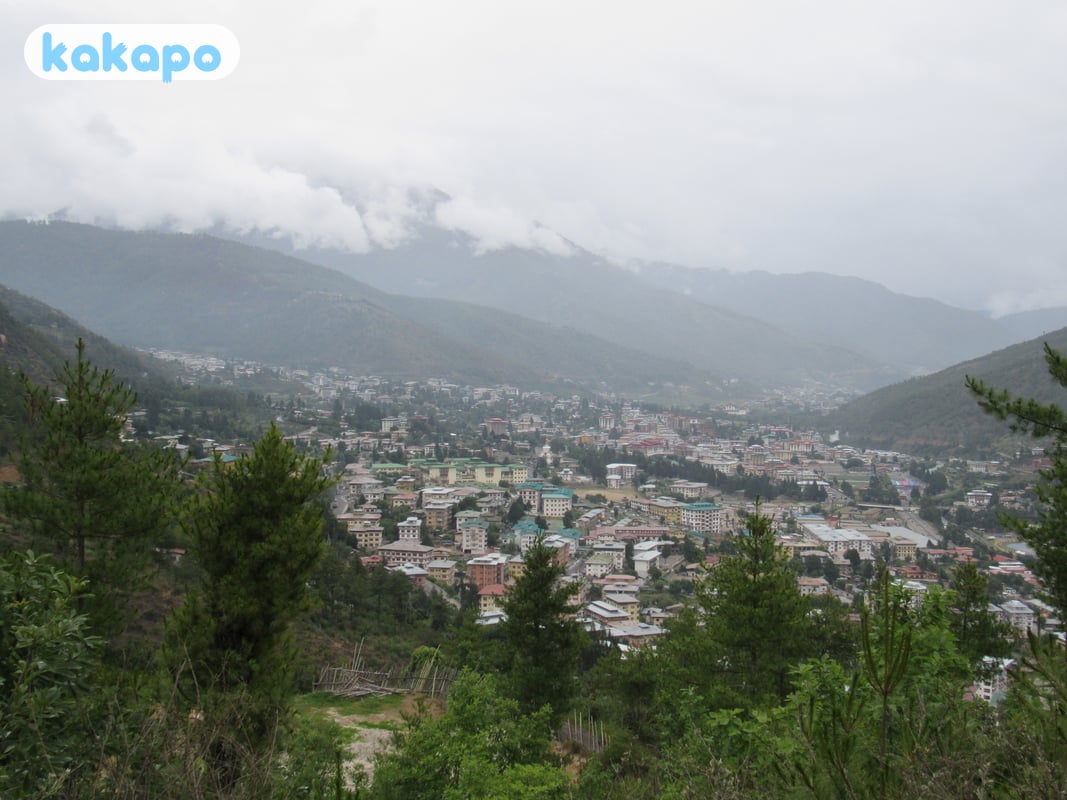
- Thimphu: 2,320m (7,610 ft). Many visitors feel mild altitude effects on arrival — headache, fatigue, slight breathlessness.
- Adjustment: 24-48 hours of light activity recommended on arrival. Hydrate aggressively (3-4L water/day); avoid alcohol first 48 hours; take it easy on stairs.
- Tiger's Nest (Paro Taktsang): monastery at 3,120m — the iconic Bhutan trek. 4-5 hour round-trip uphill; many visitors struggle. Acclimatise first.
- Trekking altitudes: Druk Path crosses 4,200m; Jhomolhari base camp 4,080m; high passes touch 5,000m. Acetazolamide (Diamox) helps if you're sensitive — bring from home, prescribed.
- Symptoms of acute mountain sickness: persistent headache, nausea, dizziness, breathlessness at rest. Descend if symptoms worsen.
- HAPE/HACE: rare at these elevations but possible on multi-day high passes; descend immediately if breathing difficulty or confusion.
- Children and elderly: tolerate altitude differently. Pediatric or older travellers should consult doctor before booking.
The Paro flight — one of the world's most difficult approaches
- Paro Airport (PBH): at 2,235m in a deep Himalayan valley; runway 2,265m long; surrounded by 5,500m peaks.
- Pilot certification: only ~50 pilots in the world are certified to land here. Daylight VFR landings only — no night flights, no instrument-only approach.
- Carriers: Drukair (national carrier) and Bhutan Airlines. Routes from Bangkok, Delhi, Kathmandu, Singapore, Dhaka, Kolkata.
- Window seat: choose left side flying to Paro for the famous Mt Everest views (clear morning); right side flying out.
- Weather cancellations: weather diversions to Bagdogra (India) or Kolkata happen; build buffer time on connecting flights.
- Safety record: Drukair has an excellent safety record despite the challenging operating environment.
- Land entry: alternative is to drive in from Bagdogra (India) via Phuentsholing border — long, scenic, requires Indian transit visa for most.
- The flight itself: dramatic banking turn between mountains on final approach. Photogenic; some passengers find it unnerving.
Dress code at dzongs and temples
- Dzongs (fortress-monasteries): Tashichho Dzong in Thimphu, Punakha Dzong, etc. — strict dress. Long trousers/skirts, long sleeves, no hats inside, removed shoes.
- Bhutanese national dress: men wear the gho (knee-length robe); women the kira (ankle-length wraparound). Foreigners aren't expected to wear these but should match the formality.
- Photography: outside dzongs and in courtyards generally OK; inside the inner shrine rooms typically prohibited. Always ask the guide.
- Don't sit with feet pointing at Buddha images: sit cross-legged or with feet tucked back.
- Don't touch sacred objects: prayer wheels (turn clockwise only), prayer flags, mani stones.
- Tobacco: Bhutan has had varying tobacco-restriction laws (full sale ban repealed in 2021 for revenue reasons). Tobacco still expensive and frowned upon. Smoking prohibited in public.
- Drone: prohibited without permit from Bhutan Civil Aviation Authority.
- Drugs: severe penalties for possession.
Thimphu — the city, dzong, and around
Thimphu town: small, walkable; main commercial strip is Norzin Lam. Tashichho Dzong (north end) — fortress-monastery housing the throne room and main monastic body; visitable evenings only. Buddha Dordenma (south, hilltop) — 51m bronze Buddha statue, panoramic views. Memorial Chorten — central, working pilgrimage site. Motithang Takin Preserve — sanctuary for Bhutan's national animal (the takin, a goat-antelope).
Recommended hotels: Amankora Thimphu (luxury), Le Méridien, Six Senses (out-of-town), Hotel Druk (mid-range), Hotel Norbuling. All require licensed-operator booking integration.
Day-trip to Paro (75 min drive): Paro Dzong, Tiger's Nest hike, National Museum.
Day-trip to Punakha (3 hr over Dochula Pass at 3,100m): Punakha Dzong (the most beautiful in Bhutan), suspension bridge, fertility temple. Dochula Pass has 108 chortens and Himalayan views on clear mornings.
Money, food, emergency numbers
- Currency: Bhutanese ngultrum (BTN), pegged 1:1 to Indian rupee. Indian rupees are accepted everywhere (except INR 500 and 2,000 notes which are problematic). $1 ≈ BTN 84.
- Cards: limited acceptance — better hotels yes, restaurants increasingly. Cash dominant. ATMs in Thimphu and Paro accept some foreign cards (Bank of Bhutan, BNB) but many tourists report failures; bring USD cash to exchange.
- Tipping: not traditional but increasingly expected from Western tourists. Guides BTN 1,000-2,000/day; drivers BTN 500-1,000/day; restaurants round up.
- Food: ema datshi (chilli-and-cheese — Bhutan's national dish, fiery), red rice, momos, sikam paa (cured pork). Bhutanese chillis are seriously hot; "no spicy" requests partly understood.
- Tap water: not drinkable. Bottled provided at hotels.
- Visa: e-Visa applied via your tour operator; takes 5-7 days; $40 fee. Single-entry, valid 30 days.
- Emergency: 113 (police); 112 (ambulance); 110 (fire). Tourism Council of Bhutan: +975 2 323251.
- Hospital: JDW National Referral Hospital, Thimphu (+975 2 322496). Serious cases evacuate to Bangkok or Delhi.
- SIM: Bhutan Telecom (B-Mobile) or Tashicell — buy at airport with passport. eSIM availability limited.
- Travel insurance: essential — must cover medical evacuation given limited in-country care.
Frequently asked questions
Is Thimphu, Bhutan safe to visit in 2026?
Yes, exceptionally — Thimphu scores 92/100 here and is one of the safest capitals on earth. The US State Department lists Bhutan at Level 1 ('exercise normal precautions') and UK FCDO has no advisories. Crime against tourists is essentially zero; the city is small, walkable, and overseen by the relentless courtesy of Bhutanese hospitality. The honest concerns are entirely about access logistics rather than crime: the Sustainable Development Fee (SDF) of $100/night per adult, the post-2023 partial relaxation of mandatory guide rules (independent visitors can now do Thimphu, Paro and Punakha solo for parts of trips), Druk Air/Bhutan Airlines as the only carriers (only ~50 pilots in the world certified to land at Paro Airport), the altitude (Thimphu sits at 2,320m), and conservative dress requirements at dzongs and temples.
Is Thimphu safe at night?
Yes — Thimphu is the only world capital without traffic lights (a police officer manually directs the central junction) and the night-safety profile matches: comfortable solo walking including for women, virtually no street crime, and Bhutanese social norms strongly against public drunkenness. The realistic late-night considerations are practical rather than safety: restaurants close earlier than in Indian cities (most by 22:00), nightlife is limited (a few bars in the centre), Bhutanese tobacco is expensive and frowned upon (smoking prohibited in public; full sale ban was repealed 2021 for revenue reasons), and drug penalties are severe. Same-sex relations were decriminalised in 2020 but conservative social norms remain — discretion is the sensible default.
What scam should I watch for in Thimphu?
Bhutan is essentially scam-free at the tourist level because the structural model (registered tour operators, SDF) intermediates almost all visitor transactions. The relevant gotchas are administrative: the SDF rules change periodically (it was raised from $65 to $200/night in September 2022, then halved to $100/night in September 2023 — confirm current rate at bhutan.travel before booking); the 8+ nights free-4-nights-at-the-back-end incentive may or may not still apply; INR 500 and INR 2,000 notes are problematic to spend in Bhutan even though Indian rupees are otherwise accepted everywhere at 1:1 with the ngultrum (BTN); and ATM withdrawals with foreign cards often fail (Bank of Bhutan and BNB are the most likely to work but bring USD cash to exchange as backup). Don't try to skip the SDF by entering as a day visitor from Phuentsholing (one-day permit free but you cannot leave Phuentsholing without full SDF entry — caught and fined). Drone use without permit is prohibited and enforced.
Can you drink the tap water in Thimphu?
No — tap water in Thimphu is not drinkable. Bottled is provided at hotels and the universal default; brush teeth with bottled if you're stomach-sensitive. Beyond water, the health-and-altitude considerations matter more here than crime: Thimphu at 2,320m affects most visitors with mild altitude effects on arrival (headache, fatigue, slight breathlessness — resolves in 24-48 hours). Hydrate aggressively (3-4L water/day), avoid alcohol for the first 48 hours, take it easy on stairs. Tiger's Nest (Paro Taktsang) monastery at 3,120m is a 4-5 hour round-trip uphill that many visitors struggle with — acclimatise first. Trekking altitudes (Druk Path crosses 4,200m; Jhomolhari base camp 4,080m; high passes touch 5,000m) require acetazolamide (Diamox) for sensitive travellers — bring from home, prescribed. JDW National Referral Hospital in Thimphu (+975 2 322496) is the country's main facility; serious cases medevac to Bangkok or Delhi — travel insurance with full medical-evacuation cover is essential given limited in-country care.
How does the SDF and the Druk Air flight actually work — and how do I plan?
The Sustainable Development Fee is the defining feature of Bhutanese tourism. It funds healthcare, education and conservation; goes directly to the government. Current rate (2025-2026): USD $100 per adult per night for most international visitors after the September 2023 halving from the $200 introduced in 2022 to manage tourist volumes. 50% for children 6-12; under-6 free; stays of 8+ nights got a free 4 nights at the back end as a 2024 incentive that may continue. Not included: hotels, food, transport, guide fees, entry tickets — the SDF is purely a fee on top of your trip cost. Indian, Bangladeshi and Maldivian nationals pay much lower SDF (currently INR 1,200/night for Indians). Booking process: pay SDF upfront via bank transfer or through your tour operator before applying for visa; visa approval letter generated only after SDF received. Refundable if trip cancelled before arrival; not after entry. The 2023 guide-rule update means independent tourists may now visit Thimphu, Paro and Punakha (the 'western circuit') without a daily guide — trips beyond (Bumthang, eastern Bhutan, trekking) still require licensed guides for permits. In practice most international visitors still book through a Bhutanese tour operator for logistics — reputable operators include Amankora packages (luxury), Bridge to Bhutan, Yangphel Adventure Travel, Bhutan Specialist (UK), MyBhutan, most of whom provide all-inclusive packages including SDF. The Paro flight is one of the world's most difficult approaches: Paro Airport (PBH) sits at 2,235m in a deep Himalayan valley with a 2,265m runway surrounded by 5,500m peaks; only ~50 pilots in the world are certified to land here; daylight VFR landings only, no night flights, no instrument-only approach. Drukair (national carrier) and Bhutan Airlines are the only operators with routes from Bangkok, Delhi, Kathmandu, Singapore, Dhaka, and Kolkata. Choose left-side window seat flying TO Paro for the famous Mt Everest views on clear mornings; right side flying out. Weather diversions to Bagdogra (India) or Kolkata happen — build buffer time on connecting flights. Drukair has an excellent safety record despite the challenging operating environment. Land entry via Bagdogra and the Phuentsholing border is the alternative — long, scenic, requires Indian transit visa for most. The dramatic banking turn between mountains on final approach into Paro is photogenic and some passengers find it unnerving. e-Visa applied via your tour operator, 5-7 days, $40 fee, single-entry valid 30 days. Tipping: not traditional but increasingly expected from Western tourists — guides BTN 1,000-2,000/day, drivers BTN 500-1,000/day. The Bhutanese national dish ema datshi (chilli-and-cheese) is fiery — 'no spicy' requests partly understood. Tashichho Dzong in Thimphu (the fortress-monastery housing the throne room) is visitable evenings only. Punakha Dzong (3-hour drive over Dochula Pass at 3,100m) is the most beautiful in Bhutan.
Sources
Run a business in Thimphu?
Show visitors your Thimphu business is a safe choice. The free Verified by Kakapo badge puts Thimphu's live safety score on your website, links back to your verified page, and updates itself. No cost.
Get the free badge →