


Is Moscow, Russia Safe? A 2026 Travel Safety Guide
The current US Level 4 / UK 'all but essential' advisory, the Ukraine-war context, dual-citizenship conscription risk, terrorism since Crocus 2024, and why most Western governments advise against travel as of 2026.

Important: as of 2026, the US State Department lists Russia at Level 4 ("Do Not Travel") and the UK Foreign Office advises against all but essential travel. This guide is written with that current reality first, and historical / "normal-conditions" tourism information second. Most international visitors should not travel to Moscow in 2026 unless absolutely required.
The reasons for the Level 4 advisory: ongoing Russia-Ukraine war (since February 2022) and Russian state hostility to "unfriendly" countries (which includes US, UK, EU, Australia, NZ, Canada, Japan, Korea); risk of arbitrary detention of foreign nationals (multiple American/British citizens detained on dubious charges since 2022, including journalists Evan Gershkovich, Alsu Kurmasheva, Marc Fogel — some have been released in prisoner-swap deals 2024-2025 but the pattern continues); risk of conscription for dual-nationals (Russian-citizen-by-descent men of military age have been detained at borders and conscripted); diminished consular support (US Embassy Moscow has reduced staff dramatically; UK Embassy similar); broken commercial sanctions infrastructure (Visa, Mastercard, American Express don't work in Russia; Apple Pay, Google Pay don't work; many Western airlines don't fly; cash-out and Western insurance gaps); ongoing terrorism (the March 2024 Crocus City Hall attack killed 145 in suburban Moscow); GPS spoofing and military-related airspace events.
Despite this, this guide covers the city's normal-conditions context for completeness — for journalists with safety training and embassy backup, for diplomats and officials with institutional support, and for citizens with family obligations who must travel. Casual tourism to Moscow is strongly inadvisable as of 2026.
| Night safety | 59/100 |
|---|---|
| Scam / petty-crime risk | High |
| Violent crime (tourists) | Medium |
| Most common scams | arbitrary detention of foreign nationals; detention for social media posts critical of Russian government; detention of military-aged dual-nationals at borders |
| Data sources cited | 4 |
| Last verified |
What the score means — 72/100
- Personal safety (38) — moderate-low. Petty street crime in Moscow is at typical European-city levels but the macro risks (detention, terrorism, war) dominate.
- Transport (60) — Moscow Metro is excellent; flights to/from "unfriendly" countries are sanctioned and limited.
- Healthcare (60) — Moscow private hospitals (European Medical Center, AmericanMedical Center) are international-standard but staff turnover post-2022 has affected English support; serious cases medevac to Istanbul or Belgrade.
- Air quality (70) — moderate; affected by traffic and surrounding industrial regions; can be poor during seasonal forest-fire smoke events.
Current Level 4 / 'do not travel' advisory — what it means
- US State Department Level 4 ("Do Not Travel") applies to all of Russia as of 2025-2026. Reasons: armed conflict, terrorism, harassment of US citizens by Russian authorities, arbitrary enforcement of local laws, retaliatory actions against US persons by the Russian government, the embassy's limited capacity to assist US citizens.
- UK FCDO advice against all but essential travel for most of Russia, with stricter no-travel for the Russia-Ukraine border regions, North Caucasus, and other specific zones.
- Other Western governments: EU members, Australia, NZ, Canada, Japan all carry similar elevated advisories.
- Travel insurance: most Western providers do NOT cover travel to a Level 4 / "advise against" country. Confirm coverage explicitly before flying.
- Diminished consular support: US Embassy Moscow has dramatically reduced staffing since 2022; processes basic American Citizen Services only; can't assist with most non-emergency issues. UK Embassy similar.
- Russian-government media / social media: foreign citizens have been detained for online posts critical of Russian government or supportive of Ukraine. Russian authorities monitor foreign visitors' social media; criminal penalties for "discrediting" military.
- Don't post about the war: even sympathetic posts about Ukraine made before travel can produce detention. Some foreign citizens have been arrested at airports based on existing social media.
- Don't bring military-aged dual-nationals: Russian-passport-holding men of military age (18-30) have been detained at borders and conscripted into Russian military service.
Arbitrary detention of foreign nationals
- The pattern since 2022: dozens of foreign citizens (especially US, UK, German, French) have been detained on charges ranging from "espionage" to "drug trafficking" to "extremism" — many with thin or fabricated evidence.
- High-profile cases: Wall Street Journal's Evan Gershkovich (arrested March 2023, released August 2024 in prisoner-swap deal); Radio Free Europe's Alsu Kurmasheva (arrested October 2023, released August 2024); Marc Fogel (American teacher, arrested 2021, released February 2025); Brittney Griner (basketball player, 2022 cannabis-vape arrest, released December 2022 swap).
- The pattern: Russian intelligence services arrest a foreign citizen, manufacture or stretch charges, then use the prisoner as bargaining leverage for a swap.
- What raises risk: journalist credentials, prior reporting on Russia, social-media activity critical of Russian government, family ties to political opposition or LGBTQ+ activism, dual-citizenship conscription liability, even (occasionally) cannabis-residue charges from substances brought in unknowingly.
- If detained: insist on consular access (Vienna Convention right); ask to call your embassy; do not sign anything in Russian without translation. American embassy ACS line +7 495 728 5000.
- Diplomatic relations: Russia-West relations at lowest level since Cold War; no quick consular assistance available.
Terrorism — Crocus City Hall and ongoing risk
- Crocus City Hall attack (22 March 2024): gunmen attacked a concert at the Crocus City Hall complex in suburban Krasnogorsk (just outside Moscow); 145 killed, 500+ injured. ISKP (Islamic State Khorasan Province) claimed responsibility; Russian government has alternately blamed Ukraine and ISKP.
- Subsequent attacks: smaller incidents in Dagestan and Chechnya 2024-25; periodic drone strikes by Ukraine on Moscow area.
- Drone strikes on Moscow: Ukrainian drone attacks have hit Moscow city centre and Moscow Oblast multiple times in 2023-2025; Russian air defences (Pantsir, S-400) attempt intercepts. Several Moscow buildings damaged.
- Defence response: Moscow has visible military presence; CCTV everywhere; airport-style security at Metro stations and large venues.
- Don't visit large public events / concerts while in Moscow; the Crocus pattern suggests soft civilian targets.
- If a drone alert is issued: stay indoors; modern Moscow apartments and hotels usually have basement-level shelter spaces.
Broken financial infrastructure for Western visitors
- Western cards don't work: Visa, Mastercard, American Express withdrew from Russia in March 2022. Apple Pay, Google Pay, PayPal also withdrawn.
- Foreign-issued cards can't make Russian payments, can't withdraw from Russian ATMs, and most Russian merchants no longer have foreign-card POS terminals.
- What works: cash. Bring USD or EUR, exchange at Russian banks (Sberbank, Alfa-Bank — though Western banks have largely cut correspondent relationships, complicating wire transfers).
- Russian Mir cards: alternative system; doesn't work for foreigners without Russian residency.
- Crypto: technically restricted in Russia; informal P2P USDT exchanges happen but legal grey-zone.
- SWIFT: most major Russian banks excluded from SWIFT since 2022; international wire transfers difficult.
- If you run out of cash: limited options; Western Union and MoneyGram have wound down; embassy emergency loans available for citizens but slow.
- Don't expect to "wing it" on a Moscow trip: bring sufficient cash for the entire stay.
Flights and getting in/out — sanctions reality
- Sanctions on European airspace: EU, UK, US, Canada, Australia airspace closed to Russian airlines since 2022; Russian airspace closed to those countries' airlines.
- What flies to Moscow: Aeroflot (Russian flag carrier, restricted Western maintenance); Turkish Airlines, Emirates, Qatar Airways, Air Serbia, Belavia (Belarus), several Central Asian carriers (Uzbekistan, Kazakhstan, Azerbaijan).
- Routes for Western visitors: most route via Istanbul, Dubai, Doha, Belgrade, or Yerevan. Direct flights from London, Paris, Berlin, NYC, Tokyo all suspended.
- Visa: Russian visa required for most Western nationalities; processing has slowed and become more politically scrutinised since 2022. Apply at Russian embassy/consulate.
- e-visa: existed pre-2022; suspended for most Western countries; check current status.
- Sheremetyevo (SVO), Domodedovo (DME), Vnukovo (VKO): Moscow's three main airports still operate; reduced international schedules.
- Don't book onward connections tightly: cancellations, sanctions changes, and rerouting are constant.
If conditions ever normalise — historical Moscow tourism
This section is for reference if and when the Level 4 advisory is downgraded. Current Western government advice is to not travel.
- Moscow Metro: among the world's most beautiful subway systems; ~250 stations; the older Stalinist-era stations (Mayakovskaya, Komsomolskaya, Novoslobodskaya) have art-museum-quality decoration; 70 RUB single ride.
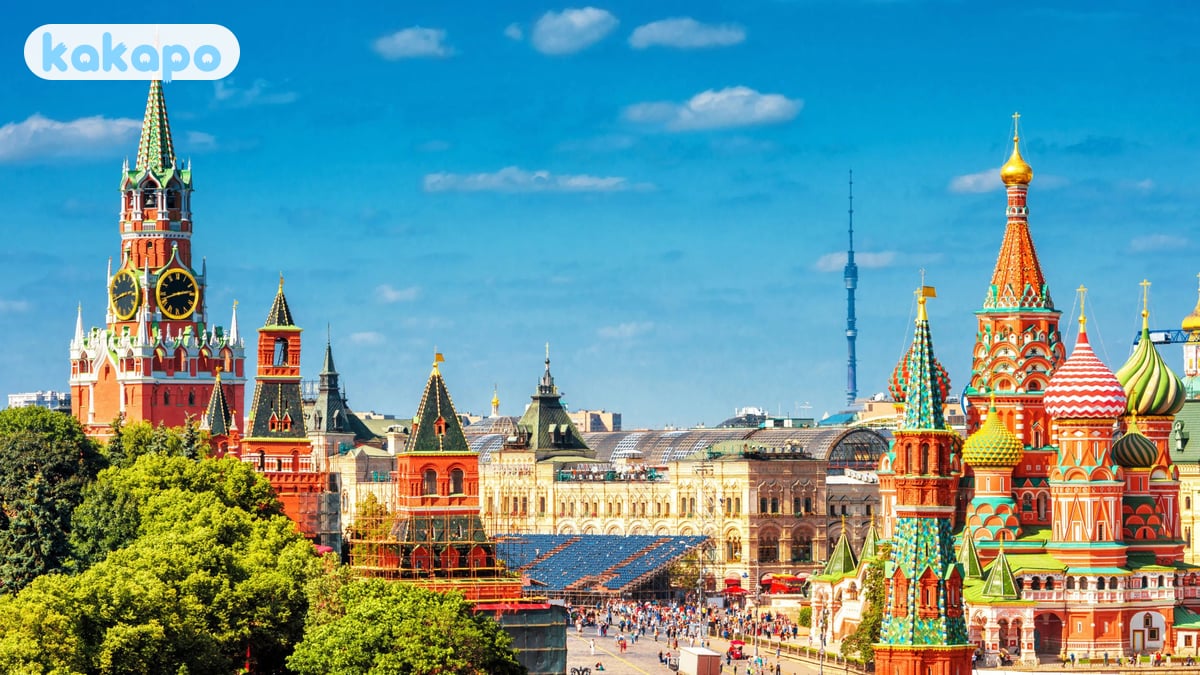
- Red Square / Kremlin / St Basil's Cathedral: free to enter Red Square; Kremlin entry RUB 700-1,000; St Basil's RUB 1,000.
- Tretyakov Gallery and Pushkin Museum: world-class Russian art and European art; RUB 600-800.
- Bolshoi Theatre: opera and ballet; tickets RUB 3,000-30,000+.
- Moscow winter: -10 to -20°C December-February; brutal but characteristic; warm clothing essential.
- Best non-winter window: May (Victory Day events), September-early October (autumn).
- Hotels: many Western chains (Marriott, Hilton, Hyatt) have closed or sold their Moscow franchises since 2022; Russian chains (AZIMUT, Cosmos) and some independent boutique stays remain.
Money, food, emergency contacts
- Currency: Russian ruble (RUB). $1 ≈ RUB 95 (volatile).
- Cards: Western cards (Visa, MC, Amex) DO NOT work in Russia. Cash only for foreigners; bring USD or EUR for exchange.
- Tipping: 10% restaurants if not on bill.
- Tap water: locals filter; bottled at hotels.
- Internet/VPN: many Western platforms (Facebook, Instagram, X) banned or restricted; YouTube throttled. Set up VPN before arrival; some VPN providers blocked.
- Don't post about the war on social media; Russian Authorities monitor.
- Emergency: 112 (universal Russian); 102 (police); 101 (fire); 103 (ambulance).
- US Embassy Moscow: +7 495 728 5000 (American Citizen Services); reduced staffing.
- UK Embassy Moscow: +7 495 956 7200; reduced staffing.
- Hospitals: European Medical Center (+7 495 933 6655) — international standard, English-speaking; American Medical Center (+7 495 933 7700).
- SIM: MTS, Beeline, Megafon — passport required; tourist plans available; Russian-only customer service largely.
- Travel insurance: confirm coverage to a Level 4 country; most Western policies decline.
- Don't bring the following: drone (illegal without permit), military-style clothing, anti-government literature, anything resembling Ukrainian symbols or "good guy with a gun" memorabilia.
- The strong recommendation as of 2026 remains: don't travel to Moscow unless absolutely required for family, work, or essential reasons. Reassess if/when Western advisories change.
Frequently asked questions
Is Moscow safe to visit in 2026?
No — and we say that plainly. Moscow scores 30/100 here, the lowest in our system. As of 2026, the US State Department lists Russia at Level 4 ('Do Not Travel'), the UK FCDO advises against all but essential travel, and the Australian, Canadian, EU and Japanese governments carry similar elevated advisories. Reasons: the ongoing Russia-Ukraine war since February 2022, documented arbitrary detention of foreign nationals (Evan Gershkovich, Alsu Kurmasheva, Marc Fogel — some released in 2024-2025 prisoner swaps but the pattern continues), dual-national conscription risk for Russian-citizen-by-descent men of military age, terrorism (the March 2024 Crocus City Hall attack killed 145 in suburban Moscow), Ukrainian drone strikes hitting Moscow city, and broken financial infrastructure. Casual tourism to Moscow in 2026 is strongly inadvisable.
Is Moscow safe at night?
Petty street crime in Moscow is at typical European-city levels and the Metro is excellent and well-patrolled even late, but the night-time question is dominated by macro risks rather than street risks. After the March 2024 Crocus City Hall attack — gunmen attacked a concert venue in suburban Krasnogorsk killing 145 — security has been visibly heightened at large venues, Metro stations and concert halls have airport-style screening, and travel-government advice from US/UK/EU is explicitly to avoid large public events while in Russia because the Crocus pattern targets soft civilian assemblies. Drone strikes on Moscow from Ukraine have hit the city centre multiple times in 2023-2025.
What's the biggest risk for a Western visitor to Moscow in 2026?
Arbitrary detention by Russian intelligence services, by a clear margin. Since 2022 dozens of foreign citizens — especially US, UK, German, French — have been detained on charges ranging from 'espionage' to 'drug trafficking' to 'extremism' with thin or fabricated evidence, then held as bargaining leverage for prisoner swaps. Raises risk: journalist credentials, prior reporting on Russia, social-media posts critical of the Russian government or sympathetic to Ukraine (Russian authorities monitor foreign visitors' social media; criminal penalties exist for 'discrediting' the military), family ties to opposition or LGBTQ+ activism, dual-citizenship conscription liability, even cannabis-residue charges. Don't bring drones, military-style clothing, anti-government literature or Ukrainian symbols. Consular support is dramatically reduced — US and UK embassies have skeleton staff.
Can you use Western cards and apps in Moscow?
No — and this matters more than most visitors expect. Visa, Mastercard, American Express all withdrew from Russia in March 2022; Apple Pay, Google Pay and PayPal also pulled out. Foreign-issued cards cannot make Russian payments, cannot withdraw from Russian ATMs, and most Russian merchants no longer have foreign-card POS terminals. SWIFT has excluded most major Russian banks, so international wire transfers are difficult. Russian Mir cards work but aren't available to foreigners without Russian residency. The practical answer is: bring sufficient USD or EUR cash for the entire stay, exchange at Russian banks. Crypto P2P USDT exchanges exist in a legal grey zone. Western Union and MoneyGram have wound down. Don't plan to 'wing it' on cash flow.
Can you drink tap water in Moscow?
Technically yes in central Moscow — Mosvodokanal treats the supply to Russian standards and the water leaves the plant safe — but in practice the locals filter, boil or buy bottled because of the variable distribution-pipe condition and the heavy chlorination taste. Hotels supply bottled or filtered as standard. Restaurants serve bottled (still 'bez gaza' or sparkling 'gazirovannaya') by default. If you do drink Moscow tap, choose central districts with newer pipework. For a short trip the bottled-by-default norm is sensible. Many Western platforms (Facebook, Instagram, X) are banned or restricted; YouTube is throttled; set up a VPN before arrival because some VPN providers themselves are now blocked.
Sources
Run a business in Moscow?
Show visitors your Moscow business is a safe choice. The free Verified by Kakapo badge puts Moscow's live safety score on your website, links back to your verified page, and updates itself. No cost.
Get the free badge →