


Is Istanbul Safe? The 2026 Earthquake Risk Reality
The North Anatolian Fault, the 'big one' Turkish seismologists have warned about for a decade, the 2023 reset, and what travellers should actually do about hotel selection in 2026.

Istanbul sits 15-20 kilometres north of the North Anatolian Fault, the same fault that ruptured at Gölcük in 1999 (17,000+ dead) and again at Kahramanmaraş in February 2023 (50,000+ dead in southeast Türkiye). Turkish government seismologists led by Prof. Naci Görür have, for over a decade, given a 60-70% probability of a magnitude-7+ earthquake in the Sea of Marmara segment in the next 30 years — a "big one" specifically affecting Istanbul. That is the honest baseline.
What that does NOT mean: that travellers should stay away from Istanbul. The risk per traveller-night is extraordinarily low. The probability of a major earthquake during a 5-night Istanbul trip is roughly 0.03% on the high-end estimates. You take similar risks every time you drive on a motorway.
What it DOES mean: a few practical hotel and route choices in 2026 cost nothing and meaningfully reduce the already-low risk. This guide covers the actual fault geography, the building-code reality (much improved post-2023), the hotel red flags, and what to do during a shake.
| Night safety | 55/100 |
|---|---|
| Scam / petty-crime risk | Medium |
| Violent crime (tourists) | Low |
| Most common scams | older boutique hotels in Sultanahmet, Pera and Galata without a documented retrofit; pre-1999 walk-up apartment buildings rented as short-term lets in Beyoğlu and Fatih; hotels in 1960s-90s reinforced-concrete infill in Sultanahmet |
| Safer neighbourhoods | Beşiktaş, Nişantaşı |
| Data sources cited | 4 |
| Last verified |
The fault — what's actually there
- North Anatolian Fault, Marmara segment — a right-lateral strike-slip fault running east-west through the Sea of Marmara, ~15-20km south of central Istanbul. The 1999 Gölcük rupture (Mw 7.6) was on its eastern end; the Princes' Islands offshore segment is the segment seismologists have flagged as overdue.
- "Overdue" in geological terms: previous Marmara segment ruptures have a recurrence interval of roughly 200-300 years; the last comparable rupture was 1766. Statistically the segment is in the "could happen any day, could be 50 years" window — the AFAD national disaster agency models scenario quakes of Mw 7.0-7.4.
- The Kahramanmaraş 2023 earthquakes were on the East Anatolian Fault, ~900km southeast of Istanbul. Istanbul felt nothing significant. The political fallout — collapsed buildings, AKP construction-amnesty scandal, the government's seismic-retrofit campaign — has been the biggest single influence on Istanbul building safety since.
- Tsunami risk: the fault is offshore but in a relatively shallow inland sea. Modelled tsunami heights in Marmara coastline scenarios are 2-3m for Yeşilköy/Florya (the Sea-of-Marmara south shore). The Bosphorus-side bairros (Beşiktaş, Üsküdar, Karaköy) face the Bosphorus, not the Marmara, and are not in the tsunami footprint.
- Aftershocks: scenario modelling expects 6+ Mw 6.0 aftershocks in the first month after a Marmara mainshock. The pattern in the 2023 East Anatolian sequence was similar.
Buildings — what changed after 2023
- The 2023 reset: the Kahramanmaraş earthquakes exposed the post-1999 "construction amnesty" scheme that had legalised millions of code-non-compliant buildings. Public anger forced a 2023-25 nationwide audit and retrofit programme.
- Istanbul's seismic retrofit (Kentsel Dönüşüm) — ongoing since 2012, accelerated after 2023. Roughly 350,000 Istanbul buildings classified "high risk" have been demolished and replaced; another 600,000 are queued through 2030. The skyline-altering construction-crane density on the Asian side reflects this.
- What's almost certainly safe: any hotel built or substantially renovated after 2018 (when the latest seismic code came in). The international chains (Marriott, Hilton, Hyatt, Four Seasons, Shangri-La) and the high-end Turkish chains (Conrad, Çırağan, Pera Palace post-2010 renovation) are on this list.
- What's a yellow flag: older boutique hotels in Sultanahmet, Pera and Galata in pre-2000 buildings without a documented retrofit. Many are charming and structurally fine; ask the hotel directly whether the building has a "Bina Kimlik Sertifikası" (Building Identity Certificate, the post-2023 transparency document).
- What's a red flag: pre-1999 walk-up apartment buildings being rented as short-term lets in Beyoğlu and Fatih, especially the 4-5 storey reinforced-concrete frames that failed catastrophically in 1999. The famous "soft-storey" pattern (ground floor with shops, no shear walls) is the textbook collapse mechanism.
By neighbourhood — relative risk
- Sultanahmet, the historic peninsula: bedrock is solid (the old Constantinople walls didn't get there by accident). Building stock is mixed — Ottoman-era stone structures perform well in earthquakes, but the 1960s-90s reinforced-concrete infill is the weak point. Hotels in restored Ottoman buildings (Four Seasons Sultanahmet, the various konak-conversions) are generally safer than 1980s concrete builds.
- Beyoğlu (Pera, Galata, Taksim): similar mixed picture. The 19th-century European-style stone buildings perform well; the 1960s-80s infill towers around İstiklal Caddesi are the building stock the retrofit programme is targeting.
- Beşiktaş, Nişantaşı, Şişli: more new-build than the old city. Newer luxury chains here are statistically the lowest-risk hotel zone.
- Asian side (Kadıköy, Üsküdar, Moda): bedrock is generally good; the famous Kadıköy waterfront has the standard tsunami footprint warning but the actual modelled wave height for the Bosphorus side is much lower than the Marmara south shore.
- Highest building-stock risk areas (not tourist zones, but worth knowing if you stay in an Airbnb): Bağcılar, Esenler, Avcılar, Küçükçekmece — dense 1980s-90s reinforced-concrete neighbourhoods on alluvial soil with documented liquefaction risk.
- Lowest building-stock risk for tourists: the major chain hotels in Beşiktaş, Nişantaşı and Şişli; the high-end converted-konak hotels in Sultanahmet.
If it happens during your trip — what to do
- Inside, during shaking: drop, cover, hold. Get under a sturdy desk or table. Stay there until shaking stops. Do not run for the door — most injuries happen from people running and being hit by falling objects.
- Outside, during shaking: move away from buildings, balconies, glass facades. The narrow streets of Sultanahmet and Beyoğlu are the worst place to be — broken minarets, balconies, signage. The squares (Sultanahmet Meydanı, Taksim Meydanı) are the better open spaces.
- After the shake: do not re-enter old buildings. Move to an open square. Aftershocks of M5+ are likely within hours; pre-damaged structures can fail in aftershocks.
- Communications: mobile networks typically overload but recover in hours. Turkish AFAD operates the 112 emergency number and an SMS notification system. The free AFAD Acil app is the official channel.
- Embassies: UK Consulate-General Istanbul +90 212 334 6400; US Consulate Istanbul +90 212 335 9000. Both run earthquake emergency desks; both have evacuation protocols.
- Tsunami evacuation (if you're on the Marmara south shore — Yeşilköy, Florya, the Asian-side coastal stretch): move inland and uphill immediately. The modelled wave arrival time from a Marmara rupture is 8-15 minutes.
Perspective — the actual probability
- 30-year probability of M7+ on Marmara segment: ~60-70% per Görür/Aktar models. Per-night probability: ~0.006%. 5-night trip probability: ~0.03%.
- For comparison: lifetime probability of dying in a motor-vehicle accident in the UK is roughly 0.4%; in the US, roughly 1%. The 5-night Istanbul earthquake risk is two orders of magnitude lower than that.
- What the FCDO and US State Department say: neither warns against travel to Istanbul on earthquake grounds. Both note the seismic risk in their country reports and recommend awareness.
- What Turkish insurance does: Turkish hotels are required to carry earthquake insurance (DASK), included automatically in licensed-hotel rates. Travel insurance from your home country generally covers earthquake disruption and evacuation.
- The honest summary: do not avoid Istanbul over earthquake risk; do prefer a post-2018 build or a documented-retrofit hotel; do read the seismic info card the AFAD app provides; do not stress.

Frequently asked questions
Should I cancel my Istanbul trip because of earthquake risk in 2026?
No. The 30-year probability of a major Istanbul earthquake is real (60-70% per Turkish government seismologists), but the per-trip probability for a 5-night stay is about 0.03%. Travel advisories from the UK FCDO and US State Department do not advise against Istanbul travel on earthquake grounds. A modern hotel and a few practical precautions effectively address the risk.
Which Istanbul hotels are safest in an earthquake?
Any hotel built or substantially renovated post-2018 (when the latest seismic code came in). International chains (Marriott, Hilton, Hyatt, Four Seasons, Shangri-La) and high-end Turkish chains (Conrad, Çırağan, Pera Palace) are typically code-compliant. If staying in an older boutique hotel, ask whether the building has a post-2023 "Bina Kimlik Sertifikası" (Building Identity Certificate).
Which Istanbul neighbourhoods are safest from earthquakes?
Beşiktaş, Nişantaşı and Şişli have the highest proportion of post-2018 building stock and are the lowest-risk hotel zones for tourists. Sultanahmet's bedrock is solid but building stock is mixed. The highest building-stock risk areas (Bağcılar, Esenler, Avcılar, Küçükçekmece) are not tourist zones; check carefully if you book an Airbnb in those.
What should I do if there's an earthquake during my Istanbul trip?
Inside: drop, cover, hold — get under a sturdy desk or table until shaking stops. Don't run for the door. Outside: move away from buildings, balconies and glass; head for an open square (Sultanahmet Meydanı, Taksim Meydanı). After: do not re-enter old buildings; expect aftershocks for hours; use the AFAD Acil app for official updates.
Is there tsunami risk in Istanbul?
Modelled risk for the Sea of Marmara south shore (Yeşilköy, Florya) is 2-3m waves with 8-15 minute arrival time. The Bosphorus-side tourist neighbourhoods (Beşiktaş, Üsküdar, Karaköy) face the Bosphorus rather than the Marmara and are not in the meaningful tsunami footprint. If you're on the Marmara south shore during a shake, move inland and uphill immediately.
Did the 2023 Türkiye earthquakes affect Istanbul?
No — those were on the East Anatolian Fault, ~900km southeast of Istanbul, and Istanbul felt almost nothing. The major impact on Istanbul has been political and structural: the 2023 disaster exposed the construction-amnesty scandal and accelerated the city's seismic retrofit programme (Kentsel Dönüşüm), so building stock is meaningfully safer in 2026 than it was in 2022.
Are tourist sites like Hagia Sophia and the Blue Mosque earthquake-safe?
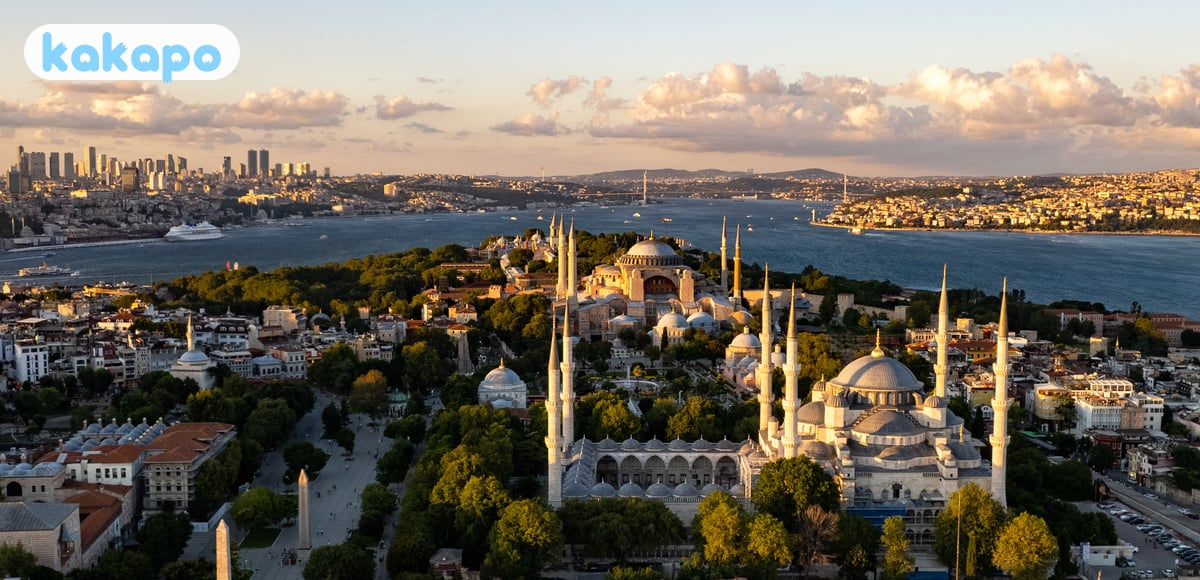
The major Ottoman monuments have survived multiple historical earthquakes — the structural engineering (massive stone walls, low height-to-base ratio) performs well in seismic events. Modern retrofits have added further reinforcement to Hagia Sophia, the Blue Mosque, the Süleymaniye and Topkapı. These are not the building-stock risk in Istanbul.
Sources
Run a business in Istanbul?
Show visitors your Istanbul business is a safe choice. The free Verified by Kakapo badge puts Istanbul's live safety score on your website, links back to your verified page, and updates itself. No cost.
Get the free badge →