


Is Tianjin, China Safe? A 2026 Travel Safety Guide
The Beijing HSR connection, the European concession architecture, the Beijing-Tianjin-Hebei air pollution, summer humidity, and the realities of China's most-overlooked tier-1 city.

Tianjin — population ~14 million, China's fourth-biggest city, on the Bohai Sea coast 130 km southeast of Beijing — is one of mainland China's most-overlooked tier-1 cities. It's a 30-minute HSR hop from Beijing, has fascinating European concession-era architecture (British, French, Italian, German, Japanese, Russian, Belgian, and Austro-Hungarian quarters preserved from the 1860-1945 treaty-port era), and serves as Beijing's port. Crime against tourists is rare; English support at major hotels is decent for a tier-2 Chinese city.
The honest concerns are mostly environmental. Tianjin's air quality is among China's worst — the Beijing-Tianjin-Hebei (Jing-Jin-Ji) megalopolis has chronic winter PM2.5 issues; Tianjin sits in the receiving zone for surrounding industrial pollution and coal heating. Summer humidity is significant (Bohai Sea moisture trapped against the Yan Mountains). The city is most-visited as a Beijing day-trip — the HSR makes it almost commute-distance — but a 1-2 night stay rewards the European concession architecture exploration. The standard mainland-China cashless / blocked-internet / passport-for-everything rules apply.
The US State Department lists China at Level 2; UK FCDO has no specific Tianjin advisories. Both note the standard China-context concerns rather than tourist-street risks.
| Night safety | 80/100 |
|---|---|
| Scam / petty-crime risk | Medium |
| Violent crime (tourists) | Low |
| Most common scams | pickpocketing in tourist crush zones at Five Great Avenues |
| Safer neighbourhoods | Heping, Italian Style Town, Hexi |
| Data sources cited | 4 |
| Last verified |
What the score means — 89/100
- Personal safety (88) — high. Tianjin is calm; petty pickpocketing in tourist crush zones at Five Great Avenues is the main risk.
- Transport (88) — Tianjin Metro 8 lines; Beijing-Tianjin HSR (Jingjin Intercity) 30 min; Tianjin Binhai International Airport (TSN); Tianjin Cruise Home Port for Bohai cruises.
- Healthcare (80) — Tianjin First Central Hospital and Tianjin Medical University General Hospital are the regional referrals; international clinic options thinner than Beijing.
- Air quality (56) — chronically poor in winter; Beijing-Tianjin-Hebei industrial cluster pollution; AQI 100-200+ Nov-Mar normal.
Beijing-Tianjin HSR — the 30-min commuter run
- Jingjin Intercity HSR: opened 2008 (China's first HSR line); 30 minutes Beijing South to Tianjin; CNY 55 second class; 5-10 min frequency 06:00-23:00.
- Multiple Beijing stations serve Tianjin route: Beijing South (main), Beijing West (limited), Beijing (Beijing Station, fewer services).
- Tianjin stations: Tianjin Station (central, walking distance to Old Town), Tianjin South (modern, distant from centre — useful for HSR connections south).
- Booking: 12306.cn (China Railway official; supports foreign passports since 2023) or via Trip.com / Klook. Passport required at booking AND boarding. Print or screenshot the QR code.
- Same-day return: easy as a Beijing day-trip; or 1-2 nights in Tianjin for fuller exploration.
- Beijing Daxing Airport (PKX) HSR connection: opened 2024; useful if connecting through Daxing.
European concession architecture — what to see
- The treaty-port era (1860-1945): nine European powers had concessions in Tianjin; each built distinct architectural quarters. Most preserved post-1949 due to Communist Party use and post-1980s rediscovered for tourism.
- Five Great Avenues (Wudadao): the British concession area; over 230 European-style mansions and villas; walking-tour worthy. Free to walk; museum house entries CNY 15-30.
- Italian Concession (Italian Style Town): pseudo-Tuscan piazzas restored 2003; restaurants and bars; lively at night.
- French Concession area: Heping district central; Parisian-style facades.
- Tianjin Catholic Cathedral (Xikai): French-built basilica; working church; modest dress to enter; mass times posted.
- Jin-Tang Bridge area: night-illuminated bridges over Hai River; classic photo spots.
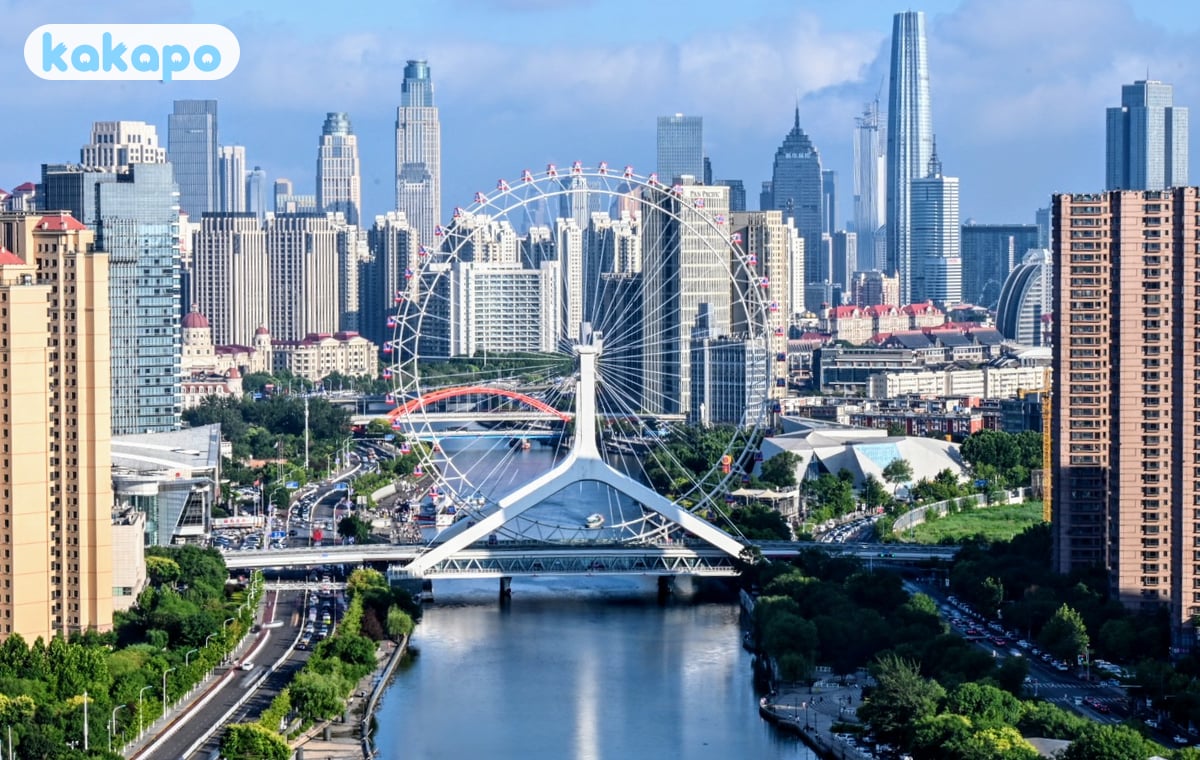
- Tianjin Eye: 120m ferris wheel built into a road bridge over the Hai River; CNY 80; sunset slot popular.
- Don't expect Western-quality preservation: many "restored" facades hide modern interiors; some are working government offices closed to public.
Beijing-Tianjin-Hebei air pollution
- Numbers: Tianjin winter PM2.5 averages 60-100 µg/m³; cold-snap days hit 200-400+ ("very unhealthy"/"hazardous"). WHO guideline 5 µg/m³.
- Why: Beijing-Tianjin-Hebei megalopolis is the world's largest concentrated industrial-and-coal-heating zone. Winter-heating season Nov-Mar accelerates the smog.
- If air-sensitive: bring N95 masks; air purifiers in better hotels (ask before booking); asthma sufferers should bring extra medication.
- Indoor refuge: malls (Joy City Tianjin, Galaxy Mall) and Metro concourses are AC and generally cleaner than outdoor.
- Best windows: October (post-summer, before winter heating), April-May (warming, before peak summer humidity).
- Worst: December-February for air quality; July-August for combination of heat, humidity, and inversions.
- Air-quality apps: IQAir, AirVisual, Plume Labs all reliable for Tianjin readings.
- Heatwaves: 2024 summer saw multi-day 38°C+ events with "high humidity"; air-quality + heat combination is especially difficult.
Tianjin Port and the cruise terminal
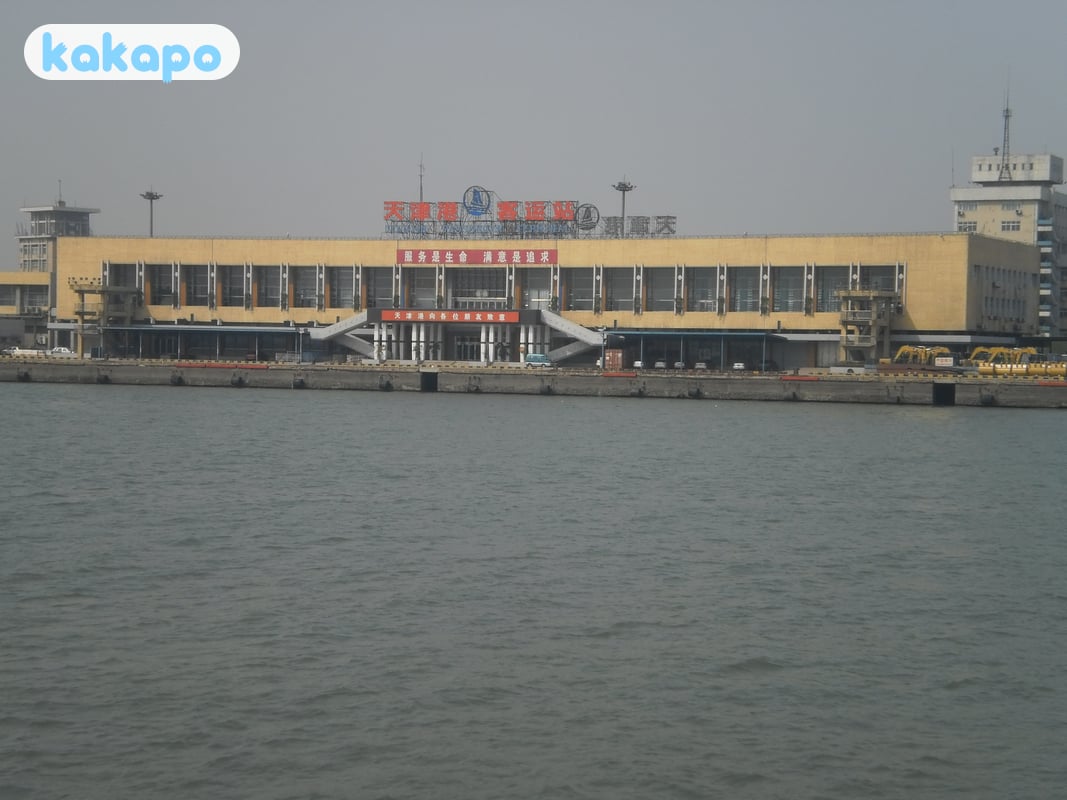
- Tianjin Cruise Home Port (Tanggu): 50 km southeast of Tianjin centre; Bohai Sea cruise terminal serving Korea, Japan, and inter-Chinese routes.
- Cruise day-stop in Tianjin: shuttle bus to central Tianjin or Beijing day-trip (CITS, Viking, Royal Caribbean tour packages).
- Port-to-Beijing: 2.5 hr by road in good traffic; cruise-ship Beijing day-trip is real but tight.
- 2015 Tianjin Port explosion (legacy): massive August 2015 chemical-warehouse explosion at Tianjin Port killed 173 and devastated surrounding industrial area. Recovery complete; safety procedures tightened. Doesn't affect tourists.
- Don't try to enter Port industrial areas: restricted; security responds.
Areas — Heping, Italian Concession, Hexi, Binhai
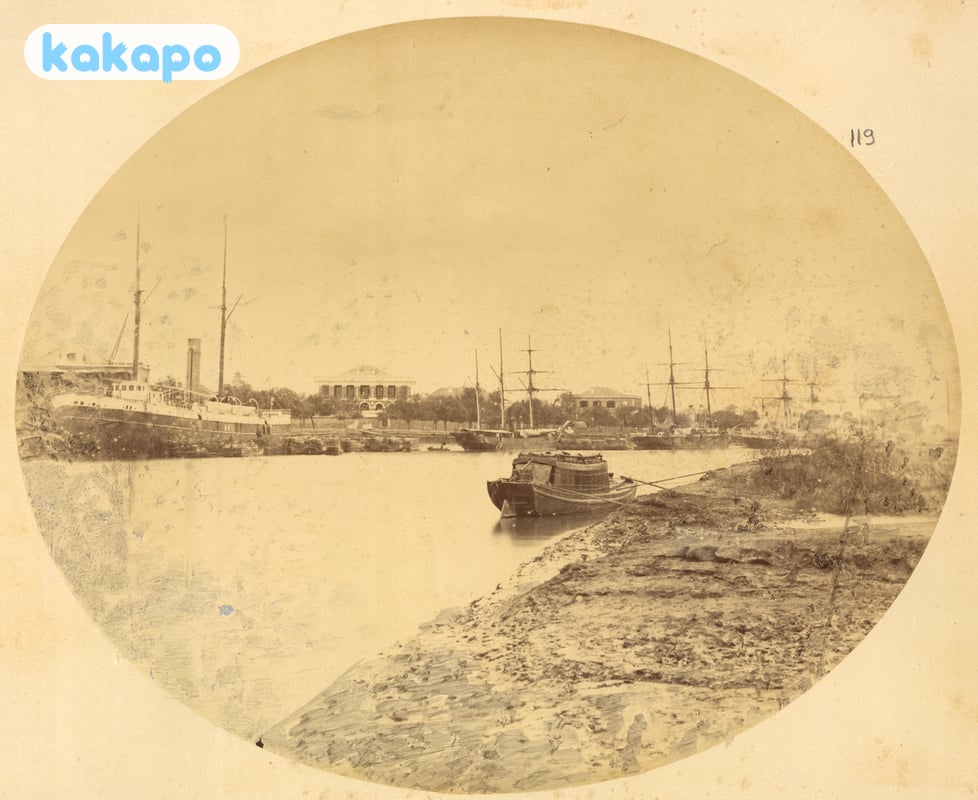
Recommended bases: Heping district (central) — Ritz-Carlton Tianjin, Astor Hotel (heritage 1863); near Italian Concession, Five Great Avenues, Hai River. Italian Style Town area — boutique heritage stays; restaurants and bars. Hexi district — newer business district; modern hotels. Binhai New Area — distant business/industrial zone; transit/business-only base.
Stay aware: Italian Style Town at peak weekend evenings — dense crowds; pickpocket precautions. Around Tianjin Station — chaotic; standard station-area issues.
There are no genuinely dangerous neighbourhoods in central Tianjin.
Transport — Metro, HSR, airport

- Tianjin Metro: 8 lines; Tianjin Station (central) is a hub; CNY 2-7 per ride; tap card or QR.
- Tianjin Binhai International Airport (TSN): 13 km east of city. Metro line 2 to Yingkoudao CNY 4 (30 min); taxi/Didi CNY 50-90.
- Beijing Capital Airport (PEK) and Daxing (PKX): alternatives via HSR + Beijing Subway.
- Didi: works city-wide; supports foreign cards in-app since 2023.
- Cashless: WeChat Pay and Alipay dominant. Set up Alipay's Tour Card before arriving.
- Internet/VPN: Google, Facebook, Instagram, X all blocked. Set up VPN before flying.
- Driving: drive on the RIGHT (China). Foreign licences not valid.
Districts of Tianjin — where to base yourself
- Heping district (central) — the historic core where most concession-era architecture concentrates. The Astor Hotel (1863, where Pu Yi the last Emperor lived in 1925-1931 and where the IOC was formed in 1925), Ritz-Carlton Tianjin, St. Regis. Walking distance to Italian Concession, Five Great Avenues, Hai River bridges. Best first-night base for first-timers. Rooms CNY 600-2,500.
- Italian Style Town (Yidali Fengqing Qu — former Italian Concession) — the most photogenic compact quarter, restored 2003 around pseudo-Tuscan piazzas with the People's Marco Polo Square statue, bars and restaurants. Lively at night, weekend crowd-heavy. Boutique heritage stays in converted villas (Bee Town, Sheraton Hotel Italian Concession). Don't drink the wine at every tourist trap — venture to Forte Antico for real Italian, or Goubuli for the famous steamed pork bun.
- Five Great Avenues (Wudadao — former British Concession) — Munan Dao, Machang Dao, Chongqing Dao, Changde Dao, Dali Dao. Over 230 European-style mansions and villas (British Tudor, Spanish Mission, French Mansard, German Romanesque, Eclectic). Walking tour worthy — free to walk; the heritage-house museums cost CNY 15-30. Quiet residential atmosphere with horse-drawn-carriage tourist rides on weekends. Bus 871 and Metro Line 1 (Xiaobailou) for access.
- French Concession area (Hai River north bank, Heping) — Parisian-style facades along Jiefang Bei Lu and Jinzhou Dao. Tianjin Catholic Cathedral (Xikai, French-built 1916 basilica, working church, modest dress for entry) is the centerpiece. The historic Kiessling bakery (German, 1901) still serves traditional Western pastries.
- Hai River corridor + night-illuminated bridges — the riverfront walk from Tianjin Eye downstream to Italian Style Town. The Jin-Tang Bridge, Liberation Bridge (Jiefang Qiao — 1927 American-built drawbridge), Beian Bridge night illuminations are the classic photo spots. Tianjin Eye Ferris Wheel (120m built into a road bridge, CNY 80, sunset slot popular).
- Hexi district (the new business core) — south-west of Heping. Modern hotels (Sheraton, Hyatt Regency), the Tianjin Grand Theatre (Gerkan Marg + Partner design, looks like a glass spaceship), the Binhai Library (the famous "Eye of Tianjin" library with floor-to-ceiling book-shaped shelves — much-photographed even though most "books" are printed inserts). Newer, cleaner, less character.
- Binhai New Area (TEDA — Tianjin Economic-technological Development Area) — 50 km southeast of central. Industrial-business zone with the cruise port, the chemical industries, the 2015 explosion legacy district. Business-only base unless taking a Bohai Sea cruise. Reach via Tianjin Metro Line 9 (60 min from centre) or HSR.
- Tianjin Station (railway station area) — central transit hub for the Beijing HSR, easily walkable to Italian Style Town across the river via Liberation Bridge. The streets immediately around the station are chaotic but not dangerous; standard station-area pickpocket awareness.
- Ancient Culture Street + Drum Tower (Gulou) — Qing-dynasty pedestrian street of recreated old shops, Tianhou Temple (the goddess of seafarers — Tianjin was historically the salt-trade and seagoing port), souvenir markets. Touristy but worth a 90-minute walk; the genuine Goubuli Restaurant is here.
- Tanggu cruise port + Binhai (50 km southeast) — the Bohai Sea cruise terminal, Korea/Japan/inter-China routes. Don't try to enter Port industrial areas (restricted, 2015 chemical-warehouse explosion legacy — security responds). Cruise day-stop visitors usually shuttle to central Tianjin or take a Beijing day-trip (2.5h by road).
If it's your first time visiting
- Best arrival: the Jingjin Intercity HSR from Beijing South (30 min, CNY 55 second class, every 5-10 min from 06:00-23:00) is the canonical route. Book on 12306.cn (supports foreign passports since 2023) or via Trip.com / Klook. Passport required at booking AND at boarding gates. Arrive at Tianjin Station (central, walkable to Italian Style Town); Tianjin South is distant from the centre. From Beijing Capital (PEK) or Daxing (PKX) airports, take the airport metro/express to Beijing South then HSR. Tianjin's own Binhai Airport (TSN) is 13 km east, Metro Line 2 to Yingkoudao CNY 4 in 30 min.
- Best neighbourhood for your first night: Heping district within walking distance of both Italian Concession and Five Great Avenues (Astor Hotel for heritage, Ritz-Carlton or St. Regis for modern); Hexi for new-build business hotels at lower prices; avoid Binhai New Area as a first-time base unless your reason for Tianjin is the cruise port.
- Set up Alipay's Tour Card BEFORE flying. Mainland China has gone almost completely cashless — WeChat Pay and Alipay dominate; Visa and Mastercard are barely accepted outside international hotels. Alipay's "Tour Card" (in the app, link foreign credit card) gives you QR-pay access to taxis, restaurants, ticket machines, vending. You cannot easily set this up after arrival because the Apple/Google app stores in China are restricted.
- Set up a working VPN BEFORE flying. Google, Gmail, Maps, Facebook, Instagram, WhatsApp, X/Twitter, YouTube, and most Western news sites are blocked by the Great Firewall. You cannot download a VPN app from inside China. ExpressVPN, NordVPN and Astrill all work in 2026 but install them before you fly.
- The 1-day Tianjin from Beijing: 07:30 HSR from Beijing South, arrive Tianjin Station 08:00. Walk over Liberation Bridge to Italian Style Town for coffee. Walk south to Five Great Avenues (allow 2 hours), lunch at Goubuli (the famous steamed pork buns, CNY 50-100/head) or Kiessling bakery. Afternoon Tianjin Eye Ferris Wheel and Hai River walk. Return HSR to Beijing 18:00-20:00. Long but doable.
- Air-quality reality check. Tianjin sits in the Beijing-Tianjin-Hebei industrial cluster, the world's most concentrated coal-heating + heavy-industry zone. Winter (Nov-Mar) PM2.5 averages 60-100 µg/m³ and cold-snap days hit 200-400+ (WHO guideline is 5). Bring N95/KN95 masks for outdoor activity Nov-Mar; ask hotels about in-room air purifiers; asthma sufferers should bring extra medication. Check IQAir, AirVisual, Plume Labs daily. Best windows: October (post-summer, before winter heating) and April-May (warming, before peak summer humidity).
- Eat the local specialties: goubuli baozi (Goubuli steamed pork buns, the chain that's been an imperial favourite since 1858, CNY 50-80 per basket of 8), erduoyan zhagao (fried sweet rice cakes), shibajie mahua (Eighteenth Street twisted fried dough — the iconic Tianjin souvenir), and the port-city seafood. Avoid the tourist-pricing restaurants on Italian Style Town's main square; venture one street back.
- Common rookie mistakes: arriving without Alipay set up (you cannot pay for anything); arriving without a VPN installed (you cannot Google anything); booking a Tianjin South station ticket and ending up 30 minutes from the centre; trying to drive (foreign licences not valid); wandering into Tanggu port industrial areas (restricted, security responds); underestimating winter cold (-5 to 5°C with wind chill, occasional snow) or summer humidity (Bohai moisture trapped against the Yan Mountains, oppressive).
- Tipping is not customary in mainland China — don't tip taxis, don't tip restaurants. Hotel bellhops at international chains accept CNY 10-20 but it's not expected.
Money, food, emergency numbers
- Currency: Chinese yuan (CNY/RMB). $1 ≈ CNY 7.2.
- Tipping: not customary.
- Food: Tianjin is known for goubuli baozi (steamed pork buns — the famous Goubuli Restaurant chain), erduoyan zhagao (fried sweet rice cakes), Tianjin mahua (twisted fried dough). The local food culture is northeast-Chinese in style with port-city seafood overlay.
- Tap water: not drinkable. Bottled or kettle-boiled.
- Heat / humidity: 28-35°C summer with humidity; cold winter (-5 to 5°C, occasional snow).
- Emergency: 110 (police), 119 (fire), 120 (ambulance). Tourist hotline 12301.
- Hospitals: Tianjin First Central Hospital (+86 22 2362 6622); Tianjin Medical University General Hospital (+86 22 6036 2255).
- SIM: passport required for Chinese SIM. eSIM (Airalo China-friendly) easier.
Frequently asked questions
Is Tianjin, China safe to visit in 2026?
Yes — Tianjin scores 80/100 here. The US State Department lists China at Level 2 and UK FCDO has no specific Tianjin advisories. Crime against tourists is rare in mainland China's fourth-biggest city (~14 million on the Bohai Sea coast, 130 km southeast of Beijing). English support at major hotels is decent for a tier-2 Chinese city. The realistic concerns are environmental — Beijing-Tianjin-Hebei (Jing-Jin-Ji) chronic winter PM2.5 pollution (AQI 100-200+ Nov-Mar normal, cold-snap days hit 200-400+ 'hazardous'), summer humidity from Bohai Sea moisture trapped against the Yan Mountains — plus the standard mainland-China cashless/blocked-internet/passport-for-everything rules that catch first-timers off-guard.
Is Tianjin safe at night?
Yes — Tianjin is calm at night with comfortable solo walking, and the Italian Concession area lit-night bridges over the Hai River are the standard photogenic evening walk. The realistic late-night considerations are practical: pickpocket precautions in the Italian Style Town at peak weekend evenings (dense crowds), winter cold (-5 to 5°C with occasional snow, indoor-outdoor transition shock real), and Didi works city-wide and supports foreign cards in-app since 2023 making cab options easy. The Tianjin Metro closes around midnight. The Tanggu cruise port area (50 km southeast) is restricted security zone — don't try to enter Port industrial areas, the 2015 chemical-warehouse explosion legacy means security responds. The Italian Style Town and Five Great Avenues are routine evenings.
What scam should I watch for in Tianjin?
The classic mainland-China tea-house / art-gallery scam exists in Tianjin's heritage tourist areas — a friendly English-speaker invites you to a 'cultural experience' or 'student art exhibition' that bills CNY 1,000-3,000. Decline polite friendliness from strangers who suggest activities. Beyond that the China-wide patterns: unlicensed taxi quoting (use Didi), the cashless trap with WeChat Pay and Alipay dominant everywhere and Visa/Mastercard barely accepted (set up Alipay's Tour Card linked to a foreign credit card before flying), and the Great Firewall — Google, Facebook, Instagram and X are blocked, so set up a working VPN before you fly because you can't download one from inside China. The Beijing-Tianjin HSR has frequent ticket-touts at Beijing South Station claiming the train is sold out and offering 'tour packages' instead — buy direct from 12306.cn or Trip.com.
Can you drink the tap water in Tianjin?
No — Tianjin tap water is not drinkable. Bottled is the universal default and locals boil everything else. Hotel rooms have kettles. The air is the larger health concern in winter: bring N95/KN95 masks for outdoor activity November-March; air purifiers in better hotels (ask before booking); asthma sufferers should bring extra medication. AQI apps (IQAir, AirVisual, Plume Labs) all reliable for Tianjin readings. Best windows are October (post-summer, before winter heating) and April-May (warming, before peak summer humidity). Worst: December-February for air quality, July-August for combination of heat, humidity, and inversions (2024 summer saw multi-day 38°C+ events with high humidity).
How do I do the Beijing-Tianjin day-trip — and what should I see?
The Jingjin Intercity HSR opened in 2008 (China's first high-speed rail line) makes Tianjin almost commute-distance from Beijing: 30 minutes Beijing South to Tianjin Station for CNY 55 second class, 5-10 minute frequency 06:00-23:00, easy same-day return. Book on 12306.cn (China Railway official; supports foreign passports since 2023) or via Trip.com or Klook. Passport required at booking AND boarding — print or screenshot the QR code. Multiple Beijing stations serve the route — Beijing South is the main, Beijing West is limited, Beijing Station has fewer services. Tianjin Station (central, walking distance to Old Town) is the better arrival; Tianjin South is modern but distant from the centre (useful only for HSR connections south). What to see: the European concession architecture is the genuine reason to visit and most other tourists don't bother. Nine European powers had concessions in Tianjin 1860-1945 — British, French, Italian, German, Japanese, Russian, Belgian, Austro-Hungarian — and most were preserved post-1949 due to Communist Party use and post-1980s rediscovered for tourism. The Five Great Avenues (Wudadao) in the former British concession have 230+ European-style mansions and villas (walking-tour worthy, free to walk, museum house entries CNY 15-30). The Italian Concession (Italian Style Town) is pseudo-Tuscan piazzas restored in 2003 with restaurants and bars, lively at night. The French Concession area in central Heping district has Parisian-style facades. The Tianjin Catholic Cathedral (Xikai) is a French-built basilica, working church, modest dress to enter. The Tianjin Eye is a 120m ferris wheel built into a road bridge over the Hai River (CNY 80, sunset slot popular). Don't expect Western-quality preservation — many 'restored' facades hide modern interiors and some are working government offices closed to public. Food: goubuli baozi (Goubuli steamed pork buns, the famous chain), erduoyan zhagao (fried sweet rice cakes), Tianjin mahua (twisted fried dough) are the local specialties. The Beijing-Daxing Airport (PKX) HSR connection opened in 2024 is useful if connecting through Daxing.
Sources
Run a business in Tianjin?
Show visitors your Tianjin business is a safe choice. The free Verified by Kakapo badge puts Tianjin's live safety score on your website, links back to your verified page, and updates itself. No cost.
Get the free badge →