


Is Samarkand, Uzbekistan Safe? A 2026 Travel Safety Guide
The Registan crowds, the Tashkent–Samarkand train, summer heat, currency logistics, and the realistic risks of the Silk Road's most photographed city.

Samarkand is one of the safer Central Asian tourist cities. Crime against visitors is rare; the Uzbek government has invested heavily in tourism since 2018 and the country's "feel" has shifted dramatically open.
The realistic risks for visitors are mostly logistical: visa rules (now relaxed for most Western nationalities), the high-speed Afrosiyob train from Tashkent (book ahead — sells out), summer heat (40°C+ in July-August), currency and ATM logistics (the Uzbek som is volatile and ATMs are not always reliable for international cards), and the conservative-but-Soviet-influenced legal-and-cultural code.
Uzbekistan sits at Level 1 on the US State Department's advisory list. UK FCDO is the same. The honest framing for first-time visitors: Samarkand is medium-sized (~530,000), the second-largest city in Uzbekistan. The Registan square (the iconic three-madrasah ensemble), Bibi-Khanym Mosque, Shah-i-Zinda necropolis, Gur-i-Amir (Timur's mausoleum), and Siyob Bazaar are the city anchors. Most visitors continue to Bukhara (3h further west) and/or Khiva.
Samarkand is one of the great Silk Road cities — a continuously-inhabited oasis on the trans-Asian trade route since at least the 7th century BC, taken by Alexander in 329 BC, made glorious by Timur (Tamerlane) in the 14th century and Ulugh Beg in the 15th. The blue-tile architecture of the Registan, Bibi-Khanym and Shah-i-Zinda is the visual signature; the Afrosiyob high-speed train from Tashkent (2h10m) is the practical gateway. Visa-free entry since 2018 for 90+ Western nationalities (UK, EU, US, Canada, Australia, NZ, Japan, Korea included) has completely changed the trip's friction — pre-2018 you needed a sponsored visa with strict registration. Now you arrive at Tashkent (TAS), get a stamp, and continue.
| Solo female safety | 92/100 |
|---|---|
| Night safety | 71/100 |
| Scam / petty-crime risk | Medium |
| Violent crime (tourists) | Low |
| Most common scams | my friend has a souvenir shop / restaurant hustle; pickpockets at the Registan; pickpockets at Siyob Bazaar |
| Safer neighbourhoods | Registan, Shah-i-Zinda, Siab |
| Data sources cited | 4 |
| Last verified |
What the score means — 76/100
- Personal safety (92) — exceptional. Tourist crime essentially zero.
- Air quality (84) — moderate. Some winter inversions and dust storms.
- Transport (80) — Afrosiyob high-speed train + good city taxis; Yandex Go works.
- Healthcare (72) — Russian-system hospitals; tourist-grade clinic in Tashkent. Serious cases evacuate to Tashkent.
Visa and entry — the post-2018 opening
- Uzbekistan opened visa-free entry for most Western nationalities since 2018.
- 30-day visa-free: UK, EU, Australia, Canada, Japan, South Korea, etc. Confirm your nationality on the official MFA list.
- Other nationalities: e-visa $20, online application.
- Registration: hotels register you automatically (called "registratsiya"); keep the slips. If staying with locals, register with the local OVIR within 3 days.
- Documents: passport with 6+ months validity.
The Registan and the major sites
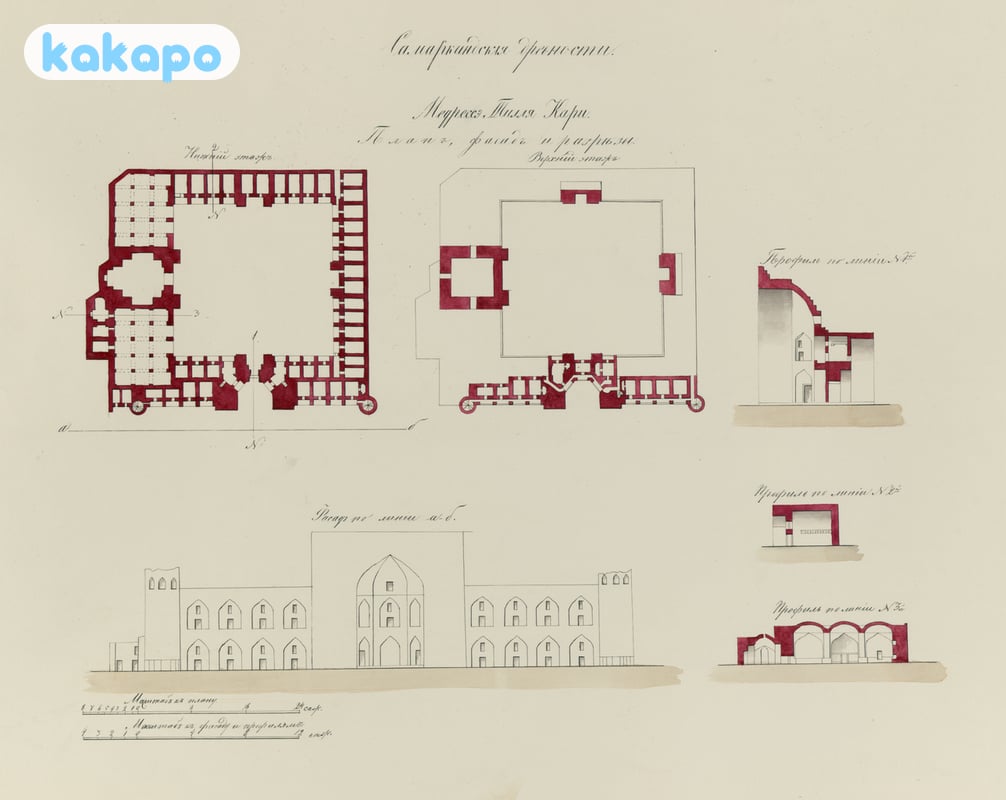
- The Registan: 15th-17th century three-madrasah ensemble. Iconic. UZS 70,000 entry (~$5).
- Sound and light show: most evenings 9pm in summer. Touristy but pretty.
- Bibi-Khanym Mosque: UZS 50,000.
- Shah-i-Zinda: stunning blue-tile necropolis. UZS 35,000.
- Gur-i-Amir: Timur's tomb. UZS 50,000.
- Tickets: at the gates; also through Uzbekistan e-ticket platforms.
- "Photo permit" surcharge: small extra fees for tripod or pro-camera at some sites. Phones are free.
- Pickpockets: low-level at the Registan and Siyob Bazaar in dense moments. Front pocket only.
- "My friend has a souvenir shop / restaurant": the standard Silk Road tourist hustle. Smile and decline.
The Afrosiyob train

- Afrosiyob high-speed train: Tashkent ↔ Samarkand in 2h10m. Then onward to Bukhara (1h45m further). Comfortable.
- Book ahead: 1-3 days in advance via railway.uz or in person. Sells out in peak season.
- Cost: economy ~UZS 240,000 ($20); business ~UZS 350,000 ($28).
- Slower trains: cheaper but 5-6 hours.
- Driving: 4h direct on the M37; reasonable road but tedious.
- Bring passport: required for ticket purchase and boarding.
Summer heat
- July-August: 35-42°C standard. Dry desert heat.
- The Registan: little shade. Visit at sunrise or 4-7pm in summer.
- Hydration: 3-4L/day.
- Best season: April-May (cool, green), September-October.
- Winter: cold (sub-zero possible); some sites have reduced hours.
Money — the soum and ATM logistics
- Currency: Uzbek soum (UZS). $1 ≈ UZS 12,500 (volatile).
- Cards: international Visa/Mastercard now accepted at most hotels and tourist restaurants. Cash needed for street, taxis, smaller places.
- ATMs: at major banks (Asaka, Hamkorbank, NBU). Can run out of foreign currency for international cards. Keep some USD as backup.
- USD cash: useful and accepted at many tourist places (post-2017 series only — older bills get refused).
- Tipping: 10% in tourist restaurants; round up taxis.
- Tap water: not safe. Bottled.
Legal code and cultural conduct
- Conservative-but-Soviet-secular blend. Public modesty expected; alcohol legal.
- Dress: modest at religious sites — covered shoulders and knees; women may be asked to cover hair at active mosques (head scarves available).
- Photography of people: ask permission; particularly women.
- Same-sex relationships: illegal in Uzbekistan with active enforcement; LGBT visitors should be discreet.
- Drugs: severe penalties.
- Drone: prohibited without permit.
- Photography of military, government, transport infrastructure: avoid.
Transport, taxis, the airport
- Yandex Go: ride-hail app, works in Samarkand. Cheap.
- Taxis: agree price first. Standard.
- Walking: the central tourist sights are within 30 min of each other.
- Samarkand International Airport (SKD): 7 km north. Yandex ride ~UZS 50,000.
Areas — Registan, Shah-i-Zinda, Siab + the wider Silk Road

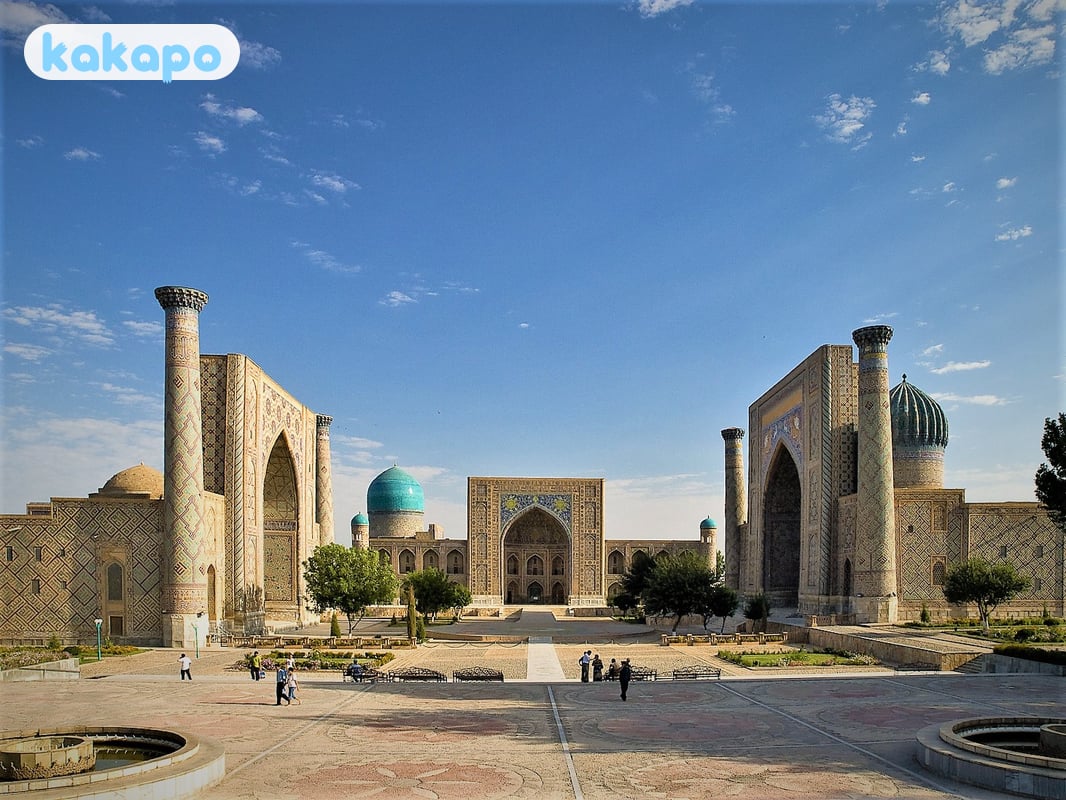
- Registan Square — the iconic three-madrasah ensemble (Ulugh Beg 1417, Sher-Dor 1636, Tilya-Kori 1660). UZS 70,000 entry (~$5); a separate ~$2 lets you climb one of the leaning minarets at sunset (negotiated discreetly with the guard — the official rule is no climbing but it happens). Free outside the gates, lit at night, sound-and-light show evenings in summer.
- Bibi-Khanym Mosque — Timur's monumental 1399-1404 mosque, the largest in the Islamic world when built. The dome partly collapsed in earthquakes; Soviet restoration in the 1970s rebuilt much of the structure. UZS 50,000 entry. Across the square from the Siab Bazaar.
- Shah-i-Zinda necropolis — the "living king" street of mausoleums, the most beautiful tile-work in Central Asia. UZS 35,000 entry. Allow 90 minutes. Genuinely the most-photographed location in Uzbekistan after the Registan.
- Gur-e-Amir — Timur's mausoleum, where Tamerlane and his sons are buried. UZS 50,000 entry. The blue ribbed dome is one of the inspirations for the Taj Mahal and the dome of the Rock.
- Siab Bazaar (Siyob) — the traditional market immediately north of Bibi-Khanym. Bread, dried fruit, spices, melons, the famous Samarkand non (a flat round bread that lasts 6 months because of the way it's baked). Closes by 19:00; busiest 09:00-13:00.
- Ulugh Beg Observatory — the 15th-century astronomical observatory ruins north-east of the centre. UZS 30,000. Ulugh Beg's catalogue of 1,018 stars was used by European astronomers into the 17th century. Allow 60 minutes including the small museum.
- Afrosiyob ruins — the original pre-Mongol city site north of modern Samarkand, levelled by Genghis Khan in 1220. Museum on site with the famous 7th-century Sogdian murals. UZS 25,000.
- Tashkent (TAS) — Afrosiyob HSR — Tashkent ↔ Samarkand on the Afrosiyob high-speed train: 2h10m, second class ~UZS 240,000 ($20), business ~UZS 350,000 ($28). Book on railway.uz 3-7 days ahead in peak season. Slower trains 5-6h. Driving 4h on the M37.
- Bukhara HSR — Samarkand ↔ Bukhara on the same Afrosiyob train: 1h45m further west. The standard Uzbekistan circuit is Tashkent → Samarkand → Bukhara → Khiva (the Khiva leg is longer; many fly back from Urgench).
- Visa-free for 90+ nationalities — UK, EU, US, Canada, Australia, NZ, Japan, Korea among others; 30-day stay, no application, no fee, just arrive at TAS with a passport valid 3+ months. Other nationalities pay $20 for an e-visa online.
- Silk Road context — Samarkand was a major Silk Road trading hub from the 7th century BC; the Persian Achaemenids, Greeks (Alexander 329 BC), Sogdians, Arabs, Mongols and Timurids all ruled it before Russia annexed it in 1868. The blue tiles and the trans-Asian trade routes are the same story.
If it's your first time visiting
- Best arrival: fly to Tashkent (TAS) on Uzbekistan Airways, Turkish, Korean, Asiana, Lufthansa, Aeroflot or direct from Istanbul/Dubai. Take the Afrosiyob high-speed train Tashkent → Samarkand (2h10m, UZS 240,000 economy / 350,000 business — book on railway.uz a week ahead). Direct flights to Samarkand International Airport (SKD) exist from Moscow, Istanbul, Dubai but are limited.
- Best neighbourhood for your first night: near the Registan (Hotel Bibi-Khanym, Hotel Registan Plaza, Antica B&B) for the iconic walking circuit; Boulevard area (Hotel Diyora, Lia! Hotel) for newer 4-star options. Stay 2-3 nights — fewer than 2 nights and you're rushed; more than 3 and the city's mostly done.
- Day 1, jet-lag friendly: Registan opening 09:00 (allow 2 hours; pay the discreet UZS 20,000-30,000 to climb a minaret); breakfast plov (Uzbek rice pilaf) at Karimbek or Platan (UZS 50,000-80,000); 13:00 Bibi-Khanym + Siab Bazaar (buy a 6-month non bread for UZS 8,000 and dried apricots); 16:00 Shah-i-Zinda for the late-afternoon light on the tile-work; evening at the Registan sound-and-light show (April-October).
- Real prices in 2026: Registan UZS 70,000 (~$5.50); Shah-i-Zinda UZS 35,000; Gur-e-Amir UZS 50,000; Afrosiyob Tashkent-Samarkand economy UZS 240,000 ($20), business UZS 350,000 ($28); plov dinner UZS 50,000-80,000; mid-range hotel UZS 600,000-1,200,000/night ($50-100); Yandex Go ride UZS 25,000-50,000; bottled water 1.5L UZS 6,000-8,000; SIM card with data UZS 80,000-150,000.
- Currency — the soum is weird: $1 ≈ UZS 12,500; the biggest note is 100,000 soum so you'll carry stacks. International Visa/Mastercard now work at hotels + tourist restaurants. ATMs at Asaka Bank, NBU, Hamkorbank can run out of foreign currency for international cards — keep some USD as backup (post-2017 series only — older notes get refused, no exceptions, even unmarked).
- Tipping: 10% in tourist restaurants; round up Yandex Go rides; small tip to the discreet minaret-climb guard at the Registan.
- Common rookie mistakes: not booking the Afrosiyob ahead and finding it sold out on a Friday; drinking tap water (locals don't — bottled is cheap and ubiquitous); photographing women without permission; bringing a drone (prohibited without permit, confiscated at TAS); ignoring the registration slips your hotel hands you (technically required — keep them until departure); using USD notes printed before 2017 (universally refused); attempting Bukhara as a same-day trip (5-6h round trip — overnight instead); skipping the post-2018 visa-free entry research (most Western nationalities now need nothing more than a passport).
- Cultural code: modest dress at religious sites (covered shoulders + knees; women may be asked to cover hair at active mosques — scarves usually provided); same-sex relationships are criminalised with active enforcement (LGBT visitors should be discreet); severe penalties for drugs; don't photograph military, government buildings, or transport infrastructure including bridges.
- Bring: modest clothing, a contactless card, USD cash backup (post-2017 notes only), a hat + SPF 50 sunscreen for summer (the Registan has no shade — 35-42°C standard July-August), an Uzbek SIM (Beeline UZ, Ucell, Mobiuz) at TAS airport, and travel insurance with medical-evacuation cover (serious cases evacuate to Tashkent or beyond).
Practical info — emergency numbers
- Police: 102.
- Ambulance: 103.
- Fire: 101.
- Unified emergency: 112.
- Tourist Police (Samarkand): visible near the Registan.
- Tashkent International Medical Clinic: +998 71 291 7222.
Bring: modest clothing for sites, a contactless card (Visa/Mastercard works), some USD cash backup (post-2017 notes), a hat + sunscreen for summer, an Uzbek SIM (Beeline UZ, Ucell, Mobiuz) at Tashkent airport, and travel insurance with medical-evacuation cover.
Frequently asked questions
Is Samarkand safe to visit in 2026?
Yes — Samarkand scores 86/100 here, near the top of any Silk Road itinerary. The US State Department lists Uzbekistan at Level 1 and UK FCDO at 'normal precautions'. Crime against tourists is unusually rare; Uzbek hospitality culture and a visible (heavy, post-Karimov-reform-era) police presence keep the Registan Square area and the historic core remarkably calm. The realistic concerns are not crime: it's the brutal continental heat (June-August routinely 38-42°C with no breeze), the language gap (Uzbek and Russian dominate; English very thin outside hotel staff), and currency-handling — som notes come in stacks of 50,000 and counting at markets is a learned skill.
Is Samarkand safe at night?
Yes. Registan Square is illuminated and busy with locals and tourists until late, and the sound-and-light show (April-October) keeps the plaza populated until 22:00. Siab Bazaar shuts by 19:00 and the streets around it empty fast. The Bibi-Khanym Mosque and Shah-i-Zinda areas are fine to walk after dark but unlit beyond the monuments; bring a phone torch. Solo women report consistently positive experiences walking in the historic centre at night. Avoid the cheap-end of the train-station area after midnight — not dangerous, just emptier and where the few taxi-overcharge attempts happen.
What scams should I watch out for in Samarkand?
The dominant tourist friction is taxi pricing rather than scam: agree a fare before getting in, or use the Yandex Go app (works well in Uzbekistan and Tashkent — much cheaper than airport-rank taxis). At the Tashkent airport on arrival, ignore the men with lanyards at baggage claim and walk to the official taxi rank or use Yandex Go from the kerb. Currency-exchange double-counting at the bazaar is occasional; count notes in front of the vendor. The Afrosiyob fast train tickets sometimes sell out for foreign tourists who walk up day-of — buy online via railway.uz a week ahead.
Can you drink tap water in Samarkand?
No — tap water in Samarkand is not safe for visitors to drink and most locals also drink bottled or filtered. The municipal supply is technically treated but pipes are old and contamination is common. Bottled water (Nestle Pure Life, Hayot) is cheap and universally available; 5-litre jugs cost about UZS 8,000-12,000. Use bottled water for brushing teeth on a short trip if your stomach is sensitive. Avoid ice in street drinks at the bazaar but ice in hotel and tourist restaurants is fine. The melon water at Siab Bazaar is wonderful and safe — they peel in front of you.
Do I need a visa, and how does the Tashkent connection work?
Uzbekistan is visa-free for 90+ Western nationalities for 30 days (introduced 2018-2019 and expanded post-Karimov) — UK, EU, US, Canada, Australia, NZ, Japan, Korea all included. Just arrive at Tashkent airport (TAS) with a passport valid 3+ months, get a stamp, no fee. From Tashkent to Samarkand, the Afrosiyob high-speed train is the standard route: 2 hours 10 minutes, UZS 200,000-340,000 second class, departs Tashkent ~07:30, 10:00, 17:00, 19:00 daily. Book a week ahead in peak season. The 5-hour shared-taxi 'damas' alternative is cheap but uncomfortable and not advised. Most travellers do Tashkent (1 night) → Samarkand (2-3 nights) → Bukhara (2 nights) → Khiva, all by Afrosiyob or sleeper train.
Sources
Run a business in Samarkand?
Show visitors your Samarkand business is a safe choice. The free Verified by Kakapo badge puts Samarkand's live safety score on your website, links back to your verified page, and updates itself. No cost.
Get the free badge →