


Is Paris, France Safe? A 2026 Travel Safety Guide
What's actually risky in Paris — pickpockets on lines 1 and 4, the airport-taxi scams, and the few areas where awareness matters.

Paris is a low-violence, high-petty-theft city for visitors. The single most useful fact you can take into the trip is that this is the most-pickpocketed tourist destination in Europe — and the pickpocketing is concentrated on a small number of specific Métro lines, monuments, and tourist circuits.
The UK FCDO and the US State Department both list France at low advisory levels (Level 2 for general vigilance because of the residual terror-threat baseline that's been in place since 2015, but no specific Paris travel restriction). Violent crime against tourists is rare. Strikes and demonstrations close streets occasionally, especially around Place de la République, Bastille, and Champs-Élysées.
The realistic risks for visitors: pickpockets on Métro lines 1, 4, 9 and at the major monuments; airport-taxi flat-fee scams; aggressive "petition" and "gold ring" hustles around Sacré-Cœur and the Eiffel Tower; and the very real challenge of being a foreign tourist in a city that — outside the heavily-policed central tourist core — runs at its own pace and isn't very forgiving of confused visitors.
Visiting Paris for the first time, the thing that catches most travellers off-guard isn't pickpockets — it's the sheer density of the tourist circuit overlapping with the working city. The Métro line you take to the Louvre is also the morning commute for half the 1st arrondissement, the queue at Pierre Hermé is staffed by people on a 35-hour week, and the waiter at your bistro is allowed to be unimpressed with you and is exercising that right. Treating the city as theatre staged for visitors is the fastest way to feel friction; treating it as someone else's city you're a guest in is the fastest way to enjoy it.
In 2026, the specific things that have changed since pre-pandemic include: the post-Olympics security infrastructure is permanent (anti-vehicle bollards along the Seine quays, expanded armed-patrol Sentinelle presence at major stations, much-improved CCTV in the Métro); contactless tap-to-pay now works on every Métro turnstile and bus (you can skip the Navigo card for short trips); CDG Express is finally operating, offering a 20-minute express train to Gare de l'Est for €24; restaurant tipping has stabilised at "round up or leave a couple of euros" rather than the percentage Anglo-American visitors used to add; and the Notre-Dame reopening in December 2024 means the Île de la Cité tourist crush is back to pre-fire levels, with all the pickpocket activity that implies.
| Night safety | 63/100 |
|---|---|
| Scam / petty-crime risk | High |
| Violent crime (tourists) | Low |
| Most common scams | Gold-ring scam (Seine bridges, Trocadéro); Friendship-bracelet hustlers (Sacré-Cœur steps); Petition / clipboard pickpocket teams |
| Safer neighbourhoods | Le Marais (3rd-4th), Saint-Germain & Latin Quarter (5th-6th), 1st (Louvre/Châtelet) |
| Data sources cited | 4 |
| Last verified |
What the score means — 80/100
- Healthcare (90) — French universal healthcare is excellent. AP-HP runs the major Paris hospitals (Pitié-Salpêtrière, Necker, Hôpital Européen Georges-Pompidou). EU citizens with EHIC/GHIC pay nothing; non-EU should have travel insurance.
- Transport (84) — the Métro/RER/bus network covers the entire city; trains run punctually outside strikes. Pickpocketing on busy lines is the only consistent transport-related risk.
- Night (78) — the central arrondissements (1-8) are well-lit and busy until late; outer arrondissements (18, 19, 20) are quieter and require slightly more awareness.
- Personal safety (74) — the lowest sub-band, dragged down by petty theft. Per Préfecture de Police statistics, Paris records ~50,000 reported pickpocketing incidents per year, the majority targeting tourists.
Métro pickpockets — the specific lines and stations
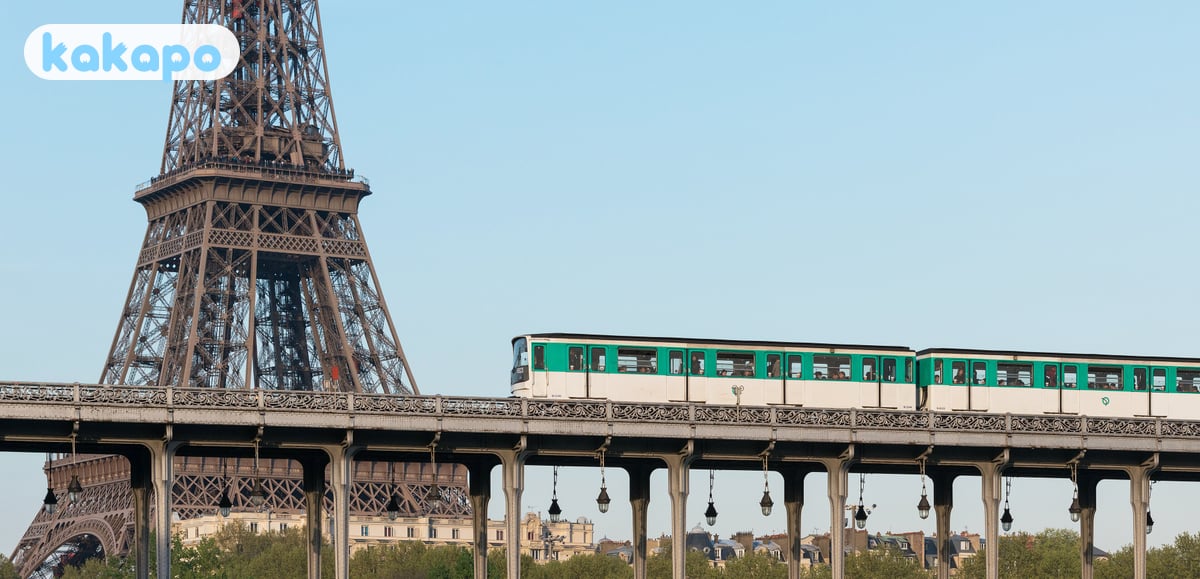
This is the single most useful section to read.
- Line 1 (yellow) — the tourist artery. Runs through Charles de Gaulle Étoile, Concorde, Tuileries, Louvre, Châtelet, Bastille. By far the most-worked line by pickpocket teams.
- Line 4 (purple) — Gare du Nord, Gare de l'Est, Châtelet, Saint-Michel. High pickpocket activity, especially at the Gare du Nord interchanges.
- Line 9 (olive) — Trocadéro, Champs-Élysées-Clemenceau. Tourist-heavy. Watch your bag at Trocadéro especially.
- RER B — the airport line from CDG via Gare du Nord. Heavily worked. Don't fall asleep with valuables.
The patterns: teams of 2-4 work together; one bumps you, others reach in; doors-closing distractions ("Watch out!" then your phone is gone). Phone in your front pocket; daypack zipped and held in front of you on platforms; never put a bag down on a station bench.
Stations to be extra alert at: Châtelet-Les Halles (the world's largest underground station — 750,000 people/day), Gare du Nord, Saint-Michel, Trocadéro, Argentine.
Monument and street scams
- The "gold ring" scam — someone "finds" a gold ring near you, asks if it's yours, then asks for money for finding it. Walk on. Most concentrated around the Pont des Arts, Trocadéro, and the Seine bridges.
- "Friendship bracelet" at Sacré-Cœur — men at the bottom of the Montmartre stairs grab your wrist and weave a string bracelet, then demand €20-30. Keep your hands in your pockets walking up; politely decline if approached.
- The "petition" / clipboard scam — usually young women, often working in pairs. They approach with a "deaf-mute" petition; while you're reading, the partner picks your pocket. Don't engage.
- "Free" rose / sunflower at restaurant terraces in Le Marais and Saint-Germain — same idea, demand money after handing it over.
- Eiffel Tower fake security check — someone in a hi-vis vest "needs to scan" your bag. Real security is at the airport-style checkpoints; nothing else exists.
- Fake Eiffel Tower / Louvre tickets sold by people approaching queues. Only buy on the official site (toureiffel.paris, louvre.fr) or at the on-site machines.
Areas — the comfortable, and the few that need awareness
Paris's 20 arrondissements spiral outwards from 1 (centre) to 20 (north-east edge).
Comfortable everywhere: 1-8 (the central tourist core), 5-7 (Latin Quarter, Saint-Germain, Eiffel area), 9 (Opéra), 16 (Trocadéro, Passy — residential), Le Marais (3-4), Montmartre top of the hill (in the 18th, but the touristy summit area).
Aware but fine: Gare du Nord / Gare de l'Est neighbourhood (10th) — busy and a bit gritty around the stations; daytime is fine, late-night solo walks less so. Pigalle (9th/18th) — the historic adult-entertainment district; tourist-friendly nightlife but pickpockets in clubs.
Stay aware: parts of the 18th north of Sacré-Cœur (Goutte d'Or / Barbès) and parts of the 19th and 20th (Belleville's outer streets after dark) — these are working-class, not "dangerous" in the muggings sense, but tourists rarely have a reason to be there at night.
Châtelet-Les Halles (1st, the central interchange) — the underground levels at night attract loiterers and have low-grade harassment incidents. Daytime is fully fine.
Airports and taxis
- Charles de Gaulle (CDG) — fixed flat-rate to central Paris: €56 to the right bank, €65 to the left bank (regulated rate). Drivers offering "€80, take it or leave it" are scamming. Use the regulated taxi rank only.
- Orly (ORY) — fixed rates: €36 right bank, €44 left bank.
- RER B from CDG — €11.80 to central Paris, ~35 min. Cheaper but pickpocket-heavy.
- Uber, Bolt, FREE NOW — all regulated as taxi services in Paris. Generally honest; surge pricing during strikes can be 2-3×.
- Vélib' bike-share — extensive but Parisian drivers don't always look. Helmet not required by law; a helmet you bring is sensible.
- Strikes — affect Métro/RER occasionally. Check rer.sncf and ratp.fr the morning of travel.
Neighbourhood-by-neighbourhood breakdown
- 1st (Louvre, Tuileries, Châtelet) — the heart of tourist Paris. Heavily policed, extremely safe day and night. Châtelet-Les Halles underground (the world's largest interchange, 750,000 passengers/day) attracts loiterers in the lower levels at night; the streets above are fine.
- Le Marais (3rd-4th) — medieval streets, Jewish quarter, gay Paris, Place des Vosges. One of the safest and most pleasant areas to walk at any hour. Pickpockets work the rue des Rosiers falafel queue on Sundays.
- Saint-Germain-des-Prés and Latin Quarter (5th-6th) — Sorbonne students, café terraces, bookstores, the Panthéon. Calm, residential-feeling, very safe. The streets immediately around Place Saint-Michel get touristy and pickpocket-prone.
- 7th (Eiffel Tower, Invalides, Orsay) — diplomatic and museum district. The Champ-de-Mars area is heavily scammed (petition girls, gold-ring hustlers, friendship-bracelet teams) but never dangerous. The residential streets behind are very safe.
- Montmartre (18th) — the hilltop tourist core around Sacré-Cœur is fine and well-policed; the friendship-bracelet hustlers on the steps up are the main annoyance. Go down the north slope into Goutte d'Or and the vibe changes — working-class, North African, fine in daylight but not where a confused tourist wants to be at midnight.
- Belleville and Ménilmontant (19th-20th) — eastern, multicultural, fast-gentrifying. Père Lachaise cemetery is here. Daytime fine and interesting; late-night solo walks on the back streets less comfortable than central arrondissements.
- Gare du Nord / Gare de l'Est area (10th) — busy, slightly rough around the immediate station perimeter, fine on the canal side. The Canal Saint-Martin nightlife strip is one of the most enjoyable evenings in the city.
If it's your first time visiting
- Best arrival airport: Charles de Gaulle (CDG) for long-haul; Orly (ORY) for European short-haul. CDG to centre: RER B (€11.80, 35 min, pickpocket-heavy) or the regulated taxi flat rate (€56 right bank, €65 left bank). The new CDG Express to Gare de l'Est runs at €24 in 20 minutes and is the best option if your hotel is anywhere near the 10th.
- Buy a Navigo Easy card or just use contactless. Tap-to-pay now works on every Métro and bus reader (€2.15 per single, €17.35 for a 10-pack carnet, €30.75 for a week of unlimited zones 1-2). No need to wrestle with paper tickets anymore.
- Best neighbourhood for your first night: Le Marais (4th) for atmosphere, Saint-Germain (6th) for calm, around the 1st for proximity to everything. Avoid first-time bookings near Gare du Nord, in the 18th north of Sacré-Cœur, or in the outer 19th/20th — they're fine but harder to navigate while jet-lagged.
- Day 1, jet-lag friendly: walk from Le Marais through Île Saint-Louis to Notre-Dame (reopened December 2024 — entry is free but timed-ticket booking via the official site is essential), then up to the Latin Quarter for lunch. Low-stress, all walkable.
- Common rookie mistakes: not greeting with "Bonjour" before every interaction (mandatory — silence reads as rude); ordering coffee at a sit-down table thinking it's the same price as the counter (it isn't, it's often triple); standing on the left side of the Métro escalator (move right or get shoved); confusing "service compris" with "tip already paid" and over-tipping (it just means tax included, not service — but tipping is genuinely optional, just round up).
- Book the big sites in advance. Louvre, Orsay, Sainte-Chapelle, Eiffel Tower, Versailles, Notre-Dame all sell timed-entry slots online. Walking up at the door in season means losing two hours of your day.
- Don't carry your passport unless you have a specific reason. Leave it in the hotel safe; carry a photo on your phone and a driver's licence or ID card. French police rarely demand passport from tourists, and losing it ruins your week.
- Bring shoes that can walk 15-20km a day on cobbles. Paris distances are deceptive on the map and lethal in cute new sandals.
Practical info — emergency numbers
- Police: 17.
- Ambulance (SAMU): 15.
- Fire / sapeurs-pompiers: 18.
- European emergency: 112 — works on any mobile.
- Tourist police (English-speaking): Service de la Protection (SDLP) at the Préfecture, +33 1 53 71 53 71.
- Lost / stolen passport: report at any commissariat de police; embassy then issues an emergency travel document.
Bring: a card without foreign-transaction fees, an unlocked phone (Free, Orange, Bouygues prepaid SIMs at the airport), comfortable shoes for the cobbles, and travel insurance documentation. Tap water is excellent; ATMs at BNP Paribas, Crédit Agricole, Société Générale are safest.

Frequently asked questions
Is Paris safe to visit in 2026?
Yes. Paris is among the world's most-visited cities for a reason — broadly safe with the well-known pickpocket pattern. US State Department lists France at Level 2 (terrorism + civil-unrest baseline). UK FCDO has no overall advisory. Real concerns: pickpocketing at the Eiffel Tower queue, Louvre, Trocadéro, metro Line 1, Gare du Nord; occasional protests at République/Bastille; rare moped-snatch in central tourist zones.
Is Paris safe at night?
Yes for central tourist areas (1st-7th + 9th + 11th arrondissements). Standard urban awareness applies: stick to lit boulevards, use Uber/Bolt/G7 taxis after midnight, watch belongings on the Metro. Avoid demonstrations + the immediate areas around major protests (République, Bastille, Nation). The outer banlieue (Seine-Saint-Denis, Val-de-Marne) has higher reported crime but isn't on visitor itineraries.
What's the most dangerous area of Paris?
Within central Paris, no specific 'no-go' zones — the 18th + 19th + 20th arrondissements have some grittier streets at night but tourist sites (Sacré-Cœur, Montmartre) are heavily-policed. Gare du Nord + Châtelet metro corridors have highest pickpocket density. Avoid the outer banlieue (Seine-Saint-Denis 93, parts of 91 + 95) at night unless you know the specific area.
Is Paris safe for solo female travellers?
Yes. Paris ranks well on solo-female-safety indices for European capitals. Standard precautions: phone in front pocket, no street-taxi rides solo late at night (use Uber/Bolt), watch drinks in nightlife. Catcalling is more common than in London/Berlin but generally non-aggressive. Women routinely walk home alone in central arrondissements.
Can you drink tap water in Paris?
Yes — Paris tap water is excellent + heavily-tested. The free public water fountains ('Wallace fountains' for still water; 'pétillante' fountains for sparkling) are drinking-grade. Some restaurants will push bottled mineral water; tap is fine + free if you ask for 'une carafe d'eau'.
What's the biggest scam to avoid in Paris?
The 'petition' scam — usually at the Eiffel Tower, Louvre, Sacré-Cœur. A group of children (often Roma-aligned) with a clipboard asks for your signature 'for the deaf' while accomplices lift your wallet. Walk past + don't engage. Other recurring scams: 'found gold ring', 'friendship bracelet' at Sacré-Cœur, three-card monte on Pont Neuf, unmarked-minicab pricing.
Are the Olympic Games / 2024 aftermath affecting Paris safety?
Positively. Paris invested heavily in central security infrastructure (cameras, bollards, dedicated cycle lanes, RER B+CDG Express line) for the 2024 Olympics — much of which remains in 2026. Operation Sentinelle (visible armed-police patrols at major stations + monuments) continues as the Vigipirate baseline. Day-to-day visitor experience: more visible security, no change in risk.
Recent travel news for Paris
All travel news →Weapons cache found near synagogue in Paris suburb Sarcelles triggers anti-terror probe
A stolen car holding an assault rifle and a handgun was found near a synagogue in Sarcelles, north of Paris, prompting the evacuation of about 300 people and a national anti-terror investigation. No attack took place and central Paris was not affected.
Wildfires of 'exceptional scale' burn near Paris, prompting evacuations and firefighting planes
Wildfires described as being of exceptional scale have torn through the historic Fontainebleau forest and other areas near Paris, forcing evacuations and the deployment of water-bombing aircraft during a hot, dry spell.
Paris authorities warn of unrest risk as PSG Champions League final draws crowds
Authorities in Paris are concerned that troublemakers may cause unrest as tens of thousands gather for Champions League final screenings on May 30.
Sources
Run a business in Paris?
Show visitors your Paris business is a safe choice. The free Verified by Kakapo badge puts Paris's live safety score on your website, links back to your verified page, and updates itself. No cost.
Get the free badge →