


Is Yerevan, Armenia Safe? A 2026 Travel Safety Guide
The Azerbaijan border, the Nagorno-Karabakh fallout, summer heat, marshrutkas, and the realistic risks of one of the world's oldest continuously-inhabited capitals.

Yerevan is one of the safer Caucasus capitals for tourists. Crime against visitors is rare; Armenian hospitality is as serious a cultural value as it is in neighbouring Georgia.
The realistic risks for visitors are the geopolitical context (Armenia is in active or recent military conflict with Azerbaijan over Nagorno-Karabakh, and the border with Azerbaijan is sealed; the border with Turkey has been closed for ~30 years), the marshrutka driving culture, summer heat (35-40°C in July), and Yerevan's location in a seismic zone (a major 1988 earthquake remains in living memory).
Armenia sits at Level 2 on the US State Department's advisory list, with Level 4 advisories specifically for the regions bordering Azerbaijan and the formerly-disputed Nagorno-Karabakh territory (now under Azerbaijani control after the 2023 offensive). The Level 4 areas are remote and not anywhere visitors normally go. Yerevan itself is functionally low-risk.
Yerevan is one of the world's oldest continuously inhabited capitals — founded in 782 BCE as the fortress of Erebuni, predating Rome by 29 years. The pink-tuff stone that gives "the Pink City" its colour was quarried locally and used in the Soviet-era central plan by architect Alexander Tamanyan, which means the centre has an unusual visual coherence. The population is ~1.1 million (Armenia's total ~2.8 million), the elevation is 990 m (mild altitude noticeable for some on arrival), and the city sits in a basin ringed by mountains — Mount Aragats to the north, Mount Ararat (in modern Turkey) due south of the city and dominating every clear-day skyline view.
The 2026 details worth knowing in advance: GG Taxi (Armenia-local) and Yandex Go are the dominant ride-hail apps, with Bolt also operating — typical fares run AMD 800-2,500 in town. The Cascade complex's outdoor escalators were restored end-to-end in 2024 after years of partial closures. Russian-passport holders remain visible in Yerevan since the 2022 mobilisation wave, with no tourist impact. The post-2023 Nagorno-Karabakh displacement (~120,000 ethnic Armenians) has reshaped some city neighbourhoods but does not affect tourist experience. The Brandy Factory (Ararat) tour at 90 minutes with tasting is AMD 7,000-12,000 depending on the tier.
| Night safety | 71/100 |
|---|---|
| Scam / petty-crime risk | Medium |
| Violent crime (tourists) | Low |
| Most common scams | foreign-tourist prices at Vernissage market; erratic driving culture of marshrutkas; rough sleepers around Kilikia bus station at night |
| Safer neighbourhoods | Kentron, Republic Square, Saryan / Mashtots area |
| Data sources cited | 4 |
| Last verified |
What the score means — 79/100
- Personal safety (86) — high. Yerevan is small enough and high-trust enough that crime is rare.
- Air quality (78) — moderate. Old Soviet-era buses and a basin geography produce visible smog in winter inversions.
- Healthcare (76) — Erebouni Medical Centre and Astghik Medical Centre are the better private hospitals. Serious cases sometimes evacuate to Tbilisi or Vienna.
- Transport (72) — Yerevan Metro is one stop short and underused; marshrutkas dominate.
Azerbaijan border, Nagorno-Karabakh, Turkey
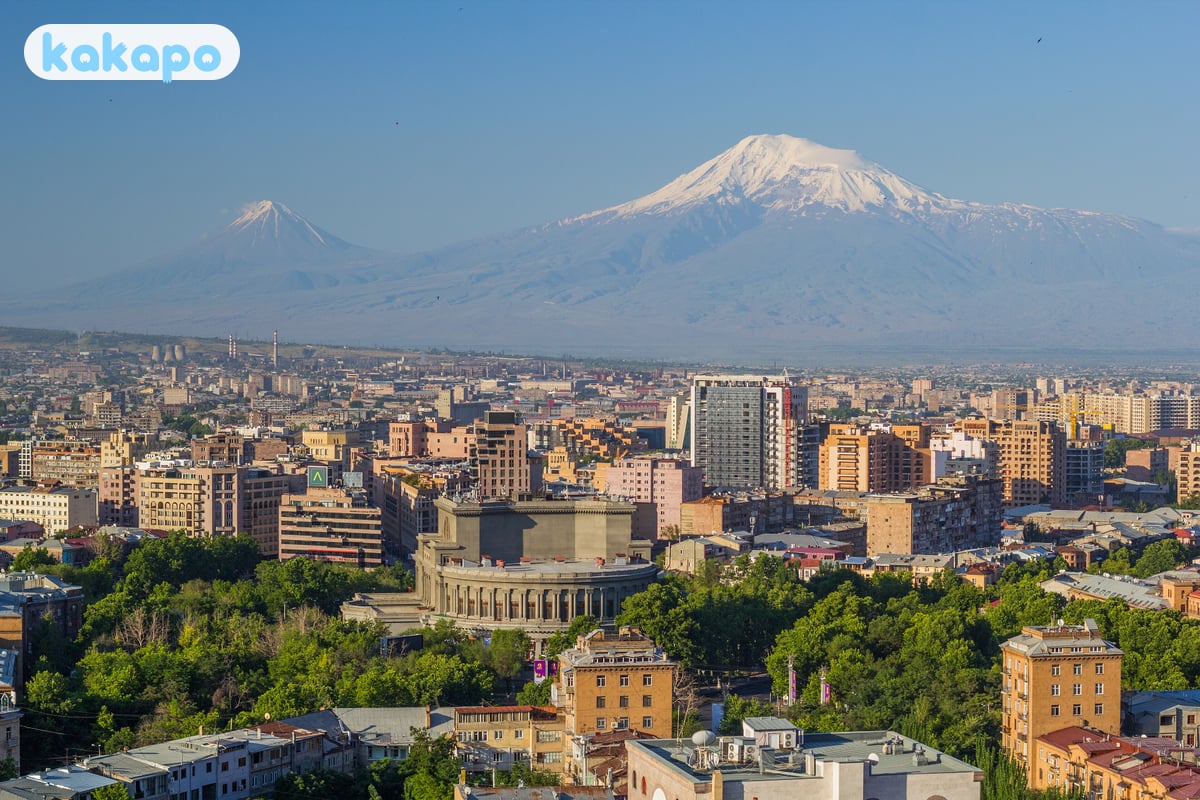
Armenia has two closed borders: with Azerbaijan (active conflict) and with Turkey (closed since 1993). It has open borders with Georgia (north), Iran (south), and air links to most major hubs.
- Yerevan specifically: zero practical impact on tourist trips. Cafés, bars, transport unaffected.
- Don't visit the eastern border regions (Tavush, Syunik). Sporadic shelling continued through 2024-2025. Tourist itineraries don't go there.
- Nagorno-Karabakh (Artsakh): Azerbaijan retook the territory in September 2023; the ethnic Armenian population (~120,000) was displaced. It's not accessible from Armenia. Tourist travel is impossible.
- Iranian border: open and busy with trade. Driving south to Iran is doable for backpackers with the right visa.
- Russian and Iranian visitors: visible in Yerevan. Yerevan has been a destination for Russian draft-dodgers since 2022. No tourist impact.
- Photography of military installations and border posts: avoid.
Areas — Kentron, the Cascade, Republic Square

Recommended for visitors: Kentron (the central district — Republic Square, the Opera, Cascade complex, the cafés on Northern Avenue). Walking-friendly, well-policed, late-night safe. Saryan / Mashtots area — the wine-bar street.
Stay aware: around Kilikia bus station at night (rough sleepers). Outer Soviet-era housing blocks (Massiv, Davtashen) — residential, no tourist relevance.
There are no specific "no-go" zones for tourists in Yerevan proper.
Summer heat and earthquake context
- July-August: 35-40°C standard, with low humidity. Plan early-morning sightseeing; rest mid-day.
- Hydration and sun: pulpulak (public drinking fountains) throughout the city — water is potable and cold. Refill bottles freely.
- Earthquake risk: Armenia sits on the Anatolian-Iranian seismic belt. The 1988 Spitak earthquake killed ~25,000 people in north-west Armenia. Yerevan's modern buildings post-2000 are built to current seismic code; older Soviet blocks are a known concern.
- If a tremor hits: drop, cover, hold under sturdy furniture; in a Soviet-era building, the corridor stairwell columns are typically the strongest section.
- Wildfires: occasional in summer, mostly outside the city.
Metro, taxis, marshrutkas

- Yerevan Metro: a single 1-line system (10 stations). Clean, cheap (₽100 = ~$0.25), but doesn't reach most tourist sites well — Republic Square is on it.
- Buses + trolleybuses: the city has been modernising. Many old Soviet-era buses are being replaced.
- Yandex Go and GG taxi: the two main ride-hail apps. Cheaper than street taxis. GG is Armenia-local.
- Bolt: also operates.
- Marshrutkas: shared minibuses, cheap, erratic driving. Use sparingly.
- Zvartnots Airport (EVN): 12 km west. Taxi via app ~AMD 2,500 (~$6). Bus 201 to Republic Square, AMD 300.
Day trips — Geghard, Garni, Sevan, Ararat brandy
- Geghard Monastery + Garni Temple: 1-hour drive east. Standard combo trip; package ₽AMD 8,000-15,000.
- Lake Sevan: 1.5-hour drive. The Sevanavank monasteries on the peninsula. Cold lake — swimming only briefly even in August.
- Khor Virap: monastery with the iconic Mount Ararat backdrop. 45 min south. Border with Turkey is just behind — closed but visible.
- Ararat brandy tour: in the city, the Ararat Brandy Factory tour is a 90-min walk-and-tasting.
- Self-drive: highways are reasonable; rural roads can be rough. Don't drive to the eastern border regions.
Neighbourhood-by-neighbourhood breakdown
- Republic Square (Hraparak) + Kentron core — the ceremonial heart, the History Museum, the singing-fountain show at 21:00 in summer, the Marriott and the National Gallery. Walkable any hour; police visible; the central metro station is here.
- The Cascade + Cafesjian Center — the giant white-limestone stepped monument climbing the hillside north of Tamanyan Street, with outdoor sculpture (Botero's "Cat", Lynn Chadwick's figures) and the Cafesjian modern-art museum inside. Restored escalators run end-to-end again. The view from the top includes Mount Ararat on clear days.
- Saryan Street + Mashtots Avenue — the wine-bar district. In Vino, Tapastan, 13 Wine Bar — Armenian wine has been having a serious revival (Areni Noir reds, indigenous grape varieties from 6000-year-old wine-making tradition). Late-night safe, locals dominate.
- Northern Avenue (Hyusisayin Poghota) — the modern pedestrian shopping street built 2007, linking Republic Square to the Opera. Glass-fronted, lit at night, café-saturated. Comfortable for solo women.
- Opera + Swan Lake (around Freedom Square) — the Armenian Opera Theatre, the surrounding park, summer concerts, winter ice-skating. Café Jazzve on the edge is a Yerevan institution. The Saryan and Mashtots wine-bar streets are a 5-minute walk west.
- Kond + Kond District — the oldest surviving neighbourhood, a hillside warren of pre-Soviet single-storey houses immediately west of Mashtots. Gritty, photogenic, slowly gentrifying. Daytime fine, less polished at night.
- Vernissage open-air market — weekend flea market behind Republic Square: carpets, jewellery, Soviet-era cameras, antiques. Foreign-tourist prices run 2-3× local prices — negotiate or move on.
- Marshrutka vs Metro — the Yerevan Metro is a single line of 10 stations (AMD 100, ~$0.25), useful for Republic Square and the Sasuntsi Davit train station but not for most tourist sites. Marshrutkas (shared minibuses) are AMD 100 flat, run everywhere, drive erratically. Most visitors use GG, Yandex Go or Bolt instead.
- Khor Virap day trip (45 min south) — the iconic Mount Ararat photo-spot monastery. The closed Turkish border is visible just behind. Standard half-day combo with Garni temple and Geghard monastery costs AMD 8,000-15,000 with a small group.
- Stay aware — around Kilikia bus station (rough sleepers at night) and outer Soviet-era housing massivs (Davtashen, Massiv) — residential, no tourist relevance. There are no specific no-go zones for tourists in Kentron.
If it's your first time visiting
- Best arrival: Zvartnots Airport (EVN) is 12 km west. GG Taxi or Yandex Go from the airport runs AMD 2,500-3,500 (~$6-8) — order from inside the terminal, not from touts in arrivals. Bus 201 to Republic Square is AMD 300 (~$0.75) but slow. Most flights are red-eyes arriving 03:00-06:00, which makes the taxi-app the practical choice.
- Currency + cards: Armenian dram (AMD). $1 USD ≈ AMD 400 (rates fluctuate). Cards are widely accepted in Kentron restaurants and hotels but Vernissage market, marshrutkas, and small cafés are cash-only. ATMs at Ardshinbank, ACBA, Inecobank are the reliable bank-branch ones; avoid Euronet ATMs which charge premium fees. Always pay in AMD on terminals (DCC adds 5-10%). USD cash is useful for backup but rarely directly spendable.
- Best neighbourhood for your first night: Kentron, ideally within walking distance of Republic Square or the Cascade. The Marriott Yerevan, Tufenkian Historic Yerevan, and Republica Hotel are the named central options ($80-200/night). The Opera area is the alternative — quieter, near the wine bars.
- Pulpulaks — the free public fountains: Yerevan has free drinking-water fountains throughout the centre, fed by mountain springs. Locals refill bottles freely. The water is mineral-rich and excellent. Hotel taps are equally safe. Bottled water is essentially unnecessary in town.
- Day trips worth pre-booking: the Garni temple + Geghard monastery combo (1h east, AMD 8,000-15,000); Lake Sevan + Sevanavank monasteries (1.5h, swim only briefly in summer — the lake is glacier-cold); Khor Virap monastery with the Mount Ararat backdrop (45 min south). The Brandy Factory (Ararat) walk-and-tasting in town is 90 minutes, AMD 7,000-12,000.
- The closed-border reality: Armenia has two closed borders — Azerbaijan (active conflict, sealed) and Turkey (closed since 1993). Open borders are Georgia (north) and Iran (south). Don't visit the eastern border regions (Tavush, Syunik) — sporadic shelling continued through 2024-2025. Nagorno-Karabakh is now under Azerbaijani control and inaccessible from Armenia. Khor Virap is safe; the Turkish border there is closed but visible behind the monastery.
- Food: Armenian khorovats (BBQ), khash (winter tripe soup), dolma, lavash flatbread, ghapama (stuffed pumpkin), and the wine-bar scene on Saryan Street. Try Lavash restaurant on Tumanyan Street for the polished tourist version; Anteb for the kebab-house standard. Lunch sets at AMD 2,500-4,000.
- Modest dress at monasteries: women cover hair (loaner scarves provided), both sexes cover knees and shoulders. Khor Virap, Geghard, Sevanavank all enforce this.
- Common rookie mistakes: paying airport taxi flat-rate quotes when GG / Yandex Go is half the price; accepting Vernissage market opening prices (2-3× local rate); confusing Yerevan's Republic Square (Hraparak) with Tashir Plaza or Northern Avenue when meeting someone; underestimating summer heat (July-August 35-40°C, plan early-morning sightseeing); and not bringing a passport on day trips — police checkpoints south toward Iran are routine and they want ID.
Practical info — emergency numbers
- Unified emergency: 911 (also 112).
- Police: 102.
- Ambulance: 103.
- Erebouni Medical Centre: +374 10 471 000.
- Astghik Medical Centre: +374 10 318 999.
Bring: an Armenian SIM (Beeline, Ucom, Viva-MTS — ~AMD 2,000 prepaid at the airport), a contactless bank card (the network is good), modest clothing for monastery visits, and travel insurance with adventure-sports coverage if you plan day trips. Tap water is safe in Yerevan.
Frequently asked questions
Is Yerevan safe to visit in 2026?
Yes. Yerevan scores 80/100 here, one of the safer Caucasus capitals — crime against tourists is rare and Armenian hospitality is taken seriously as a cultural value. Armenia sits at US State Department Level 2 with Level 4 advisories specifically for regions bordering Azerbaijan and the formerly-disputed Nagorno-Karabakh (now under Azerbaijani control after the 2023 offensive). UK FCDO has similar carve-outs. Those Level 4 areas are remote and not on standard tourist itineraries — Yerevan itself is functionally low-risk. Real concerns are the geopolitical context (closed borders with both Azerbaijan and Turkey), marshrutka driving culture, summer heat (35-40°C), and the 1988 Spitak-earthquake seismic context.
Is Yerevan safe at night?
Yes. Kentron — the central district covering Republic Square, the Opera, the Cascade complex, Northern Avenue, and the Saryan/Mashtots wine-bar street — is comfortable, well-lit, and policed late. The fountains-and-music shows at Republic Square draw families until midnight in summer. Solo walking from a Saryan wine bar back to a central hotel is routine. The area around Kilikia bus station thins out (rough sleepers) and outer Soviet-era housing blocks (Massiv, Davtashen) are residential — no tourist relevance. Use Yandex Go or GG (Armenia-local) for late-night rides rather than street taxis. Bolt also operates.
Is Yerevan safe for solo female travellers?
Yes. Yerevan is one of the more comfortable Caucasus capitals for solo women — low harassment, friendly atmosphere, and Kentron is small enough to learn quickly. Dress is largely Western and modest. Solo dining at Saryan-street wine bars and Cascade-area cafés works fine. Use GG, Yandex Go, or Bolt for late-night rides. Modest dress is sensible at monasteries on day trips (Geghard, Khor Virap — cover knees and shoulders, headscarf for women). The 2022+ Russian draft-dodger influx has been visible but not threatening to other foreign visitors. Standard nightlife drink-watching applies.
Can you drink tap water in Yerevan?
Yes — and it's a point of local pride. Yerevan has free-flowing public drinking fountains called pulpulaks throughout the city centre, with cold, clean, mineral-rich water drawn from mountain springs. Locals refill bottles freely. Hotel taps are equally safe. This is one of the few destinations where bottled water is genuinely unnecessary in town. On day trips to Lake Sevan and Garni-Geghard, pulpulaks exist at major sites but carry a refillable bottle — summer 35-40°C demands constant hydration.
What's the biggest scam to avoid in Yerevan?
Yerevan has remarkably few tourist scams compared to other regional capitals — Armenian hospitality culture and a small-city scale keep the scene clean. The recurring patterns: airport taxi flat-rate quotes (use GG, Yandex Go, or Bolt apps — typical EVN airport to Republic Square AMD 2,500-3,000 / ~$6); DCC card-reader markups (always pay in AMD); and Euronet ATMs at Vernissage market and tourist zones charging fees (use bank-branch ATMs at Ardshinbank, ACBA, Inecobank). The Vernissage flea market has the standard 2-3x foreign-tourist asking prices on carpets, jewellery, and antiques — negotiate or move on. Ararat Brandy Factory tours are official and reliable; pop-up 'cheap brandy' street vendors aren't.
How does the closed-border / Azerbaijan situation affect Yerevan visitors?
Day to day in the capital, not at all. Cafés, taxis, and transport are unaffected. Armenia has two closed borders: Azerbaijan (active conflict, sealed since the 1990s and reinforced after 2020/2023) and Turkey (closed since 1993). The open borders are Georgia (north) and Iran (south). Practical implications: don't try to visit the eastern border regions (Tavush, Syunik) — sporadic shelling continued through 2024-2025. Nagorno-Karabakh (Artsakh) is now under Azerbaijani control and inaccessible from Armenia. Khor Virap monastery (45 min south) is the iconic Mount Ararat photo spot — the closed Turkish border is visible just behind the monastery, which is otherwise completely safe to visit. Don't photograph border posts or military installations. If you plan onward travel to Azerbaijan via Georgia, expect entry-stamp questioning at Baku.
Sources
Run a business in Yerevan?
Show visitors your Yerevan business is a safe choice. The free Verified by Kakapo badge puts Yerevan's live safety score on your website, links back to your verified page, and updates itself. No cost.
Get the free badge →