


Is Mostar, Bosnia and Herzegovina Safe? A 2026 Travel Safety Guide
Mostar is comfortably safe to visit. Real concerns: residual landmines off marked rural paths, the bridge-divers tradition, summer day-tripper crowds, and visible war legacy.

Mostar is comfortably safe to visit. Crime against tourists is low. The realistic concerns are unique to the region: residual landmines (a real, documented risk in the wider Bosnia-Herzegovina countryside, not in Mostar town itself); the cliff-divers off Stari Most who occasionally get hurt; summer day-tripper compression on the bridge; and the visible war damage along Aleksa Šantića / "Sniper Alley" that frames the experience for first-time visitors.
Bosnia and Herzegovina sits at Level 2 on the US State Department advisory specifically because of unmarked landmines in rural areas; the UK FCDO is similar. The honest framing for visitors who stay in towns and on marked roads: the practical risk to you is essentially zero. Don't walk off-trail in the countryside, don't pick up unidentified objects, don't enter abandoned buildings — and you eliminate the landmine concern.
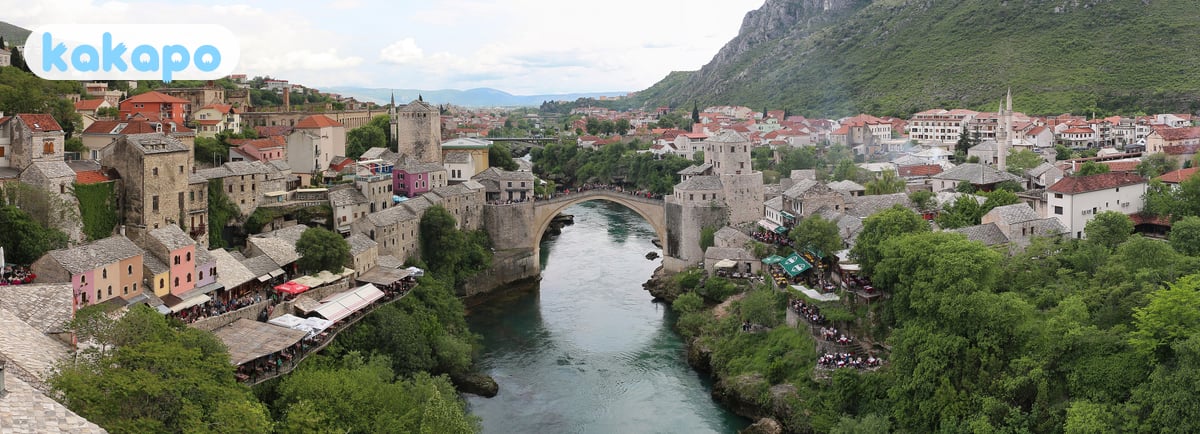
Mostar is small (~110,000 metro residents). The reconstructed Stari Most (Old Bridge), the Bazaar (Kujundžiluk), the Karadjoz Bey Mosque, and Blagaj (the Dervish monastery 12 km out) are the anchor experiences.
| Solo female safety | 84/100 |
|---|---|
| Night safety | 60/100 |
| Scam / petty-crime risk | Low |
| Violent crime (tourists) | Low |
| Most common scams | cliff-divers off Stari Most; pickpocketing at the bridge crowd peaks |
| Safer neighbourhoods | Old Town, Bazaar (Kujundžiluk), restaurant strip along the Neretva |
| Data sources cited | 4 |
| Last verified |
What the score means — 79/100
- Personal safety (84) — high. Pickpocketing exists but is mild.
- Air quality (80) — generally good; winter inversions can trap valley air.
- Healthcare (74) — Mostar Clinical University Hospital is the regional centre; quality is solid for routine care, complex care often referred to Sarajevo.
- Transport (74) — buses; one tourist-train link from Sarajevo; no metro. Rural buses run on Balkan time.
Landmines — the real risk and how to eliminate it
- The reality: Bosnia is the most-mined country in Europe. ~70,000 mines remain. The BHMAC (Mine Action Centre) maps known suspected hazardous areas — these are mostly rural Republika Srpska borders, mountainsides, and areas around former front lines.
- In Mostar town: there are no minefields. The town itself was demined in the late 1990s.
- The actual risk to visitors: walking off marked rural trails, swimming in untouched riversides far from towns, exploring abandoned buildings or hilltop ruins. Stay on marked roads and paved paths and your risk is zero.
- Red and white tape / signs: in some rural areas you'll see warning signs ("Pazi mine!"). Take them at face value.
- Hiking: use a registered guide for any off-piste mountain hiking around Bosnia. Sarajevo Funky Tours and similar operators know the cleared zones.
- Day-trip from Mostar: Blagaj, Počitelj, Kravice waterfalls — all on marked tourist routes, all safe.
Stari Most — divers, crowds, the bridge itself
- The bridge: the 1566 Ottoman bridge was destroyed in 1993 and reconstructed (UNESCO 2005). The marble surface is intentionally polished smooth and worn — extra slippery in rain.
- The divers: a Mostar tradition since 1664. Members of the Mostar Divers Club jump from 24 m into the Neretva. They collect tips from a crowd; a target of €25-30 is required before they jump (the river is cold and shallow-ish).
- Tourist diving: the club offers training for visitors who want to jump. €25 tuition + €25 dive. Real risk; they don't certify badly. Don't free-jump on your own — fatalities have occurred.
- Summer crush: 11am-4pm in July-August the bridge is shuffle-only. Cruise day-trippers from Dubrovnik amplify the bottleneck.
- Best timing: 7-9am or after 7pm. Lit at night, gorgeous, much quieter.
- Pickpockets: low but present at the bridge crowd peaks. Front pocket only.
Visible war damage and the divided city
- What you'll see: Aleksa Šantića / Marshal Tito streets retain bullet-pocked facades. The former Sniper Tower is a graffiti landmark; people climb it (no fences, real fall risk).
- The "divided city": Bosniak (mostly Muslim) east + Croat (mostly Catholic) west. Two electricity providers, two postal services, two fire brigades for years. Day-to-day life crosses the line easily; the political division is real but invisible to tourists.
- Visiting the Sniper Tower: technically trespassing, no railings, holes in floors. People go anyway. Boots + grip + no children.
- Cemeteries: the dates on headstones (1992-95) are a lot to absorb. Quiet, respectful.
- War Photo Exhibition (near the bridge): small museum; powerful. €6.
- Don't ask leading political questions of locals about ethnic identity. They've heard them.
Blagaj, Počitelj, Kravice — day trips
- Blagaj: 12 km. The Dervish monastery (tekke) at the spring source of the Buna river. €4. Crowded mid-day; lovely early.
- Počitelj: 30 km south. Ottoman fortress town, cascading down a hillside. Steep cobble paths up. Free.
- Kravice waterfalls: 40 km. Swimmable in summer. Very busy mid-day. €10 entry in season.
- Combined day-tour: €25-€35 from Mostar agencies. Cheaper than self-driving with car rental for one day.
- Driving: roads to all three are good paved; rental cars from Mostar bus station ~€40/day.
- Off-piste warning: do not hike off the marked paths around any of these sites. Stay on the trail.
Buses, trains, money
- Sarajevo–Mostar train: the scenic Inčići route. ~2.5h, €10-15. Daily. The bus is faster but ugly; train is the better experience.
- Buses to/from: Sarajevo, Split, Dubrovnik, Belgrade. Eurolines, Centrotrans, Globtour.
- Currency: Bosnian convertible mark (KM/BAM). 1 EUR ≈ 1.96 BAM (pegged). Euros widely accepted at hotels but you'll get worse rates.
- ATMs: UniCredit, Raiffeisen, Sparkasse — bank-branch only.
- Cards: hotels + bigger restaurants take them; markets and small cafés are cash.
- Mostar–Dubrovnik border: takes 30-90 min in summer. Bring passport.
Weather, water, scams
- Summer: 35-40°C valley heat. Stone gets hot.
- Winter: -2 to 5°C, occasional snow.
- Tap water: safe in Mostar town. Bottled is the norm in restaurants.
- Common minor scams: not a Mostar problem. Restaurant pricing on the bridge approach is touristy but transparent — read the menu.
- Taxi: insist on the meter or agree the fare upfront. From the train/bus station to Old Town ~5-10 BAM.
- Solo women: comfortable. Mostar is one of the more relaxed Balkans for solo travel.
Practical info — emergency numbers
- European emergency: 112.
- Police: 122.
- Ambulance: 124.
- Fire: 123.
- Mostar Clinical University Hospital: +387 36 336 500.
- BHMAC (mine info): bhmac.org for area maps if planning rural travel.
Bring: grippy shoes for the bridge + cobbles, sun protection, a refillable water bottle, a light layer for evenings, cash (BAM and euros), and travel insurance.
Frequently asked questions
Is Mostar, Bosnia and Herzegovina safe to visit in 2026?
Yes — Mostar scores 80/100 here. Bosnia and Herzegovina sits at US State Department Level 2 specifically because of unmarked landmines in rural areas; the UK FCDO is similar. Crime against tourists in Mostar town is low. The practical risk to visitors who stay on marked roads and inside towns is essentially zero — don't walk off-trail in the countryside, don't pick up unidentified objects, don't enter abandoned buildings and the landmine concern disappears. Realistic in-town concerns are the cliff-divers off Stari Most (a tradition with real risk if you join), summer day-tripper crowd compression on the bridge, and visible war damage along Aleksa Šantića.
Is Mostar safe at night?
Yes. The Old Town around Stari Most is illuminated at night and absolutely beautiful, and the Bazaar (Kujundžiluk) plus the restaurant strip along the Neretva are routinely walked by solo women late. Pickpocketing is mild and concentrated at the bridge crush in daytime, not after dark. The honest caveats: the polished marble surface of the reconstructed bridge is genuinely slippery when wet, the former Sniper Tower is a graffiti landmark people climb at night despite no railings and holes in floors (don't), and the streets get quiet by 23:00 — Mostar is small. Mostar is one of the more relaxed Balkans for solo travel.
What's the biggest risk in Mostar?
Honestly, slipping on the bridge — the marble surface is intentionally polished smooth from 460 years of foot traffic, and in rain it becomes treacherous. Sturdy grippy shoes; mind your step. The cliff-divers off Stari Most jump 24 m into the Neretva — if you pay the Mostar Divers Club for tuition (€25 + €25 dive) the risk is real but managed; do NOT free-jump on your own because fatalities have occurred. The wider regional landmine risk only matters if you go off marked rural trails, and the cleared zones for Blagaj, Počitelj and Kravice waterfalls are all on tourist routes. Pickpocket awareness at the summer 11am-4pm bridge crush is sensible.
Can you drink tap water in Mostar?
Yes — Mostar's tap water is safe and locally celebrated, sourced from the Neretva karst springs and treated to Bosnian/EU standards. Locals drink it without question. Restaurants will bring it if you ask but the cultural default is bottled. Carry a refillable bottle and use the fountains in the Old Town. The water tends to be cold even in summer — pleasant after a Stari Most climb. At rural sites like Blagaj's Dervish monastery the spring water of the Buna is also drinkable but most visitors photograph it rather than drink.
Should I be worried about landmines when day-tripping from Mostar?
No, for the standard tourist day-trips — Blagaj (12 km), Počitelj (30 km), Kravice waterfalls (40 km) are all on marked tourist routes that were demined years ago and are safe. The wider Bosnia landmine context is real (BHMAC maps suggest ~70,000 mines remain country-wide, mostly along former front lines, the Republika Srpska borders, mountainsides and old hilltop positions) but you only enter that risk if you hike off-trail in rural mountain areas without a registered guide. Red-and-white tape and 'Pazi mine!' signs in some rural areas mean exactly what they say. Stay on marked paths and paved roads and your risk is zero.
Sources
Run a business in Mostar?
Show visitors your Mostar business is a safe choice. The free Verified by Kakapo badge puts Mostar's live safety score on your website, links back to your verified page, and updates itself. No cost.
Get the free badge →