


Is Dalian, China Safe? A 2026 Travel Safety Guide
Bohai Sea winter cold, Russian and Japanese colonial heritage, summer beaches, the Japanese-tourism context, and the realities of northeastern China's gentlest port city.

Dalian — population ~7.5 million, the southernmost large city of Liaoning province on the Yellow Sea / Bohai Sea peninsula tip — is one of the most pleasant large mainland Chinese cities for visitors. It has a Russian-and-Japanese colonial heritage (Tsarist-era 1898-1905, then Japanese-controlled 1905-1945), striking turn-of-the-20th-century architecture, decent summer beaches, and a long history of Japanese tourism. Crime against tourists is rare; the central Zhongshan Square area is walkable; English support is decent for a tier-2 Chinese city.
The honest concerns are mostly environmental and practical. Dalian winters are severe — Bohai Sea winds drive January temperatures to -10 to -18°C; snow is regular but lighter than Sapporo or Vladivostok across the sea. Summer (July-August) is the peak tourist season with beach crowds at Tiger Beach, Xinghai Bay, Bangchui Island. Japanese-Chinese diplomatic tensions occasionally produce minor anti-Japanese sentiment in Liaoning (which suffered enormously in WWII and during the 1931-1945 Japanese occupation of Manchuria) — Japanese-language signage exists at major tourist spots but Japanese visitors should be aware. The standard mainland-China issues apply: WeChat/Alipay cashless dominance, Google/Facebook blocked, passport ID for everything.
The US State Department lists China at Level 2 ("exercise increased caution"); UK FCDO has no specific Dalian advisories. Both note the standard China-context concerns rather than tourist-street risks.
| Night safety | 77/100 |
|---|---|
| Scam / petty-crime risk | Medium |
| Violent crime (tourists) | Low |
| Most common scams | pickpocketing in dense beach areas; minor anti-Japanese sentiment; restricted photography in military zones |
| Safer neighbourhoods | Zhongshan Square, Xinghai Bay, Bangchui Island |
| Data sources cited | 4 |
| Last verified |
What the score means — 88/100
- Personal safety (90) — high. Dalian is genuinely calm; petty pickpocketing in tourist crush zones is the main risk.
- Transport (88) — Dalian Metro 6 lines and growing; HSR connects to Beijing (4 hr) and Shenyang (1.5 hr); Dalian Zhoushuizi Airport (DLC) 9 km from city.
- Healthcare (80) — Dalian Medical University Affiliated Hospital is the regional referral; international clinic at Global Doctor Dalian.
- Air quality (70) — moderate; better than Beijing/Shenyang in summer thanks to coastal breeze; winter inversions push PM2.5 into "unhealthy" range.
Winter — Bohai Sea cold

- December-February: daytime -3 to 5°C; overnight -10 to -18°C; Bohai Sea wind pushes the felt temperature lower.
- Snow: regular but lighter than Sapporo or Harbin; coastal location modifies. Pavements get treacherous in cold snaps.
- What to wear: down parka, thermal base layers, hat, gloves, waterproof boots with grip. Layering for indoor-outdoor transitions.
- Indoor heating: hotels and homes are well-heated to 22-26°C (Liaoning is in the mandatory district-heating zone — November-March).
- Pavement falls: ED visits spike; tourists in fashion sneakers over-represented.
- Best winter visit: late December-February for ice-and-snow festivals at Bingyu Valley (3 hours north); accept the cold trade-off.
- Best non-winter window: May-October for beaches and outdoor activities. July-August peak tourist; September is sweet spot (warm sea, fewer crowds).
- Beach water temperature: Yellow Sea swimmable June-September (24-27°C); seriously cold otherwise.
Russian and Japanese colonial heritage
- Russian Street (Eluosi Fengqing Jie): restored Tsarist-era buildings near Dalian Train Station; mostly pastiche tourist street with souvenir shops; the actual original Russian-built quarter is east of here, less visited.
- Japanese-colonial architecture: Zhongshan Square (formerly Nicholas Square / Ohiroba Square) — the central plaza with 10 spokes radiating; 10 surviving Russian and Japanese buildings around the perimeter. Walking the square is a free architecture tour.
- Lushun (Port Arthur): 45 km southwest; site of the 1904-1905 Russo-Japanese War battle; Japanese WWII era Russian Cemetery, 203 Hill (Erlongshan) viewpoint, Lushun Museum. Day-trip-able by metro line 12 or taxi.
- Photography: military zones at Lushun (Chinese naval base) restricted; some areas off-limits to photographers; some restricted-to-foreign-visitors. Read signage.
- Japanese-occupation history: Liaoning suffered enormously under 1931-1945 Japanese occupation. Don't make casual jokes about Japanese imperialism; Liaoning Provincial Museum and other sites cover this period.
- Don't display imperial Japanese symbols or pose with anti-Japanese imagery in jest; it can produce serious confrontation.
Summer beaches, crowds, water quality
- Tiger Beach (Laohutan): theme-park-and-beach complex; CNY 220 entry with rides + sea-park; very busy summer.
- Xinghai Bay Beach (Xinghai Wan): free; long stretch of sand; central; popular with locals.
- Bangchui Island (Bangchuidao Scenic Area): peninsula resort with smaller beaches and high-end villas (formerly a state-leader retreat); CNY 30 entry.
- Fujiazhuang Beach: smaller, locals-favoured; cleaner than Xinghai Wan; less commercial.
- Water quality: Bohai Sea is enclosed and shallow; algae blooms occur late summer; warm-water swimming June-September.
- Crowds: peak July-August school holidays packs all city beaches; weekday mornings calmest.
- Jellyfish: Yellow Sea has occasional jellyfish blooms (lion's mane, moon jellyfish); painful but rarely serious stings.
- Pickpocketing: dense beach areas have standard precautions.
- Sun: not extreme but reflective off sand and water; SPF50+.
Japanese tourism context and current diplomatic temperature
- Historic Japanese tourism: Dalian had one of mainland China's largest Japanese expatriate populations and Japanese tourist flows in the 1980s-2010s due to its colonial-era Japanese architecture, the daily Dalian-Tokyo flight, and the Japanese-friendly local food scene. Numbers have declined since 2010-2012 anti-Japanese protests and COVID.
- Diplomatic tensions: China-Japan relations have been periodically tense (2010 Senkaku/Diaoyu fishing-boat incident; 2012 anti-Japanese protests across China; 2023 Fukushima wastewater dispute). Liaoning has had higher anti-Japanese protest activity than other provinces in past episodes.
- For Japanese visitors: Dalian remains comparatively friendly; Japanese-language menus at many restaurants; some Japanese-style izakaya and ramen shops. Avoid politically-charged conversation in mixed company.
- For all visitors: Russo-Japanese War sites at Lushun (Port Arthur) frame the Japanese presence as imperial aggression; visit respectfully.
- Photography of Japanese cemeteries / shrines: most are removed or repurposed; the Japanese Lushun Naval Cemetery is preserved as a quiet historic site.
Areas — Zhongshan Square, Xinghai Bay, Lushun
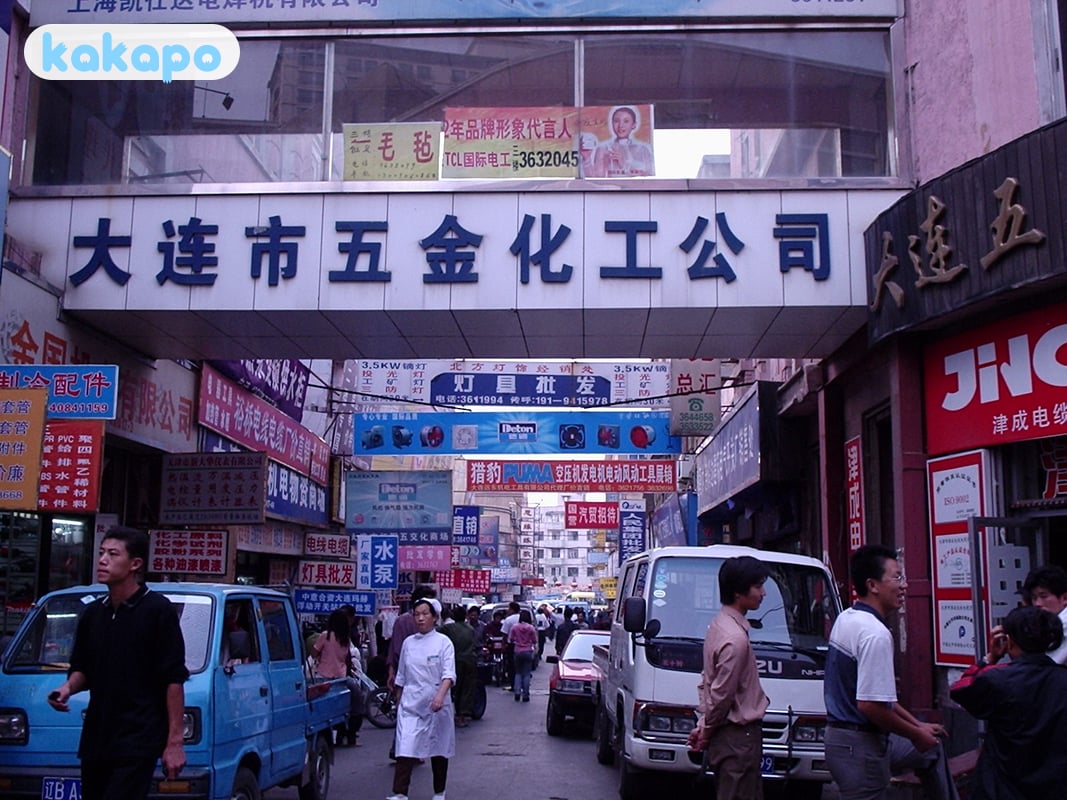
Recommended bases: Zhongshan Square / Tianjin Street area — central, walking distance to colonial architecture, restaurants, the original "Russian Street"; international hotels (Furama, InterContinental, Shangri-La). Xinghai Square area — modern landmark district, beach-side; second-tier business hotels. Bangchui Island — quiet peninsula; resort hotels.
There are no genuinely dangerous neighbourhoods in central Dalian.
Transport — metro, HSR, airport, the Yantai ferry

- Dalian Metro: 6 lines as of 2025; clean, cheap (CNY 2-7); useful tourist coverage. Line 12 to Lushun.
- Dalian Zhoushuizi Airport (DLC): 9 km from central city. Metro line 2 CNY 4 (25 min). Taxi CNY 50-80; Didi CNY 40-60. Direct international flights to Tokyo, Seoul, Singapore, Hong Kong.
- HSR: Dalian-Beijing 4 hours via the Bohai Bay HSR; Dalian-Shenyang 1.5 hr. Major hub for Northeast China.
- Yantai-Dalian ferry: across Bohai Sea (Dalian to Yantai, Shandong); 6-7 hours; useful for combining North-Yellow-Sea trip without the long road around.
- Didi: works city-wide; supports foreign cards in-app since 2023.
- Trams: Dalian has one of China's two surviving tram networks (Line 201 has heritage cars); CNY 1; more tourism than utility.
Money, food, emergency numbers
- Currency: Chinese yuan (CNY/RMB). $1 ≈ CNY 7.2.
- Cards: foreign Visa/Mastercard increasingly accepted at chains; small shops/taxis cashless via Alipay or WeChat Pay (set up Alipay's Tour Card before arriving).
- Tipping: not customary.
- Food: Dalian seafood is the headline (haixian) — sea cucumber, scallops, abalone; northeast Chinese (dongbei) cuisine — guo bao rou (sweet-and-sour pork), dumplings; Russian-influenced bakery culture. Tianjin Street seafood restaurants reliable.
- Tap water: not drinkable. Bottled or kettle-boiled.
- Internet/VPN: Google, Facebook, Instagram, X all blocked. Set up VPN before arrival.
- Emergency: 110 (police), 119 (fire), 120 (ambulance). Tourist hotline 12301.
- Hospitals: First Affiliated Hospital of Dalian Medical University (+86 411 8363 5953); Dalian Friendship Hospital.
- SIM: passport required for Chinese SIM. Tourist eSIM (Airalo China-friendly options) easier and avoids registration.
- What to pack winter: warm down, hat, gloves, waterproof boots; the cold catches Western tourists out.
Frequently asked questions
Is Dalian safe to visit in 2026?
Yes — Dalian scores 84/100 here, one of the most pleasant large mainland Chinese cities for visitors. US State Department rates China at Level 2 ('exercise increased caution'); UK FCDO has no specific Dalian advisory. Crime against tourists is rare; the central Zhongshan Square area is walkable and well-policed. The realistic concerns are environmental and practical: Bohai Sea winter cold (January -10 to -18°C, pavement falls spike), summer heat and humidity July-August (33-37°C, oppressive coastal humidity), Japanese-Chinese diplomatic sensitivities at sites like Lushun (Port Arthur), and the standard mainland-China cashless logistics (Alipay required, Google blocked). Emergency 110 police, 119 fire, 120 ambulance; tourist hotline 12301; First Affiliated Hospital of Dalian Medical University +86 411 8363 5953.
Is Dalian safe at night?
Yes — Dalian is genuinely calm at any hour. Zhongshan Square (the central plaza with 10 spokes radiating, the 10 surviving Russian and Japanese colonial buildings), Tianjin Street, Xinghai Square and the Bangchui Island peninsula are routine evenings. Petty pickpocketing in tourist crush zones is the main risk and it's mild by big-city standards. Pavement ice in January-February is the actual after-dark hazard — waterproof boots with grip, not fashion sneakers. The 'stay aware' qualifier is Lushun (Port Arthur) area: this is an active Chinese naval base 45 km southwest, some zones are off-limits to foreigners, and military-zone photography restrictions are real and enforced. Read the signage.
What's the diplomatic context I should know in Dalian?
Liaoning suffered enormously under 1931-1945 Japanese occupation of Manchuria; Lushun (Port Arthur) was the site of the 1904-1905 Russo-Japanese War and houses the Russian Cemetery, 203 Hill viewpoint and Lushun Museum that frame the Japanese presence as imperial aggression. China-Japan relations have been periodically tense (2010 Senkaku/Diaoyu boat incident, 2012 anti-Japanese protests, 2023 Fukushima wastewater dispute). Don't make casual jokes about Japanese imperialism. Don't display imperial Japanese symbols or pose with anti-Japanese imagery in jest — both have produced serious confrontations. Japanese visitors specifically: Dalian remains comparatively friendly with Japanese-language menus at many restaurants and Japanese-style izakaya, but avoid politically-charged conversation in mixed company. Russian Street (Eluosi Fengqing Jie) is mostly pastiche tourist souvenir street; the actual original Russian-built quarter is east of there.
Can you drink tap water in Dalian?
No. Tap water in Dalian — like across mainland China — is not drinkable. Boil-the-kettle or buy bottled (Nongfu Spring, C'estbon at CNY 2-5 per bottle at any FamilyMart or Lawson) is the cultural and practical default. Every hotel supplies a kettle and complimentary bottled water in the room. Restaurants serve hot water or weak tea by default; if you want cold water you'll need to ask specifically. Dalian's seafood is the headline cuisine — sea cucumber, scallops, abalone — at the Tianjin Street seafood restaurants, and supply-chain reliability is generally high; the bigger gut risk is the rich oil-based dongbei cuisine itself (guo bao rou, dumplings) producing GI upset on day 2.
How brutal is the Dalian winter actually?
Real. December-February daytime is -3 to 5°C, overnight -10 to -18°C, and Bohai Sea wind pushes the felt temperature substantially lower. Snow is regular but lighter than Sapporo or Harbin (coastal location modifies). Pavement ice is the actual visitor hazard — ED visits spike with tourists in fashion sneakers. What to pack: down parka, thermal base layers, hat, gloves, waterproof boots with grip. Indoor heating is well-maintained at 22-26°C — Liaoning is in the mandatory district-heating zone November-March. Best non-winter window is May-October for beaches and outdoor activities; July-August is peak domestic tourist crush; September is the sweet spot (warm sea 24-27°C, fewer crowds). Beach water is swimmable only June-September.
Sources
Run a business in Dalian?
Show visitors your Dalian business is a safe choice. The free Verified by Kakapo badge puts Dalian's live safety score on your website, links back to your verified page, and updates itself. No cost.
Get the free badge →