


Is Fukuoka, Japan Safe? A 2026 Travel Safety Guide
The Hakata pickpocket tradition, Nakasu nightlife touts, the yatai stalls, summer typhoons, the Korea ferry connection, and the realities of Japan's most liveable city.

Fukuoka — population ~1.6 million, the largest city on Kyushu and Japan's sixth-largest — is one of Japan's most-loved cities by residents. It consistently scores high in liveability rankings, has a younger population than Tokyo/Osaka, and the famous yatai (street food stall) culture defines its evenings. Crime against tourists is low; the city is walkable; English support is improving.
The honest concerns are about Fukuoka's status as one of Japan's few cities with a meaningful petty-theft tradition. Hakata Station and surrounding streets have long been the country's pickpocket benchmark — Japanese police statistics consistently rank Fukuoka prefecture above Tokyo and Osaka for theft incidents. The Nakasu entertainment district has the standard tout-and-overcharge pattern (similar to Osaka's Minami but on a smaller scale). Summer typhoons hit Kyushu before the rest of Japan — the August-September strikes occasionally disrupt travel. The Sakurajima volcano (200 km south, near Kagoshima) erupts almost daily; ash drift to Fukuoka is rare but possible. The Korean Peninsula's geopolitical context occasionally produces missile-test alerts that include western Japan.
The US State Department lists Japan at Level 1; UK FCDO has no advisories. Both note the standard typhoon and earthquake context.
| Night safety | 91/100 |
|---|---|
| Scam / petty-crime risk | Medium |
| Violent crime (tourists) | Low |
| Most common scams | Hakata pickpocket tradition; touts and overcharging in Nakasu; drink-spiking at tout-recruited bars |
| Safer neighbourhoods | Daimyo, Imaizumi, Tenjin |
| Data sources cited | 4 |
| Last verified |
What the score means — 95/100
- Personal safety (92) — high but pulled below Tokyo/Osaka by Hakata pickpocket statistics.
- Transport (92) — Fukuoka Subway, JR Hakata Shinkansen hub, Fukuoka Airport (FUK) is famously close to city centre (5 min subway), ferries to Korea.
- Healthcare (88) — Kyushu University Hospital is the regional referral; private hospitals (Fukuoka Tokushukai) excellent; English support limited.
- Air quality (80) — generally moderate; affected by spring kosa events and occasional Korea-side pollution.
Hakata pickpocket tradition — Japan's real exception
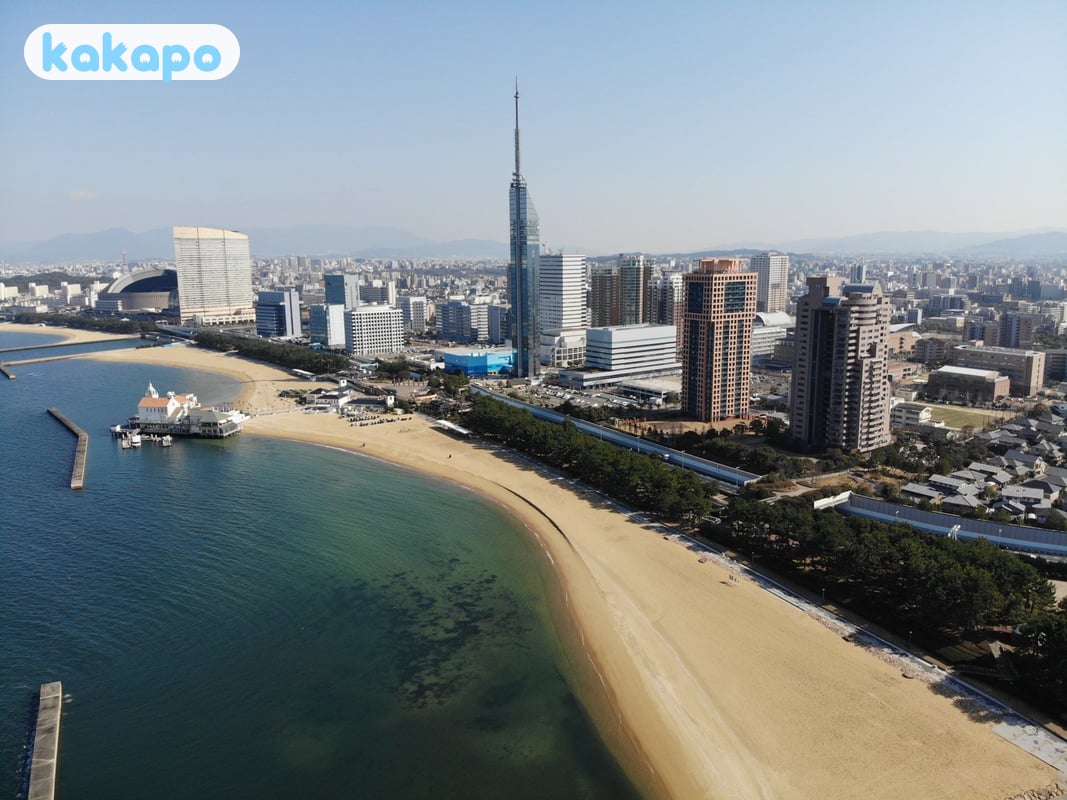
This is one of the few Japanese cities where standard pickpocket precautions actually matter.
- The numbers: Fukuoka prefecture has consistently led Japanese theft statistics for over a decade — police-recorded pickpocketing per 100,000 residents above Osaka and Tokyo.
- Where: Hakata Station and the underground passages beneath, Tenjin Underground Mall, Nakasu late at night, crowded festivals (Hakata Yamakasa in July).
- How: classic crowded-platform brush-by; bag-zip access from behind; back-pocket wallet lifts.
- Defences: front-zip bags only; phones not in back pockets; valuables in inside zip pockets.
- Reporting: Hakata Police Box at the main station entrance; Fukuoka Police's English line.
- Context: even at "Japan's worst" pickpocket rates, the absolute numbers are still extremely low by global standards. Don't be paranoid; just don't rely on Japan's reputation for everything-returned.
- Travel-document loss: keep passport copies; original in hotel safe.
Yatai stalls — the food experience
Fukuoka's yatai (mobile food stalls) are the city's defining cultural experience. ~100 yatai operate around Tenjin, Nakasu Riverside, and Nagahama — the country's last surviving major yatai concentration after most other cities banned them.
- What's served: tonkotsu Hakata ramen (the famous milky-pork-bone broth originated here), yakitori, motsu-nabe (offal hotpot), oden, tempura. ¥800-2,500 per dish.
- How to use: yatai have 6-10 seats around a U-shaped counter. Open ~18:00-02:00. Sit, order verbally (or point at neighbour's plate), pay cash on departure.
- Hygiene: yatai are licensed and inspected; food is cooked to order on visible grills/pots; turnover is high. Generally as safe as any street food anywhere.
- Common-sense: pick busy yatai; avoid empty ones at off-hours.
- Cash only: most yatai don't take cards.
- "Foreigner unfriendly" reputation: some traditional yatai posted "Japanese only" signs in past — this has largely faded as Fukuoka tourism grew, but a few still exist. The Tenjin and Nakasu Riverside yatai are foreigner-friendly.
- Sneeze guards: yatai counters are open-air; you're sitting close to other patrons; standard public-health awareness applies.
- Don't drink-and-stay: yatai turnover is high; once you've eaten, move on so others can sit.
Nakasu nightlife — touts and overcharging
Nakasu is Japan's third-largest red-light/entertainment district (after Tokyo Kabukicho and Osaka Minami). Mostly fine for visiting; the same tout patterns as Osaka apply.
- The standard scam: friendly tout, "all-inclusive" promise, then surprise table charges and intimidation when you try to leave. Reputable bars don't street-recruit.
- The rule: ignore touts; don't follow anyone into a venue; never accept a "free first drink".
- Police English warnings are posted at major Nakasu intersections.
- Nakasu yatai: the riverside yatai run by the canal are tourist-friendly and safe.
- Drink-spiking: rare but reported, especially at tout-recruited bars.
- Hostess clubs: don't enter unless you've researched specifically; bills can be eye-watering for casual walk-ins.
- If a billing dispute escalates: dial 110 immediately; refuse to pay any "fee" beyond what was clearly written.
- Where to drink safely: Daimyo and Imaizumi neighbourhoods (west of Nakasu) have a more residential bar scene with no touts; Kawabata-dori has older Hakata bars.
Typhoons and the Kyushu strike risk
- Season: August-October. Kyushu (Fukuoka's island) catches typhoons days before they reach Tokyo or hits direct strikes that miss the rest of Japan.
- Recent severe events: Hagibis 2019, Haishen 2020, Nanmadol 2022, Khanun 2023 — all caused significant Kyushu impact. Fukuoka City escaped major damage but flights and Shinkansen disrupted.
- What closes: Fukuoka Airport (FUK) suspends flights at typhoon-strength winds; Shinkansen reduces speed/cancels; ferries to Korea suspend.
- Storm surge: low-lying parts of Hakata Bay (Bayside Place, Marizon) can flood in storm surge.
- Insurance: cancellation cover essential for Aug-Oct travel.
- Best windows: late March-May (cherry blossom + warm), October-November (cool, dry post-typhoon).
- Don't try to "see" a typhoon: photographers have died at coastal viewpoints in Kyushu.
Korea ferries and the regional connections
- Hakata-Busan ferries: Beetle (3-hour jetfoil) and Camellia (overnight ferry). From Hakata Port International Terminal. Visa-on-arrival for most nationalities at Korean ports.
- Recent service changes: services suspended during COVID; resumed 2022-2023. Confirm current schedule before relying on it.
- Sea conditions: usually calm; rough in autumn typhoon season.
- Customs: Korean customs strict on currency limits and food import; declare on arrival.
- Day-trip to Korea: technically possible (Hakata 09:00 ferry, ~2 hours in Busan, return ferry) — a niche but interesting passport-stamp option.
- Combined Japan-Korea Rail Pass: doesn't exist; book each separately.
Areas — Hakata, Tenjin, Daimyo, Momochi
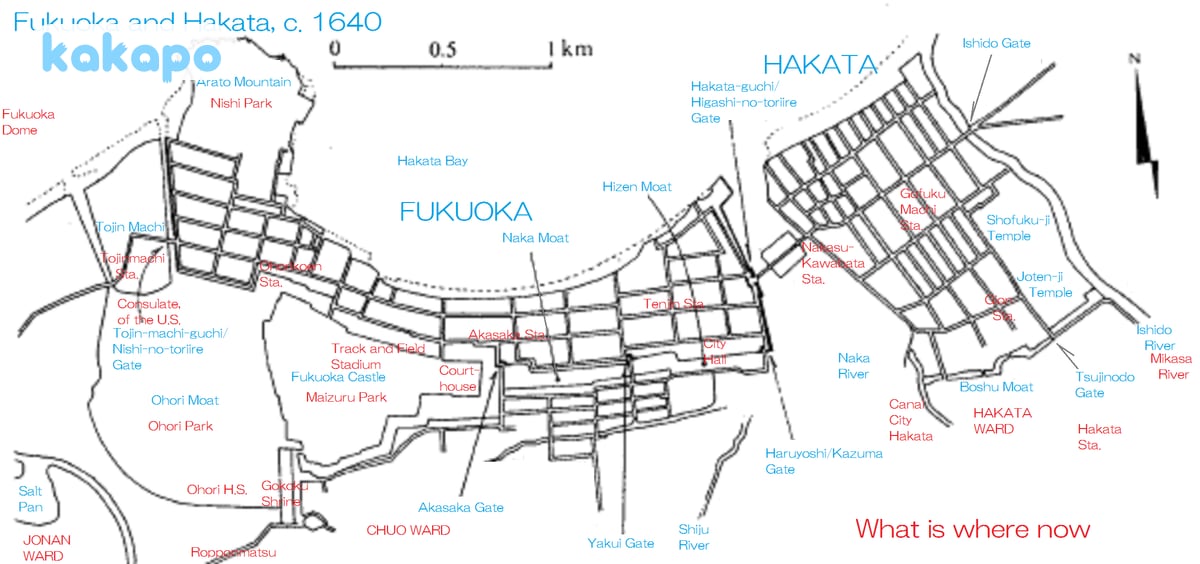
Recommended bases: around Hakata Station — Shinkansen and airport-adjacent (5 min subway to airport!), business hotels (Hotel Nikko, Granvia, Hilton Garden Inn). Tenjin — central downtown, shopping, restaurants, mid-range hotels (Solaria, ANA Crowne); 5 min from Hakata. Daimyo / Imaizumi — boutique trend district west of Tenjin; café-and-bar; calmer than Nakasu.
Stay aware: Nakasu late-night and Hakata Station underground — pickpocket precautions; standard tout precautions in Nakasu.
There are no genuinely dangerous neighbourhoods in Fukuoka.
Money, transport, emergency numbers
- Currency: Japanese yen (¥). $1 ≈ ¥152.
- Cards: chains, hotels, larger restaurants yes; yatai and small Nakasu bars cash. 7-Eleven and Japan Post ATMs work for foreign cards.
- Tipping: not done.
- Fukuoka Airport (FUK): 5 km from Hakata Station — among the world's closest airport-to-city distances. Subway Hakata-FUK ¥260 (5 min). Genuinely uses-transit-from-arrival.
- Subway: 3 lines, simple, ICOCA / Suica / Pasmo all work.
- Shinkansen: Hakata Station is the southern terminus of Sanyo Shinkansen (from Tokyo, Osaka) and northern end of Kyushu Shinkansen (to Kagoshima). Hakata-Tokyo 5 hr; Hakata-Osaka 2 hr 30 min.
- Volcanic context: Sakurajima volcano (Kagoshima, 200 km south of Fukuoka) erupts almost daily — small ash plumes; rarely affects Fukuoka. JMA Volcano Alert covers all Kyushu volcanoes.
- Emergency: 110 (police), 119 (fire and ambulance). Japan Visitor Hotline 050-3816-2787 (24h, English).
- Hospitals: Kyushu University Hospital (+81 92 641 1151); Fukuoka Tokushukai (+81 92 573 6622).
- SIM: at Fukuoka Airport. eSIM (Airalo Japan) easier.
- Earthquake: J-Alert pushes warnings to all phones. Fukuoka is less seismically active than the Pacific coast cities but the M6.6 Kumamoto earthquake (2016) caused damage in central Kyushu.
Frequently asked questions
Is Fukuoka safe to visit in 2026?
Yes. Fukuoka is one of Japan's safest big cities and consistently ranked among Japan's most livable. The US State Department lists Japan at Level 1 and UK FCDO has no advisories. Violent crime against tourists is essentially nonexistent. The honest concerns are practical: pickpocketing in the Hakata Station underground concourse and at Nakasu yatai (street-food stall) crowds, the Nakasu nightlife tout pattern (one of Japan's three biggest red-light districts alongside Tokyo's Kabukicho and Sapporo's Susukino), summer typhoons (Kyushu absorbs the first hits — September is peak), and the Kumamoto-area volcanic and seismic context (the M6.6 Kumamoto earthquake in 2016 caused damage in central Kyushu).
Is Fukuoka safe at night?
Yes. Hakata, Tenjin and Daimyo all stay busy and well-policed late, and the famous yatai street-food stalls along the Naka River run until midnight or beyond. The genuine night risks are concentrated in Nakasu: street touts running the standard 'all-inclusive' bar billing scam (friendly approach, promise, then surprise charges) target foreigners. Ignore every tout, don't follow anyone into upper-floor venues, and stay on the well-lit main strips. Standard Hakata Station underground pickpocket awareness handles the last-train crush. Solo women routinely walk home from late ramen dinners.
Is Fukuoka safe for solo female travellers?
Yes, exceptionally. Fukuoka combines Japan's near-zero violent crime rate with a relaxed, port-city friendliness. Catcalling is essentially absent. The 3-line subway is simple and safe at all hours, and the Hakata-Fukuoka Airport subway link (¥260, 5 min — among the world's closest airport-to-city distances) means solo airport arrivals are uneventful. Standard Nakasu tout caveat applies (don't follow strangers into bars). The Daimyo and Imaizumi boutique districts are particularly comfortable for solo cafe and bar evenings.
Can you drink tap water in Fukuoka?
Yes. Fukuoka tap water is safe and tested to Japan's strict national standards — locals drink it routinely. Restaurants automatically serve free chilled water on arrival. Carry a refillable bottle in summer when 30-33°C with high humidity is normal. The yatai stalls run their own water from city mains and food hygiene is closely regulated — eating yatai tonkotsu ramen or yakitori is among the safest street-food experiences in Asia.
What's the biggest scam to avoid in Fukuoka?
Nakasu bar touts running the 'all-inclusive' billing scam — friendly approach on the street, promise of all-inclusive pricing, then surprise table charges and intimidation when you try to leave. Reputable Fukuoka bars don't street-recruit foreigners. Ignore every tout, don't follow anyone into a venue, and never accept a 'free first drink' from someone on the street. If a billing dispute escalates inside a bar, dial 110 (police) immediately and refuse to pay any fee beyond what was clearly written and agreed. Other minor patterns: pickpockets at peak Hakata Station underground transfers, and the standard Japanese DCC card-terminal pattern (always pay in JPY, never your home currency).
How much should I worry about Kyushu typhoons and volcanoes?
Aware rather than worried. Kyushu sits at the western edge of the Pacific typhoon belt and absorbs the first hits — September is peak typhoon season with August-October the broader window. Major Kyushu strikes cause flight cancellations, JR Shinkansen suspensions and occasional storm-surge damage on the coast; Fukuoka city itself is inland enough that flooding is less catastrophic than rural areas. JMA pushes typhoon warnings to phones. For volcanoes: Sakurajima (Kagoshima, 200 km south) erupts almost daily with small ash plumes that rarely affect Fukuoka; Aso (central Kyushu) and Kuju are the other active ones. JMA Volcano Alert covers all Kyushu volcanoes — check before driving inland. The Kumamoto-area 2016 M6.6 earthquake caused damage in central Kyushu; modern Japanese building codes handled it well in Fukuoka.
Sources
Run a business in Fukuoka?
Show visitors your Fukuoka business is a safe choice. The free Verified by Kakapo badge puts Fukuoka's live safety score on your website, links back to your verified page, and updates itself. No cost.
Get the free badge →