


Is Sapporo, Japan Safe? A 2026 Travel Safety Guide
Brutal winters, Snow Festival logistics, the brown bear question on Hokkaido hikes, Susukino nightlife touts, and why Sapporo is otherwise about as safe as travel gets.

Sapporo, Hokkaido's capital and Japan's fifth-largest city (population ~2 million), is one of the safest major cities anywhere. Crime against tourists is rare; the spacious, grid-planned city centre is easy to navigate.
The honest concerns are environmental. Sapporo gets the most snowfall of any major city on Earth — over 5 metres of total seasonal snow is normal — and winter temperatures regularly hit -10 to -15°C. The Sapporo Snow Festival (Yuki Matsuri, early February) draws 2 million+ visitors into the central streets and creates accommodation, train, and ice-walking logistics very different from a normal Sapporo trip. Hokkaido's surrounding mountains and national parks are real bear country — Ussuri brown bears (higuma, the same species as Russian and Alaskan brown bears) cause fatal attacks every couple of years and dozens of injuries. The Susukino entertainment district has the same Japanese-city tout pattern as Osaka's Minami at smaller scale, and the broader Hokkaido seismic context (the 2018 Eastern Iburi earthquake) applies.
The US State Department lists Japan at Level 1; UK FCDO has no advisories. Both note the standard earthquake context.
| Night safety | 91/100 |
|---|---|
| Scam / petty-crime risk | Medium |
| Violent crime (tourists) | Low |
| Most common scams | billing scams in Susukino; touts in Susukino; fake 'free' drinks in Susukino |
| Safer neighbourhoods | Sapporo Station, Odori, Maruyama |
| Data sources cited | 4 |
| Last verified |
What the score means — 95/100
- Personal safety (95) — exceptional. Susukino touting is the asterisk.
- Transport (90) — Sapporo Subway 3 lines, JR Sapporo, streetcar, easy. Winter delays do happen.
- Healthcare (88) — Hokkaido University Hospital and Sapporo Medical University Hospital are the regional referral centres; English support limited.
- Air quality (90) — generally clean; occasional winter-inversion smoke from heating systems.
Winter — cold, ice, and frostbite risk
- December-March: daytime highs -5 to 0°C, overnight -10 to -15°C. -20°C cold snaps possible.
- Snowfall: Sapporo averages 5+ metres per season — among the highest urban totals in the world. Heavy snow days dump 30-50 cm overnight.
- Sidewalk ice: the genuine winter hazard. Foot-traffic-polished ice on every sidewalk by January. Hokkaido residents wear special studded soles or buy slip-on metal cleats (¥1,000-3,000 at Don Quijote and convenience stores).
- Frostbite: exposed skin in -15°C wind freezes in 10-20 minutes. Cover ears, fingers, nose. Tourists from warmer climates are over-represented in ED.
- Underground cities: Sapporo has one of Japan's largest underground pedestrian networks — Chika-Hodo connects Sapporo Station to Susukino over 1.5 km. Stay underground in serious weather.
- Driving: studded tyres or chains legally required Dec-Mar. Most rentals provide them. Black ice on highways genuinely dangerous.
- Best winter visit: Jan-Feb for snow festival and ski conditions; March slushy and unattractive.
Snow Festival (Yuki Matsuri) — early February logistics
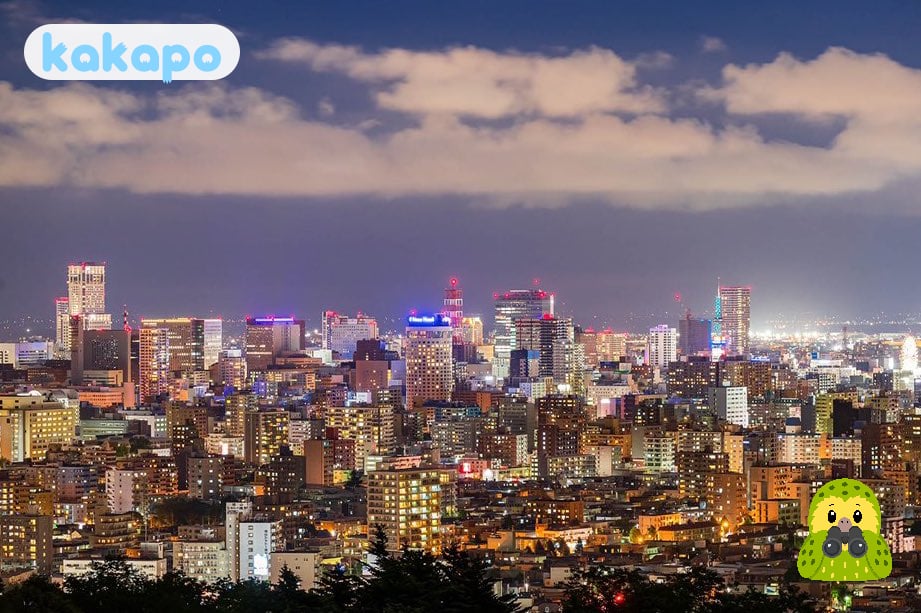
The Sapporo Snow Festival runs about 7 days in early February (typically Feb 4-11; check yuki-matsuri.jp for exact dates). Three sites: Odori Park (the famous one), Susukino (ice sculptures), and Tsudome (family/snow play, suburban).
- Crowds: 2 million+ visitors during the week. Hotels in central Sapporo book out 6+ months ahead and triple in price.
- Accommodation strategy: book by August. Or stay in Otaru (40 min by JR), Chitose (closer to airport, 35 min) or Jozankei (onsen town, 60 min).
- Sculpture sites: Odori Park stretches 12 blocks east-west; the big sculptures are at the western end. Visit at dusk when illumination starts (~17:00) and again later when crowds thin (after 21:00).
- Slipping injuries: festival ice is everywhere. Cleats on shoes essential. Fall-related ED visits spike during the festival week.
- Dress code: many Westerners under-dress thinking "Japanese cities are mild". Hokkaido in February is not mild. Down jacket, hat, gloves, base layers, waterproof boots.
- Other February events: Otaru Snow Light Path (illuminations, parallel week to Snow Festival) is also worth a half-day.
Brown bears (higuma) — the real Hokkaido wildlife risk
Hokkaido's brown bear (higuma, Ussuri brown bear, Ursus arctos lasiotus) is genuinely dangerous. They are the same species as Russian and Alaskan brown bears — adult males 250-500 kg.
- Recent fatal incidents: bears killed three hikers and farmers in Hokkaido in 2023 alone (including one near Asahikawa, one in Shari). 2024 saw further attacks in eastern Hokkaido.
- Where: most national parks (Daisetsuzan, Akan, Shiretoko), forest areas around Jozankei, even outskirts of suburban Sapporo (bears were sighted in Minami-ku, central Sapporo, in 2021 — one entered a residential area and injured four people before being shot).
- Hiking precautions: bear bells (kuma-yoke-no-suzu) on packs; talk loudly in groups; carry bear spray (sold at outdoor stores); don't hike at dawn/dusk; pack out all food smells.
- If you encounter a bear: don't run (triggers chase). Don't make eye contact. Back away slowly. If charged, Shiretoko Foundation guidance is to fight back if attacked by a brown bear (different from grizzlies in some literature).
- Solo hiking: Hokkaido Forest Service strongly discourages solo bear-country hiking. Join a guided group.
- Sightseeing tours: Shiretoko boat cruises see bears on the shoreline at safe distance — the appropriate way to see one.
- Garbage discipline: rural campsites and ryokan post bear-country rules. Follow them.
Susukino nightlife — touts, billing scams, and respect
- Susukino: Sapporo's main entertainment district; one of Japan's three biggest red-light districts (alongside Tokyo's Kabukicho and Fukuoka's Nakasu).
- Billing scam pattern: same as Osaka Minami — friendly tout, "all-inclusive" promise, then surprise table charges and intimidation when you try to leave. Reputable Sapporo bars don't street-recruit foreigners.
- The rule: ignore every tout. Don't follow anyone into a venue. Don't accept a "free first drink" from someone on the street.
- Sapporo police have run periodic crackdowns; English warnings posted at major Susukino intersections.
- If a billing dispute escalates: dial 110 immediately and refuse to pay any "fee" beyond what was clearly written and agreed.
- Fine to visit: Susukino's ramen alley (Ramen Yokocho), izakaya, and karaoke venues. Just stay on the well-lit main strips and don't follow touts into upper floors.
Hokkaido earthquakes
- 2018 Eastern Iburi earthquake: M6.7, killed 41, caused massive landslides near Atsuma; triggered the first ever island-wide blackout in Japanese history (Hokkaido was electrically isolated for 2 days).
- Sapporo specifically: shaken hard but minimal direct damage. The blackout was the bigger tourist disruption.
- Tsunami risk: Sapporo is inland and not directly tsunami-exposed. Hokkaido's Pacific coast is — particularly along the Japan Trench and Kuril Trench. Government modelling suggests a megathrust event could produce 20+ m tsunami on the eastern coast within decades.
- What to do: Drop, Cover, Hold On. J-Alert pushes warnings to phones.
- Volcanoes: Tarumae, Tokachi, Usu are active. Lake Toya (Jozankei area) has visible volcanic features; check JMA alerts before driving to Showa-Shinzan.
Areas — Sapporo Station, Odori, Susukino, Maruyama
Recommended bases: Sapporo Station / Kita area — JR access, business hotels, near JR Tower. Odori Park area — central, near Snow Festival sites and TV Tower. Susukino — nightlife and food, lots of mid-range hotels. Maruyama — leafy residential, near Hokkaido Shrine, calmer.
Stay aware: Susukino backstreets after midnight — the touts and the loud-drunk salaryman crowd. Generally not unsafe, just unpleasant.
There are no genuinely dangerous neighbourhoods in Sapporo.
Money, food, emergency numbers
- Currency: Japanese yen (¥). $1 ≈ ¥152.
- Cards: now widely accepted; 7-Eleven ATMs work for foreign cards.
- Tipping: not done.
- Food: Sapporo miso ramen (try Ramen Yokocho's Sumire or Junren), Genghis Khan grilled lamb (jingisukan, the local Beer Garden's specialty), Hokkaido sashimi (Nijo Market for breakfast uni-don), Sapporo Beer and Hokkaido whisky (Nikka Yoichi distillery 80 min west).
- Tap water: safe.
- Emergency: 110 (police), 119 (fire and ambulance). Japan Visitor Hotline 050-3816-2787.
- Hospitals: Hokkaido University Hospital (+81 11 716 1161); Sapporo Medical University Hospital (+81 11 611 2111).
- New Chitose Airport (CTS): 46 km southeast. JR Rapid Airport train ¥1,150 (37 min to Sapporo Station); airport bus ¥1,100 (80 min); taxi ¥10,000-13,000.
- What to pack winter: down jacket, thermal base layers, hat covering ears, waterproof boots with grip OR slip-on metal cleats.
Frequently asked questions
Is Sapporo safe to visit in 2026?
Yes. Sapporo scores 90/100 and is one of the safest major cities anywhere. The US State Department lists Japan at Level 1 and UK FCDO has no advisories. Crime against tourists is essentially nonexistent and the spacious grid-planned centre is easy to navigate. The honest concerns are entirely environmental: Sapporo gets the most snowfall of any major city on Earth (5+ metres a season), winter temperatures regularly hit -10 to -15°C with foot-polished sidewalk ice as the genuine hazard; the early-February Snow Festival draws 2 million+ visitors into the central streets; Hokkaido's surrounding mountains are real Ussuri brown bear (higuma) country with fatal attacks every couple of years; and Susukino nightlife has the standard Japanese-city tout pattern at smaller scale.
Is Sapporo safe at night?
Yes, very. Sapporo's central streets, Odori Park area and Sapporo Station underground network (the 1.5 km Chika-Hodo passage connecting Sapporo Station to Susukino) are completely safe at any hour. Solo women routinely walk home from ramen alley dinners. The only nighttime caveat is Susukino backstreets after midnight — the touts (similar to Tokyo's Kabukicho and Fukuoka's Nakasu) try to lure foreigners into billing-scam bars. Ignore every street tout, don't follow anyone into upstairs venues, and stay on the well-lit main strips. In winter, the bigger nighttime risk is ice — wear slip-on metal cleats (¥1,000-3,000 at Don Quijote) on shoes.
Is Sapporo safe for solo female travellers?
Yes, exceptionally. Sapporo combines Japan's near-zero violent crime rate with a calmer, more spacious feel than Tokyo or Osaka. Catcalling is essentially absent. Solo women routinely use the JR network, Sapporo Subway and the underground passages — even late, even in deep winter. Standard precautions handle Susukino touts (ignore them) and the ice (cleats). The Hokkaido brown bear precaution applies only if you're hiking national parks (Daisetsuzan, Akan, Shiretoko) — don't go solo bear-country hiking; join a guided group.
Can you drink tap water in Sapporo?
Yes. Sapporo tap water is excellent — sourced from snowmelt and groundwater, tested to Japan's strict national standards, and locals drink it routinely. Restaurants automatically serve free water (often chilled) on arrival. Carry a refillable bottle in summer; in winter the dry indoor heating dehydrates fast and you'll drink more than expected. Convenience-store water is also fine if you prefer bottled.
What's the biggest scam to avoid in Sapporo?
Susukino bar touts and the 'all-inclusive' billing scam — friendly approach on the street, promise of all-inclusive pricing, then surprise table charges and intimidation when you try to leave. Reputable Sapporo bars don't street-recruit foreigners. Ignore every tout, don't follow anyone into a venue, and never accept a 'free first drink' from someone on the street. If a billing dispute escalates inside a bar, dial 110 (police) immediately and refuse to pay any fee beyond what was clearly written and agreed. Sapporo police have run periodic crackdowns and English warnings are posted at major Susukino intersections.
How dangerous are Hokkaido brown bears really?
Genuinely dangerous if you're hiking, harmless if you stay urban. Hokkaido's Ussuri brown bear (higuma, Ursus arctos lasiotus) is the same species as Russian and Alaskan brown bears — adult males 250-500 kg. Recent fatal incidents include three hikers and farmers killed in 2023 alone, plus a 2021 attack in Sapporo's suburban Minami-ku where a bear entered a residential area and injured four people. National park hiking precautions: bear bells on packs, talk loudly in groups, carry bear spray, don't hike at dawn/dusk, pack out food smells. If you encounter one — don't run (triggers chase), don't make eye contact, back away slowly. Hokkaido Forest Service strongly discourages solo bear-country hiking. The appropriate way to see a bear is from a Shiretoko boat cruise.
Sources
Run a business in Sapporo?
Show visitors your Sapporo business is a safe choice. The free Verified by Kakapo badge puts Sapporo's live safety score on your website, links back to your verified page, and updates itself. No cost.
Get the free badge →