


Is Guangzhou, China Safe? A 2026 Travel Safety Guide
Brutal summer humidity, the Canton Fair logistics, the Xiaobei African neighbourhood, Pearl River Delta typhoons, Canton Tower, and the realities of southern China's biggest city.

Guangzhou (Canton) — population ~19 million metro, the capital of Guangdong province on the Pearl River — is southern China's biggest city and the country's most-important trade-fair destination. It's calm by megacity standards; crime against tourists is rare; the Metro is excellent; English support at hotels is decent for a tier-1.5 Chinese city. Most international visitors arrive for Canton Fair (April and October), business meetings in the Pearl River Delta industrial belt, or as a stopover en route to Hong Kong (3 hours by HSR).
The honest concerns are mostly environmental and practical. Guangzhou summers are brutal — June-September is 30-35°C with 80%+ humidity and frequent thunderstorms; tourists from temperate climates underestimate. The Canton Fair (15 April-5 May and 15 October-4 November each year) brings 200,000+ international buyers and overwhelming hotel demand and traffic. The Xiaobei district has Guangzhou's African expat community (largely Nigerian, Senegalese, Ethiopian — the city is a major procurement hub for African-market goods) which has been politically sensitive at intervals. The Pearl River Delta typhoon season (August-October) hits hard. The standard mainland-China cashless / blocked-internet rules apply.
The US State Department lists China at Level 2; UK FCDO has no specific Guangzhou advisories. Both note the standard China-context concerns rather than tourist-street risks.
| Night safety | 67/100 |
|---|---|
| Scam / petty-crime risk | Medium |
| Violent crime (tourists) | Low |
| Most common scams | wholesale deals offered by strangers in Xiaobei; pickpocketing on Metro and at trade-fair venues; racially-targeted pickpocketing in Xiaobei |
| Safer neighbourhoods | Tianhe, Yuexiu, Liwan |
| Data sources cited | 4 |
| Last verified |
What the score means — 82/100
- Personal safety (88) — high. Petty pickpocketing on Metro and at trade-fair venues; otherwise calm.
- Transport (90) — Guangzhou Metro 18 lines (one of the world's largest); HSR hub; Guangzhou Baiyun Airport (CAN) is mainland China's third-busiest.
- Healthcare (84) — Sun Yat-sen Memorial Hospital and Sun Yat-sen Cancer Center are top-tier; international clinic at Eur Am Medical Center.
- Air quality (68) — moderate; better than Beijing/Xi'an; PRD industrial regional pollution; coastal breeze helps in summer.
Summer heat — humidity is the killer

- June-September: 30-35°C with 80-90% humidity; daily afternoon thunderstorms; "heat dome" days regular.
- July-August are the worst: heat-stroke ED admissions spike; tourists who underestimate over-represented.
- What it feels like: walking 5 minutes outside in mid-afternoon July, you'll be soaked through. AC indoor temperature differential causes condensation on glasses.
- Defences: aggressive water intake (3-4L/day); mid-day indoor breaks (Tee Mall, Taikoo Hui, IFC are AC-cold); avoid 11:00-15:00 outdoor activities; cotton long sleeves (paradoxically cooler).
- Best windows: October-December (post-typhoon, dry, mild 18-25°C); late February-May (warming, manageable).
- Avoid: July-August unless trade-fair-required.
- Winter: 10-18°C; mild but humid; rare to need heavier than fleece.
Canton Fair — the city in trade-show mode
- What it is: China Import and Export Fair (Canton Fair); largest trade fair in China; held twice annually (Spring 15 April-5 May; Autumn 15 October-4 November) at Pazhou Complex (Guangzhou International Convention and Exhibition Center).
- Phases: each fair runs 3 phases × 5 days; different product categories each phase. ~200,000 international buyers per fair.
- Hotel demand: prices triple; rooms book out 3+ months ahead. Reputable Pazhou-area hotels: Westin Pazhou, Pullman Pazhou, Marriott Pazhou.
- Pickpocketing: Pazhou Metro Station, Convention Center entrance peaks; standard precautions.
- Visa: Canton Fair organizers issue invitation letters that support fast-track Chinese business visas for buyers; visa-free transit options also expanded for some nationalities. Confirm current rules at cantonfair.org.cn.
- Traffic: getting to Pazhou from anywhere across Guangzhou doubles in time during fair days; use Metro Line 8 (Pazhou station) directly.
- Outside fair times: Guangzhou is dramatically less busy and prices return to normal.
Xiaobei district and the African community context
- What's there: Xiaobei district (around Xiaobei Metro station and Bao Han Zhi Jie) has been Guangzhou's African expat hub since the 2000s — Nigerian, Senegalese, Cameroonian, Ethiopian traders procuring goods for African markets. Distinct restaurants (West African, Ethiopian), money-changers, and a vibrant trader community.
- Recent context: the African population in Guangzhou has declined since 2017-2020 due to tighter Chinese visa enforcement and (briefly) anti-African discrimination during 2020 COVID-related expulsions which produced international diplomatic friction.
- For visitors: Xiaobei is calm, walkable, with great food. Some racially-targeted pickpocketing has been reported (both directions); standard precautions.
- Policing: visible police presence in Xiaobei; ID checks more common than in other tourist areas. Carry passport copy.
- Don't visit just to gawk: it's a working community; respectful behaviour expected.
- Don't engage in commerce with strangers offering "wholesale deals" — typical low-grade scam.
Pearl River Delta typhoons
- Season: June-November, peak August-October. PRD takes direct strikes most years.
- Recent severe events: Typhoon Mangkhut 2018 (Cat 5), Typhoon Saola 2023 (Cat 4), Typhoon Yagi 2024 (Cat 5 northern Vietnam but lashed PRD). Multiple lower-category strikes most years.
- Signal system: PRD follows Hong Kong-style 1-3-8-9-10. Signal 8+ = most businesses close.
- What closes: HSR services suspend; CAN Airport diverts; Metro keeps running underground.
- Storm-surge zones: Pearl River banks (parts of Liwan, Haizhu) flood in major typhoons.
- Insurance: cancellation cover for Aug-Oct travel.
- Best windows: late October-December (post-typhoon, dry, mild); late February-May (warming, before peak humidity).
Areas — Tianhe, Yuexiu, Liwan, Pazhou
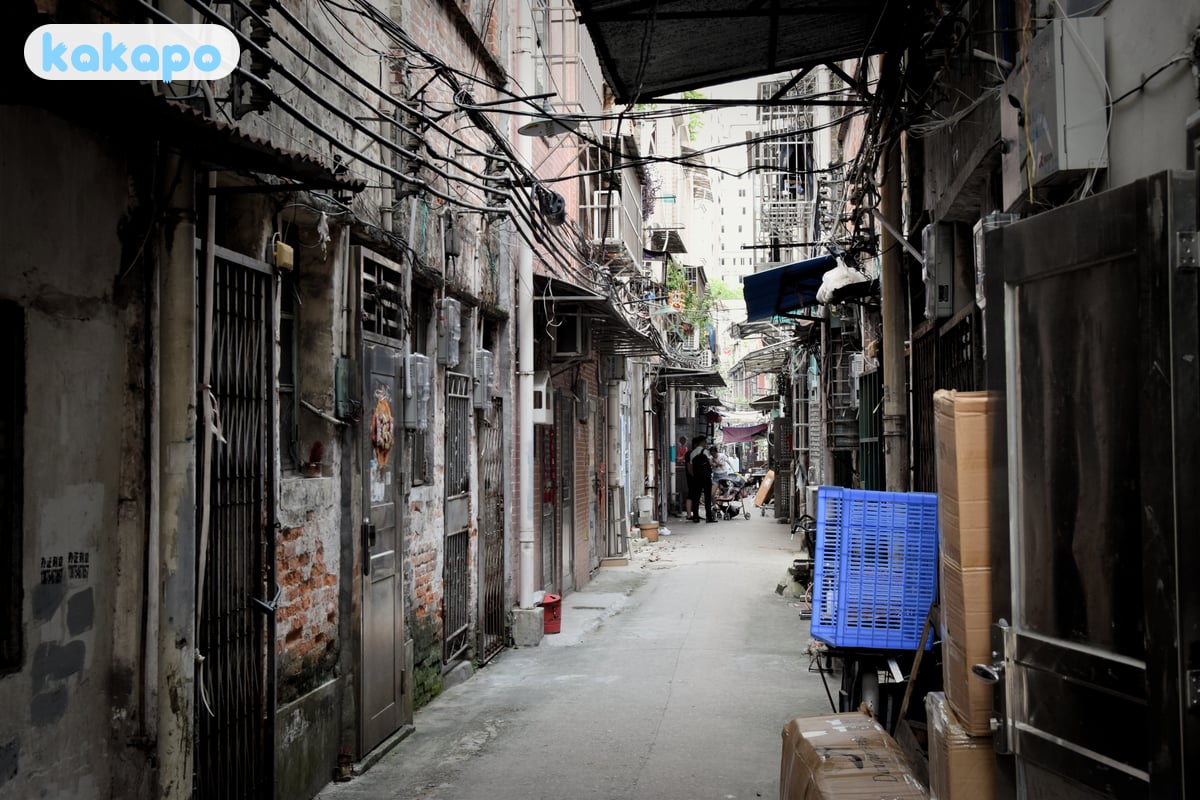
Recommended bases: Tianhe (newer business district) — high-end hotels (Four Seasons Guangzhou in IFC, Mandarin Oriental Pazhou, Park Hyatt); near Tianhe Sports Center and Taikoo Hui mall. Yuexiu (central old district) — historic; near Beijing Lu pedestrian street; mid-range hotels. Liwan (oldest district) — Shamian Island colonial-era European quarter, walking distance to Hubin Park. Pazhou — Convention Center area; trade-fair focus.
Stay aware: Beijing Lu pedestrian street and Shangxia Jiu pedestrian street at peak hours — dense crowds; pickpocket precautions. Around Guangzhou Railway Station — chaotic; standard station-area issues.
There are no genuinely dangerous neighbourhoods in central Guangzhou for daytime visiting.
Transport — Metro, HSR, the airport, Hong Kong

- Guangzhou Metro: 18 lines and growing; one of the world's largest networks; clean, cheap (CNY 2-12 per trip).
- Guangzhou Baiyun Airport (CAN): 30 km north of city. Metro line 3 (CNY 7, 50 min); airport bus; taxi/Didi CNY 100-150.
- HSR: Guangzhou South (Guangzhou Nan) is one of China's biggest HSR hubs. Hong Kong West Kowloon 50 min CNY 215; Shenzhen 30 min; Beijing 8 hr; Shanghai 7 hr; Wuhan 4 hr.
- To Hong Kong: HSR is the standard; or ferry from Pazhou Port; or coach via Shenzhen-Lok Ma Chau border.
- Didi: dominant ride-hail; supports foreign cards.
- Cashless: WeChat Pay and Alipay dominant. Set up Alipay's Tour Card before arriving.
- Internet/VPN: Google, Facebook, Instagram, X all blocked. Set up VPN before flying.
- Driving: drive on the RIGHT (China). Foreign licences not valid; don't try.
Money, food, emergency numbers
- Currency: Chinese yuan (CNY/RMB). $1 ≈ CNY 7.2.
- Tipping: not customary.
- Food: Cantonese cuisine homeland — dim sum (yum cha), wonton noodles, char siu, congee, sweet-and-sour pork. Famous restaurants: Lin Heung Tea House, Bing Sheng (multiple), Tao Tao Ju (heritage Cantonese), Yat Tung Heen (dim sum). Shamian Island has good cafés.
- Tap water: not drinkable. Bottled or kettle-boiled.
- Visa: 144-hour visa-free transit available for many nationalities for Pearl River Delta region (Guangzhou, Shenzhen, Zhuhai, etc.). Confirm current rules. 240-hour pilot scheme rolling out.
- Heat / humidity: Guangzhou is one of the world's most humid major cities June-Sep. Hydrate.
- Emergency: 110 (police), 119 (fire), 120 (ambulance). Tourist hotline 12301.
- Hospitals: Sun Yat-sen Memorial Hospital (+86 20 8133 2199); Eur Am Medical Center (+86 20 8735 8338) — English-speaking; Guangzhou United Family Hospital (+86 20 8710 6000).
- SIM: passport required for Chinese SIM. eSIM (Airalo China-friendly options) easier.

Frequently asked questions
Is Guangzhou safe to visit in 2026?
Yes — Guangzhou scores 82/100 here. UK FCDO and US State Department both treat mainland China as low-to-moderate advisory with no specific Guangzhou warning; the post-pandemic reopening, the 240-hour visa-free transit and the resumed Canton Fair traffic have all run without security incident. Violent crime against foreigners is rare. The realistic risks are bag-snatch on Beijing Road during peak Canton Fair, counterfeit-goods detention at customs if you buy fakes in Shahe or Zhanxi wholesale markets, and Didi-vs-unlicensed-taxi confusion outside Baiyun Airport. Air quality and summer heat (35-38°C with humidity) are larger practical risks than crime.
Is Guangzhou safe at night?
Yes. Tianhe (the CBD around Zhujiang New Town and Canton Tower), Zhujiang New Town riverside, Shamian Island, Beijing Road pedestrian street and Taikoo Hui are well-lit and safe late. The bar streets of Party Pier and Yongqing Fang in Liwan are busy and policed. Yuexiu around the train station gets seedier after midnight — the wholesale-market alleys north of Guangzhou Railway Station are not where you want to be at 2am. Didi is the default ride app; you'll need it linked to a Chinese bank/Alipay or use Didi's English version with a foreign card. Metro shuts around 23:00.
What's the biggest scam to avoid in Guangzhou?
Counterfeit-goods detention. Zhanxi Road, Shahe and Baima wholesale markets sell fake Louis Vuitton, Rolex, AirPods at obvious prices — buying one or two for personal use rarely triggers issues, but quantities raise customs flags both in China (export) and at your home airport. Hong Kong customs in particular routinely seize counterfeits on the high-speed-rail crossing back. Second-place is the Beijing Road 'tea ceremony' scam — friendly students invite you to a teahouse and present a ¥2,000 bill; politely decline tea invitations from strangers. Third, unlicensed taxis ('black cars') outside Baiyun Airport — use Didi or the official taxi rank.
Can you drink tap water in Guangzhou?
No — do not drink unboiled tap water. Guangzhou municipal water meets Chinese standards at the treatment plant but older pipework and rooftop tanks mean it's not considered potable at the tap. Locals universally boil water (every hotel room has a kettle and a thermos for this reason) or drink bottled. Tea is served everywhere as the safe default. Brushing teeth with tap water is fine. Ice in reputable restaurants and hotels is made from filtered water and safe; street-stall ice is best avoided.
Do I need a VPN to use the internet in Guangzhou?
Practically yes — Google (search, Maps, Gmail), WhatsApp, Instagram, Facebook, X/Twitter and most Western news sites are blocked behind the Great Firewall. Install a VPN BEFORE you arrive — the major VPN provider websites are themselves blocked from inside China, so you can't download one on landing. Apple's App Store inside China also strips most VPN apps. Alternatives that work natively: WeChat (everything), Baidu Maps, Alipay (you can now link a foreign Visa/Mastercard since 2024). Hotel Wi-Fi in international chains often has acceptable VPN tolerance. eSIMs that route via Hong Kong (3HK, Nomad) bypass the firewall entirely and are the cleanest fix for short trips.
Sources
Run a business in Guangzhou?
Show visitors your Guangzhou business is a safe choice. The free Verified by Kakapo badge puts Guangzhou's live safety score on your website, links back to your verified page, and updates itself. No cost.
Get the free badge →