


Is Shibuya, Tokyo Safe? A 2026 Travel Safety Guide
The Shibuya Scramble crowd density, late-night Center Gai precautions, the standard Tokyo earthquake context, and the realities of one of the world's most-photographed crossings.

Shibuya is a district of central Tokyo — for Tokyo's overall safety context (typhoons, earthquakes, the Nankai Trough scenario, citywide healthcare and transport), see our parent Tokyo guide. This page covers Shibuya-specific risks.
Shibuya — population ~225,000 (residential) plus ~3 million daily visitors at the Shibuya Crossing — is Tokyo's most-photographed district and the centre of Japanese youth-fashion-and-nightlife culture. Crime against tourists is essentially nonexistent (Tokyo-equivalent low rates). The honest concerns are the Scramble Crossing crowd density at peak times (Friday/Saturday evenings can see 3,000+ pedestrians per crossing cycle), the Center Gai late-night nightlife, and Shibuya's historical position in a Tokyo earthquake (the 1923 Kanto event devastated low-rise Shibuya — modern buildings are seismically engineered).
The 2026 Shibuya is also a district mid-construction. The 100-year Shibuya Station redevelopment ("Shibuya 100"), continuing through the late 2020s, has rebuilt Shibuya Sky (the Scramble Square observation deck, 230m, ¥2,500 timed entry), opened Shibuya Sakura Stage and the Tokyu Plaza Shibuya, and is rerouting the Ginza Line platform yet again. Practical impact: even regular Shibuya users get lost. Allow extra time at the station, screenshot exit numbers, and use Google Maps' indoor station view. The Halloween crowd-control regime — banned street drinking, one-way pedestrian flow on the Scramble, heavy police presence, no celebrating allowed in front of Hachiko — is now permanent each October 31st and December 31st after the post-Itaewon (2022) push by Shibuya City; if you actively want Halloween in Tokyo, go to Roppongi or Ikebukuro instead.
| Night safety | 93/100 |
|---|---|
| Scam / petty-crime risk | Medium |
| Violent crime (tourists) | Low |
| Most common scams | aggressive touts offering 'girls bar' at Hachiko exit; overcharging at bars in Center Gai; drink-spiking in nightlife areas |
| Safer neighbourhoods | Shibuya 109, Hachiko Square, Center Gai |
| Data sources cited | 4 |
| Last verified |
What the score means — 95/100
- Personal safety (94) — exceptional Tokyo-equivalent.
- Transport (96) — Shibuya Station is one of Tokyo's biggest hubs; JR Yamanote, Tokyu, Keio, Tokyo Metro Ginza/Hanzomon/Fukutoshin lines.
- Healthcare (90) — Tokyo metropolitan hospital network; Japan Medical Association nearby.
- Air quality (78) — moderate; Tokyo-megalopolis traffic emissions.
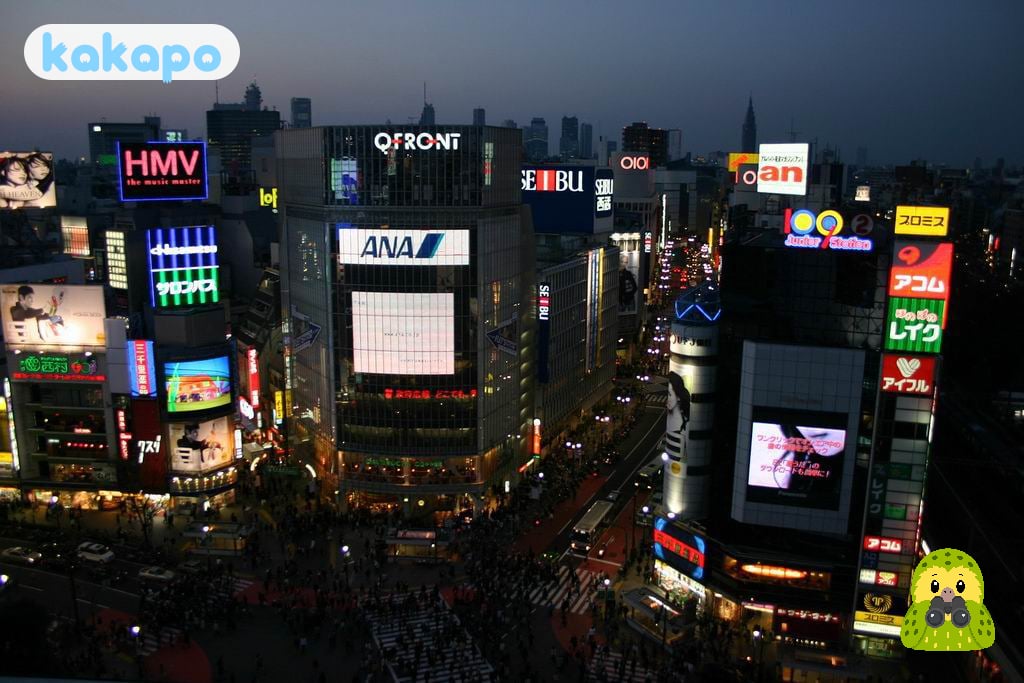
Shibuya Scramble Crossing — crowd density and photo etiquette
- The crossing: world's busiest pedestrian crossing; Friday/Saturday evening 3,000+ pedestrians per cycle.
- Best photo spots: Shibuya Sky observation deck (¥2,500); Starbucks Q-Front 2nd floor (free with order); Mag's Park rooftop on Shibuya 109.
- Don't stop in the middle of the crossing for selfies — moves crowds, blocks others, photographers pile up at the edges instead.
- Crowd safety: extreme density at New Year's countdown and Halloween (Oct 31) — Shibuya Mayor has banned outdoor drinking on Halloween since 2023 after years of incidents.
- Pickpocket precautions: rare but possible at peak crowd times.
- Hachiko statue: famous meeting point; expect crowds; bag in front for selfies.
Center Gai and late-night Shibuya
- Center Gai: Shibuya's main pedestrian shopping/nightlife strip; bars, clubs, izakaya, karaoke.
- Standard Tokyo nightlife caveats: avoid touts inviting you into bars (the Kabukicho-style overcharging scam exists at smaller scale in Shibuya); reputable bars don't street-recruit.
- Drink-spiking: rare but reported; standard precautions.
- Closing time: most bars 24h; trains stop ~midnight then resume 05:00 — many young Tokyoites stay out till first train.
- Halloween (Oct 31) and New Year: Shibuya is now actively crowd-controlled; avoid both events unless you specifically want them.
Shopping districts and the youth-fashion scene
- Shibuya 109: iconic gyaru-fashion department store; fashion-tourism magnet.
- Shibuya Parco, Hikarie, Scramble Square, Stream: luxury and mid-range shopping complexes.
- Don Quijote Shibuya: 24-hour discount mega-store; tourist must-do; pickpocket precautions in crush.
- Pickpocket levels: still very low by international standards but elevated for Tokyo.
Getting to and from Shibuya
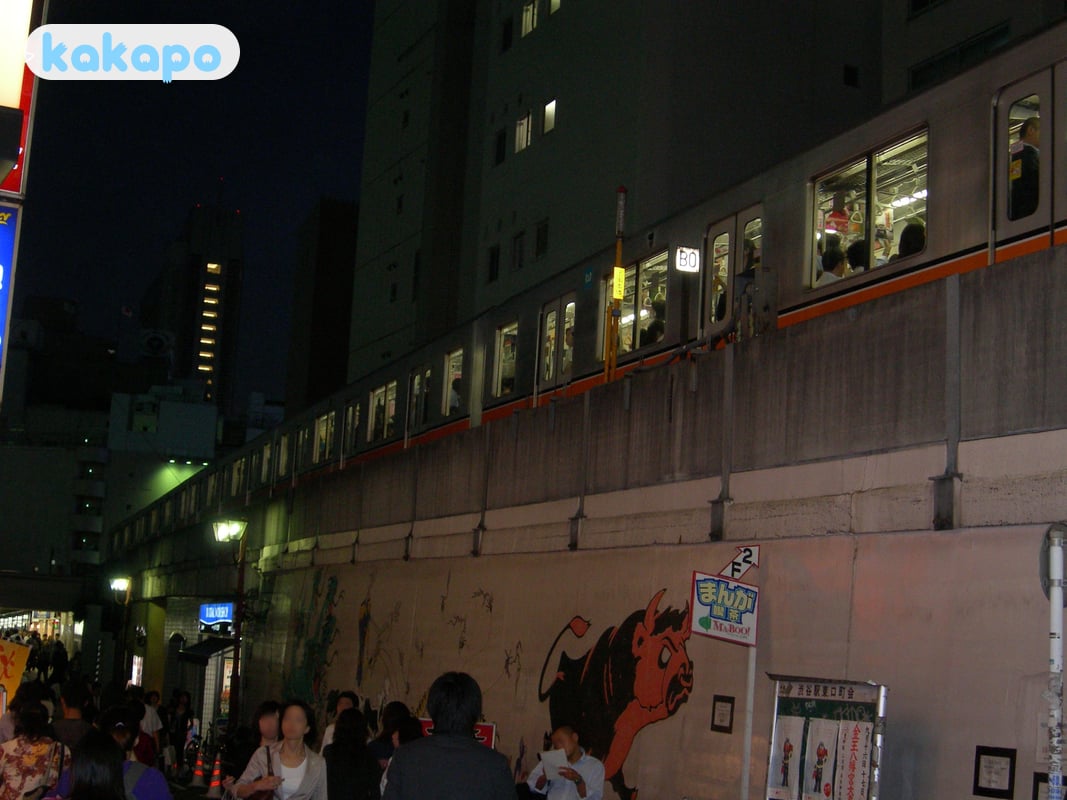
- Shibuya Station: 11 lines; one of Tokyo's three biggest transit hubs (with Shinjuku and Tokyo Station). JR Yamanote loops; Tokyo Metro Ginza/Hanzomon/Fukutoshin; Tokyu Toyoko (to Yokohama); Keio Inokashira (to Kichijoji).
- From Haneda Airport (HND): 30 min by Limousine Bus or Keikyu Limited Express + transfer; ~¥600.
- From Narita (NRT): 90 min via Narita Express to Shinagawa then JR Yamanote.
- Suica / Pasmo / ICOCA tap card: essential.
- Last train: ~midnight; taxi after that ~¥3,000-5,000 to most central districts.
Shibuya Scramble — what it actually feels like + crowd-tips
Shibuya Crossing (the "Scramble") is the most-photographed intersection on Earth — up to 2,500 people cross at once during a single green-light cycle. It's also the entry-point to the entire Shibuya district experience, and the single moment most international visitors associate with Tokyo.
- Best view from above: the Starbucks in Tsutaya (2nd floor) — free, queue 10-15 min for a window seat. Alternatively, the Mag's Park rooftop atop the Shibuya 109 building, or the Shibuya Sky observation deck (¥2,500 — pre-booked timed entry, very popular).
- Best time of day: 17:30-19:00 weekdays for peak commuter scramble + lights on; Saturday evening for tourist density.
- The Hachiko statue: outside Shibuya station, west exit. Always crowded; small bronze loyalty dog, queue 5-15 min for the photo.
- How to actually cross: when the light goes green for pedestrians, all directions cross at once. Look at the lit-up scoreboards on the buildings, walk steadily, don't stop in the middle for a selfie (you'll block 500 people). It's a 30-second crossing.
- What's around it: Center-Gai (the pedestrianised shopping street), Shibuya 109 (youth fashion), Don Quijote, the love hotels of Maruyama-cho, Yoyogi Park, Meiji Shrine, Harajuku (Takeshita Street is one stop north on Yamanote).
- The Halloween problem: Shibuya was the city's de-facto Halloween street party — until late-2023 the ward banned alcohol consumption on the streets around Halloween + New Year due to overcrowding incidents. Police presence is heavy during those nights; respect the diversions.
Scams + the Roppongi-style bar warning
- Japan in general has very low scam volume — but Shibuya at night is where the few that exist concentrate. The classic warning: aggressive touts (often Nigerian or Eastern European men) approach foreigners at the Hachiko exit, around the Center-Gai, or at the Dogenzaka taxi stand offering "girls bar" / "free drink" / "guys-only bar."
- What actually happens: tourists go in, drink one beer, the bill comes at ¥50,000-200,000. Refusal can be intimidating; security may "escort" you to an ATM. The Tokyo Metropolitan Police have posted signs in English warning about this specific pattern.
- Where it concentrates: Dogenzaka (the steep street uphill from the scramble), Maruyama-cho (the love-hotel district), parts of Center-Gai late at night.
- What to do: never follow a tout; never enter an unsigned bar; never let someone "escort" you to an ATM. Walk into a well-lit konbini (7-Eleven, Family Mart) and ask staff to call police if pressured.
- Pickpockets on Yamanote / Ginza lines: rare but real on packed commuter trains. Front pocket; phone in hand at chest height not arm's length.
- Restaurant otōshi (cover charge): legitimate Japanese practice — most izakayas charge ¥300-700/person automatically. Not a scam, but tourists are sometimes surprised. Posted at the entrance.
- IC card: Suica or Pasmo — works on all trains, buses, taxis, convenience stores. ¥500 deposit; refundable when leaving Japan.
Inside Shibuya — the sub-districts that matter
- Hachiko Square and the Scramble — the ground-zero plaza in front of Shibuya Station's Hachiko Exit. The bronze loyal dog statue dates from 1934 (rebuilt 1948); standard meeting point. Tsutaya Q-Front (the curved black building with the giant screens) is the photographer's perch — the second-floor Starbucks gives a free crossing view with any drink purchase; expect a 10-15 min queue for a window seat at peak. Pickpocketing is rare here even at the worst crowd density, but watch phones during Halloween/New Year crowd-control nights.
- Center-gai (センター街) — the pedestrianised shopping spine running northwest from the Scramble. Cheap eats, chain karaoke (Big Echo, Karaoke-kan), youth-fashion shops, the Tokyu Hands annex. Bustles until last train; mostly safe but the Center-gai late-night strip is where the diluted Roppongi-style touts sometimes operate — never follow anyone you didn't approach.
- Dogenzaka (道玄坂) — the steep street climbing west from the Scramble, mixing midrange hotels (Shibuya Excel Hotel Tokyu, Cerulean Tower), karaoke joints, and the entrance to the love-hotel district. The Dogenzaka taxi stand is the late-night pickup point. Aggressive bar touts cluster here after 23:00; walk past, don't engage.
- Maruyama-cho (円山町) — Shibuya's love-hotel district, halfway up Dogenzaka. Discreet boutique love hotels (¥6,000-15,000 per "rest" or stay; check-in is automated via touchscreen at most properties) and the famous live houses (Womb, Sound Museum Vision, Club Asia) sit side by side. Safe, but the tout problem peaks on the small alleys here at 02:00-04:00.
- Sakuragaoka (桜丘) — the quieter wedge of small offices and izakaya immediately south of the station, undergoing redevelopment under the "Shibuya Sakura Stage" project. Excellent dinner option (Sakura-tei okonomiyaki, the Mexican spot El Cafe, several small wine bars) away from the Center-gai chaos.
- Shoto (松濤) — the upmarket residential district uphill northwest of Dogenzaka. Walled mansions, embassies, the Shoto Museum of Art, the Toguri Museum of Art. Calm by day, dead at night; very safe. Worth a 20-minute stroll if you want to see Tokyo's wealthy residential side.
- Miyashita Park and the Cat Street axis — the rebuilt elevated park-mall complex (Miyashita Park, opened 2020) runs northeast from the Scramble toward Harajuku along Cat Street, a 1km strip of streetwear (BAPE, Supreme, Onitsuka Tiger), the Ralph Lauren Cafe, and small independent boutiques. Walkable, calm, the genuine fashion-tourism axis.
- Daikanyama and Ebisu (隣接) — technically separate districts (Shibuya Ward but separate train stations) immediately southwest. Daikanyama is upscale-calm (the Tsutaya T-Site bookstore-complex is a destination in itself); Ebisu has Yebisu Garden Place, the Museum of Photography, and the Ebisu Yokocho food alley. Underrated as a base if you want Shibuya-adjacent without Shibuya prices.
If it's your first time in Shibuya
- Get a Suica or Pasmo on arrival at Haneda or Narita (¥2,000 including ¥500 refundable deposit, or mobile via Apple Wallet). Without one you'll struggle at Shibuya's turnstiles — 11 lines converge here and buying paper tickets each time is slow.
- Use Hachiko Exit, not New South Exit, for the Scramble. The JR Hachiko Exit puts you directly at the famous crossing with the dog statue. The other exits dump you several hundred metres away — especially the Shin-Minami (New South) which is now isolated by station construction.
- Best first-night base in Shibuya: Cerulean Tower Tokyu (luxury, ¥35,000-60,000/night, west-side panoramic views), Shibuya Stream Excel Hotel Tokyu (mid-range, ¥18,000-28,000), or Mustard Hotel Shibuya (boutique, ¥14,000-20,000). For budget, Shibuya Granbell Hotel (¥10,000-14,000) sits right above the Center-gai. Avoid booking in Maruyama-cho love hotels for a multi-night stay — they're designed for short stays and the per-night rate gets uncompetitive.
- Shibuya Sky (¥2,500): book the 230m observation deck timed entry 1-3 days ahead via the official site or Klook. Sunset slots sell out a week ahead in cherry-blossom and autumn-foliage season. The free alternatives: Mag's Park on the Shibuya 109 rooftop, and the Starbucks Q-Front second floor.
- Last train system: most JR and Metro lines stop running from Shibuya between 00:00 and 00:30 (the JR Yamanote's last loop ends ~00:30). Check the specific line via Google Maps or the Navitime app — Yamanote, Saikyo, Ginza, Hanzomon, Fukutoshin, Inokashira, and Tokyu Toyoko each have a different cutoff. Miss it: take a Sleeple Cube (capsule, ¥4,000-6,000) or a 24h manga café (Bagus, Gera Gera, ¥2,000-3,500 for an overnight pack), or pay ¥3,000-5,000 in a taxi to most central districts.
- The Halloween and New Year rule: Shibuya City has banned outdoor drinking on Halloween (Oct 31) and New Year's Eve since 2023, with one-way pedestrian flow on the Scramble and heavy police. Don't celebrate at Hachiko — actively go to Roppongi or Ikebukuro if you want those nights. Standard nights, Shibuya is fine.
- Cash and cards: most chain restaurants, izakaya, department stores, and konbinis now take tap-to-pay (Visa/Mastercard contactless, Apple Pay). Small Center-gai izakaya, Nonbei Yokocho's tiny bars under the Yamanote tracks, and many shrines remain cash-only. Carry ¥10,000-15,000.
- The otoshi (お通し) cover charge: legitimate Japanese practice — most izakaya automatically charge ¥300-700 per person as a "table fee" with a small appetiser. Posted at the entrance; not a scam, just unfamiliar to first-timers. Refusing is not the cultural move.
- Common rookie mistakes: stopping in the middle of the Scramble for a selfie (blocks 500 people — take the photo from Tsutaya's second floor instead); tipping (don't); blocking the platform yellow line at Shibuya Station; talking loudly on Yamanote trains (strictly silent); standing right on escalators (Tokyo stands LEFT, walks right, opposite to Osaka).
Money, food, emergency numbers
- Currency: Japanese yen (¥). $1 ≈ ¥152.
- Cards: chains and major restaurants yes; small izakaya cash. 7-Eleven ATMs work.
- Tipping: not done.
- Food: Ichiran ramen (Shibuya branch — solo-booth chain), Sushi Zanmai Shibuya, Streamer Coffee Company; Shibuya Yokocho food alley (atmospheric drinking-and-eating).
- Tap water: safe.
- Emergency: 110 (police), 119 (fire and ambulance). Japan Visitor Hotline 050-3816-2787 (24h, English).
- For Tokyo-wide context — earthquakes, typhoons, healthcare network — see our parent Tokyo guide.
Frequently asked questions
Is Shibuya safe to visit in 2026?
Yes — Shibuya scores 92/100 here, the standard Tokyo-low-crime profile. Japan sits at US State Department Level 1 and UK FCDO 'normal precautions'. Crime against tourists is genuinely rare — pickpocketing, theft, and assault rates are among the lowest of any global megacity's most-trafficked district. Realistic risks are operational rather than criminal: the Hachiko Crossing crowd density (especially Halloween night when SCMP-style crowd-crush concerns are now policed with one-way traffic), Center-gai late-night drunken disorder (alcohol-related rather than dangerous), earthquake preparedness (the Greater Tokyo region sits on multiple fault lines), and the last-train system (miss it and you're paying ¥10,000+ for a taxi or sleeping in a manga café).
Is Shibuya safe at night?
Yes — exceptionally so by global standards. The Hachiko Crossing, Center-gai bar streets, Dogenzaka and Shibuya Sakuragaoka all stay busy until the last train (~00:30 from Shibuya station) and feel safe for solo walkers including women. Side streets in Maruyama-cho (the love-hotel district up the hill) are calmer and also fine. The Center-gai and Roppongi-touts-on-tour pattern of pushy bar-promoter scams exists; ignore touts inviting you to 'special bars' — they lead to the same overcharging clip-joints as Shanghai or Budapest, just with different decor. After last train, the 24-hour conveni and the manga cafés are the cheap survival options; or pay ¥4,000-7,000 to a Daikoku, Kentos or Hello-Tomodachi taxi back to your hotel.
How does the last-train system work and what about earthquake preparedness?
Last trains from Shibuya: most JR and Tokyo Metro lines stop running between 00:00 and 00:30; the Yamanote Line's last loop ends around 00:30. Check the specific line on Google Maps or Navitime — Shibuya is on the Yamanote, Saikyo, Ginza, Hanzomon, Fukutoshin, Inokashira and Tokyu Toyoko lines, and each has its own cutoff. Miss it: walk to a 24-hour conveni for a manga-café night (¥2,000-4,000 for a 'nighttime pack'), or taxi home. Earthquake preparedness: Japan's J-Alert phone system pushes warnings 10-60 seconds before strong shaking — keep your phone on and the alert on. Shibuya's buildings are engineered to current Japanese seismic codes and survived 2011 (the Tohoku earthquake was felt strongly in Tokyo but caused no Shibuya structural damage). If a major quake hits, the rules: drop, cover, hold; don't run outside; don't use lifts; head to a designated evacuation site (Yoyogi Park is the nearest from central Shibuya) only after shaking stops.
What scams should I watch out for in Shibuya?
Mostly the Center-gai bar-tout 'special bars' pattern — touts offering tourists to 'a nice club, no cover' which leads to an overcharging clip-joint or one of the regulated host/hostess clubs where bills routinely run ¥30,000-100,000 with door staff blocking exits. Japan has cracked down on this in Kabukicho (Shinjuku) and the scheme has partially migrated to Shibuya's Maruyama-cho. Don't follow strangers to bars; stick to named, reviewed venues. The legitimate Shibuya nightlife (Womb, Sound Museum Vision, Trump Room, the Center-gai izakayas) is well-policed. ATM-skimming is rare — 7-Eleven and Lawson ATMs accept foreign cards and don't skim. Always pay in JPY, not your home currency.
Can you drink tap water in Shibuya?
Yes — Tokyo tap water is treated to among the highest standards globally (the Tokyo Metropolitan Government runs an active campaign branding it 'Tokyo Tap Water' with public taste tests), drawn from the Tone and Tama river systems and treated at multiple plants. It's drinkable straight from the tap throughout Shibuya, and restaurants serve cold filtered water ('o-hiya') for free. Carry a refillable bottle; many station platforms now have refill stations as part of the city's plastic-reduction push. The Yoyogi Park public taps are also drinkable. Hachiko's water bowl (the famous dog statue near Shibuya Crossing) is not for human use.
Sources
Run a business in Shibuya?
Show visitors your Shibuya business is a safe choice. The free Verified by Kakapo badge puts Shibuya's live safety score on your website, links back to your verified page, and updates itself. No cost.
Get the free badge →