


Is Sugamo, Tokyo Safe? A 2026 Travel Safety Guide
Tokyo's 'Grandma's Harajuku' district, Togenuki Jizo temple etiquette, the red-pants tradition, and the realities of one of Tokyo's most-distinctive (and quietest) shopping streets.

Sugamo is a district of Tokyo's Toshima ward — for Tokyo's overall safety context (typhoons, earthquakes, citywide healthcare and transport), see our parent Tokyo guide. This page covers Sugamo-specific context.
Sugamo is famously known as "Obaachan no Harajuku" (Grandma's Harajuku) — the Jizo-dori Shopping Street caters to Tokyo's elderly women population with traditional sweets, red lucky-pants (akapantsu), and the Togenuki Jizo temple where the deity is said to "pull out" pain and illness. Crime against tourists is essentially nonexistent (one of Tokyo's quietest districts). The honest concerns are entirely about respectful behaviour at the temple, the elderly-population pace, and the standard Tokyo earthquake context.
What's changed since the pre-pandemic Sugamo is mostly the visitor mix, not the place. Western tourists still rarely come here — Toshima Ward stats show Sugamo's overnight foreign-visitor count is a fraction of nearby Ikebukuro's. But the YouTube and TikTok exposure of "Tokyo's grandma district" through 2023-2025 has brought a noticeable trickle of curious solo travellers (and the Maruji red-underwear shops report explicit interest from foreign customers buying ¥1,500-3,000 akapantsu as gifts for grandparents). Practical impact: zero on safety, and the shopkeepers along Jizo-dori are uniformly delighted to see respectful foreign visitors — a few of the long-running sweet shops like Mizuno now have small English signs explaining shio-daifuku. The neighbourhood pace remains unhurried; if your prior week has been Shibuya and Shinjuku, an afternoon in Sugamo is a deliberate decompression.
| Night safety | 92/100 |
|---|---|
| Scam / petty-crime risk | Low |
| Violent crime (tourists) | Low |
| Safer neighbourhoods | Sugamo |
| Data sources cited | 4 |
| Last verified |
What the score means — 94/100
- Personal safety (98) — among Tokyo's quietest districts.
- Transport (92) — JR Yamanote line Sugamo Station; Toei Mita line Sugamo Station; central Tokyo 15 min.
- Healthcare (90) — Tokyo metropolitan network; Toshima Hospital nearby.
- Air quality (78) — moderate Tokyo-megalopolis air.
Togenuki Jizo Temple (Koganji) — etiquette
- Koganji Temple: small Soto Zen temple housing the Togenuki Jizo bodhisattva (the "thorn-pulling Jizo"); free entry; the bronze Arai Kannon statue at the side is the headline ritual object.
- The Arai Kannon ritual: visitors wash the statue with water and a small towel (sold ¥100 from temple booth); rub the towel on your own body where you feel pain; the Kannon "transfers" healing.
- Etiquette: queue patiently (the queue is largely elderly women); be respectful; modest dress (covered shoulders); remove hat at altar.
- Photography: permitted in courtyard; restricted in inner shrine; no selfies posing irreverently with Kannon.
- Open: 06:00-17:00 daily; busiest on the 4th day of each month (the temple's Ennichi market day).
- Don't bypass the queue: it's a slow-moving devotional ritual, not a tourist photo-op.
Jizo-dori Shopping Street
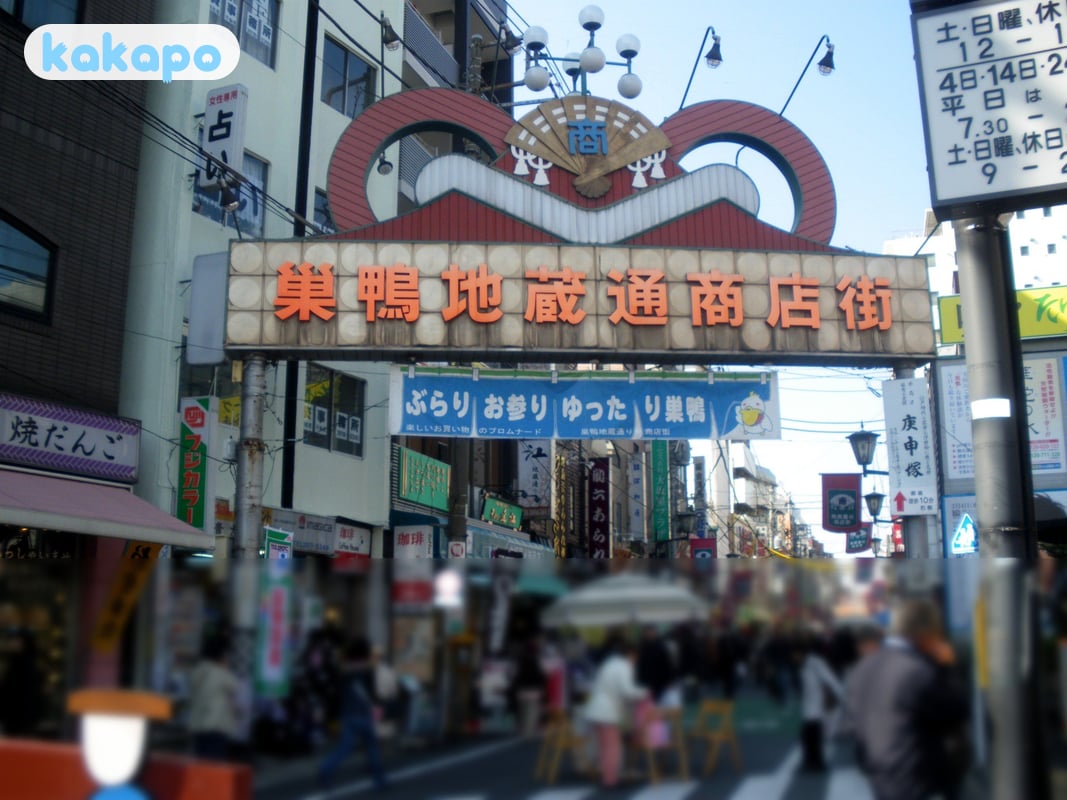
- Jizo-dori (Sugamo Jizodori Shotengai): 800m pedestrian shopping street; 200+ shops largely catering to elderly Japanese women; traditional sweets, red akapantsu (lucky underwear), kimono accessories.
- Akapantsu (red underwear): the Sugamo signature — lucky red underwear, especially for women in their "yakudoshi" (unlucky years) and elderly women's health. Maruji is the famous shop.
- Traditional sweets: shio-daifuku (salt mochi at Mizuno; the local famous), kurikinton (chestnut sweets), monaka.
- Quiet pace: the street is gentle, slow-paced; respectful behaviour matches the elderly customer base.
- Best timing: the 4th, 14th, 24th of each month (Jizo's "Ennichi" market days) bring street stalls and crowds; weekday mornings are the calmest.
Getting to and from Sugamo
Standard Tokyo earthquake context
- Sugamo sits on the Kanto Plain — same earthquake context as central Tokyo; future Kanto-region M7+ event has 70%+ probability within next 30 years.
- What to do during shaking: Drop, Cover, Hold On under sturdy table; don't run outside.
- Phone alerts: J-Alert pushes warnings to all phones in seconds.
- For broader Tokyo context see parent Tokyo guide.
"Harajuku for grannies" — what Sugamo actually is
Sugamo is a north-Tokyo neighbourhood (Toshima ward) about 15 minutes from Ikebukuro by JR Yamanote line. Its nickname "Harajuku for grannies" (おばあちゃんの原宿 — obāchan no Harajuku) is genuine — the main shopping street is geared toward shoppers in their 60s-80s, with traditional Japanese clothing, walking aids, herbal medicine shops, and senbei (rice cracker) stalls. It's a sweet, calm, distinctly local experience that most Tokyo guides skip.
- Jizō-dōri shopping street: the main spine. 800m of small shops + cafes + craft stalls. Quiet weekdays, lively weekends.
- Kōgan-ji Temple (the "Pulling-out-the-Thorn Jizō"): the central attraction. Pilgrims rub a small jizō statue on the part of their body that hurts, in the belief it will be cured. The 4th + 14th + 24th of every month are special-prayer days when the street fills with elderly pilgrims.
- Red underwear shops: a Sugamo institution. Red underwear is believed to bring good health to the wearer (especially for elderly women). Several shops specialise.
- Sugamo Shio Daifuku: salty-sweet mochi (Mizuno is the famous old shop). Senbei + dorayaki + Japanese-style sweets at multiple stalls.
- Genki Sushi: kaiten (conveyor-belt) sushi for cheap lunch nearby.
- Best time to visit: weekday morning for the calm, 4th/14th/24th for the festival atmosphere.
- Combine with: Ikebukuro (one stop south, the major commercial district), Otsuka (Sugamo's smaller neighbour with vintage shops), or just a quiet stop on the Yamanote loop.
Standard Tokyo basics that apply here too
- Japan's overall safety — exceptional. Lost wallets get returned; sex/violent crime against tourists is rare. Sugamo is even calmer than central Tokyo.
- Scams in Tokyo more broadly — concentrated in Roppongi + Shinjuku Kabukichō (aggressive bar touts with surprise ¥50,000-200,000 bills + intimidation). None of that happens in Sugamo.
- Pickpocketing — extremely low base rate. Yamanote rush hour is the most likely spot but still rare.
- Earthquake awareness — Tokyo runs annual drills, buildings code-built. If shaking starts: drop, cover, hold on, don't run outside.
- Cash + cards — Japan is still more cash-dependent than other developed economies, especially older establishments. Bring ¥10,000-20,000 cash for the day; use 7-Eleven, Family Mart, or Japan Post ATMs to refill (they accept foreign cards 24/7).
- IC card — Suica or Pasmo. ¥500 deposit; refundable when leaving Japan. Works on all trains, buses, vending machines, konbinis.
- Modest behaviour — Japan is quiet in public. Don't talk loudly on trains; don't eat while walking. Sugamo's elderly residents are particularly sensitive to tourist noise.
- Removing shoes — at temples, ryokan, traditional restaurants. Slip-on shoes save time.
Sugamo and adjacent — where to actually go
- Jizo-dori Shopping Street (とげぬき地蔵通り) — the 800m pedestrian shopping spine, running north from Koganji Temple to Sugamo Shinden. Approximately 200 small shops; the unmissable stops are Maruji (the iconic red akapantsu shop at #4-22, four branches along the street, ¥1,000-3,000 for women's lucky-red underwear), Mizuno (the salt-mochi shop at #3-33, shio-daifuku ¥200/piece since the 1930s), and Tokiwa Shokudo (the cheap teishoku set-meal joint, ¥800 lunch trays). Closes 18:00-19:00 most days; the 4th, 14th, 24th of each month are the "Ennichi" Jizo market days when 100+ extra stalls fill the street.
- Koganji Temple (高岩寺 — the Togenuki Jizo) — the Soto Zen temple at the south end of Jizo-dori. The bronze "Arai Kannon" (washing Kannon) statue is the ritual centre — visitors buy a small towel (¥100) from the temple booth, ladle water over the part of the statue corresponding to their own ailment, and rub the towel on themselves. Free entry; 06:00-17:00 daily. Queue patiently; this is a devotional practice, not a photo op.
- Sugamo Shinden (巣鴨新田) area — north end of Jizo-dori, where the shopping street meets the Toden Arakawa Streetcar (Tokyo's only surviving tram line). Riding the Toden one or two stops to Koshinzuka (¥170) is a charming five-minute detour.
- Around JR Sugamo Station — the south exit feeds into Jizo-dori; the north exit has a small business-district cluster including Toshima Civic Centre and several cheap chain restaurants. The Toei Mita Line Sugamo Station is one block away, connecting south to Otemachi and the Imperial Palace area.
- Otsuka (大塚) — Sugamo's smaller neighbour one Yamanote stop south. Vintage shops, the Otsuka Yon-chome shopping street, and the famous Bondy curry (¥1,200-1,500) and Tonkatsu Tonki branches. Pleasant 10-minute walk between the two.
- Ikebukuro (池袋) — three Yamanote stops south, ~5 min, ¥160. The major commercial hub if you want big-shopping (Seibu, Tobu, the Sunshine City complex), Otome Road (the female-otaku-culture answer to Akihabara), and late-night dining. Sugamo to Ikebukuro is the most-used local pairing.
- Rikugien Garden (六義園) — 15-minute walk southeast of Sugamo Station; one of Tokyo's two greatest Edo-period strolling gardens (the other is Koishikawa Korakuen). ¥300 entry. Stunning during cherry blossom in early April when the weeping cherry is lit at night, and in late November for autumn maple foliage.
- Tokyo Sugamo Shinkin Bank "Akarengo" headquarters — the architecturally-celebrated red-brick bank building two blocks west of Jizo-dori. Free to view from outside; quirky landmark.
If it's your first time in Sugamo
- Get here on the JR Yamanote Line. Sugamo is on the Yamanote loop between Ikebukuro and Komagome; ¥160-220 from Shinjuku, Tokyo Station, or Shibuya (15-25 min). The Toei Mita Line is the alternative if you're coming from Otemachi or Hibiya. From Haneda or Narita, transfer at Hamamatsucho or Nippori respectively then Yamanote.
- Time your visit for a 4-14-24 Ennichi day if you can. The 4th, 14th, and 24th of each month bring 100+ extra street stalls to Jizo-dori and a genuine festival atmosphere of elderly pilgrims, vendors, and food. Weekday non-Ennichi mornings are the calmest if you prefer the quiet version.
- Best first hour: walk south from JR Sugamo Station's north exit, cut into Jizo-dori at its south end near Koganji Temple, do the Arai Kannon ritual (¥100 for the towel, ladle water over the statue, rub the towel on yourself), then walk slowly north up the 800m strip pausing at Mizuno for shio-daifuku and Maruji for the akapantsu inspection.
- Lunch options: Tokiwa Shokudo (the ¥800 teishoku set with mackerel, rice, miso, pickles, and side dishes — old-school cheap perfect); Sugamo Tokiwa for cheap soba; or walk 10 minutes to Otsuka for Bondy curry (¥1,200-1,500, the famous European-style beef curry that started in Jinbocho). Most Jizo-dori restaurants close 17:00-18:00 — eat earlier than you would in Shibuya.
- Akapantsu shopping: Maruji has four branches along Jizo-dori with slightly different stock. Women's red panties are the headline at ¥1,000-3,000; they also do red socks, red haramaki (belly-warmers), red T-shirts. The cultural meaning is health and longevity for the wearer — a thoughtful gift for an older relative.
- Cash: bring ¥5,000-10,000 in small notes. Most Jizo-dori shops are cash-only; the 7-Eleven inside JR Sugamo Station has a foreign-card-friendly ATM. Maruji takes cards for larger purchases; most sweet shops don't.
- Temple etiquette: bow once at the gate; speak quietly; remove hat at the altar; modest dress (covered shoulders preferred); no flash photography in the inner shrine; don't pose irreverently with the Kannon statue. The queue moves slowly — that's the point.
- Combine the visit: most Sugamo trips run 90-180 minutes. Pair with Rikugien Garden (15-min walk, ¥300, especially good in early April or late November), the Toden Arakawa streetcar ride from Sugamo Shinden (¥170, one of Tokyo's last trams), or Ikebukuro for big shopping. Don't try to combine with Asakusa or Shinjuku in the same morning — too much travel for the day.
- Common newcomer notes: speak softly (the elderly demographic is sensitive to tourist noise); don't queue-jump at the temple ritual; tipping is not done; pavement bikes are common — stick to the right when walking the shopping street.
Money, food, emergency numbers
- Currency: Japanese yen (¥). $1 ≈ ¥152.
- Cards: chains and major shops yes; small Jizo-dori sweets shops cash. 7-Eleven ATMs work.
- Tipping: not done.
- Food: Sugamo specialties — shio-daifuku, ohagi (sweet rice balls), traditional yatsuhashi sweets. Tonkatsu Tonki at nearby Otsuka. Kafe Tora (long-running cafe near temple).
- Tap water: safe.
- Emergency: 110 (police), 119 (fire and ambulance). Japan Visitor Hotline 050-3816-2787 (24h, English).
- For Tokyo-wide context — see our parent Tokyo guide.
Frequently asked questions
Is Sugamo safe to visit in 2026?
Yes — Sugamo scores 95/100 here, one of the highest scores in any Tokyo neighbourhood. Japan sits at US State Department Level 1 and UK FCDO 'normal precautions'. Sugamo is a Toshima Ward neighbourhood on the JR Yamanote Line, three stops from Ikebukuro, famous as 'obaachan no Harajuku' — grandmother's Harajuku — because the Jizo-dori shopping street and the red Maruji-brand 'akapantsu' (lucky red underwear) shops cater overwhelmingly to retirees rather than youth tourists. Crime against visitors is essentially nil; the area's main demographic is locals over 65. Realistic risks: nothing significant. Pickpocketing rates are Tokyo-low, and the calmer crowd profile makes Sugamo less risky than Shibuya or Shinjuku even by Japanese standards.
Is Sugamo safe at night?
Yes — exceptionally so, but Sugamo isn't a nightlife destination. The Jizo-dori shopping street closes by 18:00-19:00; most cafés and traditional sweet shops (the famous shio-daifuku and ohagi vendors) shut by 17:00. After that the neighbourhood goes quiet quickly — pleasant residential streets, low foot traffic. A few izakaya and yakitori spots run later but the cluster is small. The JR Yamanote Line runs until ~00:30 from Sugamo, with regular service to Ikebukuro, Ueno, Tokyo Station and Shibuya. If you miss the last train, taxis are readily available; Tokyo manga café (kissa) options are at Ikebukuro one stop south for ¥2,000-4,000 night packs.
What scams should I watch out for in Sugamo?
Almost none — Sugamo is one of the lowest-scam neighbourhoods in one of the world's lowest-scam cities. The neighbourhood's elderly demographic occasionally attracts ATM phone-scam fraud (the 'ore-ore' / 'it's me' scam targeting Japanese grandparents); this doesn't affect tourists. The Maruji red-underwear shops are legitimate, fairly-priced (¥1,000-3,000), and run by long-established local businesses; no fake versions to worry about. Always pay in JPY rather than your home currency on card terminals. 7-Eleven and Lawson ATMs accept foreign cards and don't skim.
Can you drink tap water in Sugamo?
Yes — Tokyo tap water meets some of the world's strictest drinking-water standards, drawn from the Tone and Tama river systems and aggressively monitored by the Tokyo Metropolitan Government. The 'Tokyo Tap Water' brand has been actively promoted at international events. Restaurants serve cold filtered tap water ('o-hiya') for free. Carry a refillable bottle; many station platforms now have refill stations. The water bowl at the Togenuki Jizo temple's purification fountain (the famous 'arai kannon' statue where elderly visitors rub the corresponding sore body parts of the deity for healing) is not for drinking — it's ritual water.
What's actually worth doing in Sugamo?
Three things, all best appreciated on a slow weekday afternoon. Jizo-dori shopping street is a 780m strip of small traditional shops — wagashi (Japanese sweets) at Mizuno (famous for shio-daifuku salt-cured mochi), the red-everything Maruji store for the lucky akapantsu underwear (a beloved gift for grandparents), traditional clothing, futon-makers, and obanzai pickled vegetables. Buy something; the prices are honest and the shopkeepers are unhurried and pleased to see visitors. Koganji Temple (the Togenuki Jizo Temple) hosts the famous 'arai kannon' statue — visitors wash and rub the corresponding body part of the Buddha statue for healing of their own aches; the 4th, 14th and 24th of each month are the temple's traditional ennichi market days when Jizo-dori fills with stalls. And the JR Yamanote Line connection — Sugamo is the cheapest, calmest residential base on Tokyo's main rail loop, with direct access to Ikebukuro (3 min), Tokyo Station (15 min), Shibuya (20 min) and Shinjuku (10 min via the Marunouchi Line transfer at Ikebukuro). An underrated alternative to staying in the hectic central wards.
Sources
Run a business in Sugamo?
Show visitors your Sugamo business is a safe choice. The free Verified by Kakapo badge puts Sugamo's live safety score on your website, links back to your verified page, and updates itself. No cost.
Get the free badge →