


Is Hakone, Japan Safe? A 2026 Travel Safety Guide
Onsen etiquette and tattoo rules, Owakudani volcanic gas closures, Mt Fuji visibility, the Romance Car crush, and why Hakone is a calm but quirky weekend.

Hakone is a tiny mountain onsen town (population ~11,000) inside a national park, an hour by train from Shinjuku. Crime against tourists is essentially nonexistent. The honest concerns are entirely about hot-spring etiquette, the active volcanic geology, mountain weather, and the realities of a place that gets 20 million visitors a year through a few narrow valley roads.
Hakone sits inside an active volcanic caldera. The Owakudani area — the famous "Great Boiling Valley" with the black eggs cooked in sulphur springs — periodically closes when sulphur dioxide and hydrogen sulphide gas levels rise. Major closures happened in 2015 (eight months after a phreatic eruption) and again in May 2019; smaller ropeway shutdowns happen most years. Mt Fuji, the visual centrepiece of any Hakone trip, is famously hidden by cloud most days — the "Fuji visible" rate from Hakone is about 30%. And the Odakyu Romance Car from Shinjuku, charming as it is, sells out weeks ahead in cherry-blossom and autumn-foliage seasons.
The US State Department lists Japan at Level 1; UK FCDO has no advisories. Both note the standard earthquake context, with specific mention of active volcanoes including Hakone-yama.
| Night safety | 92/100 |
|---|---|
| Scam / petty-crime risk | Low |
| Violent crime (tourists) | Low |
| Safer neighbourhoods | Hakone-Yumoto, Gora, Moto-Hakone |
| Data sources cited | 4 |
| Last verified |
What the score means — 95/100
- Personal safety (96) — exceptional. Visitor crime nearly nonexistent.
- Transport (88) — well-organised but the Hakone Tozan train, ropeway, and pirate ship all bottleneck on peak days.
- Healthcare (84) — Hakone Onsen Hospital handles basics; serious cases transfer to Odawara or Tokyo.
- Air quality (88) — generally pristine; localised sulphur smell around Owakudani.
Onsen etiquette — the rules that actually matter
This is the single most important Hakone topic. Most ryokan and public baths follow long-established conventions; getting them wrong causes genuine offence.
- Wash before entering: shower thoroughly at the seated washing stations; rinse off all soap. Then enter the bath. Soap or shampoo in the bath itself is a serious breach.
- Naked, gender-separated: Japanese onsen are nude. Swimsuits prohibited at almost all traditional baths. Mixed-gender (konyoku) is rare and almost always allows female-only towel use.
- The small towel: cover yourself walking between bath and washing station. Don't let it touch the bath water — fold it on your head.
- Tattoos: many Hakone onsen and ryokan refuse tattooed guests outright. Some allow small tattoos covered with patches; some are tattoo-friendly. Check the ryokan's website before booking. Public onsen are stricter than private hotel onsen.
- Tattoo-friendly Hakone options: Hakone Yuryo, Tenzan Tohji-kyo, and most rotenburo (private outdoor baths) at modern hotels accept tattoos. The Hakone Tourist Association maintains a list.
- Long hair: tie up so it doesn't touch the water.
Onsen health risks — fainting, dehydration, drinking
- Vasovagal fainting: hot mineral water + standing up = blood pressure crash. Genuine cause of bath deaths every year (statistically more dangerous than traffic in older bathers).
- Time limits: 10-15 minutes at a time; cool off; rehydrate; back in. Don't doze in the water.
- Don't bathe drunk: alcohol + hot water + dehydration is a Japanese bath safety message you'll see translated everywhere. Save the sake for after.
- Pregnancy: many onsen advise against it; ask the ryokan.
- Pacemakers: avoid sulphur-rich baths (most of Hakone's). Check with your doctor.
- The chest tightness some visitors feel in Hakone's sulphur baths is normal; if it persists or you feel unwell, get out and rest.
Owakudani — the volcanic gas problem
Owakudani is the active hydrothermal area on the slopes of Hakone-yama. Black eggs cooked in 80°C sulphur springs are sold here (eat one, gain seven years of life, per local lore). The area is also genuinely hazardous.
- Volcanic alert level: the Japan Meteorological Agency rates Hakone-yama on a 1-5 scale. Level 1 = normal (current as of 2025-2026). Level 2+ = restrictions. The 2015 phreatic eruption raised it to Level 3 and shut Owakudani for ~8 months.
- Sulphur dioxide and hydrogen sulphide: present in normal concentrations but spikes can close the ropeway or cordon off the cooking area within hours.
- If you have asthma, heart disease, or are pregnant: don't visit Owakudani directly. The ropeway pass-over is fine.
- Don't leave the marked paths: surface temperatures off-trail reach 100°C+ in places. Tourists have suffered burns through shoe soles.
- If alarm sirens sound: evacuate via the marked routes immediately. Drills are rare; real evacuations have happened.
- Check before going: hakone.or.jp/en/ posts current conditions. The Hakone Ropeway website confirms whether the Owakudani station is open.
Mt Fuji visibility, hiking, and the seasonal weather
- Visibility from Hakone: Fuji is visible roughly 30% of days year-round, with winter (Dec-Feb) the best (60%+) and June-August the worst (10-15%, due to humidity and cloud).
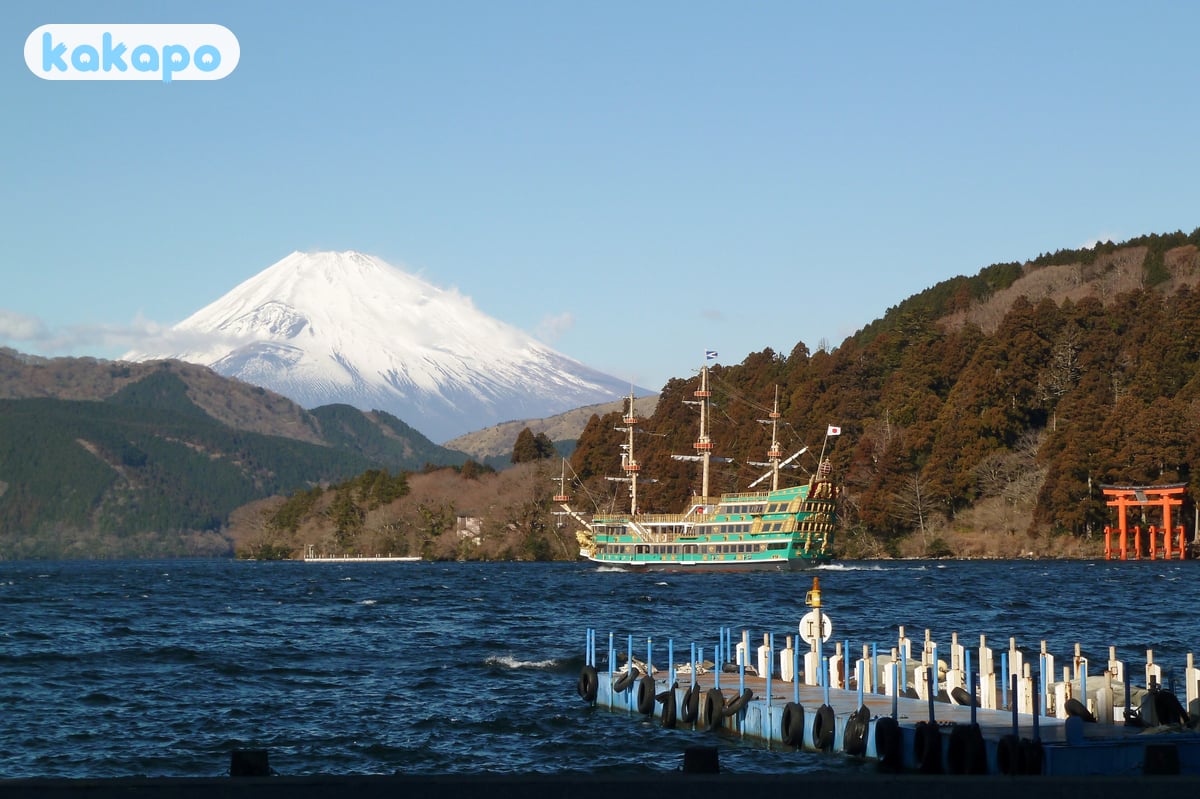
- Best viewpoints: Lake Ashi shoreline, Hakone Pirate Ship cruises, Owakudani station, Komagatake ropeway summit. The famous Hakone Shrine red torii in the lake faces away from Fuji.
- Climbing Mt Fuji: the official climbing season is 1 July - 10 September. Outside that window the trails are closed and unprepared climbers have died. From Hakone, you don't climb Fuji directly — you'd transfer via bus to the 5th Station.
- Hakone hiking: the Old Tokaido road (Hakone-juku to Moto-Hakone) is a classic 1-2 hour walk on the original Edo-period stone path. Mt Komagatake summit ropeway + 30-min walk is easy.
- Winter: snow and ice on the higher trails Dec-Mar. Crampons or chained boots for serious hikes; otherwise stick to the village.
- Typhoons: Aug-Oct strikes can flood the Hakone Tozan train tracks (the line was suspended for over a year after Typhoon Hagibis in 2019).
Romance Car, the Hakone Free Pass, and the loop

- Odakyu Romance Car from Shinjuku to Hakone-Yumoto: 85 min, ¥2,470 (regular fare ¥1,260 + Romance Car limited-express surcharge ¥1,210). Reserved seats — sells out 2-4 weeks ahead in peak season.
- Hakone Free Pass (Odakyu): 2 or 3 days, ¥6,100/¥6,500 from Shinjuku, includes the Odakyu return + unlimited use of Hakone Tozan train, ropeway, cable car, pirate ship, Hakone Tozan bus. Almost always worth it.
- The classic loop: Hakone-Yumoto → Hakone Tozan train to Gora → cable car to Sounzan → ropeway to Owakudani → continue ropeway to Togendai → pirate ship to Moto-Hakone → bus back to Hakone-Yumoto. Allow a full day.
- Crowds: the ropeway and the pirate ship are the bottlenecks. Saturday in autumn-foliage season (mid Nov) has 90-min queue waits. Weekday or shoulder season strongly recommended.
- Driving: Hakone roads are narrow and winding; parking at attractions limited and expensive. Public transport is easier.
- Last trains and ropeways: ropeway last service ~16:00-16:45 depending on season. Plan your loop accordingly.
Where to stay — Yumoto, Gora, Sengokuhara, Moto-Hakone
Hakone-Yumoto: closest to the train, busy onsen district at the entrance to the park; budget and mid-range ryokan, walking distance to baths and shrines.
Gora: middle of the loop, classic onsen ryokan, calmer than Yumoto; near Hakone Open-Air Museum.
Sengokuhara: high plateau on the way to Lake Ashi, pampas grass fields, smaller boutique ryokan, rural feel.
Moto-Hakone / Hakone-machi: lakeside, near Hakone Shrine and the pirate-ship terminus; quiet at night.
Tax: Hakone introduced a ¥100/person/night accommodation tax in 2019, added to your ryokan bill.
Money, food, emergency numbers
- Currency: Japanese yen (¥). $1 ≈ ¥152.
- Cards: ryokan and chain restaurants accept; small shops cash-only. ATMs at 7-Eleven in Yumoto and Gora.
- Tipping: not done.
- Food: Hakone is known for Owakudani black eggs (kuro-tamago, ¥500/5), soba at the old Tokaido teahouses, and kaiseki dinners included in ryokan stays. Try Naraya Cafe (Miyanoshita) for foot-bath-while-you-snack vibe.
- Tap water: safe.
- Emergency: 110 (police), 119 (fire and ambulance). Japan Visitor Hotline 050-3816-2787.
- Hospital: Hakone Onsen Hospital (+81 460 85 6911); for major issues, Odawara Municipal Hospital 30 min east.
- What to pack: small towel for onsen (most ryokan provide), warm layer for the ropeway summit even in summer, walking shoes (cobbled paths and stone Tokaido road).
Frequently asked questions
Is Hakone safe to visit in 2026?
Yes. Hakone scores 90/100 — a tiny mountain onsen town of ~11,000 inside a national park, an hour from Shinjuku. The US State Department lists Japan at Level 1 and UK FCDO has no advisories. Visitor crime is essentially nonexistent. The honest concerns are entirely about the active volcanic geology (Owakudani sulphur dioxide and hydrogen sulphide levels periodically close the ropeway — major closures in 2015 after a phreatic eruption and again in May 2019), onsen etiquette and health risks (vasovagal fainting in hot mineral water is a real cause of bath deaths), Mt Fuji weather (Fuji is visible only ~30% of days, less in summer humidity), and the Odakyu Romance Car bottleneck in peak season.
Is Hakone safe at night?
Yes, completely. Hakone-Yumoto's onsen district, Gora's ryokan area and Moto-Hakone lakeside are all calm and well-lit. Most ryokan guests are in robes by 9pm anyway. The genuine nighttime risks are physical rather than criminal: don't bathe drunk (alcohol plus hot water plus dehydration causes faints), keep onsen sessions to 10-15 minutes at a time with cooling breaks, and don't try to walk down from higher hiking trails after dark. The ropeway last service is around 16:00-16:45 depending on season, so build your loop around it.
Is Hakone safe for solo female travellers?
Yes, exceptionally — and the gender-separated traditional onsen format makes Hakone particularly comfortable for solo women. Solo female ryokan stays are completely standard; many ryokan cater specifically to women-traveller groups. Standard onsen etiquette (wash thoroughly at washing stations before entering, naked nude bathing, small towel folded on head, tie up long hair) applies. Tattoo policies vary — many traditional baths refuse tattooed guests; tattoo-friendly options include Hakone Yuryo, Tenzan Tohji-kyo and most rotenburo at modern hotels. Check the ryokan's website before booking.
Can you drink tap water in Hakone?
Yes. Hakone tap water is safe and tested to Japan's strict national standards — and famously good-tasting because it's mountain-sourced. Locals drink it routinely. Restaurants serve free chilled water on arrival. Carry a refillable bottle for the loop (Hakone Tozan train, cable car, ropeway, pirate ship) — onsen bathing dehydrates fast and many ryokan provide refilling stations. Note: the Owakudani area's water has visible sulphur and you shouldn't drink from local streams there.
What's the biggest scam to avoid in Hakone?
Honestly, scams are essentially absent in Hakone — it's a polished, well-regulated onsen town where ryokan reputations matter. The realistic risks are commercial: third-party Hakone Free Pass resellers marking up the Odakyu official price (¥6,100/2-day from Shinjuku); 'private guide' tours that duplicate the standard self-guided loop; and over-priced restaurants near major ropeway stations versus the better-priced eateries in Yumoto and Gora. Try Naraya Cafe in Miyanoshita (foot-bath while you snack) for the genuine local experience. Always book the Romance Car limited-express directly via Odakyu — peak season (cherry blossom and autumn foliage) sells out 2-4 weeks ahead.
How dangerous is Owakudani really and should I skip it?
Real but manageable risk. Owakudani is the active hydrothermal area on Hakone-yama; sulphur dioxide and hydrogen sulphide gas levels rise and the ropeway/cooking area can close within hours. Major closures happened in 2015 (after a phreatic eruption, ~8 months shut) and May 2019; smaller ropeway shutdowns happen most years. JMA rates Hakone-yama on a 1-5 volcanic alert scale — Level 1 is normal. If you have asthma, heart disease or are pregnant, skip the direct Owakudani visit (the ropeway pass-over is fine). Don't leave the marked paths — surface temperatures off-trail reach 100°C and tourists have suffered shoe-melted burns. Check hakone.or.jp/en/ for current conditions before going, and follow evacuation routes if alarm sirens sound. The famous black eggs (kuro-tamago, ¥500/5) are part of the experience for healthy visitors on Level 1 days.
Sources
Run a business in Hakone?
Show visitors your Hakone business is a safe choice. The free Verified by Kakapo badge puts Hakone's live safety score on your website, links back to your verified page, and updates itself. No cost.
Get the free badge →