


Is San Miguel de Allende, Mexico Safe? A 2026 Travel Safety Guide
Cobbled-and-steep walking, the Bajío-region context, the altitude (1,910m), the road from CDMX, and the realistic risks of central Mexico's most photographed colonial town.

San Miguel de Allende is one of Mexico's safer colonial tourist towns. The historic centre is small, walkable, well-policed, and tightly tourism-managed. Crime against visitors in the centre is uncommon.
The realistic risks for visitors are environmental: the cobbled-and-steep streets that catch out unsuited footwear, the Bajío region's broader context (Guanajuato state had documented cartel-related violence 2018-2023, mostly affecting smaller towns and highways outside the SMA tourist corridor — not SMA itself), the altitude (1,910 m — mild for some, noticeable for others), and the road from Mexico City (3-4h drive on the federal highway, generally fine).
Mexico sits at Level 2 on the US State Department's advisory list. Guanajuato state is at Level 2 with regional carve-outs (specifically Celaya and the southern parts) — SMA is in the safer northern half of Guanajuato. UK FCDO is similar.
The honest framing for first-time visitors: SMA is small (~75,000), built on a hillside with the iconic pink Parroquia church at the centre. Most visitors stay 3-5 nights, walk the historic core, eat well, and possibly day-trip to Guanajuato city (1.5h) or Querétaro (1h).
The single most important context for understanding SMA is its expat-retiree economy. The town has the largest concentration of US and Canadian retirees of anywhere in Mexico — Conde Nast Traveler readers have voted it the world's best small city repeatedly since 2017 — and a meaningful chunk of the historic centre is owned, restored or operated by foreign residents. This shows up in the dining (Atrio, Aperi, La Parada all run at NYC mid-range prices, MXN 800-1,500 per person), in the real-estate signs ("Sotheby's International Realty" everywhere), in the English-language Atención San Miguel newspaper, and in the fact that Hospital de la Fe is essentially a private bilingual clinic catering to insured Americans. The flip side is that SMA is meaningfully more expensive than Querétaro or Guanajuato city, and the prices on the centro restaurant menus are not the prices Mexicans down the hill in Colonia San Antonio pay for the same enchiladas mineras.
In 2026, the specific things that have changed since pre-pandemic include: the Parroquia square (Jardín Allende) now enforces a no-alcohol-in-glass rule and the rooftop bars on the surrounding blocks (Luna Rooftop Tapas Bar, Quince) are the legal alternative; the hot-springs circuit at La Gruta and Escondido Place now sells timed tickets online (MXN 200-300 / $12-18) after years of long arrival queues; the federal highway 57 between Querétaro and SMA has improved police presence after the 2018-2021 spillover violence years; and BJX airport (Bajío/León) now has direct flights from Chicago, LAX, Houston, Dallas and Atlanta, making the 90-minute drive from BJX the standard arrival rather than the longer CDMX route.
| Night safety | 57/100 |
|---|---|
| Scam / petty-crime risk | Low |
| Violent crime (tourists) | Low |
| Safer neighbourhoods | Centro Histórico, Guadiana, Colonia San Antonio |
| Data sources cited | 4 |
| Last verified |
What the score means — 84/100
- Personal safety (86) — high in the historic core.
- Air quality (86) — moderate-high. Dry, dusty.
- Healthcare (76) — Hospital de la Fe is the local private; serious cases evacuate to Querétaro or Mexico City.
- Transport (80) — small enough to walk; taxis and Uber for outer.
Walking — cobbles, hills, ankles
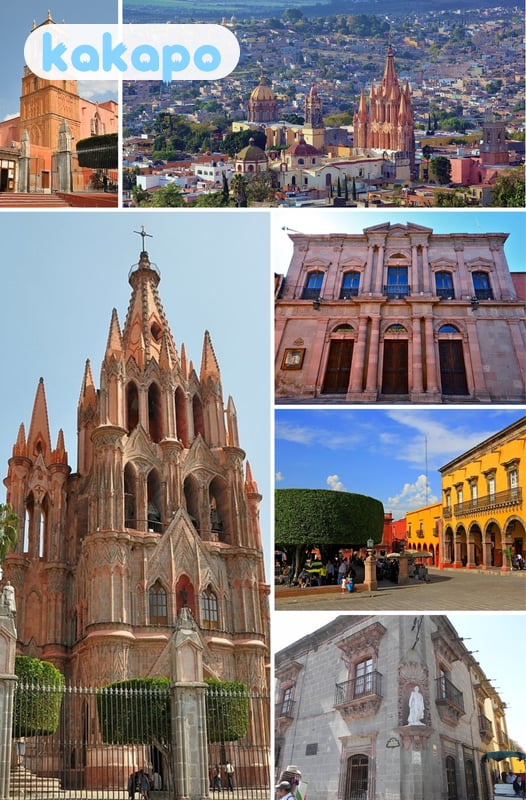
- SMA's historic centre: cobbled streets, often steep, sometimes uneven flagstones in the lanes.
- Common visitor injury: ankle twists from uneven stones; knee strain from steep streets.
- Bring sturdy shoes: with grip and ankle support. Heels are a bad idea.
- The Mirador: 15-min walk uphill from the centre — best Parroquia + sunset view. Hat, water.
- Slippery in afternoon storms (June-September): cobbles + rain.
Altitude — what to know
- SMA: 1,910 m (6,267 ft). Mild altitude for most visitors.
- Effects on day 1: faster fatigue, dehydration, occasional headache. Drink double the water.
- Alcohol hits harder: pace yourself the first night.
- Sun: stronger at altitude; hat + sunscreen.
- Mexico City to SMA day-of: most visitors handle the elevation change fine since CDMX is similar.
Regional context — what to know about Guanajuato state
- Guanajuato state: experienced significant cartel-related violence 2018-2023, mostly in southern industrial cities (Celaya, Salamanca, Irapuato).
- SMA specifically: not affected directly. Tourist-density and federal-policed.
- The road CDMX → SMA: federal highway 57, well-traveled, daytime fine.
- Don't drive at night: rural Mexico road safety advice. Some tourists have been caught in crossfire incidents on highways at night.
- Day trips to Guanajuato city + Querétaro: both safer than the southern Guanajuato cities.
- Don't try to drive to obscure pueblos alone.
Areas — Centro Histórico, Guadiana, San Antonio
Recommended for visitors: Centro Histórico (the historic walled core — Parroquia, Jardín Allende, all the visitor sites), Guadiana (residential, walkable from centre), Colonia San Antonio (gentrified, more local character).
Stay aware: around the bus station (Central de Autobuses) at night. Outer colonias: residential, no tourist relevance.
SMA has no specific "no-go" zones for tourists.
Transport — taxis, the road from CDMX
- Walking: SMA centre is small enough.
- Taxis: agree price first; cheap.
- Uber and DiDi: both work; cheaper than taxis.
- From Mexico City: 3-4h drive. ETN and Primera Plus run comfortable buses (4h, ~MXN 800-1,200 / $40-60).
- Bajío (BJX) airport: 90 min west. Direct flights from Houston and Dallas.
- Querétaro (QRO) airport: 1h south. More flight options.
- Pre-booked airport transfer: $80-150 USD. Reliable.
Money, food, the cost story
- Currency: Mexican peso (MXN). $1 ≈ MXN 17-20.
- Cards: widely accepted; tap-to-pay.
- Tipping: 10-15% restaurants.
- Tap water: not safe; bottled.
- Cost: SMA is more expensive than most central-Mexico towns due to its expat economy. Mid-range dinner $20-40/person.
- Local food: enchiladas mineras, the city's restaurant scene is upscale-Mexican (try Aperi, La Parada, Atrio).
Neighbourhoods — Centro, La Aurora, Guadiana, San Antonio
- Centro Histórico — the UNESCO-listed walled core. La Parroquia (the iconic pink neo-Gothic church on Jardín Allende), Templo San Francisco, Casa de Allende museum, Biblioteca Pública. Where you'll spend 80% of your visit. Cobbled, steep, photogenic, tourist-policed. Restaurant prices here run NYC mid-range (MXN 800-1,500 / $45-85 per person at Atrio, Aperi, La Parada).
- Colonia La Aurora — 10 min walk northwest of Centro. Built around the Fábrica La Aurora, a converted 1902 textile mill now housing the city's best gallery + design complex. Cafés, antiques, the Food Factory. Quiet, walkable, increasingly expensive.
- Colonia Guadiana — residential, leafy, walkable from Centro in 15 min. Boutique hotels and small B&Bs (Hotel Casa de la Noche, Casa Schuck). Calm evenings; you'll likely walk through it heading to Parque Juárez.
- Colonia San Antonio — south of Centro, the rapidly-gentrifying barrio with more local character. Bilingual Trade Center, Tuesday tianguis (open-air market), the Mercado Sano organic market. Where you'll eat enchiladas mineras at half the Centro price. Bus or 20-min walk.
- The Parroquia + Jardín Allende — the central square in front of the church. Mariachi groups in the evening, balloon vendors, the city's social heart. No-alcohol-in-glass rule since 2024; rooftop bars on surrounding blocks (Luna at Rosewood, Quince) are the legal alternative.
- Fábrica La Aurora — converted 1902 textile factory; the city's best contemporary-art and design complex with 40+ galleries, cafés, and the Food Factory restaurant courtyard. Open Tue-Sat. Reachable on foot from Centro in 15 min.
- Hot-springs circuit (north of town, 15-20 min by Uber) — La Gruta Spa (the famous tunnel-pool, MXN 200-300 / $12-18), Escondido Place (a quieter alternative). Both now sell timed tickets online to manage arrival queues. The natural-thermal-water pools are a real draw.
- Mirador (lookout) — 15-min uphill walk from Centro for the postcard Parroquia + sunset shot. The path passes through the Salida a Querétaro neighbourhood; safe by day and at sunset, less so to walk solo after dark.
- Central de Autobuses (bus station) — south edge of town. ETN and Primera Plus first-class buses to CDMX (3.5-4h, MXN 800-1,200) and Querétaro (1h). The area is fine by day; take an Uber back to your hotel at night rather than walk.
If it's your first time visiting
- Fly to BJX, not CDMX, if you can. Bajío International (BJX/León) is 90 min from SMA and now has direct flights from Chicago, LAX, Houston, Dallas, Atlanta and Monterrey. Pre-booked airport transfer (BajioGo, Viajes San Miguel) runs $80-150 USD per car. The CDMX → SMA drive is 3.5-4h on federal highway 57 — fine in daylight, not recommended at night.
- Bring sturdy shoes with grip — the cobbles are slick when wet. The single biggest source of tourist ER visits is twisted ankles on the calle de canto rodado (rounded-stone cobbles). Heels are a bad idea. Afternoon storms June-September add a slick layer.
- Pre-book a Parroquia-facing dinner if you want the photo. Bovine at the Rosewood, Luna Rooftop Tapas Bar, Quince — all need a 1-week reservation in high season for a Parroquia-view table. MXN 800-1,500 / $45-85 per person.
- Hot-springs day: La Gruta or Escondido Place. Both 15-20 min by Uber north of town. La Gruta has the famous tunnel-pool; Escondido is quieter. Now sell timed tickets online (MXN 200-300 / $12-18). Bring a towel, sandals, a hat.
- Eat at the Mercado El Nigromante and Mercado de San Juan de Dios, not just Centro restaurants. Enchiladas mineras (the local specialty — corn tortillas filled with cheese, fried, topped with a mild guajillo-tomato sauce, side of potato and carrot) cost MXN 80-120 / $5-7 at the markets vs MXN 250-400 in Centro restaurants. Both are 15-min walks from Jardín Allende.
- Currency, cards, tipping. Mexican peso (MXN); $1 USD ≈ MXN 17-20. Cards work everywhere mid-range up, tap-to-pay common. Always pay in MXN on terminals — decline DCC. Tip 15% restaurants; round up on taxis; MXN 20-50 ($1-3) for hotel staff per service. Carry MXN 500-1,000 in 50s and 100s for market stalls.
- Use Uber or DiDi over street taxis. Both work in SMA, both are cheaper than yellow taxis, both eliminate the price-negotiation friction. A ride from Centro to the bus station or hot springs runs MXN 60-120 / $4-7.
- Altitude is real on day 1. SMA sits at 1,910m. Drink double the water; alcohol hits harder; sunscreen + a hat are non-optional. Most visitors handle it fine within 24 hours.
- Don't drive at night on rural Bajío highways. The CDMX-SMA and Querétaro-Guanajuato corridors are fine during daylight; rural night driving has seen occasional crossfire incidents in the 2018-2023 cartel-spillover period. SMA itself remains insulated.
Practical info — emergency numbers
- Emergency: 911.
- Tourist Police: visible at the Jardín Allende.
- Hospital de la Fe: +52 415 152 2233.
- Cruz Roja (Red Cross): +52 415 152 1616.
Bring: sturdy shoes with grip, sun protection, layered clothing (cool evenings even in summer), a Mexican SIM (Telcel, AT&T MX, Movistar), a contactless card, and travel insurance with full medical coverage.
Frequently asked questions
Is San Miguel de Allende safe to visit in 2026?
Yes — one of Mexico's safer colonial tourist towns. Mexico sits at US State Department Level 2 ('exercise increased caution') and Guanajuato state is at Level 2 with regional carve-outs (specifically Celaya and parts of the southern industrial cities). SMA is in the safer northern half of Guanajuato and the historic centre is small, walkable, well-policed, and tightly tourism-managed. UK FCDO is similar. Crime against visitors in the Centro Histórico is uncommon. Realistic risks are cobbled-and-steep streets (ankle injuries are the #1 visitor incident), the altitude (1,910m mild but noticeable), summer afternoon storms making cobbles slippery, and the broader Bajío-region context that mostly affects highways outside the SMA tourist corridor.
Is San Miguel de Allende safe at night?
Yes — the central blocks around Jardín Allende, the Parroquia, and Calle Hidalgo are alive late, well-lit, and patrolled by tourist police. SMA's restaurant and bar scene is one of central Mexico's best (Aperi, Atrio, La Parada) and runs to midnight comfortably. The area around the Central de Autobuses warrants more awareness at night but isn't a hard 'no'. Take a tuk-tuk or Uber back to your hotel from outer-colonia restaurants rather than walking unfamiliar streets.
Is San Miguel de Allende safe for solo female travellers?
Yes — SMA's heavy US/Canadian retiree and expat presence has built infrastructure (walking groups, language exchanges, art classes) that's particularly solo-female-friendly. Catcalling is mild relative to other Mexican cities. Standard adjustments: sturdy shoes with grip (cobble injuries account for most visitor ER visits), modest dress at the Parroquia and other church interiors, sun protection at 1,910m (UV is stronger than at sea level), and Uber/DiDi after dark. Hospital de la Fe is the local private facility; complex cases evacuate to Querétaro (1h) or Mexico City (3-4h).
Can you drink tap water in San Miguel de Allende?
No — stick firmly to bottled. SMA's tap is treated but mineral-heavy and most expat residents and all visitors drink bottled. Bottled water is cheap and ubiquitous. Restaurants serve filtered water by default. Bring oral rehydration salts; altitude (1,910m) compounds dehydration.
What's the biggest scam to avoid in San Miguel de Allende?
Highway 57 'police' checkpoints between Mexico City and SMA where uniformed people demand small 'fines' from foreign drivers — have your passport and IDP ready, don't pay cash on the spot, and request a written ticket if you can. Many tourists report these resolve quickly when you politely insist on official process. Other recurring patterns: Mirador parking-lot 'guards' demanding tips (the Mirador parking is free), unmetered taxis (Uber/DiDi work and are cheaper), 'discount' silver jewellery at Jardín Allende stalls that's actually plated (use established Centro galleries), and inflated MXN-vs-USD math at tourist-strip restaurants. SMA itself has minimal scam pressure relative to Mexican beach destinations.
Should I worry about cartel violence in Guanajuato state?
Realistic but not paralysing for the SMA tourist corridor. Guanajuato state experienced significant cartel-related violence between 2018 and 2023, concentrated in southern industrial cities (Celaya, Salamanca, Irapuato) rather than SMA itself. SMA's tourist density and federal-policed status have kept it largely insulated. The realistic adjustments: federal highway 57 to/from CDMX is well-traveled and daytime-fine — don't drive at night because tourists have occasionally been caught in crossfire on rural highways; day trips to Guanajuato city and Querétaro are safer than the southern industrial cities; don't try to drive to obscure pueblos alone; and don't get involved in any drug-purchase situation. SMA itself feels closer to a Tuscan hill town than to a Mexican risk zone.
Sources
Run a business in San Miguel de Allende?
Show visitors your San Miguel de Allende business is a safe choice. The free Verified by Kakapo badge puts San Miguel de Allende's live safety score on your website, links back to your verified page, and updates itself. No cost.
Get the free badge →