


Is Salamanca, Spain Safe? A 2026 Travel Safety Guide
Salamanca is one of Spain's safer cities. The honest concerns: the cobbled university quarter, 40°C+ summer heat, and the Plaza Mayor late-night student scene.

Salamanca is one of Spain's safer cities. Crime against tourists is low, and the UNESCO sandstone Old Town is heavily policed and walkable. The realistic concerns are physical and cultural: the cobbled university quarter is slippery sandstone (especially the Patio de Escuelas in light rain); Castilla summer heat regularly tops 38-40°C; the Plaza Mayor late-night scene is shaped by the city's 30,000+ international students, many in their first year abroad and discovering Spanish sangría; and the town's heavy student demographic produces predictable Friday-Saturday late-night intensity.
Spain sits at Level 2 on the US State Department's advisory (terrorism baseline). UK FCDO is similar. The honest framing for visitors: Salamanca is mid-sized (~145,000 city, doubled with students), with arguably Spain's most beautiful Plaza Mayor and one of Europe's oldest universities (1218). The student energy gives the town a year-round liveliness Madrid + Seville don't have at this scale.
The defining experiences: Plaza Mayor, the Universidad de Salamanca facade (find the frog), the Old + New Cathedrals, Casa de las Conchas, the Convento de San Esteban, the Roman bridge, and night views from the Cathedral Ieronimus tower.
Salamanca sits 200 km west of Madrid on the AVANT high-speed rail line — 1h35m city-to-city for ~€25, which makes day-tripping from Madrid a real option. The university (1218) is one of the four oldest in Europe alongside Bologna, Oxford and Paris and still anchors the local economy — student rents shape the centre, the academic calendar shapes the nightlife (September Erasmus week is hotel-impossible), and ~30,000 international students mean Spanish-language schools are an entire visitor sub-economy. The Villamayor sandstone everything is built from glows gold at sunset and stores heat aggressively in summer.
The 2026 details worth knowing in advance: the Ieronimus Cathedral-tower combined ticket has been steady at €5 for the spectacular Old Town view, the university entry ticket remains €10 (combined with the Cathedral €15), the Plaza Mayor's nightly floodlighting comes on around 21:30 in summer and 19:00 in winter, and Tele-Taxi Salamanca (+34 923 250 000) is the regulated late-night standby. The Salamanca-Matacán airport (SLM) has expanded seasonal Binter flights to the Canaries but most international arrivals still route via Madrid-Barajas with a 2.5h drive or 1h35m AVANT.
| Night safety | 73/100 |
|---|---|
| Scam / petty-crime risk | Medium |
| Violent crime (tourists) | Low |
| Most common scams | pickpocket spike during the September Erasmus arrivals; higher restaurant pricing at Plaza Mayor cafés; drink-spiking in bigger anonymous clubs |
| Safer neighbourhoods | Calle Bordadores, Calle Compañía, Calle Van Dyck |
| Data sources cited | 4 |
| Last verified |
What the score means — 88/100
- Personal safety (90) — very high.
- Air quality (88) — Castilla plateau, generally good; calima dust days briefly lower.
- Healthcare (84) — Hospital Universitario de Salamanca handles routine; complex care occasionally referred to Madrid (2.5h).
- Transport (82) — buses + train; small + walkable.
Sandstone cobbles + the slip risk
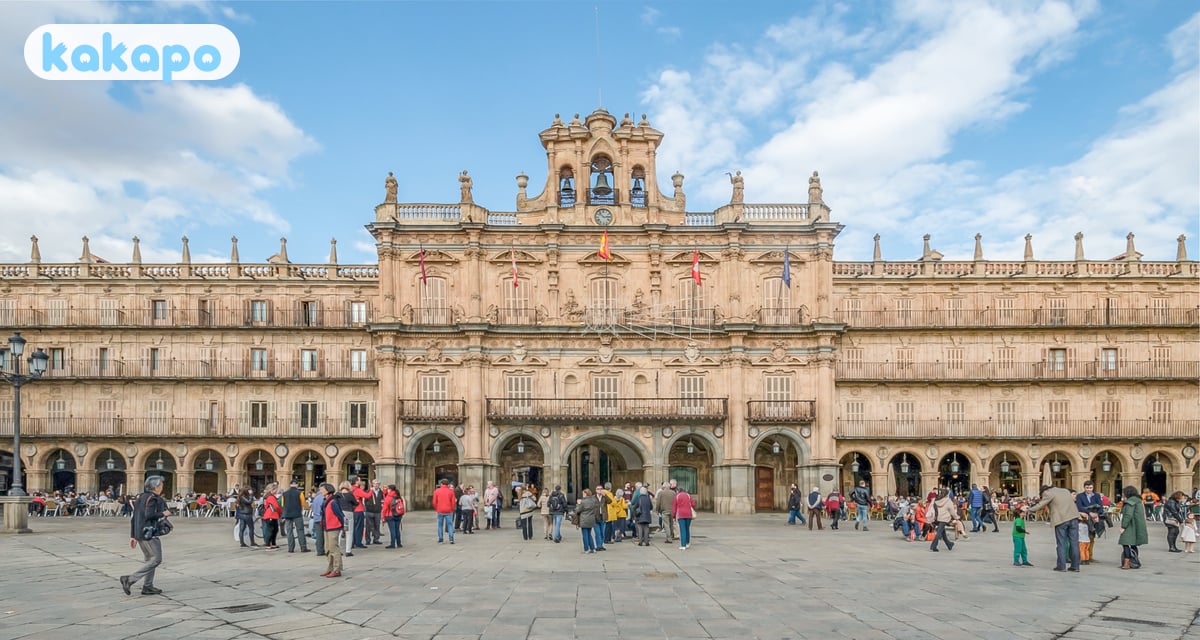
- The reality: Salamanca's distinctive golden Villamayor sandstone paves much of the Old Town. Beautiful + slippery in rain or after spilled beer.
- Patio de Escuelas (university courtyard): particularly polished by 800 years of footfall.
- Footwear: trainers with rubber grip; not flip-flops in rain.
- Twisted ankles: the most common minor injury locals see in tourists.
- Wheeled luggage: bangs and breaks. Hotel-porter assistance if your hotel is deep in the Old Town.
- Wheelchair access: limited; the Cathedral has step-free routes; Plaza Mayor + Casa de las Conchas accessible. Smaller streets less so.
Summer heat — Castilla extremes
- July-August: 33-38°C standard, 40-42°C in heatwaves.
- The sandstone: stores heat. Streets feel hotter than open countryside.
- Mid-day rule: 1-5pm get inside or in shade. Most non-tourist shops close.
- Hydration: tap water is safe. Public fountains in Old Town drinkable.
- Best months: April-mid-June, September-October. Easter procession week is spectacular but busy.
- UV: 9-10 in summer. Hat + sunscreen.
Plaza Mayor — the student-bar reality
- Plaza Mayor: 1729 Baroque masterpiece. Lit beautifully at night.
- Restaurant pricing: Plaza Mayor cafés run 30-50% higher than equivalents two streets back. Read the menu.
- Coperto: Spain doesn't have it; bread + tap is included.
- Late-night: the Plaza is the meeting point. Students, older locals, tourists. Police presence visible.
- Pickpockets: low base rate; minor spike in the Plaza Mayor evening crush. Front pocket only.
- Solo women: comfortable at any hour in Plaza Mayor; less in the deeper student-bar streets after 3am if intoxicated.
Student nightlife — the streets to know
- Calle Bordadores + Calle Compañía: the tapas-bar streets near the university. Lively + safe + reasonable.
- Calle Van Dyck + Plaza San Boal: club + late-night zone. Students from Spain + Erasmus internationals.
- Drink-spiking: rare; ordinary precautions in the bigger anonymous clubs. Watch your drink.
- Botellón culture: outdoor group-drinking. Officially restricted in Salamanca centre; police occasionally fine. Off the central squares it persists.
- Late-night taxis: cheap, regulated. Tele-Taxi Salamanca +34 923 250 000.
- Sleeping near the centre: noise carries to 4am Friday-Saturday + during Erasmus arrival weeks (September). Earplugs.
Universidad de Salamanca — the frog + the facade
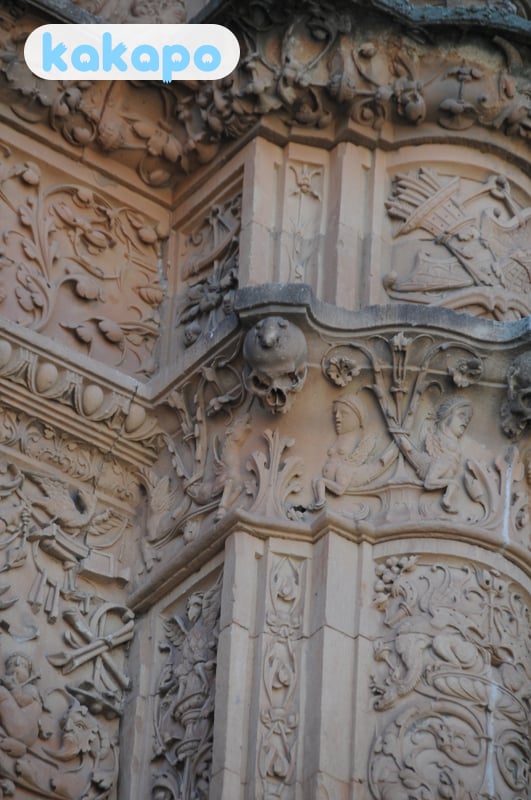
- The university facade (Patio de Escuelas): 16th-century plateresque masterpiece. Free to view; €10 to enter the building.
- The frog: a small carved frog on a skull on the facade. Tradition: spotting it brings luck (especially in exams). Don't be embarrassed to spend 5 minutes finding it.
- The library: included with entry; one of Spain's oldest active university libraries.
- Cathedral combined ticket: with university €15.
- Ieronimus (Cathedral towers): €5; spectacular Old Town view. Steep narrow stairs.
Trains, buses, money
- Trains: Renfe Salamanca ↔ Madrid (Chamartín) on AVANT 1h35m, ~€25. Or ALSA bus 2h15m, ~€16-€22.
- Salamanca-Matacán Airport (SLM): tiny; mostly seasonal. Most fly into Madrid (250 km).
- Buses: Salamanca de Transportes; €1.20.
- Driving: avoid the centre. Park at Plaza España or Mercado de Abastos garages.
- Currency: euro. Cards everywhere; cash for small market.
- Tipping: 5-10% if good; round-up otherwise.
- ATMs: bank-branch (Santander, BBVA, CaixaBank).
Neighbourhood-by-neighbourhood breakdown
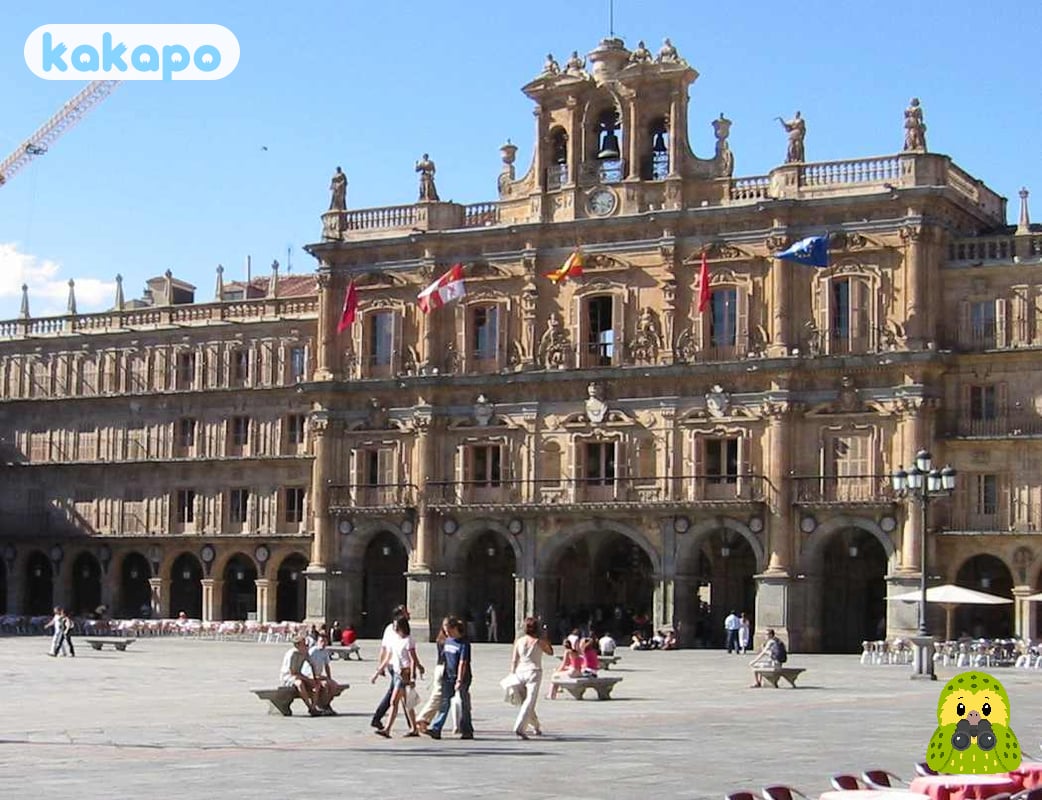
- Plaza Mayor — Spain's most photographed Baroque square (1729, by Alberto and Nicolás Churriguera). Floodlit at night; cafés along the four porticoed sides charge 30-50% more than equivalents two streets back. The clock-tower side (north) is the photo-canonical view. Pickpocket spike during the September Erasmus arrivals and at Easter.
- Casa de las Conchas — the 16th-century "House of Shells" decorated with 350 carved scallop shells (the symbol of the Order of Santiago). Free to enter the courtyard; it's now a public library. Directly facing the Pontifical University (La Clerecía), whose twin Baroque towers offer the Scala Coeli rooftop walk (€4, exceptional Plaza Mayor view).
- Universidad de Salamanca + Patio de Escuelas — the 16th-century plateresque facade (one of Europe's most ornate). Find the frog on the skull for luck (traditional pre-exam ritual, students still touch it before finals). Free to view from the courtyard; €10 to enter the building.
- La Clerecía + Scala Coeli — the Baroque Jesuit church and Pontifical University, with the rooftop tour for the Plaza Mayor view. Right opposite Casa de las Conchas, an unbeatable pair.
- Calle Mayor + the Old/New Cathedrals — Calle Mayor runs from Plaza Mayor down to the cathedrals. The cathedral complex is two buildings stacked: the Romanesque Old Cathedral (12th century) and the Gothic-Plateresque New Cathedral (16th century). Combined entry €5; the Ieronimus tower tour is €5 separately and offers the best Old Town view.
- Roman Bridge + the Tormes river — the 1st-century Roman bridge over the Tormes river, 15 arches of which the first 15 are original Roman. Free, atmospheric at sunset, the riverbank walk south makes a 30-minute loop. The "Lazarillo de Tormes" bronze statue commemorates Spain's first picaresque novel.
- Calle Bordadores + Calle Compañía — the tapas-bar streets immediately north and west of Plaza Mayor. Lively, safe, reasonable pricing — pinchos at €1.50-€2.50 each is the local rate. The unwritten rule is move bars every 1-2 drinks.
- Calle Van Dyck + Plaza San Boal — the late-night club zone. Erasmus internationals + Spanish students. Open until 4-6am Fri-Sat. Earplugs if your hotel is anywhere central.
- AVE / AVANT to Madrid — Renfe runs the AVANT high-speed service from Salamanca to Madrid (Chamartín) in 1h35m for ~€25. Trains every 1-2 hours. Also ALSA buses 2h15m for ~€16-€22 from the bus station 1 km from the centre.
- Stay aware — Salamanca has no specific "no-go" areas for tourists. The area around the bus station and Plaza España thins after midnight but isn't unsafe. The deeper student-bar streets after 3am can be intoxicated rather than threatening.
If it's your first time visiting
- Best arrival: Renfe AVANT high-speed from Madrid Chamartín to Salamanca in 1h35m for ~€25 is the standard path — most visitors fly into Madrid-Barajas and connect by Cercanías + AVANT. ALSA bus from Madrid Avenida de América is 2h15m for €16-€22. Salamanca-Matacán Airport (SLM) is tiny with mostly seasonal flights. If driving, A-62 motorway from Madrid is 2h30m; the centre is mostly pedestrianised, so park at Plaza España or Mercado de Abastos garages.
- Best neighbourhood for your first night: within 5-10 minutes' walk of Plaza Mayor — Hospes Palacio de San Esteban (in the convent), NH Puerta de la Catedral, Hotel Rector. €100-250/night standard; September Erasmus week and Easter triple prices. Avoid booking directly on Calle Van Dyck or near Plaza San Boal unless you want club bass until 4am.
- The Cathedral + University combined ticket — €15 covers both. Add the Ieronimus Cathedral-tower walk for €5 (steep narrow stairs but the best Old Town view) and the La Clerecía Scala Coeli rooftop for €4 (the Plaza Mayor view nobody photographs from). Total cathedral-and-university anchor day: €24, 4-5 hours.
- Find the frog — on the plateresque facade of the Patio de Escuelas at the University. A small carved frog sitting on a skull, intentionally hidden. Spotting it brings exam luck according to centuries of student tradition. Spend the 5 minutes; finding it without a hint is a small win.
- Sandstone footwear rule — Salamanca's golden Villamayor sandstone is slippery in rain and after spilled beer. Trainers with rubber grip, not flat-soled boat shoes. The Patio de Escuelas particularly is 800 years polished. Twisted ankles are the most common minor tourist injury locals see.
- Summer heat — July-August 33-38°C standard, 40-42°C in heatwaves. The sandstone stores heat — streets feel hotter than open countryside. Mid-day 13:00-17:00 get inside; most non-tourist shops siesta-close. Tap water is safe (agua del grifo on request, free, a Spanish national right since 2022); public fountains in the Old Town are drinkable.
- Tapas culture — Calle Bordadores and Calle Compañía are the tapas-bar streets. Pinchos at €1.50-€2.50 each; move every 1-2 drinks. Bar El Patio Chico, Mesón Las Conchas, Tapas 2.0 are local-trusted. The bigger menú del día is €12-€16 weekday lunch — outstanding value.
- Currency + cards: Spain uses euro. Cards everywhere; cash for small markets only. Always pay in EUR on terminals (DCC adds 5-10%). Tipping is rounding-up (5-10% if service was good). Bank-branch ATMs (Santander, BBVA, CaixaBank) avoid the Euronet markup.
- Common rookie mistakes: paying Plaza Mayor café prices when one street back is identical food (read the menu — bread and tap are included); booking the Erasmus arrival week in September without realising; sleeping near Calle Van Dyck without earplugs; trying to drive into the centre; assuming the Roman Bridge is closed at night (it's free, lit, and the walk is one of the city's quiet pleasures).
Practical info — emergency numbers
- European emergency: 112.
- Policía Nacional: 091.
- Hospital Universitario de Salamanca: +34 923 29 11 00.
- AEMET (heat alerts): aemet.es
Bring: trainers with rubber grip, sun hat + SPF 50, refillable water bottle, electrolyte tablets in summer, a contactless card, an unlocked phone (Movistar, Vodafone ES, Orange ES prepaid), and travel insurance.
Frequently asked questions
Is Salamanca safe to visit in 2026?
Yes. Salamanca is one of Spain's safer cities. Spain sits at US State Department Level 2 (terrorism baseline) and UK FCDO is similar. Crime against tourists is low, the UNESCO sandstone Old Town is heavily policed and walkable, and the heavy student population gives the city year-round liveliness without big-city pickpocket density. Realistic concerns are physical and cultural: golden Villamayor sandstone cobbles slippery in rain or after spilled beer, Castilla summer heat reaching 40-42°C in heatwaves, the Plaza Mayor late-night Friday-Saturday student scene, and the September Erasmus arrival weeks bringing predictable noise.
Is Salamanca safe at night?
Yes. Plaza Mayor is the city's evening meeting point — visible police, beautiful 1729 Baroque floodlighting, and a mixed crowd of students, locals, and tourists until late. Walking back from a Calle Bordadores or Calle Compañía dinner is uneventful. The Calle Van Dyck and Plaza San Boal club zones run loud until 4am Friday-Saturday; the energy is mostly youthful rather than threatening. Solo women report comfortable Plaza Mayor late nights; less so in deeper student-bar streets after 3am if heavily intoxicated. Booking centre accommodation? Earplugs — noise carries to 4am on weekends and during Erasmus arrival weeks.
Is Salamanca safe for solo female travellers?
Yes — among Spain's easier solo-female cities. Spanish small-city street culture in Castilla y León is calm, harassment is rare, and the centre is small enough to navigate in 20 minutes end-to-end. The heavy international-student presence gives the streets a calm cosmopolitan feel even late. Solo women report comfortable evenings on Plaza Mayor, the Cathedral towers (Ieronimus), and the Roman bridge. Standard awareness in larger Calle Van Dyck clubs (watch your drink), and Tele-Taxi Salamanca (+34 923 250 000) is cheap and regulated for late-night moves.
Can you drink tap water in Salamanca?
Yes. Salamanca tap water is safe, EU-standard, and important in 40°C summers when the sandstone stores heat. Restaurants serve it free on request as agua del grifo (a Spanish national right since 2022). Public fountains in the Old Town are drinkable. Carry a refillable bottle and electrolyte tablets in July-August; UV is 9-10 in summer.
What's the biggest scam to avoid in Salamanca?
Honestly very little — Salamanca is small, student-heavy, and not a tourist-scam destination. The patterns: Plaza Mayor cafés running 30-50% more expensive than equivalents two streets back (read the menu, though Spain doesn't have coperto and bread plus tap is included); DCC card-readers asking you to pay in your home currency rather than EUR (always choose EUR); tourist-shop machine-stamped university souvenirs versus artisan workshops; and Euronet ATMs offering worse rates than Santander, BBVA, or CaixaBank branches. Botellón outdoor group-drinking is officially restricted in the centre and police occasionally fine; not a tourist trap but worth knowing.
What's the story with the frog on the university facade?
Salamanca's most distinctive small ritual. The 16th-century plateresque facade of the Patio de Escuelas at Universidad de Salamanca (1218 — one of Europe's oldest universities) hides a small carved frog sitting on a skull. Tradition holds that spotting it brings luck, especially in exams — students still touch it before finals. Don't be embarrassed to spend 5 minutes looking; it's intentionally not obvious and finding it without a hint is a small win. Free to view from the courtyard; €10 to enter the building (combined with the Cathedral €15, and the Ieronimus Cathedral towers €5 give the best Old Town view). The library inside is one of Spain's oldest active university libraries.
Sources
Run a business in Salamanca?
Show visitors your Salamanca business is a safe choice. The free Verified by Kakapo badge puts Salamanca's live safety score on your website, links back to your verified page, and updates itself. No cost.
Get the free badge →