



Featured study
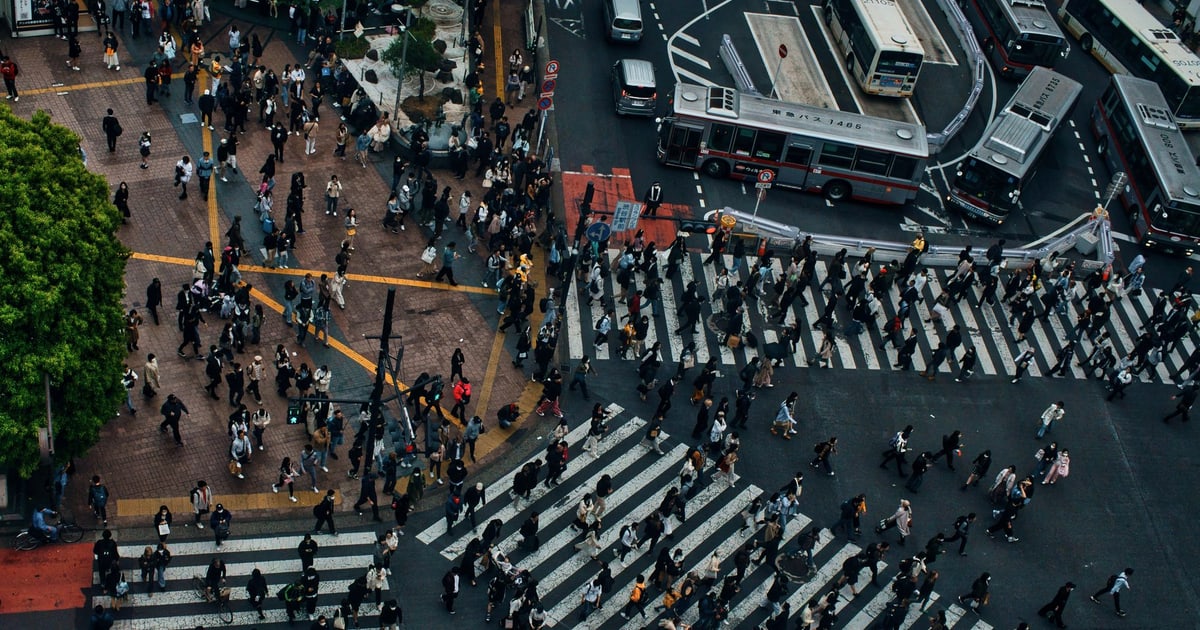
The Tourist Paradox
The world's most-visited cities scored for safety — the famous magnets that fame never made safe (Mexico City fails; Tokyo tops).
Read the studyThe studies
50 studiesOriginal, free-to-cite analyses built from the Kakapo Safety Index.

The Night-Safety Gap
The cities whose safety drops most between noon and midnight — an angle a single headline score hides.

Safe Destinations, Dangerous Roads
The beloved, broadly-safe destinations — Bali, Palawan, Puebla — where traffic, not crime, is the real risk to travellers.

The Healthcare Cliff
The bucket-list destinations — Everest's Kathmandu, Machu Picchu's Cusco, Bali — that are safe from crime but dangerous to get hurt in.

No City Wins Everything
Every great city has one dangerous dimension — Toronto's streets, Johannesburg's nights — exposed by our four sub-scores.

Cheap and Safe
The budget-tier destinations that outscore New York, Paris and London — Hoi An leads at 86 for a fraction of the price.

Digital Nomad Reality Check
A 37-point safety spread across the Instagram nomad hubs — Cape Town lands dead last, Playa del Carmen's nights crater to 50.

Party Capitals After Dark
The world's nightlife cities scored after midnight — Prague stays safe at 83, Rio drops to 34.

City vs City
Ten travel debates settled on the data — the deciding sub-score for Bali vs Bangkok, Lisbon vs Barcelona, Tokyo vs Seoul.

Retire Abroad, Reality Check
The famous expat-retirement picks scored on the two things retirees actually need — safety and healthcare. Alicante wins both; Chiang Mai is safe but thin on care.

The Cruise-Port Report
The busiest cruise calls scored for a day ashore — Santorini and Dubrovnik at 89, Cape Town at 49 with a personal-safety sub of 32.

The Layover Trap
Which big-airport layovers are worth leaving for — Singapore tops at 93, and the trap is the airport run, not the terminal.

The Big-City Myth
Across 460 cities, population barely predicts safety (r = -0.16). Seoul (10M) beats the average small town; the specific city is the whole story.

Study Abroad Safety
The most popular semester-abroad cities scored day and night — Tokyo tops at 94, Barcelona's night sub is the lowest in Europe at 59.

Set-Jetting
The screen-famous destinations of the moment, scored — Tokyo at 94, and Emily-in-Paris Paris drops to 63 after dark.

The Safety-Reputation Gap
The cities travellers are wrong to fear — where a fearsome reputation and the real 2026 score diverge most.

World Cup 2026 Host-City Safety
Every 2026 FIFA World Cup host city scored for the millions travelling to the tournament.

What “Safe” Actually Means
Across 1,012 cities, night safety tracks a city's overall score most tightly (r = 0.87); healthcare least. What “safe” really measures.

Why Japan Owns the Rankings
Japan's cities average 93.7 to the world's 81.1, hold the global top four, and take 25 of the safest 50 — the after-dark edge is nearly double.

Safe Country, Unsafe City
The US averages a strong 82.6, but Baltimore scores just 57 — the widest safe-country outlier. The cities that buck their nation's reputation.

The Divided Countries
South Africa spans 44 points city-to-city (Queenstown 85, Johannesburg 41). The countries where “is it safe?” has no single answer.

The Healthcare–Crime Mismatch
Far more cities have strong hospitals but risky streets than the reverse — San Francisco 86 vs 57, Johannesburg 56 vs 24.

No Weak Spot
The cities safe whichever way you measure — Luxembourg and Monaco never drop below 93 on any of the four sub-scores. Paris's night-63 floor is the counterexample.

The Safest Countries
Measured by their cities: Japan, Finland and Switzerland lead — and the UAE gate-crashes the top six, ahead of Norway and Austria.

The Riskiest Popular Cities
The famous destinations that score lowest — Johannesburg 41, Cape Town 49, Rio 52 — and the one weak spot they all share: night safety.

The Capital Paradox
In 38 of 40 countries the capital isn't the safest city — only Rabat and Prague buck it. Pretoria 54 vs Queenstown 85 is the widest gap.

The Transport Divide
In 70% of cities the transit is safer than the street — Johannesburg +27, Paris +17. Take the metro, mind the walk (and the rare reverse).

Solo Female Travel: The After-Dark Gap
The solo-female round-ups crown Tokyo (night 92) and Cape Town (night 30) in the same breath — a 60-point spread the lists never mention.

Family Travel Safety
The pillars families lean on aren't nightlife. Bali reads safe at 80 but its family blend is 69 — healthcare and transport are its weakest. The beach isn't the risk.

The Business-Trip Safety Map
The financial hubs, scored for the after-work reality — Tokyo stays 94/92, Paris drops to 63 by dinner, and a few (Zurich, Luxembourg) get safer after dark.

Paradise, Scored
The postcard is a daytime photo. For 15 of 19 famous islands the weak spot is after dark — Playa del Carmen 81 by day, 50 at night.

Where Snowbirds Should Actually Go
Warmth without the safety hit — Dubai tops at 92, Madeira and Tenerife hold up, and Cape Town is the one that genuinely fails (49).

The Honeymoon Safety Check
Kyoto is both romantic and safest (95). The catch is the island tax — the Maldives scores 72, healthcare 68: the villa's a dream, a hospital's a floatplane away.

Best Cities for a First Trip Abroad
Judged by the weakest axis, not the average — Kyoto and Tokyo lead (floor 92), while the classic Europe darlings (Barcelona floor 59, Rome 64) sink after dark.

Southeast Asia, Scored
A 35-point spread inside one region — Singapore 93 down to Manila 58 — with quiet stops like Krabi (87) and Hoi An (86) outscoring the reputation anchors.

The Mediterranean, Scored
The basin's real divide isn't violent crime — it's daytime pickpocketing. Valletta leads (personal 84); Naples, Istanbul and Barcelona are the pickpocket capitals.

Latin America, Beyond the Reputation
Not one risk profile — a 35-point spread. Cuenca 87, Puebla 86 and Montevideo 83 outscore many European cities; the famous megacities carry the reputation.

The State of Global Travel Safety
Across 956 cities: 85% score “safe,” 5% “dangerous,” and the world is best at healthcare, worst after dark. The big picture in one study.

The Four Kinds of Safety
Night and daytime safety move together almost perfectly (r = 0.99). The four sub-scores collapse into two — safety is really two questions, not four.

Which Continent Is Safest?
A photo finish — Oceania (85.4) edges Europe (84.9), and Asia ranks third, above North America. But Asia holds both the safest city (Nara 97) and one of the least safe.

The Specialists
Safety has four different world champions — night → Tokyo, day → Kyoto, transport → Singapore, healthcare → Malmö. Only Zürich, Basel and Bern make two lists.

Balanced vs Spiky
Tokyo is safe on every axis (a spread of 1); Johannesburg's spread is 33 (night 23 vs healthcare 56). A reassuring headline number can hide one deep hole.

The Second-City Advantage
In 42 of 44 countries a smaller city outscores the biggest metro — average gap 8.9 points, widest Caracas 42 vs Valencia 82. Skip the megacity.

The World's Safest & Most Dangerous Cities
A 77-point gulf, Nara (97) to Aleppo (20). The safe top-15 is almost all Japan; night safety drags 13 of the bottom 15.

The Anatomy of a Failing Grade
Of the cities that fail, 91% are dragged under by the same thing — night safety. Almost none fail on daytime streets alone.

The Safety Ceiling
No city scores 100. The world's highest is Nara at 97 — and night safety caps even the elite: it's the limiting sub for 17 of the top 20.

The World's Weakest Link
Night safety has the lowest global average (68.9) and is a city's single weakest dimension in 80% of the world. The one thing nobody's solved.

Does GDP Buy Safety?
The world's #1 economy lands 15th of 20 (New York 77), while UAE, Switzerland and Saudi Arabia beat the US, UK, France and Italy. Wealth barely tracks safety.

The Safest Cities You've Never Heard Of
You don't need Tokyo or Zürich — Kanazawa 96, Trondheim 94, Espoo 94 and more score in the same band at a fraction of the crowds.

The Healthcare Frontier
Healthcare is the most geographically-determined kind of safety — region explains 64% of it. Western Europe averages 91, Sub-Saharan Africa 55.

The Megacities That Beat the Size Penalty
Only 17 of 49 giant cities (5M+) still score 82+ — and the safe-giant club is almost entirely East Asian, with Sydney the lone Western entry.
For journalists & editors
Every study here is free to cite in journalism, research or content — all we ask is a link back to Kakapo. Need something specific? We do custom data pulls at no cost: a single region, a city-by-city breakdown, or a ranking cut to your story, usually the same day.
Email [email protected], or download the full 2026 dataset (CSV).