


Is Benidorm, Spain Safe? A 2026 Travel Safety Guide
Benidorm is broadly safe but has Europe's most concentrated British package-tourism culture. The honest concerns: balconing fatalities, sunburn, bar-strip drink-spiking, and rip currents.

Benidorm is broadly safe for visitors. Crime against tourists is mild — the heavy police presence + British-tourist economy keeps it that way. The realistic concerns are particular to the destination: balconing (the practice of climbing between hotel balconies, almost always while drunk) produces 5-10 fatalities every Costa Blanca summer; sunburn extremes hit Britons within hours of arrival; the bar-strip nightlife (around Calle Gerona + the Old Town's Calle Santo Domingo) has the predictable hen/stag/group-trip pattern with drink-spiking incidents; and Levante + Poniente beaches have rip currents on windy days that catch out non-strong swimmers.
Spain sits at Level 2 on the US State Department's advisory (terrorism, baseline). UK FCDO carries no specific Benidorm warning but actively publishes balconing + alcohol-related safety reminders for Spanish coast destinations. The honest framing for visitors: Benidorm is the most concentrated British package-tourism town in Europe — ~5 million annual visitors, ~half British. The "Brits abroad" caricature is real and the safety incident profile reflects it.
The defining experiences: Levante + Poniente beaches, the Old Town (Casco Antiguo), Balcón del Mediterráneo viewpoint, Mundomar + Aqualandia waterparks, the British-pub strip on Calle Gerona, and day trips to Guadalest + Algar Falls.
Geographically Benidorm is built around a single Mediterranean-facing semicircular bay with a rocky promontory at the centre. The Casco Antiguo (Old Town) sits on and around that promontory, with the Balcón del Mediterráneo viewpoint at its tip. Either side of the promontory the bay opens into the two long beaches: Levante to the east (the busier and louder British end), Poniente to the west (the family and Spanish end). The hotel skyline — Benidorm has Spain's highest concentration of high-rise hotels and was an early experiment in mass beach-tourism vertical density — climbs back from each beach in a wall of towers. Inland, the British bar strip ("the British Square" around Calle Gerona, the Square, and Avenida Mediterráneo) sits behind Levante; Spanish Benidorm and the families' end sit behind Poniente. The TRAM regional rail station is in the inland north of town; everyone walks or takes the L1/L2 bus around the seafront.
| Night safety | 66/100 |
|---|---|
| Scam / petty-crime risk | Medium |
| Violent crime (tourists) | Low |
| Most common scams | drink-spiking incidents in Calle Gerona and Calle Santo Domingo; pickpockets in bar-strip crush 11pm-3am; DCC card-reader scam |
| Safer neighbourhoods | Casco Antiguo, Poniente, Levante |
| Data sources cited | 4 |
| Last verified |
What the score means — 84/100
- Air quality (86) — Costa Blanca, generally good.
- Healthcare (84) — Hospital Clínica Benidorm + IMED Levante private; Hospital de la Vila Joiosa public for emergencies.
- Transport (80) — TRAM regional rail (Alicante line) + buses; walkable centre.
- Personal safety (78) — moderate-high. Alcohol-related incidents pull the score down vs. crime-against-tourists rate.
Balconing — the actual risk

- What it is: climbing between hotel balconies, jumping from balconies into pools, or "playful" balcony stunts. Almost always involves alcohol.
- The numbers: 5-10 deaths per Costa Blanca/Mallorca summer. Most are British men 18-30.
- Hotel responses: many Benidorm hotels now have anti-balconing policies — eviction without refund for any balcony-climbing.
- Insurance issue: travel insurance routinely excludes balcony-climbing accidents. UK travellers who fall pay €30,000+ for medical evacuation.
- Don't: climb between balconies, sit on railings, jump into pools from above, lean over railings to drop things.
- Children: railings on older Benidorm hotels are 1.0-1.1 m, not the modern 1.2 m. Don't put toddlers on chairs near railings.
Sunburn + heat — the British arrival problem
- The numbers: July-August UV 9-11; first-day British arrivals routinely take 3-4 hours of midday sun and produce serious second-degree burns.
- The siesta rule: 1-5pm get inside or in shade. Locals do.
- Hydration: alcohol + heat compounds dehydration. 2-3 L water per day minimum.
- Children: high-SPF + UV-rated swim shirts; reapply hourly.
- Sun-stroke: heatwave summers see hospital queue spikes. Drink, rest, repeat.
- Best months: April-June, September-October. July-August are the busiest + hottest.
Calle Gerona + Old Town — drink-spiking + nightlife

- The British strip: Calle Gerona, Avenida Mediterráneo. Tribute-act pubs, themed bars, all-day-drinking.
- Old Town nightlife: Calle Santo Domingo, Plaza Castell. Mixed Spanish + British; gentrified-er.
- Drink-spiking: happens. UK FCDO + Spanish police actively warn. Watch your drink; refuse drinks from strangers.
- Pickpockets: meaningful in bar-strip crush 11pm-3am. Front pocket only.
- Hen + stag groups: the dominant weekend demographic. Heavy police presence.
- Solo women: comfortable in Old Town; less so in deepest bar-strip crush at 3am if intoxicated.
- Late-night fights: occasional, mostly British-on-British. Police break them up fast.
- Don't engage: with anyone trying to provoke; walk away.
Levante, Poniente, rip currents

- Levante: 2 km east-side beach. Lifeguarded May-October; busiest beach.
- Poniente: 3 km west-side; quieter, family-friendly.
- Mal Pas: small cove between the two; sheltered.
- Flag system: green safe, yellow caution, red no-swimming.
- Rip currents: appear on windy days, especially with eastern wind. If caught: don't fight it; swim parallel to shore, then back in.
- Jellyfish: Pelagia summers; vinegar at lifeguard stations.
- Drunk swimming: a major Costa Blanca cause of fatality. Don't.
Money, language, the British package
- Currency: euro. Cards universal; many bars cash + card.
- Language: Spanish + Valencian official; English very widely spoken because of British tourism.
- Tipping: not required in bars; 5-10% in restaurants.
- British-pub prices: pints €4-€6; full English breakfast €8-€12. Cheaper than UK.
- Hotels: package deals can be £200-£600/week including flights + half-board. Walk-in rates much higher.
- "Don't pay in EUR" (DCC): card-reader scam, takes 7-10%. Always pay in euros.
- Tap water: safe.
Trains, buses, the airport

- Alicante Airport (ALC): 60 km south. Beniconnect bus to Benidorm €15, ~50 min. Or Alicante TRAM rail link — change at Luceros.
- TRAM (Alicante regional rail): Benidorm ↔ Alicante 1h, ~€5. Scenic coastal.
- Buses (LLorente Bus, ALSA): connect to Valencia, Murcia.
- Driving: AP-7 motorway. Benidorm centre is partly pedestrianised; park outside.
- Day trips: Guadalest castle (40 min); Algar Falls (45 min); Altea (15 min north, quieter Old Town).
Areas — Levante, Poniente, the Old Town
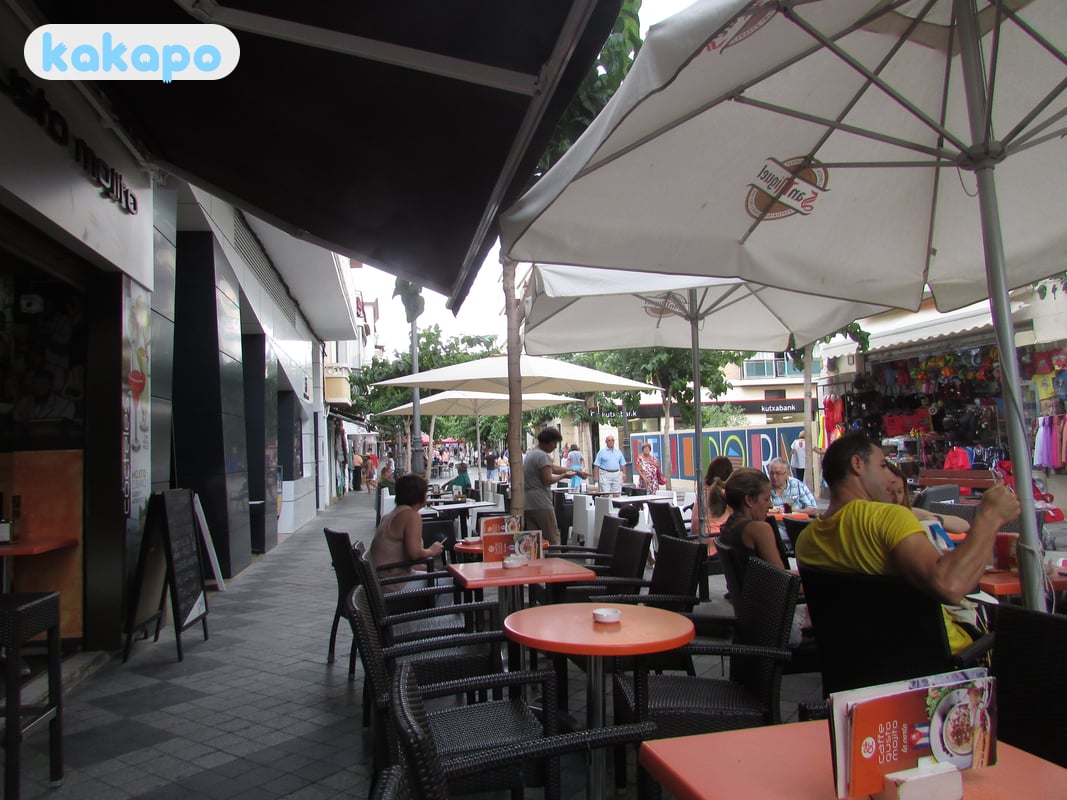
- Levante (the British end) — the 2-km east beach and the eight-block grid behind it. High-rise hotels (Sol Pelícanos, Levante Club, Riviera Beachotel), the densest concentration of British-themed pubs, karaoke bars and tribute-act venues. The "British Square" (Plaza de la Hispanidad, locally known as Square) is the social heart, with Tiki Beach Sports Bar, Sinatra's, and Robin Hood Pub as anchors. Hen and stag central; police visible nightly.
- Poniente (the Spanish + family end) — the 3-km west beach with a wider promenade and the post-2009 José Carlos Mateo-designed seafront. Quieter, mid-range hotels (Hotel Don Pancho, Gran Bali — the tallest residential building in Spain at 186m), Spanish families and older British couples. Aqualandia and Mundomar waterparks sit on the western edge; family restaurants line the back-of-promenade streets.
- Casco Antiguo (Old Town) — the original Valencian fishing village on the promontory between the two beaches. Blue-and-white houses, the 18th-century Iglesia San Jaime church on the cliff edge, Plaza Castell, Plaza Triangular. The Casco's restaurants (La Cava Aragonesa, Ulia, El Mosaico) are the actual good food in Benidorm — tapas, arroces, Valencian rice dishes. Evening-pleasant; safer late than the bar strip.
- Balcón del Mediterráneo — the tiled viewpoint at the tip of the Old Town promontory, with the white balustrade arcing out over the rocks. Sunset standard; the photograph is over both bays at once. Free, busy, pickpockets work the crush.
- Rincón de Loix — the far eastern end of Levante, separated from the main strip by an inland push. The "Square" is here. Higher hen/stag density; the Daytona bar, Sticky Vicky's, the Beachcomber. Daytime quiet; from 23:00 onwards loud and increasingly British.
- El Tossal + La Cala — the inland and northern residential areas climbing up the hillside, where most Benidorm residents actually live. Quieter; some Airbnbs but no tourist reason to base here.
- Cala de Finestrat + Sierra Helada — the small cove and the protected Sierra Helada natural park to the east. The clifftop walk to the Cruz de Benidorm viewpoint is the only proper hiking near town; 1.5 hours round-trip, sturdy shoes, no shade.
- Altea — the gentrified, white-village town 15 minutes north on the TRAM (€2.05). Old Town with the blue-domed church, art galleries, dressier restaurants. The escape from Benidorm's intensity when you need it.
- Guadalest — castle-and-village day trip 40 minutes inland in the Marina Baixa mountains. UK travellers know it from Benidorm hotel-desk excursions. Llorente Bus or rental car; €15 castle entry.
- Areas to skip — none seriously unsafe in tourist terms. The bus-station area behind the strip is bleak. Some of the cheaper Levante back-blocks (around Calle Gerona at 03:00) are the rough end of bar-strip culture rather than dangerous.
If it's your first time visiting
- Getting in: Alicante Airport (ALC) is 60 km south of Benidorm — a 50-minute coach run on the AP-7. Beniconnect direct bus to Benidorm hotels is €15 (book online, the driver checks the QR), every 30-90 min, single trip 50-70 min. Alternative: ALSA bus to Alicante centre, then TRAM Línea 1 from Luceros to Benidorm 1h, €5.85. Taxi €90-110, Uber/Cabify €75-95.
- Package vs walk-up — Benidorm's economic model is the British package holiday: TUI, Jet2holidays, easyJet Holidays bundle flight + hotel + half-board for £200-£600/week, often cheaper than walking up to the same hotel. May-September inventory tightens; book at least 3 months ahead. Walk-up Hotel Benikaktus, Hotel Marconi rates start €60-100/night.
- Best base by demographic: Levante mid-strip (Hotel Sol Pelícanos Ocas, Hotel Madeira Centro) for nightlife within 5-min stagger; Poniente (Hotel Cimbel, Gran Bali) for families and quieter mornings; Rincón de Loix for purely budget British package; Old Town and Mal Pas (Hotel Bilbaíno, Villa Venecia boutique) for couples and quieter atmosphere.
- TRAM regional rail is the secret — Benidorm Intermodal station (north end of town) connects via the L1 line to Alicante 1h south (€5.85) and Denia 1h north. Trains every 30-60 minutes, scenic coastal route. Cheaper, easier, and more interesting than the coach tours hotel desks sell.
- The siesta-rule for the British sunburn problem — UV index hits 9-11 in July-August. Don't sunbathe 13:00-16:00 on your first day; do go to the supermarket and buy SPF50+ Spanish-brand sunscreen (Isdin, Heliocare, Mercadona own-brand are the locals' picks, all cheaper than Boots equivalents). Reapply every 90 minutes when in/out of water. Children: UV-rated swim shirts.
- Bar strip booking + cost reality — pints €4-€6 on the strip, €2-€3 in the Old Town locals' bars. All-day breakfasts £5-£8 (most strip bars accept GBP cash from British visitors). Drink-spiking has a documented pattern — don't accept open drinks from strangers, never leave the table with a drink unattended, ask the bartender to remake if you've lost sight of it.
- Insurance + balconing fine print — read your travel-insurance policy before flying. UK standard policies (Aviva, Direct Line, Post Office) routinely exclude balcony-climbing, intoxicated accidents above 1.5 BAC, and water-sports without a separate add-on. The British Consulate Alicante is +34 902 109 356; they cannot pay your medical bills.
- Day trips that work — Guadalest (castle village, 40 min inland, hotel-desk excursion €25-35); Algar Falls / Fuentes del Algar swimming (45 min inland, €5 entry, summer only); Altea Old Town (15 min north on TRAM, €2.05, the photographable white village); Tabarca Island (boat from Santa Pola or Alicante, €15-20 return); Valencia city (TRAM-train combo to Gandia then Renfe, 3-4 hours each way — overnight rather than day-trip).
- Cash + cards + the DCC scam — euros universal, contactless everywhere, but bar tills will frequently offer to "charge in GBP" which silently adds 7-10%. Always pay in euros on the card reader. UK travellers especially trapped: many British-themed bars accept GBP cash but at brutal exchange rates — bring euros.
- Common rookie mistakes: spending the first day on Levante in full sun (second-degree burn before evening); buying drinks from beach hawkers selling unbranded cans (often tap water with food colouring); climbing balconies for a swimming-pool shortcut (the headline cause of British holiday deaths); driving rental cars after 2 pints (Spanish 0.5‰ limit, breath-tests common on AP-7); booking only Levante hotels then realising the noise level (Poniente or Old Town for any non-party trip); going home without trying real Spanish food in the Old Town (the strip is British; the Casco is Valencian — completely different).
Practical info — emergency numbers
- European emergency: 112 (English-speaking operators).
- Policía Local Benidorm: 092.
- Tourist police (in season): at Guardia Civil station + town hall.
- Hospital Clínica Benidorm: +34 965 853 850.
- British Consulate (Alicante): +34 902 109 356.
Bring: high-SPF sunscreen, sun hat, a refillable water bottle, swimwear, modest evening clothes (most clubs have minimum dress codes), a contactless card, and travel insurance — confirm it covers alcohol-related accidents (many policies don't).
Frequently asked questions
Is Benidorm safe to visit in 2026?
Yes — Benidorm scores 78/100 and crime against tourists is mild because the heavy police presence and British-tourist economy keep it that way. Spain sits at Level 2 in US State Department guidance (terrorism baseline); UK FCDO carries no specific Benidorm warning but actively publishes balconing and alcohol-related safety reminders for the Spanish coast. The realistic risks aren't street crime — they're 'balconing' (climbing or jumping between hotel balconies, 5-10 Costa Blanca / Mallorca summer deaths every year, mostly British men 18-30), first-day British sunburn (UV 9-11 in July-August), drink-spiking in the British bar strip, and rip currents at Levante and Poniente on windy days.
Is Benidorm safe at night?
Mostly yes — Levante, Poniente and the Casco Antiguo Old Town with its Plaza Castell and Calle Santo Domingo are routinely walked late with heavy police presence on weekend nights (hen and stag groups are the dominant demographic and police break up fights fast). The British bar strip around Calle Gerona and Avenida Mediterráneo has the predictable tribute-act pub culture; drink-spiking happens (UK FCDO and Spanish police actively warn), pickpockets are meaningful in the 23:00-03:00 crush, and late-night fights are mostly British-on-British. Solo women are comfortable in the Old Town; less so in the deepest bar-strip crush at 03:00 if intoxicated. Cabify and Bolt both operate. European emergency: 112 (English-speaking); Policía Local Benidorm: 092.
What is balconing and how serious is it really?
Genuinely serious — balconing is the practice of climbing between hotel balconies, jumping from balconies into pools, or 'playful' balcony stunts, almost always involving alcohol, and it kills 5-10 mostly-British tourists every Costa Blanca and Mallorca summer. Many Benidorm hotels now have anti-balconing policies with eviction without refund for any balcony-climbing. The insurance trap: standard travel insurance routinely excludes balcony-climbing accidents, so UK travellers who fall pay €30,000+ for medical evacuation themselves. Don't climb between balconies, don't sit on railings, don't jump into pools from above, don't lean over to drop things. Railings on older Benidorm hotels are 1.0-1.1m tall (not the modern 1.2m) — don't put toddlers on chairs near them. The British Consulate Alicante is +34 902 109 356.
Can you drink tap water in Benidorm?
Yes — Benidorm tap water is safe and meets EU drinking water standards (Aguas Municipalizadas de Alicante supplies the area). Bottled is the cultural default in restaurants but you can ask for 'agua del grifo' (tap water) — the response is sometimes polite reluctance but it's served. Carry a refillable bottle — the heat and alcohol combine to dehydrate fast, and you need 2-3L a day minimum during a Benidorm stay. The high-SPF sunscreen matters more than the water question: July-August UV hits 9-11 and first-day British arrivals routinely produce serious second-degree burns from 3-4 hours of midday sun. Take the 13:00-17:00 siesta seriously. Reapply sunscreen hourly on children plus UV-rated swim shirts.
Are the beaches safe and what about jellyfish?
Generally yes with the wind-day caveat. Levante (2km east-side, the busiest beach) and Poniente (3km west-side, quieter and family-friendly) are lifeguarded May-October with the standard flag system (green safe, yellow caution, red no-swimming). Heed the flags — rip currents appear on windy days, especially with eastern wind; if caught, don't fight it, swim parallel to shore until out of the pull then back in. Mal Pas is a small sheltered cove between the two. Pelagia noctiluca jellyfish appear in some summers — vinegar at the lifeguard stations is the standard treatment. Drunk swimming is a major Costa Blanca cause of fatality — don't. Travel insurance must explicitly cover alcohol-related accidents — many policies don't, which is the harshest financial trap of a Benidorm trip.
Sources
Run a business in Benidorm?
Show visitors your Benidorm business is a safe choice. The free Verified by Kakapo badge puts Benidorm's live safety score on your website, links back to your verified page, and updates itself. No cost.
Get the free badge →