


Is Valencia, Spain Safe? A 2026 Travel Safety Guide
Las Fallas fire festival, beach-bag theft, the 2024 flood context, the Turia Park, and the realistic risks of Spain's third city.

Valencia is one of Spain's safer big cities for tourists. Less saturated than Barcelona, more relaxed than Madrid. Crime against visitors is moderate, with the realistic risks being bicycle theft (Valencia is bike-mad), beach-bag theft at Malvarrosa, pickpocketing in a few specific old-quarter spots, the once-a-year intensity of Las Fallas (the March fire festival), and an unusual but worth-mentioning recent context: the catastrophic October 2024 floods that hit suburban Valencia (notably Paiporta) and killed 200+ people in the metro area.
Spain sits at Level 2 on the US State Department's advisory list (terrorism). UK FCDO is similar. The honest framing for first-time visitors: Valencia is mid-sized (~800,000 in city, 2.5 million metro), built where the Turia river was diverted in the 1957 floods — its dry bed is now the Turia Park, the city's signature green spine. The Old Town, the Mercado Central, the City of Arts and Sciences, and the Malvarrosa beach are the four anchors.
Visiting Valencia for the first time, the thing that catches most travellers off-guard isn't crime — it's how genuinely cheaper and calmer Valencia is than Barcelona or Madrid for the same Mediterranean Spain experience. Paella is from here (not Catalonia), and asking a Valenciano "where's the best paella?" is a national-pride question with strong opinions. The real Valencian paella (chicken, rabbit, snails, garrofó beans, no seafood) is paella valenciana; the seafood version is paella de marisco; the mixed monster sold to tourists is paella mixta and locally considered a betrayal. The greeting is "Hola" or "Bones" (Valencian), "Bon dia" before lunch, switching to English without fuss. A coffee is €1.50-2, a menú del día lunch €12-15, a beer €2.50, a real paella valenciana at La Pepica €25-30 per person. The flat compact bike-friendly city design — Valenbisi public bikes are €30/year, the Turia Park is a 9 km greenway — turns visitors into cyclists by day two.
In 2026, the specific things that have changed since pre-pandemic include: the Metrovalencia tap-to-pay rollout on all readers (€1.50 single, €4 day tourist pass, €13.80 Bono 10); the October 2024 DANA floods (230+ deaths in southern suburbs, not tourist Valencia) have produced visible new flood-warning infrastructure and the IT-Alert push-message system; the post-flood recovery in suburban areas has dominated regional politics but central Valencia and Malvarrosa beach were essentially unaffected; the new "Valenbici 4.0" e-bike fleet has launched (€60/year, more comfortable for older visitors); and Las Fallas 2025 was the first post-flood festival, with new safety perimeters around La Cremà burning sites.
| Night safety | 74/100 |
|---|---|
| Scam / petty-crime risk | Medium |
| Violent crime (tourists) | Low |
| Most common scams | pickpockets at the Mercado Central; pickpockets on metro Line 3; beach-thieves' two-man play |
| Safer neighbourhoods | Ciutat Vella, El Carmen, Russafa |
| Data sources cited | 4 |
| Last verified |
What the score means — 82/100
- Transport (88) — metro is excellent; Valenbisi cycle-share is everywhere; the city is bike-friendly.
- Personal safety (86) — high. Crime is concentrated and avoidable.
- Healthcare (86) — Spanish public + private. Hospital La Fe is one of Spain's largest.
- Air quality (86) — moderate-high. Coastal breeze.
Las Fallas — the fire festival

- Las Fallas: the March 15-19 festival. Hundreds of huge papier-mâché sculptures (fallas) are erected throughout the city, then burned on the final night ("La Cremà").
- Crowds: massive. Hotels +200-300% prices. Book 6+ months out.
- Fireworks (mascletà): every day at 2pm in Plaza del Ayuntamiento. Painfully loud — this is sound-as-spectacle. Wear earplugs if children or sensitive hearing.
- Petardos (firecrackers): kids throw them in the street legally during Fallas. Watch your feet.
- La Cremà (final-night burning): beautiful and chaotic. Stand back further than you think — sparks travel. Police rope off safety distances.
- Pickpockets: significantly elevated during Fallas. Front pockets only.
- If you can't sleep with noise: don't visit during Fallas. The city does not sleep.
The October 2024 flood context
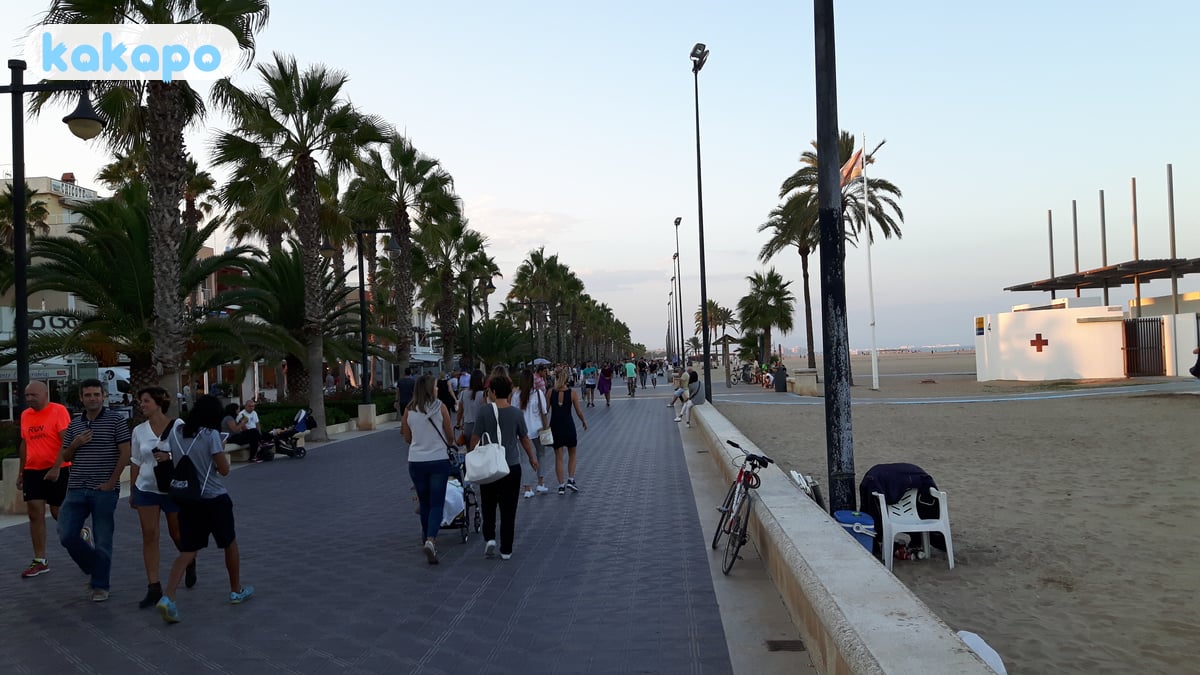
This section is here because international visitors ask. On 29 October 2024, a "DANA" (cold-drop) weather system produced extreme flash flooding in Valencia province, killing 230+ people, mostly in the suburb of Paiporta and surrounding towns south of the city. It was Spain's deadliest flood in modern memory.
- Valencia city centre was largely spared — the diverted Turia channel did its job.
- Affected areas: southern suburbs (Paiporta, Catarroja, Alfafar). These are not areas tourists normally visit.
- Recovery: most tourist infrastructure was undamaged. Hotels, the Old Town, the City of Arts, beaches all reopened by November 2024.
- Future flood risk: DANA events are rare (every decade or so produces one of this severity); standard travel insurance covers weather cancellations. Spanish meteorological alerts are reliable.
- What to do during weather alerts: AEMET (Spanish Met Office) issues red/orange/yellow alerts. Heed red alerts; stay indoors above ground floor.
Beach — Malvarrosa, theft, swimming

- Malvarrosa Beach: 4 km of sand, lifeguarded in season, restaurant/paella row.
- Beach-bag theft: while swimming. Common at Malvarrosa. Take only what you need into the water; leave valuables in hotel safe.
- Mediterranean swimming: generally calm. Heed flag colours: red = no swim, yellow = caution, green = OK.
- Jellyfish: occasional in summer. Stings minor.
- Paella beach restaurants: La Pepica is the famous one. Booking advisable Friday-Sunday lunch.
Metro, bikes, taxis, the airport

- Valencia Metro: 7 lines, modern, clean. €1.50 single; tourist day pass €4.
- Buses (EMT): extensive. Same fare structure.
- Bikes: Valenbisi public cycle-share + flat city + dedicated bike lanes = fantastic. Annual €30 visitor pass via app.
- Bike theft: a real Valencia issue. Two locks for any private bike; Valenbisi-rented bikes don't matter.
- Taxis: white, metered, honest.
- Valencia Airport (VLC): 8 km west. Metro Lines 3 + 5 €4.90, 25 min. Taxi €25-30.
- AVE high-speed train: Madrid 1h45m; Barcelona 2h30m.
Scams and minor risks
- Pickpockets at the Mercado Central: dense crowds. Front pocket only.
- Pickpockets on metro Line 3: airport line, tourist-heavy.
- Restaurant "couvert": standard Spanish. €2-3/person if it arrives.
- "Free walking tour" tip pressure: tip €5-10/person.
- Beach-thieves' two-man play: one distracts (asks directions), one grabs your bag. Aware = defended.
Neighbourhood-by-neighbourhood breakdown

- Ciutat Vella (Old Town) — the historic core: Cathedral, La Lonja, Mercado Central, Plaza de la Virgen. Heavily walked, very safe day and night. Pickpockets work the Mercado Central morning rush; otherwise calm.
- El Carmen (within Ciutat Vella) — the medieval northern Old Town, narrow lanes, street art, the Torres de Serranos. Lively at night with bars and restaurants, very safe with normal awareness.
- Russafa (Ruzafa) — south of Estación del Norte, the gentrified bohemian quarter, the best restaurant and bar scene in the city. Very safe, the best evening neighbourhood.
- Ensanche / Pla del Remei — central modernist district with the Mercado de Colón, the embassies, leafy avenues. Polished, very safe.
- Cabanyal / Malvarrosa — the beachside districts, the colourful Cabanyal fishing-quarter houses, the 4 km Malvarrosa beach. Day and evening fine; beach-bag theft is the realistic risk (the two-person play — one distracts asking directions, partner grabs the bag).
- City of Arts and Sciences / Eixample — south, the Calatrava megastructures, Oceanogràfic, Hemisfèric. Modern, very safe, a day-trip-in-the-city destination.
- Benimaclet — north of the centre, gentrifying student/bohemian, cheap rents, lively bar street on Carrer de la Murta. Very safe.
- Turia Park — the 9 km greenway through the old river bed connecting most neighbourhoods. Daytime and early evening fine and beautiful for walking/cycling; long unlit sections at 3am are best skipped solo.
- El Cabanyal seafront blocks immediately around the post-flood revitalisation: some are still scrappy, fine by day.
If it's your first time visiting
- Best arrival airport: Valencia (VLC), 8 km west. To centre: Metro Lines 3 or 5 €4.90 in 25 min direct to Xàtiva or Colón (the standard option), or taxi €25-30 flat-rate. AVE high-speed train Madrid 1h45m, Barcelona 2h30m if combining.
- Public transport: Metrovalencia (7 lines), EMT buses. Tap-to-pay on every reader. €1.50 single, €4 day tourist pass, €13.80 Bono 10 (rechargeable). The Valenbisi bike-share is the locals' favourite (€30/year visitor app pass, dock stations every 300m).
- Best neighbourhood for your first night: Russafa (Ruzafa) for atmosphere and food, El Carmen for the medieval Old Town vibe, Cabanyal for the beach. Avoid first-time bookings immediately around the train station Nord — fine but not where the magic is.
- Day 1, jet-lag friendly: morning at the Mercado Central (closes 3pm), tapas crawl in El Carmen, afternoon Turia Park bike ride to the City of Arts and Sciences, sunset on Malvarrosa beach, dinner of real paella valenciana at La Pepica (booking 24-48h ahead).
- Paella rules: real Valencian paella is lunch-only (never dinner), Sunday tradition, with chicken-rabbit-snails-garrofó-bean, no seafood, made in a wide flat pan over wood fire. The seafood version is paella de marisco; "paella mixta" with chorizo and prawns is the tourist abomination — locally considered an offence. La Pepica, Casa Ripoll, La Marcelina are the legit beach-row places.
- For Las Fallas (March 15-19): book 6+ months ahead, expect 2-3x hotel prices, bring earplugs for the daily 2pm mascletà fireworks, watch your feet for kids' firecrackers. The final-night La Cremà burning is spectacular — stand back further than police rope off (sparks travel further than expected).
- Common rookie mistakes: ordering paella for dinner at a tourist restaurant (locals only eat it at Sunday lunch, in restaurants that pre-soak the pan all morning); leaving bags on the beach while swimming (the two-person theft pattern is real); locking a bike with one lock (theft is high — Valenbisi rentals are fine but don't matter); not pre-booking AVE train tickets (they sell out for popular Madrid/Barcelona runs).
- Tap water is safe but locals usually prefer bottled because the taste is mineral-heavy and chlorinated. Bottled is cheap; both are fine.
Practical info — emergency numbers
- European emergency: 112.
- Policía Nacional: 091.
- Hospital La Fe: +34 961 244 000.
- AEMET weather alerts: subscribe via the AEMET app for region-specific warnings.
Bring: a contactless card, an unlocked phone (Movistar, Vodafone ES, Orange ES prepaid SIMs), comfortable walking shoes, sun protection (Mediterranean UV), and travel insurance with weather-cancellation coverage.
Frequently asked questions
Is Valencia safe to visit in 2026?
Yes. Valencia is one of Spain's safer big cities, less tourist-saturated than Barcelona and more relaxed than Madrid. US State Department lists Spain at Level 2 (terrorism baseline). Crime against visitors is moderate — the realistic risks are bicycle theft, beach-bag theft at Malvarrosa, pickpocketing around the Mercado Central and on metro Line 3, and the once-a-year intensity of Las Fallas (March).
Is Valencia safe at night?
Yes. Central Valencia (Old Town, Ruzafa, El Carmen) stays alive and policed until late. Spanish dinner runs 9-11pm and bars stay busy until 2am+. The Turia Park is fine to walk through during the day but solo walks through long unlit sections at 3am are not ideal. Use Cabify, FREE NOW, or taxis for distance at night.
Is Valencia safe for solo female travellers?
Yes. Valencia ranks comfortably for solo-female safety. The flat compact centre, dense daytime tourism, and bike-friendly streets all support solo travel. Standard precautions: phone in front pocket on metro Line 3 (airport line, tourist-heavy), beach-bag awareness at Malvarrosa (the two-man play — one distracts asking directions, partner grabs the bag), and Cabify rather than late-night walks across the park.
Can you drink tap water in Valencia?
Yes — it's safe but locals often prefer bottled because the taste is markedly mineral-heavy and chlorinated. Tap is safe at every restaurant and refill is fine. If taste matters to you, bottled is widely available and cheap.
What's the biggest scam to avoid in Valencia?
Beach-bag theft at Malvarrosa via the two-man play — one person distracts you asking directions or showing a map, the other grabs your bag from the towel while you're swimming. Take only what you need into the water; leave valuables in the hotel safe. Other recurring patterns: pickpockets at the Mercado Central in dense crowds, bicycle theft (use two locks for any private bike; Valenbisi rentals are no risk), and the standard 'free walking tour' tip pressure.
Should I worry about flooding after the 2024 disaster?
Not for tourist Valencia. The October 2024 DANA flood killed 230+ people but the devastation hit southern suburbs (Paiporta, Catarroja, Alfafar) — not areas tourists visit. Valencia city centre was largely spared because the diverted Turia channel did its job. Tourist infrastructure was undamaged and fully operational by November 2024. DANA events of that severity occur roughly once a decade; AEMET (Spanish Met Office) weather alerts are reliable — heed red alerts and stay above ground floor if one is issued during your visit.
Sources
Run a business in Valencia?
Show visitors your Valencia business is a safe choice. The free Verified by Kakapo badge puts Valencia's live safety score on your website, links back to your verified page, and updates itself. No cost.
Get the free badge →