


Is Anchorage, Alaska Safe? A 2026 Travel Safety Guide
Bear and moose encounters, the brutal Alaskan winter, the 1964 earthquake legacy, and the realistic risks of America's gateway to the wilderness.

Anchorage is moderately safe for tourists. Crime against visitors in tourist neighbourhoods (downtown core, Midtown, Spenard) is uncommon. The realistic risks are environmental: bear and moose encounters (yes, in city limits — moose injure more visitors than bears), the genuinely brutal Alaskan winter (-15 to -30°C with windchill in January), the 1964 Good Friday earthquake legacy + ongoing seismic risk, and the cruise-ship-tourist-season summer crush.
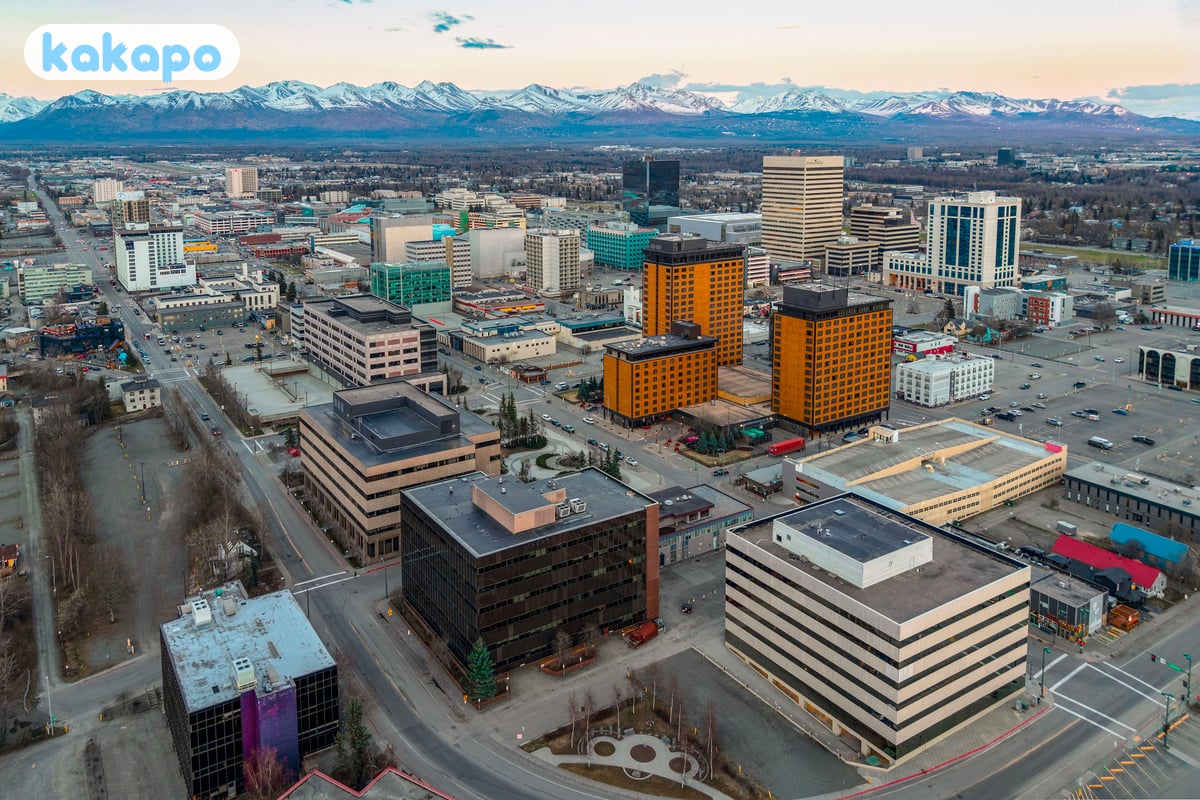
The honest framing for first-time visitors: Anchorage is medium (~290,000 in city, 400,000 metro), Alaska's biggest city. Most visitors arrive to start an Alaskan-cruise or wilderness trip. Tony Knowles Coastal Trail, Anchorage Museum, the Alaska Native Heritage Center, and gateway access to Denali NP (3.5h drive north), Kenai Fjords, and Prince William Sound are the visitor anchors.
The thing that catches first-time visitors most off-guard isn't the wildlife — it's the light. June has 19+ hours of daylight, and the "sun" at midnight is still bright enough to read by; December has 5.5 hours and a noon "sunrise" that never really clears the southern horizon. The Cook Inlet tide-bore mudflats just south of downtown look like a beach at low tide and are in fact a quicksand-style deathtrap that has trapped visitors who wandered out (rescue is sometimes impossible before the 9-metre tide returns). Anchorage Police Department posts warnings every summer; locals call the mudflats "the inlet" and treat them as roughly equivalent to crevasses.
In 2026 the practical changes since pre-pandemic: bear-spray sales at the airport (Ted Stevens ANC) are now permitted post-security in the gift shops on arrival; the People Mover bus system has a new contactless Touch Pass for $2 single / $5 day pass; the Glenn Highway-Knik Arm Bridge project remains stalled (don't plan a route assuming it exists); and the 2024-2025 Denali Park Road landslide closure has been partially repaired with a new road through Pretty Rocks — check nps.gov/dena before planning any north-of-mile-43 trips.
| Night safety | 62/100 |
|---|---|
| Scam / petty-crime risk | Low |
| Violent crime (tourists) | Medium |
| Most common scams | dangerous quicksand-style mudflats at Cook Inlet; wildlife encounters with moose and bears; homelessness and visible distress concentrations in downtown |
| Safer neighbourhoods | Downtown, Midtown, Spenard |
| Data sources cited | 4 |
| Last verified |
What the score means — 79/100
- Air quality (90) — pristine. Some summer wildfire smoke from Yukon fires.
- Healthcare (84) — Providence + Alaska Native Medical Center are major.
- Transport (80) — small enough to walk; rental car for outer.
- Personal safety (76) — moderate. Anchorage has higher per-capita crime than typical US tourist cities; concentrated in specific areas.
Bears, moose, and the rules
- Moose: present in Anchorage city limits — including downtown. Moose injure more visitors than bears (kicks + charges). Don't approach. Stay 50+ ft away.
- Bears: black bears + grizzlies in surrounding wilderness. Sightings on the Coastal Trail in summer.
- Bear spray: legal, sold at REI / outdoor shops. Not allowed in airplane carry-on; buy on arrival.
- If you encounter wildlife on a trail: don't run. Make yourself big. Speak calmly. Back away.
- Don't feed: anything. Federal/state fines.
- Garbage discipline: bears are scavengers; secure trash.
- Salmon-stream bears: at viewing platforms (Brooks Falls, etc.) — guided only.
Winter cold and ice
- December-March: -10 to -25°C standard, occasional -30°C cold snaps.
- Frostbite: at -20°C with wind in 10-15 min on exposed skin.
- Layered clothing: thermal base + wool middle + windproof shell. Mittens (warmer than gloves).
- Ice on sidewalks: salted but inevitable. Boots with grip + ice cleats (sold at REI for $20).
- Aurora season: September-March. Anchorage isn't ideal — light pollution + lower latitude. Better at Fairbanks (4h flight).
- Daylight: December has 5.5 hours; June has 19+.
Earthquake context
- 1964 Good Friday earthquake: 9.2 magnitude, second-largest ever recorded. Devastated Anchorage.
- 2018 quake: 7.0M, significant but few fatalities — modern building codes worked.
- Anchorage sits on active subduction zone. Real but unpredictable risk.
- If a tremor hits: drop, cover, hold under sturdy furniture. If outdoors, away from buildings.
- Tsunami: some coastal areas — heed warnings, head inland and to high ground.
Areas — Downtown, Midtown, Spenard

Recommended for visitors: Downtown (4th + 5th Avenue strip; walkable), Midtown (modern hotels), Spenard (gentrified bohemian — Moose's Tooth, etc.), Hillside / South Anchorage (residential).
Stay aware: parts of downtown around 4th Ave at night (homelessness + visible-distress concentration), Mountain View (residential, higher crime stats — not on tourist itineraries).
Day trips — Denali, Kenai Fjords, Whittier
- Denali National Park: 3.5-4h drive north. North America's tallest peak (6,190 m / 20,310 ft). Most visitors take a park bus into the wilderness.
- Kenai Fjords (Seward): 2.5h south. Glacier-and-marine-life cruises.
- Whittier (Prince William Sound): 1h east. Through the Anton Anderson Memorial Tunnel (one-way alternating; check schedule).
- Driving conditions: summer fine; winter requires winter tyres + emergency kit (blanket, water, food, phone charger).
- Don't drive Alaska remotes alone in winter without preparation.
- Mosquitoes: Alaska's "state bird". Bug spray essential June-August in any wilderness.
Transport, taxis, the airport
- People Mover: city bus system. Limited tourist use.
- Walking: downtown is walkable.
- Uber + Lyft: both work; cheap.
- Taxis: metered.
- Ted Stevens Anchorage International Airport (ANC): 8 km from downtown. Taxi/Uber $25-35.
- Rental car: useful for day trips.
Neighbourhood-by-neighbourhood breakdown
- Downtown — the 4th and 5th Avenue strip; the Anchorage Museum, the Performing Arts Center, the Saturday Market (May-September), Ulu Factory souvenir shop. Comfortable by day; the 4th Avenue strip after dark has homelessness and visible distress concentrations though incidents involving tourists are rare. The Captain Cook and Sheraton are the main hotels.
- Spenard — the gentrified bohemian neighbourhood south of downtown, around Spenard Road and Lake Hood; Moose's Tooth Pub & Pizzeria, the Spenard Roadhouse, the airport-area B&Bs. Lake Hood is the world's busiest seaplane base — watch the floatplanes take off all summer. Safe with standard urban awareness.
- Midtown — the commercial strip along C Street and Northern Lights; modern hotels (Hilton Garden Inn, Embassy Suites), REI flagship store, the better restaurants. Functional rather than picturesque; rental-car-friendly.
- Mountain View — north-east residential; higher crime stats and not on tourist itineraries. The neighbourhood is rougher than the rest of Anchorage; pre-booked transport in and out, no casual wandering.
- Hillside / South Anchorage — affluent residential on the lower slopes of Chugach; the Hilltop Ski Area, Glen Alps trailhead (the popular Flattop Mountain hike), bear-and-moose-fence-style yards. Very low crime; the visitor relevance is mostly trailhead access.
- Eagle River — separate community 20 min north on the Glenn Highway; Eagle River Nature Center, base for Chugach State Park hikes. Quiet residential.
- ANC airport (Ted Stevens Anchorage International) — 8 km from downtown; the major-cargo hub between Asia and North America (FedEx and UPS — most US-Asia overnight freight transits here). Domestic and international terminals. Taxi/Uber $25-35 to downtown; People Mover route 7A $2.
- Tony Knowles Coastal Trail — 11-mile paved trail from downtown to Kincaid Park, hugging Cook Inlet. Moose are frequently on the trail (stay 50+ ft back), bears occasionally in summer (carry bear spray). The trail's tide-bore-mudflat-side is signposted DO NOT WALK ONTO MUDFLATS — heed it, the inlet's 9-metre tides and quicksand-style mud have killed visitors who wandered out.
- Bear-spray-on-trails culture — buy bear spray on arrival (not allowed in airline carry-on, $50 at REI Midtown or at Trailhead outdoor in Spenard; airport gift shops post-security also stock it for $60). Carry on holster on hip when on any trail. Don't fire it indoors as a test — it's stronger than pepper spray and will incapacitate.
If it's your first time visiting
- Best arrival airport: Ted Stevens Anchorage International (ANC) — direct seasonal flights from Seattle, Portland, LA, Chicago, NYC, Frankfurt, Tokyo, Reykjavik. To downtown: People Mover bus 7A ($2, 30 min), Uber/Lyft ($25-35), taxi ($35-40). The airport gift shops post-security sell bear spray for ~$60 — convenient if you forgot to plan.
- Public transport: People Mover city buses run $2 single, $5 day pass with the new Touch Pass contactless system. The Anchorage Trolley (summer only, $20) hits the tourist highlights in 1 hour. Most visitors rent a car for day-trip flexibility — Denali, Kenai Fjords, and Whittier are all driving destinations.
- Best neighbourhood for your first night: Downtown for walkability to the Anchorage Museum and 5th Avenue restaurants; Midtown for cheaper modern hotels with parking; Spenard if you want a B&B near Lake Hood with floatplane views.
- Day 1, jet-lag friendly (summer): walk the Tony Knowles Coastal Trail from Westchester Lagoon (free moose-spotting) to Earthquake Park (1964 earthquake landslide site, 4 km), Anchorage Museum afternoon, dinner at Moose's Tooth in Spenard. The "midnight sun" in June means you can stay out late without realising.
- Common rookie mistakes: walking onto the Cook Inlet mudflats at low tide (looks like a beach, is actually quicksand — people die from this), approaching moose for photos (they injure more visitors than bears do — stay 50+ ft back), packing bear spray in checked luggage (technically not allowed in carry-on either; buy on arrival), planning a same-day round trip to Denali (3.5-4h each way; the park is a 2-3 day commitment minimum), driving Glenn Highway in winter without studded tires and an emergency kit (blanket, water, food, phone charger — cell coverage drops to nothing past Sutton), under-tipping flightseeing or fishing-charter pilots (15-20% is the norm).
- Currency and tipping: USD. 18-22% at restaurants, $1-2 per drink at bars, 15-20% for flightseeing/fishing-charter operators. Alaska has no state sales tax; some municipalities (not Anchorage) charge local bed tax.
- Book Denali, Kenai Fjords cruises, and bear-viewing flights 2-4 months ahead in summer — peak season is June-August and reputable operators (Phillips Cruises, Major Marine Tours for Kenai Fjords; Rust's Flying Service or Regal Air for Brooks Falls bear-viewing) book out. Princess and Holland America cruise-tour shoreside-extension dates dominate June-August Denali capacity.
- Layer for any season: 50-degree temperature swings within a day are normal even in summer. Bring rain shell, fleece mid-layer, base layer; ice cleats and parka if visiting October-April. Sunglasses essential year-round (snow-glare in winter, midnight-sun in summer).
Practical info — emergency numbers
- Emergency: 911.
- APD non-emergency: 907-786-8900.
- Providence Alaska Medical Center ER: 907-562-2211.
- Alaska Native Medical Center ER: 907-563-2662.
Bring: serious cold-weather layers Nov-March, ice cleats, bear spray (buy on arrival), bug spray for summer wilderness, sun protection (long summer-sun exposure), a contactless card, and US-valid travel insurance.
Frequently asked questions
Is Anchorage safe to visit in 2026?
Yes for tourists with realistic expectations — Anchorage is moderately safe and crime against visitors in the downtown core, Midtown, and Spenard is uncommon. The US sits at Level 1 on the State Department's general advisory. Anchorage has higher per-capita crime than typical US tourist cities, but it concentrates in specific outer neighbourhoods. The honest concerns are environmental: bear and (especially) moose encounters in city limits, the brutal -10 to -25°C winter with frostbite risk in 10-15 minutes, the 1964 earthquake legacy with ongoing seismic risk, and Alaska summer wilderness logistics.
Is Anchorage safe at night?
Yes in the downtown tourist strip (4th and 5th Avenue), Midtown, and Spenard with standard urban precautions. The recurring asterisk is parts of downtown around 4th Avenue at night which have concentrations of homelessness and visible distress that can feel unsettling — police presence is real and incidents involving tourists are rare, but it isn't the polished evening atmosphere of Seattle or Portland. Avoid Mountain View (residential, higher crime stats) and use Uber or Lyft for late-night returns to hotels.
Is Anchorage safe for solo female travellers?
Yes with standard urban and wilderness precautions. Downtown tourist areas are walkable in daylight; for evening returns use Uber or Lyft rather than walking through 4th Avenue. The genuine non-gendered risks are environmental: bear and moose encounters on the Coastal Trail (don't approach, stay 50+ feet away), winter ice and frostbite, and the brutal -25°C cold snaps. Day trips to Denali, Kenai Fjords, and Whittier are well-organised; book reputable operators.
Can you drink tap water in Anchorage?
Yes — Anchorage Water and Wastewater Utility (AWWU) meets EPA standards and the water comes largely from Eklutna Lake (glacial). Tap is safe across the city and is regarded as excellent quality. A refillable bottle is fine; refill stations are common in hotels, the airport, and trailheads.
What's the biggest scam to avoid in Anchorage?
There isn't a meaningful scam culture in Anchorage itself. The recurring practical traps are unlicensed flightseeing or fishing-charter operators (book with established companies that have public liability insurance and FAA Part 135 certification), Denali day-tour upselling for return trips that can't realistically be done in a day (3.5-4 hours each way to the park alone), and rental-car insurance pressure at depot pickup. Bear-spray markup at downtown shops is real; REI and outdoor stores in Midtown are cheaper.
How dangerous are moose and bears really?
Moose injure more visitors than bears do. They are present in Anchorage city limits including downtown and along the Tony Knowles Coastal Trail. They kick and charge when they feel threatened, particularly cows with calves. Stay 50+ feet away, don't approach for photos, and back away if one is on the trail. Bears (black bears in town, grizzlies in surrounding wilderness) are seen on the Coastal Trail in summer. Buy bear spray on arrival (not allowed in airline carry-on; REI sells it for around $50); make noise on trails to avoid surprising animals; never run if you encounter one — make yourself big, speak calmly, and back away. Don't feed any wildlife: federal and state fines are substantial.
Sources
Run a business in Anchorage?
Show visitors your Anchorage business is a safe choice. The free Verified by Kakapo badge puts Anchorage's live safety score on your website, links back to your verified page, and updates itself. No cost.
Get the free badge →