


Is Kandy, Sri Lanka Safe? A 2026 Travel Safety Guide
Temple of the Tooth dress code, Esala Perahera crowds, the Colombo road, hill-country weather, and the realities of Sri Lanka's spiritual capital.

Kandy — population ~125,000 in the lake-cradled hill capital — is one of South Asia's gentlest, most calm tourist cities and the spiritual heart of Sri Lankan Buddhism. Crime against tourists is rare; the lakefront and central streets are walkable; the climate at 500m elevation is consistently milder than Colombo.
The honest concerns are about respect, crowds, and the road in. The Sri Dalada Maligawa (Temple of the Sacred Tooth Relic) — one of Buddhism's most sacred sites, holding a tooth said to be the Buddha's — has a strictly enforced dress code (covered shoulders, covered knees, no hats, no shoes). The annual Esala Perahera (10-day full-moon festival in late July or early August) brings 100+ elephants in nightly processions and packs Kandy with two million pilgrims and tourists; accommodation triples and crowd density becomes serious. The Colombo-Kandy A1 road is winding, with crashes most weeks. Hill-country weather changes fast; misty cool mornings can hide afternoon downpours, and the train ride to Ella sometimes catches tourists in alpine cold.
The US State Department lists Sri Lanka at Level 2; UK FCDO has no specific Kandy advisories. Both note the standard tropical-disease and road-safety context.
| Night safety | 67/100 |
|---|---|
| Scam / petty-crime risk | Medium |
| Violent crime (tourists) | Low |
| Most common scams | pickpocket risk during Esala Perahera crowds; overcharging for accommodation during Esala Perahera; fake 'free' tour guides at the Temple of the Tooth |
| Safer neighbourhoods | around Kandy Lake, Hantana area, Peradeniya area |
| Data sources cited | 4 |
| Last verified |
What the score means — 80/100
- Personal safety (90) — high. Kandy is calm; the asterisk is the Esala Perahera crowd density.
- Transport (74) — A1 road from Colombo (3-4 hr); scenic train; tuk-tuks within town.
- Healthcare (76) — Kandy General Hospital and Suwasevana Hospital adequate; serious cases medevac to Colombo.
- Air quality (86) — clean by South Asian standards; hill-elevation breeze; some traffic emissions in the lake bowl.
Temple of the Tooth — dress code and etiquette
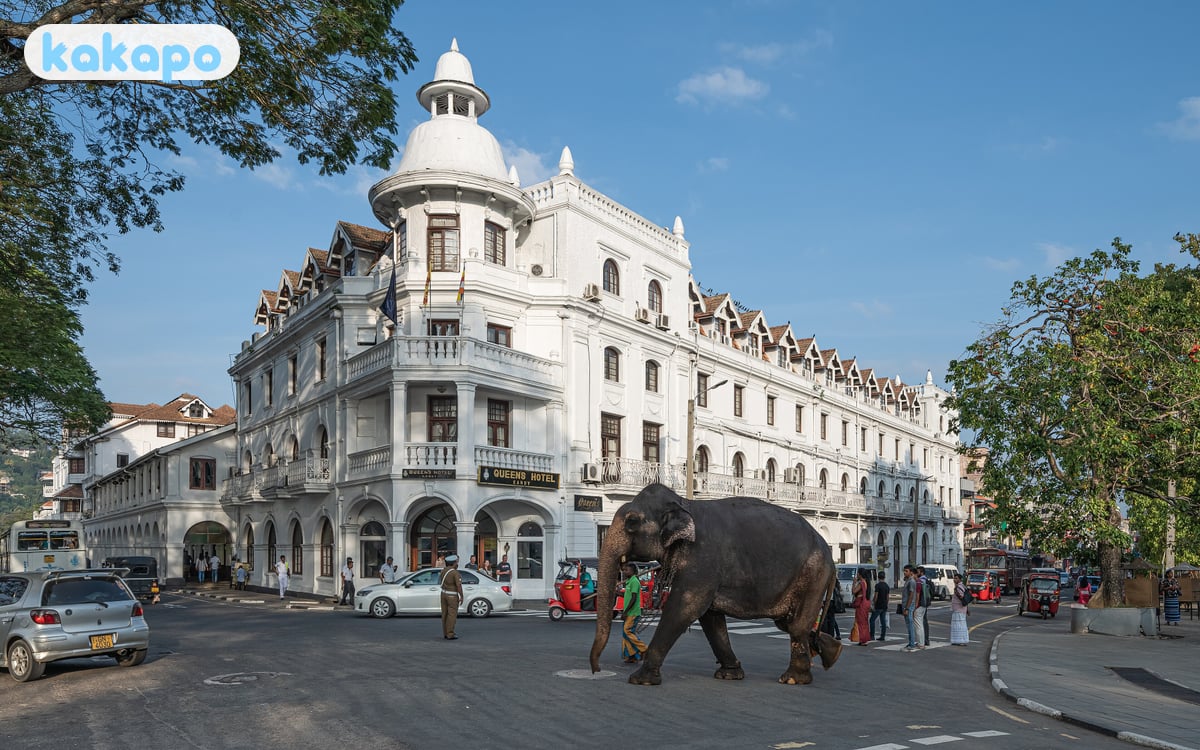
Sri Dalada Maligawa houses the Sacred Tooth Relic of the Buddha — one of Buddhism's most venerated objects. It's a working temple, not a museum, and Sri Lankan visitors come on serious pilgrimage.
- Dress code: shoulders covered (no tank tops, no sleeveless), knees covered (no shorts, no short skirts), no hats inside, no shoes (deposit at the shoe counter LKR 50). Sarongs are sold at the entrance for LKR 200-500 if you arrive underdressed; police will turn you away otherwise.
- Tickets: LKR 2,000 for foreign adults; included guided audio LKR 200 extra.
- Best timing: morning puja (06:30) and evening puja (18:30) are when the inner shrine doors open and pilgrims jostle for darshan. Visually spectacular. Crowded.
- Photography: permitted in courtyards; restricted in inner shrine; never pose with your back to a Buddha statue or with a Buddha image (visitors have been deported for this — the famous 2014 case of a Western tourist with a Buddha tattoo).
- Inner relic chamber: closed except for brief puja moments. You'll glimpse the gold reliquary, not the actual tooth.
- Security: bag X-ray and metal detector at entry — relic survived an LTTE bombing in 1998 and remains a high-security site.
- Etiquette: don't point feet at Buddha images; don't turn your back to them; remove shoes before any shrine.
Esala Perahera — the festival nights
Esala Perahera (10 days in July or August around the full moon — exact dates vary annually) is Sri Lanka's biggest religious procession. 100+ caparisoned elephants, drummers, fire dancers, whip-crackers process around Kandy Lake nightly, building from small evening parades to the spectacular Randoli Perahera on the final nights.
- Crowds: 1-2 million pilgrims and tourists. Streets close; pickpocket risk peaks; accommodation triples in price and books out months ahead.
- Best vantage: hotel balcony seats on Dalada Veediya cost LKR 5,000-30,000 per person depending on view and night. Public viewing free but density extreme.
- Don't take selfies near elephants: caparisoned elephants are stressed by hours of processing in noise and crowds; injuries to tourists who got too close happen. The 2024 procession had several elephant-related injuries reported.
- Photography of elephants: animal-welfare debate. Some captive elephants have visible injuries from heavy harnesses. Decision is yours; consider whether your photo encourages an industry critics describe as cruel.
- Modesty: Sri Lankan dress norms; cover shoulders.
- Plan transport: tuk-tuks impossible during processions; everything walks.
- Best timing if avoiding: don't visit Kandy during Esala unless you specifically want the festival.
The Colombo–Kandy road — A1 and the train alternative
- A1 road: 115 km from Colombo via Kegalle. The mountain stretch from Cadjugama upwards is winding, slow, and crash-prone — overtaking on blind curves is the leading killer.
- Drive time: 3-4 hours by car (no expressway). Buses can be 4-5 hours.
- The new Central Expressway: partially opened (Kadawatha to Mirigama, with extension to Kurunegala under construction); future Kandy connection still years out.
- If by car/taxi: hire experienced driver; AC; refuse if driver wants to overtake on blind curves. Reputable Colombo airport-Kandy taxi services LKR 12,000-18,000.
- Train alternative: Colombo Fort to Kandy 2.5-3 hours, second-class observation LKR 500, first-class LKR 1,500. Slower than driving but spectacular and much safer.
- The famous train ride continues: Kandy to Ella (5-7 hours through tea country) is one of the world's iconic train journeys — book reserved seats 30+ days ahead.
- Don't hang out of the doors: the famous "doorway photo" pose has killed multiple tourists who lost balance or hit poles. The 2018 fatal incident near Demodara was widely reported.
Hill-country weather and the trip on to Nuwara Eliya
- Kandy elevation: 500m. Daytime 22-30°C; nights 18-22°C; consistently milder than Colombo.
- Nuwara Eliya elevation: 1,900m, 80 km south. Daytime 15-22°C; nights 5-10°C in winter (Dec-Feb); bring warm layers.
- Horton Plains and Adam's Peak: dawn departures in 5-10°C; gloves, fleece, hat. Tourists in t-shirts hit hypothermia at altitude on misty days.
- Adam's Peak (Sri Pada) climbing season: December to May. Outside that the path is leech-infested, slippery, and most pilgrim huts close. Climb is 5,500 steps; allow 4-5 hours up; do it overnight to summit for sunrise.
- Mist and rain: hill country can get socked in within an hour. Sigiriya / Dambulla day-trips from Kandy have lost full views to monsoon mist.
- Best windows: January-March (driest hill country); July-September (driest east coast — opposite to coast).
- Leeches: in monsoon, hill-country trails have leeches. Long socks, salt or repellent on shoes, don't pull them off (twist gently or wait).
Elephants — Pinnawala vs Udawalawe vs ethical choice
- Pinnawala Elephant Orphanage (40 km west of Kandy): controversial — keeps elephants chained, performs bathing for tourists, has been criticised by World Animal Protection. Decision is yours.
- Millennium Elephant Foundation (near Pinnawala): better welfare practices but still captive.
- Udawalawe National Park (4 hours south): wild elephants in habitat; jeep safari ethics still vary by operator but the animals are free.
- Yala National Park: leopards (highest density in the world), elephants, sloth bears; jeep crowding at sightings is a problem; Block 1 most touristy, Blocks 3-5 quieter.
- Riding elephants: never ethical. Multiple welfare reviews confirm spinal damage from regular riding.
- Don't approach wild elephants: human-elephant conflict kills 60-80 people annually in Sri Lanka. Maintain distance; never get between mother and calf.
- Reputable Kandy-based operators: Helping the Tortoise (turtle conservation), Dambana Veddah Village (indigenous community visit done respectfully).
Areas — Lake, hill stations, around the temple
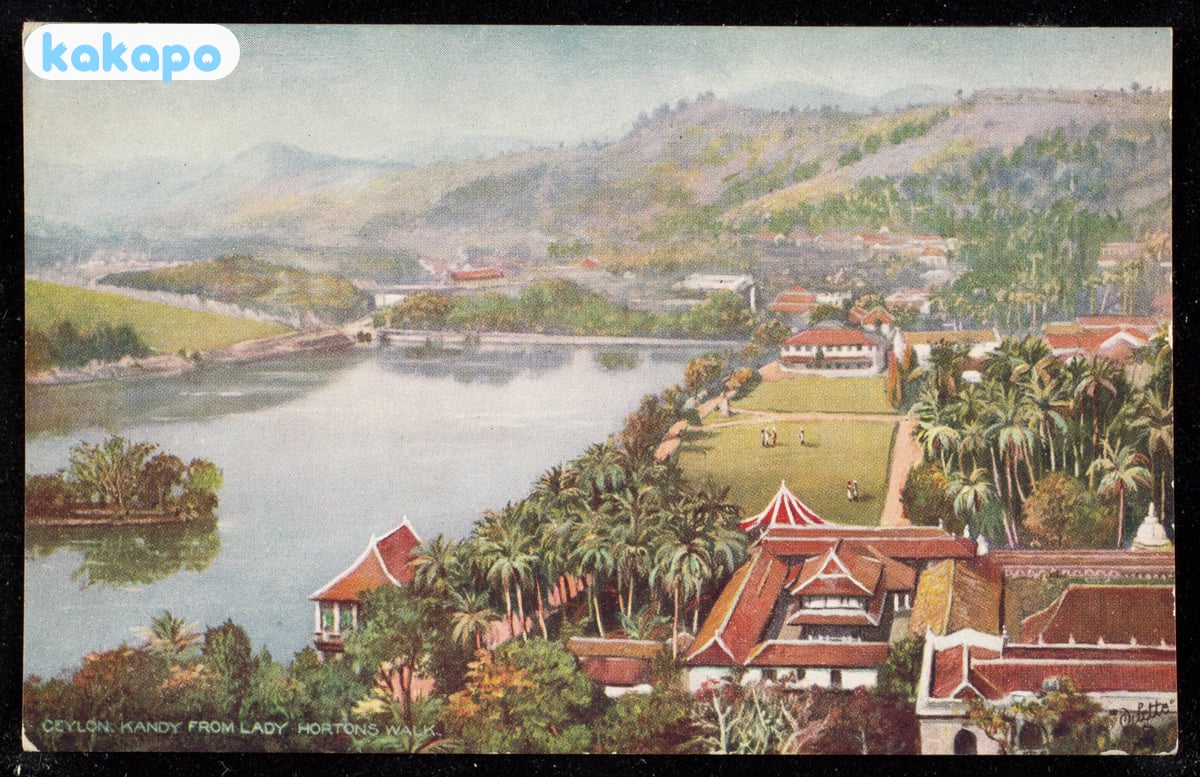
Recommended bases: around Kandy Lake — central; walking distance to Temple of the Tooth, lake walking path, Royal Botanical Gardens (4 km away). Hilltop hotels (Hantana area) — Kandy House, Theva Residency; views over the lake but need tuk-tuk to town. Peradeniya area (4 km) — university and botanical gardens, calm.
Stay aware: Kandy Lake walking path at night — generally safe but dimly lit on parts; women solo recommended to avoid after dark.
There are no genuinely dangerous neighbourhoods in Kandy.
Money, food, emergency numbers
- Currency: Sri Lankan rupee (LKR). $1 ≈ LKR 300.
- Cards: hotels yes; tuk-tuks and small restaurants cash.
- Tipping: 10% restaurants; LKR 500 porters; LKR 1,000-2,000 per day for drivers/guides.
- Food: Sri Lankan rice and curry; "devilled" dishes (chicken, prawn — sweet-spicy stir-fry); kottu roti; lamprais (Dutch-influenced rice pouch). The Empire Cafe and Cafe Aroma good Western options.
- Tap water: not drinkable.
- Visa: ETA required; apply at eta.gov.lk before flying.
- Emergency: 119 (police); 110 (ambulance/fire); Tourist Hotline 1912 (24h).
- Hospitals: Kandy General Hospital (+94 81 222 2261); Suwasevana Hospital (+94 81 220 2270).
- SIM: Dialog or Mobitel; LKR 1,500-3,000 for tourist packages.
- Cultural Triangle ticket: combined ticket for Sigiriya/Dambulla/Polonnaruwa is no longer sold (separate tickets only) — pay individually at each site.
Frequently asked questions
Is Kandy safe to visit in 2026?
Yes — Kandy scores 84/100 here, one of South Asia's gentlest hill cities. Sri Lanka sits at US State Department Level 2 ('exercise increased caution'); UK FCDO has no specific Kandy advisories. Crime against tourists is rare and the lakefront and central streets are walkable. The realistic concerns are about respect, crowds and the road in: the strictly enforced Temple of the Tooth dress code (covered shoulders, covered knees, no hats, shoes deposited), the Esala Perahera festival crowds (10 nights in late July or early August, 1-2 million visitors, accommodation triples), the winding crash-prone A1 road from Colombo, and hill-country weather changes.
Is Kandy safe at night?
Yes. The lakefront, the streets around the Temple of the Tooth and Dalada Veediya, and the main hotel corridors stay calm and well-policed late. Kandy is a pilgrimage town with a family atmosphere, not a nightlife destination — bars close by 23:00 and the city is sleepy by midnight. The Kandy Lake walking path is generally safe but dimly lit on parts; solo women are advised to skip the lake circuit after dark. Hilltop hotels (Hantana area) need a pre-arranged tuk-tuk back, not a midnight walk.
Is Kandy safe for solo female travellers?
Yes with cultural awareness. Kandy is one of Sri Lanka's easier solo-female destinations — calm, family-oriented, low harassment. Dress modestly especially around the Temple of the Tooth (covered shoulders, covered knees mandatory; sarongs are sold at the entrance for LKR 200-500 if you arrive underdressed). Solo dining is routine. Standard precautions on the Kandy Lake path after dark, on hill-country day-trips (don't hang out of train doors on the Ella line — multiple fatal incidents), and during Esala Perahera when the crowd density makes the festival uncomfortable solo.
Can you drink tap water in Kandy?
No — Sri Lankan tap water is not drinkable. Use bottled (sealed) or filtered water for drinking, brushing teeth and rinsing fruit. Hotels and reputable restaurants serve filtered water on request. Carry a refillable bottle with a Sawyer or LifeStraw filter as a backup. The hill-country water is generally cleaner than Colombo's but still untreated for foreign stomachs.
What's the biggest scam to avoid in Kandy?
The 'free temple tour' or 'I'll show you the secret viewpoint' pattern around the Temple of the Tooth entrance, the lake and the Bahirawakanda Buddha statue — a friendly local offers a 'free' tour, then demands LKR 5,000-10,000 at the end or routes you through commission gem and spice shops. Polite firm refusal works. Other patterns: street tuk-tuk 'broken meters' quoting 3-5x normal rates (use PickMe — Sri Lanka's local ride-hail, works with foreign cards), gem-export scams ('rare sapphire deal, sell for profit at home' — never engage, UK FCDO specifically warns about this), and the 'photo with Buddha' setup where guides encourage poses that get visitors deported (never pose with your back to a Buddha, never with Buddha imagery on tattoos or clothes — the 2014 Buddha-tattoo deportation case is still cited).
Is the Kandy Esala Perahera festival worth attending?
Yes if you specifically want it; no if you don't. The 10-day Esala Perahera around the July or August full moon (exact dates vary annually) is Sri Lanka's biggest religious procession: 100+ caparisoned elephants, drummers, fire dancers and whip-crackers process around Kandy Lake nightly, building to the spectacular Randoli Perahera on the final nights. It draws 1-2 million pilgrims and tourists, triples accommodation prices, books out months ahead, closes streets and pushes crowd density to genuinely uncomfortable levels. The best vantages are hotel balcony seats on Dalada Veediya (LKR 5,000-30,000 per person depending on night and view); public viewing is free but extremely tight. Don't take selfies near the elephants — they are stressed by hours of processing in noise and crowds, and the 2024 procession had several elephant-related injuries to tourists who got too close. The captive-elephant welfare debate is real; some animals have visible harness injuries, and the question of whether photographing them encourages a cruel industry is a fair one. If you don't specifically want the festival, skip Kandy during these 10 days — the city is twice as good at any other time.
Sources
Run a business in Kandy?
Show visitors your Kandy business is a safe choice. The free Verified by Kakapo badge puts Kandy's live safety score on your website, links back to your verified page, and updates itself. No cost.
Get the free badge →