


Is Busan, South Korea Safe? A 2026 Travel Safety Guide
Typhoons, beach rip currents, Seomyeon nightlife, the North Korea question, and why Busan is one of Asia's safer big-city beach destinations.

Busan is one of the safer large port cities anywhere. Violent crime against tourists is very rare; women routinely use the metro and walk the beachfront late at night without incident.
The realistic concerns are typhoons (Busan is South Korea's most typhoon-exposed major city — Hinnamnor in 2022 caused widespread flooding and a fatality in an underground car park), rip currents and tide drowning at the headline beaches, the boozy Seomyeon nightlife scene with its "anju" tab tricks, the North Korea backdrop (zero practical impact for visitors), and the constant Air Quality Index swings driven by transboundary dust from China.
The US State Department lists South Korea at Level 1; UK FCDO has no advisories against travel. Both note the standard North Korea / DMZ context and the typhoon risk.
In 2026, the practical Busan picture has shifted in three ways since pre-pandemic. First, the K-ETA travel authorisation is back in effect for many nationalities entering Korea (£8, valid 3 years, apply at least 72h before flying; the US, UK, EU, and Japan got the temporary K-ETA waiver renewed through 2026 but always check the latest list before booking). Second, the post-Itaewon-tragedy crowd-control regime is now visible across Busan's headline events — Haeundae's summer beach festival, the Busan International Film Festival in October, and the New Year's sunrise crush at Haedong Yonggungsa Temple all run with one-way pedestrian flow and capacity caps. Third, the cashless KRW economy has tipped — almost every restaurant, café, market stall, and taxi takes contactless cards or Kakao Pay; cash is still useful at Jagalchi Fish Market and Bupyeong Kkangtong Night Market but no longer essential anywhere else.
| Night safety | 84/100 |
|---|---|
| Scam / petty-crime risk | Medium |
| Violent crime (tourists) | Low |
| Most common scams | anju tab tricks in Seomyeon nightlife; surprise food charges in Seomyeon and Gwangalli bars; touts inviting into bars in Seomyeon |
| Safer neighbourhoods | Haeundae, Seomyeon, Nampo-dong |
| Data sources cited | 4 |
| Last verified |
What the score means — 88/100
- Personal safety (92) — very high. Petty theft is rare; the famous "left phone on a café table" rule mostly holds.
- Transport (90) — Busan Metro 4 lines + light rail; clean and reliable. KTX from Seoul in 2.5h.
- Healthcare (88) — Pusan National University Hospital is the regional centre; private clinics have decent English support.
- Air quality (74) — moderate. Spring kosa (yellow dust) and winter inversions push PM2.5 high; summer is cleaner.
Typhoons — August to October
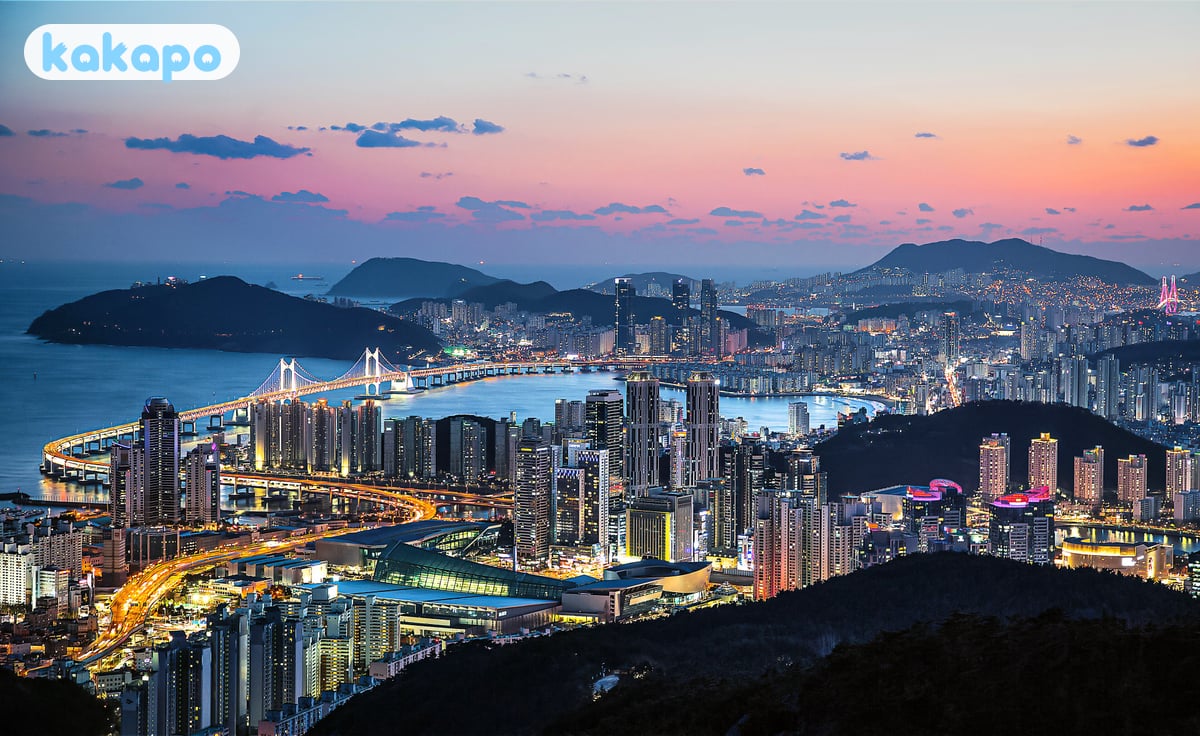
- Season: Aug-Oct. Busan's Pacific-facing position makes it Korea's most exposed major city. Recent serious strikes: Maemi (2003, the worst in modern memory), Chaba (2016), Maysak/Haishen (2020), Hinnamnor (2022).
- Hinnamnor (Sep 2022): storm surge flooded Haeundae beachfront cafés; an underground car-park flood killed seven residents in nearby Pohang.
- Warnings: Korea Meteorological Administration (KMA) issues advisories 48-72h ahead. Cell broadcasts go to all phones in Korea.
- What closes: ferries to Japan and Jeju cancel; high-rise sky bridges (Busan Tower, X the Sky observation deck) close; Gimhae Airport diverts.
- Stay away from: Haeundae and Gwangalli waterfront promenades during a Land Warning. Photographers have died in storm-surge waves there.
- Insurance: cancellation cover matters Aug-Oct. Carriers reroute, not refund.
Beaches — rip currents, jellyfish, and tide rules
Haeundae, Gwangalli, Songjeong, and Songdo are the four main city beaches. Lifeguard season is officially 1 June - 31 August.
- Rip currents (이안류, ee-an-ryu): Haeundae has Korea's worst documented rip-current pattern. Mass rescues happen every summer — over 100 swimmers were pulled from a single rip event at Haeundae in August 2023.
- Flag system: green safe, yellow caution, red no swimming. Take the red flag seriously.
- If caught in a rip: don't fight the pull. Swim parallel to the beach until you exit the current, then back to shore.
- Jellyfish: nomura's jellyfish (massive, painful sting) appear July-September in increasing numbers due to warming sea temperatures. Lifeguards close beaches when blooms arrive.
- Outside lifeguard season: don't swim. Currents continue; rescue capacity doesn't.
- Songdo glass-floor cable car and Skywalk: well-maintained, no real risk; close in high wind.
North Korea — what it actually means for visitors to Busan
Busan is South Korea's southeastern port, ~430 km from the DMZ. It is one of the furthest major Korean cities from the North Korean border.
- Practical impact on tourists: zero. North Korean missile tests, propaganda balloons, and even periodic GPS jamming events in border areas don't reach Busan.
- Civil-defence drills (Eulji): occasional, brief, scheduled. Sirens; traffic stops for ~15 minutes; restaurants and shops continue normally.
- Cell broadcasts: Korea pushes emergency alerts in Korean to all phones — earthquake, typhoon, missile, weather. Don't panic if you receive one in Korean only — Naver Translate or Papago will translate the text.
- Don't fly drones near military installations. Busan's port has Republic of Korea Navy facilities and US Navy port visits.
Seomyeon nightlife — the anju and bar-tab trick
Seomyeon is Busan's main nightlife district. Mostly fine, but two specific patterns repeat:
- The anju (안주) tab: in many Korean bars and "hof" beer halls, you cannot order drinks without ordering food (anju). Some tourist-trap bars in Seomyeon and Gwangalli load surprise ¥50-80 plates of dried squid onto your tab without asking. Confirm price before ordering, in writing if necessary.
- Tout bars and hostess bars: avoid any venue where an English-speaking man on the street invites you in. Reputable bars don't street-recruit.
- Drink-spiking: rare but reported. Don't leave drinks unattended.
- Soju culture: Korean drinking culture is intense; pace yourself. Soju at 17-20% feels lighter than it is.
- If overcharged: dial 112 (police) or call the 1330 tourist hotline (24h, English).
Areas — Haeundae, Seomyeon, Nampo-dong, Gamcheon
Recommended bases: Haeundae — beach district, modern hotels, Marine City highrises, slightly removed from "old" Busan but well-served by metro line 2. Seomyeon — central, lots of mid-range hotels, where metro lines 1 and 2 cross. Nampo-dong / Jagalchi — the "old Busan" port area, near the famous fish market and Yongdusan park. Gwangalli — beachfront with Diamond Bridge views, calmer than Haeundae.
Stay aware: Texas Street (next to Busan station, the historic port-bar district) has a small declining red-light/drinking scene with persistent touts; safer to walk past and head to nearby Choryang. Gamcheon Culture Village — colourful, photogenic, but a working residential community: don't peer into homes, don't fly drones, follow signed paths.
Metro, KTX, and ferries to Japan

- Busan Metro: 4 lines + Busan-Gimhae light rail. Clean, runs ~05:30-00:00. Single ride ₩1,300; T-money card works.
- KTX from Seoul: 2h 15min, ₩59,800. Reserve via Korail or the Korail Talk app.
- Buses: city buses ₩1,300; airport limousine to Gimhae ₩7,000.
- Gimhae International Airport (PUS): 16 km west. Light rail to Sasang then metro line 2 ₩1,650 (45 min total). Limousine bus to Haeundae ₩10,000 (60 min). Taxi ₩25,000-35,000.
- Ferry to Japan: Busan-Fukuoka by Beetle (3h jetfoil) or overnight Camellia Line. Both run from Busan Port International Terminal. Visa on arrival for most nationalities at Hakata.
- Taxis: Kakao T app dominates. Standard taxi base ₩4,800; black "deluxe" taxis are ~30% pricier.
Busan neighbourhood-by-neighbourhood
- Haeundae (해운대) — the famous 1.5km crescent beach, the Marine City highrise cluster (including the controversial 80-storey Haeundae LCT The Sharp), the Park Hyatt and Paradise Hotel luxury anchors, and the Westin Josun. Metro Line 2 (Haeundae Station) connects to central Busan in 30 minutes. The Dongbaek Island walking trail at the western end and the Cheongsapo coastal walk east are the underrated free-attractions. Beach: lifeguarded 1 June-31 August; outside that window don't swim — the rip-current pattern is documented.
- Gwangalli (광안리) — the smaller, calmer beach district 4 km west of Haeundae, framed by the lit Diamond Bridge (Gwangan Bridge). Mid-range hotels (Homers Hotel, La Valse), excellent seafood restaurants on the beachfront, and a younger nightlife scene than Seomyeon. The bi-monthly Diamond Bridge drone shows are now a permanent Friday/Saturday-night fixture.
- Seomyeon (서면) — central Busan's main commercial-and-nightlife hub, where Metro Lines 1 and 2 cross. Mid-range business hotels (Lotte Hotel Busan, Crown Harbor Hotel, Toyoko Inn at ¥7,000-12,000 equivalent), the underground Daehyun department store, and a dense club-and-bar scene. The "anju tab" scam concentrates here — confirm prices before ordering, never follow English-speaking street touts.
- Nampo-dong and Jagalchi (남포동·자갈치) — "old Busan", the port-adjacent peninsula with the Jagalchi Fish Market (Korea's largest, ground-floor raw market, upper floors hoe sashimi restaurants), Yongdusan Park with the 120m Busan Tower (₩12,000 observation deck), the Bupyeong Kkangtong Night Market, and the Gukje Market (the post-war refugee market memorialised in the 2014 film "Ode to My Father"). Metro Line 1, atmospheric, walkable, fine at night.
- Gamcheon Culture Village (감천문화마을) — the famously colourful hillside neighbourhood in Saha-gu, often called "Busan's Santorini" or "Korea's Machu Picchu" (neither is accurate; the colours date from a deliberate 2009 art project). Reach by Bus 2 or 2-2 from Toseong Metro Station (₩1,300). Working residential community of around 8,000 — don't peer into homes, don't fly drones, follow signed paths, lower your voice. The Little Prince viewpoint is the standard photo. Free entry; ₩2,000 stamp-trail map at the visitor centre.
- Centum City and Marine City (센텀시티) — the modern business-and-luxury cluster east of central, anchored by the Shinsegae Centum City (Guinness-record-largest department store at 293,000 m²), the Busan Cinema Center (Busan International Film Festival venue), and the BEXCO convention complex. Calm, clean, very safe; ideal base for business travellers.
- Beomeosa and Geumjeong-san (범어사·금정산) — the great Zen monastery on Mount Geumjeong in the city's north, reached by Metro Line 1 to Beomeosa then bus 90 or a 20-min walk. Founded 678 AD, free entry, working temple — dress modestly, no flash inside halls. Hike the 4km wall route around the mountain for the city's best views.
- Texas Street (텍사스촌) — small declining red-light/drinking district next to Busan Station, historic American sailor strip. Persistent touts; walk past rather than through. Choryang's Chinatown two blocks east is the safer alternative for cheap eats.
If it's your first time in Busan
- Sort the K-ETA before flying if your nationality requires it. £8, valid 3 years, apply at least 72 hours before departure at k-eta.go.kr. The US, UK, EU, Japan, and several others got the temporary visa-and-K-ETA waiver renewed through 2026 — check the current list before booking, the policy has shifted twice in three years.
- Buy a T-money card at any Gimhae Airport convenience store on arrival (₩4,000 for the card, then load any amount). Works on every metro, bus, and taxi in Busan plus most major Korean cities including Seoul. The newer alternative: Visa/Mastercard contactless tap-to-ride is rolling out on Busan Metro but not yet universal — get T-money anyway.
- From Gimhae Airport (PUS) to the city: light rail to Sasang then Metro Line 2 ₩1,650 (45 min total — the cheapest); airport limousine bus to Haeundae ₩10,000 (60 min, easiest with luggage); taxi via Kakao T app ₩25,000-35,000 (35 min). Avoid the freelance taxi touts at the arrivals hall — use the Kakao T app or the official taxi rank.
- Best first-night base: Haeundae if you want the beach experience (Park Hyatt, Westin Josun at ₩300,000-500,000; Hound Hotel, Hotel Foret at ₩90,000-140,000); Seomyeon if you want central commercial convenience (Lotte Hotel, Toyoko Inn at ₩90,000-150,000); Nampo-dong if you want atmospheric old Busan (boutique hotels at ₩80,000-130,000). Skip a first-night booking at Centum City unless you're business-tied to BEXCO.
- Install Kakao Map and Naver Map before arriving — Google Maps in Korea is hobbled by national-security map-export restrictions and gives unreliable walking directions. Naver Map has the best English support; Kakao T (rideshare) and Papago (translation) round out the essential apps.
- Eat at least once at Jagalchi Fish Market — pick your live seafood ground-floor (set price ₩30,000-80,000 per dish depending on species; written-price boards prevent the tourist-rate problem), take it upstairs for the restaurant to serve as hoe (Korean-style raw sashimi) and maeuntang (spicy fish stew). The dwaeji-gukbap (pork rice soup, ₩8,000-12,000) at Songjeong 3 Dae Pork Soup or Ssang Dungi Dwaejigukbap in Seomyeon is the other essential Busan dish.
- Cash and cards: contactless cards work almost everywhere now; ₩30,000-50,000 cash is sufficient backup. Convenience-store ATMs (CU, GS25, 7-Eleven) accept foreign cards for a ₩3,500-4,500 fee.
- Beach safety (June-August lifeguarded only): take the red flag seriously at Haeundae — over 100 swimmers were pulled from a single rip event in August 2023. If caught in a rip, don't fight the pull — swim parallel to the beach until you exit the current, then back to shore. Jellyfish blooms (especially Nomura's) appear July-September; lifeguards close beaches when blooms arrive.
- The Seomyeon "anju" rule: in many Korean bars and hof beer halls you must order food (anju) with drinks. Some tourist-trap places load ₩50,000-80,000 surprise plates onto your tab. Confirm the price before ordering, in writing if necessary. Reputable bars don't street-recruit English-speakers; if a tout invites you in, walk past.
- Common rookie mistakes: tipping (not customary, ever); accepting "free drink" invitations from English-speaking street touts; expecting Google Maps to work for walking directions; swimming outside lifeguard season; flying drones near military installations or at Gamcheon.
Money, food, emergency numbers
- Currency: Korean won (₩ / KRW). $1 ≈ ₩1,360.
- Cards: accepted nearly everywhere, including street stalls. Cash useful at traditional markets like Jagalchi.
- Tipping: not customary; restaurants don't expect it.
- Food: Busan's specialities are dwaeji-gukbap (pork rice soup), milmyeon (cold wheat noodles), eomuk (fish cake), and raw seafood at Jagalchi.
- Tap water: legally drinkable but locals use filtered/bottled. Restaurants serve filtered water automatically.
- Emergency: 112 (police), 119 (fire and ambulance), 119 also dispatches an interpreter via 3-way call. Tourist hotline 1330 (24h, English/Japanese/Chinese).
- Hospitals: Pusan National University Hospital (+82 51 240 7000); Busan St Mary's Hospital (+82 51 933 7114).
- Foreign SIM: KT Roaming at Gimhae arrivals; eSIM via Airalo or KT Olleh works on arrival.
Frequently asked questions
Is Busan safe to visit in 2026?
Yes — Busan is one of the safer large port cities anywhere. Violent crime against tourists is very rare; the US State Department lists South Korea at Level 1 and the UK FCDO has no advisories. Women routinely use the metro and walk the beachfront late at night without incident. The realistic concerns are seasonal and environmental: Busan is South Korea's most typhoon-exposed major city (August-October), rip currents at Haeundae and Gwangalli have caused mass rescue events, the Seomyeon nightlife has "anju tab" overcharging traps, and spring kosa (Asian dust) and winter inversions push PM2.5 high.
Is Busan safe at night?
Yes — Haeundae, Gwangalli and the metro stations stay calm and well-lit. Seomyeon is the main nightlife district and is mostly fine, but two specific patterns repeat: "anju" food bills that arrive without being ordered (¥50-80 plates of dried squid loaded onto your tab), and English-speaking street touts inviting you into hostess bars (reputable bars don't street-recruit). Texas Street near Busan Station has a small declining red-light scene; walk past rather than through. Drink-spiking is rare but reported — don't leave drinks unattended.
Is Busan safe for solo female travellers?
Yes — among the safer destinations in Asia for solo female travel. The Korean high-trust society means lost wallets get returned and late-night metro and beachfront walks are genuinely safe. Standard precautions on Seomyeon bar tabs and on Haeundae and Gwangalli rip currents (lifeguard season runs 1 June - 31 August; outside that don't swim). On Gamcheon Culture Village photo trips, remember it's a working residential community — don't peer into homes or fly drones.
Can you drink tap water in Busan?
Legally yes — Busan tap water meets Korean drinking-water standards and is safe. In practice, locals universally drink filtered or bottled water (a cultural preference rather than a safety issue) and restaurants serve filtered water automatically. Convenience stores sell 1.5L bottles for ₩900-1,500. The water from public fountains at major parks is also potable.
What's the biggest scam to avoid in Busan?
The Seomyeon anju tab is the most reliably reported one — confirm prices in writing before ordering at any bar that doesn't display a menu, and avoid English-speaking touts on the street. Other recurring traps: hostess bars on Texas Street with aggressive bill padding, and unofficial "private DMZ tour" or "private temple tour" brokers (book through Korea Tourism Organization or established operators). If overcharged, dial 112 (police) or the 1330 tourist hotline (24h, English) — Korean police take tourist scams seriously and most situations resolve with a phone call.
How do typhoons affect a Busan trip?
Significantly during August-October peak season. Busan's Pacific-facing position makes it Korea's most typhoon-exposed major city — Hinnamnor in 2022 flooded Haeundae beachfront cafés and killed seven residents in a Pohang underground car park. The Korea Meteorological Administration issues advisories 48-72 hours ahead via cell broadcasts to every phone in Korea. When a Land Warning is declared, ferries to Japan and Jeju cancel, sky bridges and observation decks close, and Gimhae Airport diverts. Stay away from the Haeundae and Gwangalli waterfront promenades during typhoons — photographers have died there in storm-surge waves. Travel insurance with typhoon cancellation cover matters this season; carriers reroute rather than refund.
Sources
Run a business in Busan?
Show visitors your Busan business is a safe choice. The free Verified by Kakapo badge puts Busan's live safety score on your website, links back to your verified page, and updates itself. No cost.
Get the free badge →