


Is Fez, Morocco Safe? A 2026 Travel Safety Guide
The 9,000-lane medina, faux-guide aggression, leather-tannery scams, summer heat, the conservative dress code, and the realistic risks of Morocco's medieval imperial city.

Fez is one of the most intense tourist experiences in North Africa. The medieval medina (Fes el Bali) is the world's largest car-free urban area, with ~9,000 lanes. Crime against tourists is uncommon, but the medina experience is intentionally disorienting — getting lost is normal, faux-guides are aggressive, and the famous tannery is a tourist-trap arena.
The realistic risks for visitors are getting lost (Google Maps fails routinely in the medina), the persistent and sometimes aggressive faux-guide ("come, I show you the tannery, free, just follow") culture, the leather-shop scam pattern at the Chouara Tannery, summer heat (40°C+ on dusty streets with limited shade), the conservative dress code, and the standard pickpocket caution at souks.
Morocco sits at Level 2 on the US State Department's advisory list. UK FCDO is similar. The honest framing for first-time visitors: Fez (~1.1 million in city) is split into Fes el Bali (the UNESCO old medina, the famous photogenic part), Fes el Jdid (the "new" medieval Jewish quarter and palace), and Ville Nouvelle (modern French-built quarter, less interesting). Most visitors stay in a riad inside Fes el Bali for 2-3 nights and continue to Marrakech, Chefchaouen, or the Sahara.
| Night safety | 55/100 |
|---|---|
| Scam / petty-crime risk | High |
| Violent crime (tourists) | Low |
| Most common scams | faux-guides in Fes el Bali medina; Chouara Tannery leather-shop scam; free henna application scam |
| Safer neighbourhoods | Fes el Bali, Fes el Jdid, Ville Nouvelle |
| Data sources cited | 4 |
| Last verified |
What the score means — 74/100
- Air quality (80) — moderate. Some dust + occasional Sahara sirocco events.
- Personal safety (76) — moderate. Aggressive scam culture more than violent crime.
- Transport (76) — petits taxis + walking; medina has no cars.
- Healthcare (74) — Cleveland Clinic Fez and Hôpital Cheikh Khalifa are the better private; complex cases evacuate to Casablanca or Madrid.
The medina — getting lost is normal
- Fes el Bali: 9,000+ lanes. Google Maps and the actual paths often disagree.
- Strategy: orient on landmarks (Bab Boujloud / Blue Gate, Al-Quaraouiyine mosque, Bou Inania madrasa, the tannery). Note where you start; expect to get re-found.
- Hire an official guide: 400-700 MAD ($40-70) for a half-day. Worth it on day 1. Look for the official Ministry of Tourism credential (a metal badge with photo and "Guide Officiel" plus a number).
- Faux-guides: the unofficial "guides" who insist on "showing the way". Will lead you to commission shops, demand 100-300 MAD at the end. Polite firm refusal works ("la, shukran" = "no, thank you").
- If you're seriously lost: ask shopkeepers for "Bab Boujloud" or "Talaa Kebira" (the main downhill street).
- "This way is closed, follow me": standard faux-guide line. Often the way is fine; ignore.
Chouara Tannery — the scam pattern
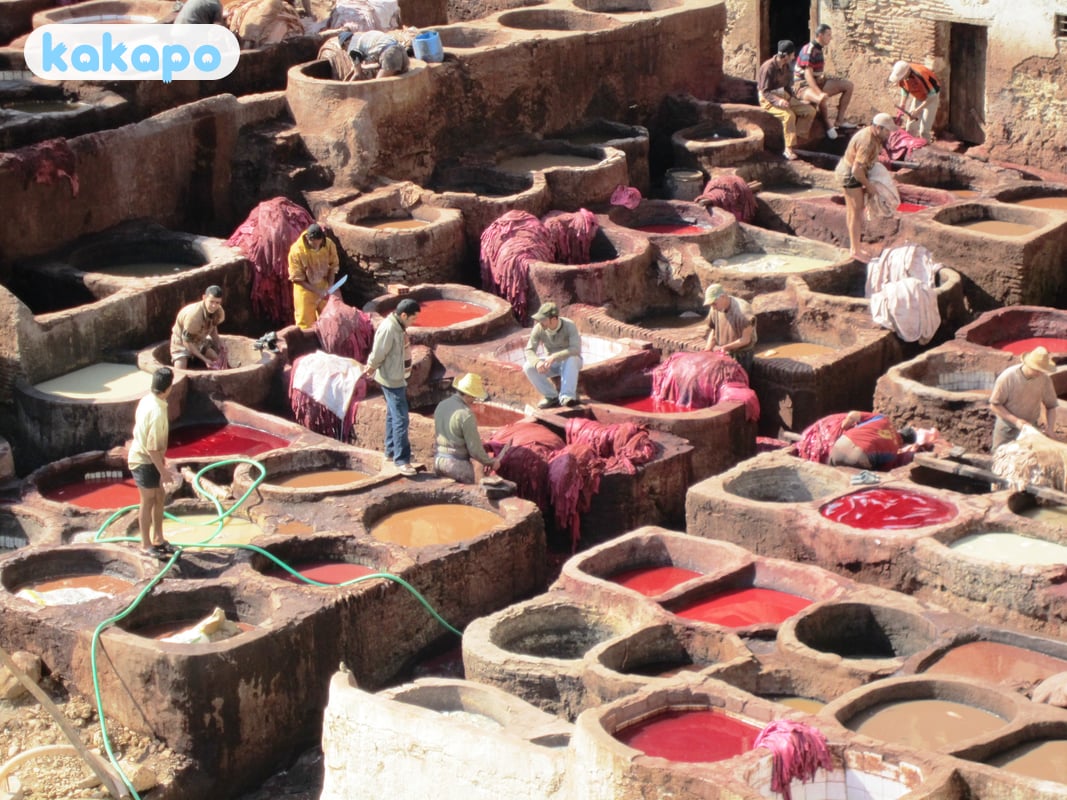
- Chouara Tannery: the iconic colourful dyeing pits. Photographable from balconies of leather shops above.
- The pattern: a "free guide" leads you to a leather shop where the balcony is "free to use". You're then expected (with significant pressure) to buy a leather goods item; prices are 3-10× fair value with deep "discounts" applied.
- To see the tannery without obligation: ask for a 20-30 MAD ($2-3) "viewing fee" upfront if you don't want to buy. Some shops accept this; others won't let you leave easily.
- If you do want leather: bargain hard. Start at 30% of asking; settle around 50%. Quality varies.
- Smell: sulphurous tannery odor is intense. Mint sprig is offered at the door; hold to nose.
- Nearby Sidi Moussa Tannery: smaller, less touristy.
Other scams and tourist hassles

- "Free henna": women apply henna unrequested then demand 200+ MAD.
- "Photo of my snake / monkey": common in Marrakech less in Fez but happens. 50 MAD demanded after.
- "Closed for festival, come tomorrow": tourist redirect to commission shops.
- Carpet-shop pressure: very high. Don't enter unless ready to negotiate hard or buy.
- Begging children: organised. Don't give cash; donate to legitimate orgs (Fondation Mohammed V).
- Shop "owner's son" who happens to speak your language: scripted.
Dress code and conduct
- Modest dress: covered shoulders + knees minimum, especially in the medina. Long sleeves and long pants are more comfortable in summer (sun protection) and culturally easier.
- Mosque entry: most active mosques are non-Muslim-prohibited. The Bou Inania and Al-Attarine madrasas are open to non-Muslims. The Quaraouiyine mosque is one of the world's oldest universities — non-Muslim entry only at the courtyard glimpse from the open doorway.
- Solo women: catcalling reported in Fez; modest dress significantly reduces it. Walking with a male companion or in a small group reduces it more.
- Photography: ask before photographing people. Children + women particularly.
- Ramadan: don't eat, drink, or smoke in public during daylight. Restaurants reopen at iftar.
- Drugs: kif/cannabis is decriminalised for personal use as of recent reforms but possession remains a grey area for tourists. Don't.
- Same-sex relationships: illegal in Morocco. LGBT visitors should be discreet.
Areas — Fes el Bali, Fes el Jdid, Ville Nouvelle
Recommended for visitors: Fes el Bali medina — stay in a riad, walk the lanes, see the headline sites. Fes el Jdid — Royal Palace gates (closed to public), Mellah (Jewish quarter). Ville Nouvelle — only if you need a modern hotel with parking.
Stay aware: walking medina alone after midnight — daytime busy is fine; lanes empty quickly post-midnight. Around the railway station at night.
Transport — petits taxis, the train, the airport

- Walking: medina is no-cars; you walk.
- Petits taxis: red taxis. Insist on meter ("compteur") or agree price. Within Fez ~10-30 MAD.
- Grands taxis: shared inter-city Mercedes. Useful for cheap Fez-Chefchaouen, Fez-Meknes.
- Train (ONCF): Fez-Casablanca 4h, Fez-Marrakech 6.5h, Fez-Tangier 4h. Comfortable.
- Fez-Saïss Airport (FEZ): 15 km south. Bus 16 (8 MAD), grand taxi (~50 MAD), petit taxi (~120-180 MAD).
- Don't drive in the medina: literally impossible.
Money, food, the cost story
- Currency: Moroccan dirham (MAD). $1 ≈ MAD 10. Closed currency — get most cash inside Morocco.
- Cards: at hotels and tourist restaurants; medina is mostly cash.
- ATMs: at banks. Withdrawal limits ~2,000-5,000 MAD per transaction.
- Tipping: 10% restaurants; round up taxis; 20-50 MAD for hotel staff.
- Tap water: not safe; bottled.
- Local food: tagine, pastilla (savoury pigeon pie), couscous (Friday), bessara (fava bean soup), Moroccan mint tea.
Practical info — emergency numbers
- Police: 19.
- Ambulance: 15.
- Tourist Police (Brigade Touristique): visible at major medina entrances.
- Cleveland Clinic Fez: +212 5 38 90 76 76.
- Hôpital Cheikh Khalifa: +212 5 38 32 32 00.
Bring: comfortable walking shoes for cobbles, modest clothing, a Moroccan SIM (Maroc Telecom, Inwi, Orange MA) or eSIM, hand sanitiser, oral rehydration salts, a contactless card backup, and travel insurance with full medical coverage.
Frequently asked questions
Is Fez safe to visit in 2026?
Yes, with adjustments for the medina intensity. US State Department lists Morocco at Level 2 (exercise increased caution, citing terrorism) and UK FCDO has no advisory against travel. Crime against tourists in Fez is uncommon; violent incidents are rare. The realistic risks are the persistent faux-guide aggression, getting lost in the 9,000-lane Fes el Bali medina, the tannery scam pattern, and standard pickpocket caution in the souks. Tourist police (Brigade Touristique) are visible at major medina gates.
Is Fez safe at night?
The medina lanes are busy until around 9-10pm when shops close, then empty quickly — and the unlit alleys after midnight are not where you want to be wandering alone. Stick to the main routes (Talaa Kebira, Talaa Seghira) for evening returns to your riad or take a petit taxi to Bab Boujloud and walk in from there. The Ville Nouvelle is calmer and better-lit after dark. Around the railway station at night is best avoided. Violent crime is uncommon either way; the issue is disorientation and harassment in empty lanes.
Is Fez safe for solo female travellers?
Doable but more confronting than Marrakech and significantly more so than Casablanca. Catcalling and persistent 'follow me, free guide' approaches are routine in the medina. Modest dress (covered shoulders and knees, long sleeves more comfortable in summer) substantially reduces unwanted attention. Sunglasses, headphones, and a firm repeated 'la, shukran' (no, thank you) are standard kit. Hire an official Ministry of Tourism guide for the first day (look for the metal 'Guide Officiel' badge) — having a male local guide visibly with you cuts off most approaches. Avoid medina alleys alone after dark.
Can you drink tap water in Fez?
No — stick to bottled. Fez's tap supply is treated but mineral-heavy, irregular in pressure, and many riads use old building plumbing. Bottled water is cheap (5-7 dirhams for 1.5L) and ubiquitous. Avoid ice in non-tourist-grade venues, street fresh juice unless you trust the source, and unpeeled raw vegetables outside reputable restaurants.
What's the biggest scam to avoid in Fez?
The Chouara Tannery 'free balcony view' setup — a 'free guide' leads you to a leather shop above the dyeing pits where the balcony is 'free to use' and then you face 20-30 minutes of high-pressure leather sales at 3-10x fair price. Either decline and walk on, or offer a 20-30 MAD viewing fee upfront and refuse purchases. The wider faux-guide pattern is the same across the medina: 'come, I show you, free' followed by commission-shop steering and a 100-300 MAD demand. Polite firm 'la, shukran' and keep walking. Other recurring ones: unrequested henna application, 'closed for festival' redirects, and the scripted 'owner's son who happens to speak your language' carpet pitch.
Is it possible to navigate the Fez medina without getting hopelessly lost?
Honestly, no — and that's fine, because everyone gets lost. The medina has roughly 9,000 lanes and Google Maps fails routinely because of unmapped paths, overhanging structures blocking GPS, and lanes that change with daily souk activity. The realistic strategy: orient on big landmarks (Bab Boujloud/Blue Gate, Al-Quaraouiyine, Bou Inania madrasa, the tannery), note your riad's closest landmark and which downhill street leads to it, and accept you'll need to ask shopkeepers ('where is Bab Boujloud?' or 'Talaa Kebira?'). For day 1, hire an official Ministry of Tourism guide for 400-700 MAD — they teach you the geography in a few hours. Don't trust 'this way is closed, follow me' — it's the standard faux-guide redirect.
Sources
Run a business in Fez?
Show visitors your Fez business is a safe choice. The free Verified by Kakapo badge puts Fez's live safety score on your website, links back to your verified page, and updates itself. No cost.
Get the free badge →