


Is Chefchaouen, Morocco Safe? A 2026 Travel Safety Guide
The 'blue city' cobbles and steep medina, the Rif kif-tourism context, the road from Tangier or Fez, the conservative dress, and the realistic risks of Morocco's most photographed town.

Chefchaouen is one of the safer Moroccan tourist towns. The historic blue-painted medina is small, walkable, and tightly tourism-managed. Crime against tourists is uncommon.
The realistic risks for visitors are the steep-and-cobbled medina (slippery in rain), the road up from Tangier (3-4h) or Fez (4-5h), the surrounding Rif Mountains' kif (cannabis) tourism economy (officially decriminalised for personal use; police involvement still possible for tourists), and the conservative dress code.
Morocco sits at Level 2 on the US State Department's advisory list. UK FCDO is similar. The honest framing for first-time visitors: Chefchaouen is small (~45,000), built on a steep mountainside in the Rif. The blue-painted medina is the Instagram pull. Most visitors stay 1-2 nights and continue to Fez, Tangier, or the Mediterranean coast.
The geography to know: Chefchaouen sits at 565m altitude in the Rif Mountains of northern Morocco, between Tangier (90 km north) and Fez (200 km south-east). The blue-painted medina climbs a steep mountainside in concentric tiers — Plaza Uta el-Hammam is the flat central square with the Kasbah, Ras El Maa (the freshwater spring) is at the upper edge where the town meets the mountain, and the rest is a tangle of narrow stepped lanes painted in shades of blue (the origin story varies — Jewish refugees in 1492, Berber tradition, mosquito repellent, or 1970s tourism branding all get cited). The blue is real and is repainted twice a year by residents. Most visitors stay in riads inside the medina — the riads are family-converted blue houses with rooftop terraces overlooking the mountain.
In 2026, the specific things that have changed since pre-pandemic include: bus operators CTM and Supratours now sell online tickets via mobile apps (no more dawn ticket-office queues), with Tangier → Chefchaouen MAD 70-90 (3.5h) and Fez → Chefchaouen MAD 110-150 (4.5h); the Akchour Waterfalls trail (30 km north, 2-3h hike) has had improved signage and gendarmerie patrols after several incidents in 2021-2022 — go with a guide, ideally riad-arranged at MAD 400-600 per group; the partial 2021 cannabis decriminalisation for medical and industrial use has NOT extended to recreational use, and "farm tours" remain a legal grey area; and the Spanish Mosque (Bouzaafar, 30-min sunset hike east of town) is now the standard golden-hour photography spot — wear closed shoes.
| Night safety | 90/100 |
|---|---|
| Scam / petty-crime risk | Medium |
| Violent crime (tourists) | Low |
| Most common scams | cannabis offers from 'guides' or street sellers; faux-guides in the medina; pickpockets in dense crowds |
| Safer neighbourhoods | Plaza Uta el-Hammam, the blue medina |
| Data sources cited | 4 |
| Last verified |
What the score means — 80/100
- Air quality (90) — clean Rif Mountain air.
- Personal safety (82) — high in town. Less aggressive faux-guide culture than Fez.
- Transport (76) — buses + grand taxis; no rail link.
- Healthcare (68) — basic clinic; serious cases evacuate to Tangier or Tetouan (90 min).
The blue medina — cobbles and stairs
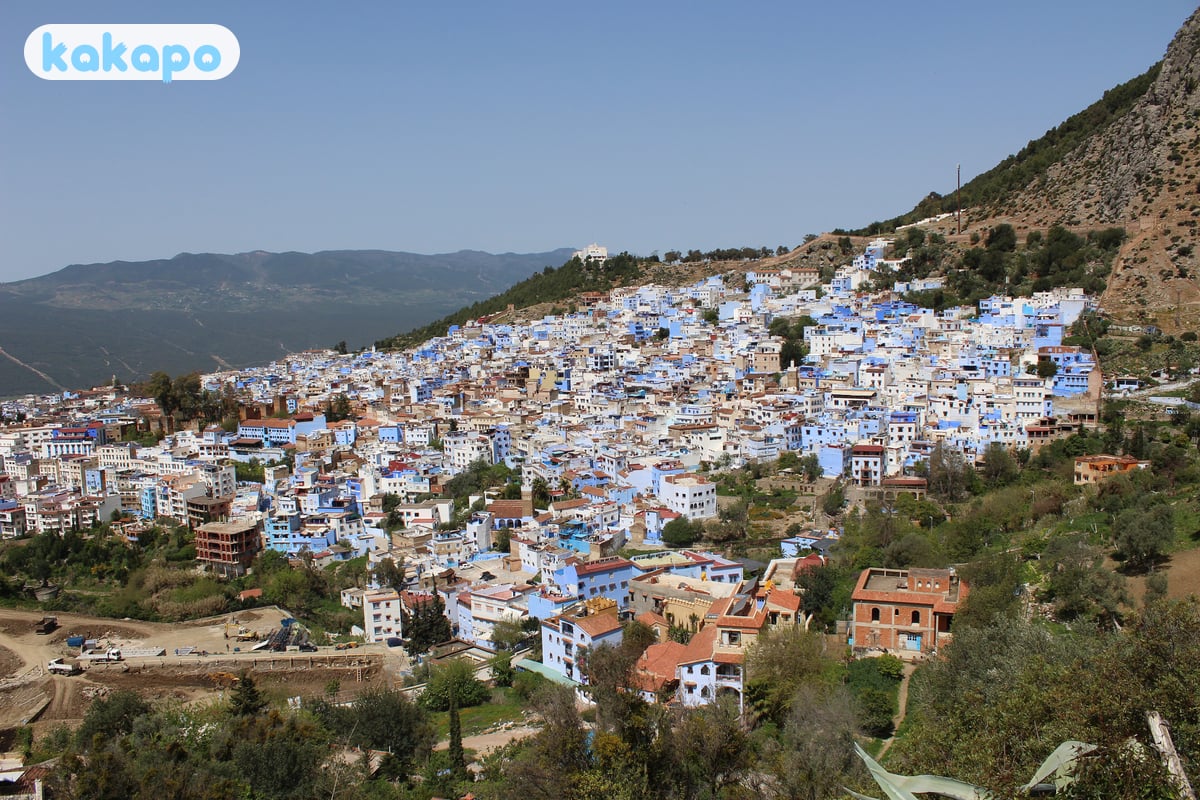
- The medina: small (~1 km²), much easier to navigate than Fez or Marrakech. Most lanes painted in shades of blue.
- Stairs and slopes: the town climbs the mountain. Most "streets" are stepped lanes.
- Sturdy walking shoes: with grip and ankle support. Cobbles get slippery in rain.
- Plaza Uta el-Hammam: the central square; the Kasbah; restaurants.
- Faux-guides: present but less aggressive than Fez.
- Pickpockets: low-level in dense crowds at the photogenic blue stairs.
- Photography of locals: ask before photographing residents (they're tired of it).
The Rif's cannabis tourism — what to know
- The Rif Mountains: have been Morocco's kif (cannabis) growing region for centuries. The countryside around Chefchaouen has many cannabis farms.
- 2021 partial decriminalisation: Morocco legalised cannabis for medical and industrial use. Recreational use remains technically illegal but personal-use enforcement against locals is lax in the Rif.
- For tourists: cannabis offers from "guides" or street sellers ("you want hashish?") are common. Police sometimes work with these touts; arrests have happened.
- If asked, say "la, shukran" ("no, thank you") and walk on.
- "Farm tours": organised cannabis-farm tourism is a grey-area niche. Don't, unless via clearly-licensed operators (which barely exist).
- Border-crossing: do not attempt to cross any border (especially Spain via Tangier or Ceuta) carrying cannabis. Spanish customs is rigorous.
The road up from Tangier or Fez
- From Tangier: 3-4h on the N2 / N16. Mountain road, generally fine but winding and slow in places.
- From Fez: 4-5h, also mountain road.
- From Tetouan: 1.5h. Closest major town.
- By bus: CTM and Supratours operate. ~MAD 100-150 ($10-15) from Tangier.
- Grand taxis: shared Mercedes from Tangier or Fez. Faster than bus, slightly less comfortable.
- Self-drive: the road is fine but has tight switchbacks; not for nervous drivers.
- No train: the closest stations are Tangier and Fez.
Border-area context
- Tangier and Tetouan: 90 min and 60 min away. Morocco's Mediterranean coast.
- Spanish enclaves (Ceuta, Melilla): Spanish territory on the Moroccan coast. Border crossings exist but are not relevant to Chefchaouen visits.
- Migrant smuggling: the Rif coast has documented migrant-smuggling activity. Tourist-zone in Chefchaouen is unaffected.
- Photography near border posts: avoid.
Dress and conduct
- The Rif: conservative. Modest dress (covered shoulders + knees) more important here than in Marrakech.
- Solo women: occasional catcalling on the streets; less aggressive than Fez/Marrakech. Modest dress reduces.
- Same-sex relationships: illegal in Morocco; rural Rif is more conservative; LGBT visitors should be discreet.
- Mosque entry: closed to non-Muslims.
- Ramadan: don't eat, drink, or smoke in public during daylight.
Weather and the day hikes
- Mountain altitude: 565 m. Cooler than coastal Morocco.
- Summer: 25-32°C. Pleasant compared to Marrakech.
- Winter: 5-15°C, rain frequent. Snow possible occasionally on surrounding peaks.
- Akchour Waterfalls: 30 min drive + 2-3h walk. Scenic; don't go alone in remote-trail sections; some incidents reported in past years.
- Talassemtane National Park: hiking; arrange a guide.
Money, food, the cost story
- Currency: Moroccan dirham (MAD).
- Cards: at hotels and main restaurants; cash needed for medina shopping.
- ATMs: at banks in town. Limited, withdraw before arrival.
- Tipping: 10% restaurants.
- Tap water: not safe; bottled.
- Cost: cheap. Mid-range dinner $8-15.
Chefchaouen area-by-area
- Plaza Uta el-Hammam — the central flat square with the 1471 Kasbah and the Grand Mosque (closed to non-Muslims). Café terraces line the square (Café Sofia, La Lampe Magique). Where you'll start every walk through the medina. Restaurant prices ~30% above one street back.
- Ras El Maa — the freshwater spring at the upper edge of the medina where locals do laundry and fill bottles. Always running, always cold, popular with photographers. The start of the path up to the Spanish Mosque.
- Blue medina (the photogenic lanes) — Calle Hassan I, Rue Bin Souaki, the small staircases off Plaza Outa el-Hammam. The famous painted-blue staircases (Ras El Maa Stair, the Bin Souaki blue corner) get crowded with photographers 10:00-16:00. Visit at 07:00-08:00 for empty light.
- Akchour Waterfalls — 30 km north (45-min drive + 2-3h hike). Scenic but go with a guide; some incidents reported in past years on remote-trail sections, and gendarmerie patrols have increased after 2021-2022. Riad-arranged guide MAD 400-600 per group.
- Spanish Mosque (Bouzaafar) sunset hike — 30-min uphill walk east of town to the abandoned Spanish-era mosque on the hill. The standard sunset photography spot for the view back at the blue medina. Wear closed shoes; the path is steep and rocky. Quiet at sunrise too.
- Bus from Tangier (90 km, 3.5h) — CTM and Supratours, MAD 70-90 ($7-9), 4-5 daily departures. The N2 / N16 road is winding mountain but generally fine. Grand taxis (shared Mercedes) are slightly faster but more cramped.
- Bus from Fez (200 km, 4.5h) — CTM and Supratours, MAD 110-150 ($11-15). Also mountain road. Most Morocco itineraries do Chefchaouen as a stop between Tangier and Fez.
- Talassemtane National Park — the Rif's protected mountain park, hiking trails up to the Adrar a-Kal (Mount Tisouka) peak at 2,122m. Multi-day trekking with arranged guides only.
- Tangier (90 min) + Brittany Atlantic context — Tangier is the major regional hub, with the ferry/fast-ferry to Tarifa, Spain (1h). Tetouan is closer (1.5h, the Spanish-style colonial city). Ceuta and Melilla (Spanish enclaves) are border-crossing points — but do NOT attempt to cross any border carrying cannabis.
If it's your first time visiting
- Stay 1-2 nights inside the medina in a riad — Lina Ryad, Dar Echchaouen, Dar Meziana. Riad prices MAD 400-1,200/night ($40-120). Most include breakfast on the rooftop terrace overlooking the mountain.
- Get the photogenic shots at 07:00-08:00 before the day-trippers arrive. Ras El Maa Stair, the Bin Souaki blue corner, the painted staircases off Plaza Outa el-Hammam all empty for an hour or two at sunrise.
- Sturdy walking shoes with grip — the cobbled stepped lanes are very slippery when wet. Twisted ankles are the most common visitor injury. Heels are a bad idea anywhere in town.
- "La, shukran" and keep walking when offered hashish. Cannabis remains illegal for recreational use despite the 2021 partial decriminalisation. Police occasionally work with the touts. "Farm tours" are best avoided. Critically: never carry cannabis across any border — Spanish customs at Ceuta, Melilla and the Tangier ferry to Spain is rigorous and sentences are real.
- Modest dress: covered shoulders + knees, long sleeves more comfortable in mountain weather anyway. The Rif is more conservative than Casablanca or Marrakech. Solo women see less catcalling here than Fez or Marrakech, but modest dress reduces it further.
- Bus from Tangier or Fez — book CTM or Supratours online a day ahead in peak season. Tangier-Chefchaouen MAD 70-90 (3.5h); Fez-Chefchaouen MAD 110-150 (4.5h). Grand taxis (shared Mercedes) are slightly faster and from the centre, not the bus station.
- ATM withdraw before arrival — bank machines in Chefchaouen are limited and can run out. Bring MAD 1,500-3,000 in 50s and 100s for medina shopping, riad tips, and Akchour transport.
- Sunset hike to the Spanish Mosque (Bouzaafar) — 30 min uphill, closed shoes. The best photo of the blue medina is from this hill at golden hour. Bring a head torch for the walk back down.
- Tap water is NOT safe — bottled is universal at MAD 5-7 per 1.5L. The famous Ras El Maa spring is where locals fill, but visitors should use sealed bottles. Ice at established medina restaurants is fine; at street stalls variable.
Practical info — emergency numbers
- Police: 19.
- Ambulance: 15.
- Royal Gendarmerie (rural): 177.
- Local clinic (Hôpital Mohamed V): small.
Bring: comfortable walking shoes with grip, modest clothing, layered clothing year-round (mountain weather), a Moroccan SIM, MAD cash, and travel insurance with medical-evacuation cover.
Frequently asked questions
Is Chefchaouen safe to visit in 2026?
Yes — Chefchaouen is one of the safer Moroccan tourist towns. US State Department lists Morocco at Level 2 (exercise increased caution, citing terrorism) and UK FCDO has no advisory against travel. The blue-painted medina is small, walkable, and tightly tourism-managed. Crime against tourists is uncommon and the faux-guide culture is noticeably less aggressive than in Fez or Marrakech. The realistic risks are steep slippery cobbles, the cannabis-tourism context of the surrounding Rif, and the mountain road in from Tangier or Fez.
Is Chefchaouen safe at night?
Yes. Plaza Uta el-Hammam and the Kasbah area stay lively into the evening with restaurants and cafés. The medina lanes empty out earlier than in larger Moroccan cities — by 10-11pm most blue-painted alleys are quiet — but the town is small enough that you're never far from your riad and violent incidents are rare. The cobbles are very slippery when wet, so a head torch and sturdy shoes help if walking back late on rainy nights.
Is Chefchaouen safe for solo female travellers?
Among the easier Moroccan towns for solo women. Catcalling exists but at a lower intensity than Fez or Marrakech, partly because the medina is small and dominated by international tourists. The Rif is conservative culturally — modest dress (covered shoulders and knees, long sleeves more comfortable for the cooler mountain weather) is more important here than in cosmopolitan Casablanca. Avoid lone hikes to Akchour Waterfalls or in Talassemtane National Park; go with a guide or a group. Some incidents have been reported on remote trail sections in past years.
Can you drink tap water in Chefchaouen?
No — stick to bottled. The mountain spring sources around Chefchaouen are clean but the in-town distribution is older and many riads use rooftop tanks. Bottled water is cheap (5-7 dirhams for 1.5L). The famous Ras El Maa spring on the medina's edge is where locals fill bottles, but visitors are better off with sealed bottled water.
What's the biggest scam to avoid in Chefchaouen?
The cannabis sales pitch — 'you want hashish?' is the single most common street approach, especially around the Kasbah and along the road to Akchour. Police sometimes work with these touts and tourist arrests do happen. Just say 'la, shukran' and walk on. Other recurring patterns are inflated 'guide' fees to Akchour Waterfalls (use a riad-recommended driver-guide for around 400-600 MAD per group), photography-fee demands from residents (ask before pointing a camera at anyone), and CTM/grand-taxi touts offering 'private' rides at 3-4x the real fare. The medina vendors are less aggressive than Fez but still negotiate hard.
Is the Rif cannabis context a real concern for tourists?
It can be. The Rif Mountains have been Morocco's main kif (cannabis) growing region for centuries and the countryside around Chefchaouen has many cannabis farms. Morocco partially decriminalised cannabis in 2021 for medical and industrial use, but recreational use remains technically illegal and enforcement against tourists specifically has happened — including stings where the seller is working with police. 'Farm tours' offered casually on the street are a grey area best avoided. Critically: do not attempt to cross any border carrying cannabis, especially the Spanish enclaves (Ceuta, Melilla) or the ferry to Spain via Tangier — Spanish customs is rigorous and sentences are real.
Sources
Run a business in Chefchaouen?
Show visitors your Chefchaouen business is a safe choice. The free Verified by Kakapo badge puts Chefchaouen's live safety score on your website, links back to your verified page, and updates itself. No cost.
Get the free badge →