


Is Casablanca, Morocco Safe? A 2026 Travel Safety Guide
Morocco's commercial capital — what's safe, where to stay, and how it differs from Marrakech or Fes.

Casablanca is Morocco's commercial capital, not its tourist capital — and that distinction shapes the realistic safety story for visitors. Most of the city's 4 million people are getting on with the business of life; the tourist density is much lower than in Marrakech or Fes. The Hassan II Mosque, the Old Medina, Quartier Habous, and the Corniche are the main visitor magnets; the rest of the city is a working African business hub.
The UK FCDO and the US State Department both list Morocco at low/moderate advisory levels. Crime in Casablanca is mostly petty (pickpocketing, bag-snatching by moped riders, taxi haggling); violent crime against tourists is uncommon. The realistic risks are pickpocketing in the Old Medina and on certain tram routes, taxi overcharging, and the experience of solo female travel — for which the country has a different cultural baseline than European destinations.
One framing point: Casablanca looks and feels different from the "tourist Morocco" of Marrakech or Fes. It's bigger, more modern, more French-speaking, less souk-driven. If you're researching Casa safety because you have a layover or a business trip, the practical advice below is more relevant than generic "Morocco safety" articles.
The city's geography to carry: Casablanca sprawls along 30 km of Atlantic coast in three loose layers. The historic centre — Place des Nations Unies, Boulevard Mohammed V, the Old Medina, and the Art Deco "Centre Ville" core that the French laid out in the 1920s-40s — sits inland from the port. The Hassan II Mosque sits on the sea wall directly north, the Corniche promenade arcs west from it for 5 km past the lighthouse to Ain Diab. Inland and west, the Anfa, Maârif and Bourgogne districts are the upmarket residential and shopping zones. The Tramway de Casablanca's two lines connect the airport-adjacent business district (Sidi Maarouf) through the centre to the residential west; the new Line 3 opened December 2023. Most visitors use a 3 km radius around Place des Nations Unies.
| Night safety | 59/100 |
|---|---|
| Scam / petty-crime risk | Medium |
| Violent crime (tourists) | Low |
| Most common scams | Hassan II Mosque ticket scams; taxi flat-fee inflation; friendly local guide in the medina |
| Safer neighbourhoods | Anfa, Maarif, downtown around Place des Nations Unies |
| Data sources cited | 4 |
| Last verified |
What the score means — 73/100
Casablanca sits at the high end of the "caution" band:
- Healthcare (75) — the highest sub-band. Casablanca has the country's best private hospitals (Cheikh Khalifa Ibn Zaid, Anfa, CIB). For Morocco-related medical evacuation insurance, this is the city you'd be evacuated to.
- Night (72) — moderate. The Anfa, Maarif, and downtown areas are well-lit and active until late; the medina and outer working-class districts are not.
- Personal safety (70) — moderate. Pickpocketing in tourist areas; aggressive but non-violent vendor pressure in the medina; bag-snatching by motorbike riders (rare but it happens).
- Transport (68) — Casablanca taxis are negotiation-heavy; the tram is excellent but pickpockets work it. The Casablanca-Marrakech motorway is well-built.
Where to stay — and where to be aware

Comfortable everywhere: Anfa (upscale residential, the Twin Center area), Maarif (modern shopping district, restaurants, the Morocco Mall is here), Gauthier / Racine (residential, French expat-favoured), downtown around Place des Nations Unies (administrative + business hotels).
Tourist-magnet but watch for pickpockets: Old Medina (small compared to Marrakech, but the same souk dynamics), Corniche / Ain Diab (the beachfront promenade — fine by day, more clubby at night), Quartier Habous (the "new medina," touristy crafts).
Stay aware: the area immediately around Casa-Voyageurs train station has the standard bag-grab risk you'd expect at any major African train hub. Derb Sultan and Hay Mohammadi are working-class districts with higher reported crime; tourists rarely have a reason to go there but if you do, daytime only.
Hassan II Mosque area: the mosque itself is heavily policed and very safe to visit. The streets between the mosque and the Old Medina are mixed; stick to main thoroughfares.
Trams, taxis, and getting around
- Tram (Casa Tram) — modern, clean, runs on three lines T1/T2/T3 covering most tourist destinations. MAD 6-8 per ride. Used by everyone. Pickpocketing is concentrated at peak commute times around Casa-Voyageurs and Place des Nations Unies — phone in front pocket.
- Petits taxis (red, in-city) — should run meters by law; many drivers refuse. Insist on the meter ("avec le compteur, s'il vous plaît") or agree a flat fare. Short hops are typically MAD 15-30; airport-to-downtown is MAD 250-300.
- Grand taxis (large white/cream cars) — shared inter-city Mercedes 240s. Cheap but often overcrowded. Used between cities, not in town.
- Heetch / inDrive ride-sharing apps work in Casa and remove the haggling. Uber is not present.
- Trains (ONCF) — Casa-Marrakech, Casa-Fes, Casa-Rabat-Tangier all run modern fast trains. Excellent. Buy at the station or on the ONCF app.
- Mohammed V Airport (CMN) is 30km from downtown. Trains run to Casa-Voyageurs every hour (40 min, MAD 43); taxis are MAD 250-300.
Scams and pricing
- "Friendly local guide" in the medina who walks you to a carpet shop / tannery / jewellery store. Standard medina playbook across Morocco. Polite firm "no, thank you" and walk on.
- Hassan II Mosque ticket scams — only the official ticket office at the mosque entrance sells legitimate tickets. Anyone offering "VIP access" outside is a tout.
- Taxi flat-fee inflation — agree the price before getting in. Or insist on the meter.
- Currency: Moroccan dirham (MAD). Cards work at hotels and chain shops; cash for medina, taxis, smaller restaurants. Dirham is closed currency — you can't get it outside Morocco; withdraw at the airport.
- ATMs: Attijariwafa Bank, BMCE, Banque Populaire are major networks. Use bank-attached machines.
Solo female travel
Casablanca, like Morocco generally, has a different cultural baseline than European destinations. Foreign women travelling alone do experience more attention than they might at home — usually verbal, occasionally persistent.
- Dress code: covering shoulders, chest, and knees outside hotel beach pools is the practical norm. This isn't strictly enforced — Casablanca is more cosmopolitan than rural Morocco — but it's the comfortable level.
- Inside hotels and most Maarif/Anfa restaurants: Western standards apply.
- Hassan II Mosque visits: women must wear a headscarf inside (provided at the entrance if needed) and modest dress.
- Catcalling is common in the medina and downtown areas. Sunglasses + headphones + walk on is the standard non-engagement.
- Avoid the medina alleys after dark alone. Take a petit taxi back to your hotel from dinner.
Religion, Ramadan, and political demonstrations
- Casablanca during Ramadan (varies — March/April in the mid-2020s): many restaurants closed during daylight hours. Hotels still serve. Be discreet about eating/drinking in public during the day. Iftar (sunset breaking of fast) creates traffic chaos.
- Mosques: only the Hassan II Mosque is open to non-Muslim visitors (with a guided tour). Don't enter other mosques.
- Demonstrations: occasional political demonstrations in central Casa, particularly around Place des Nations Unies and outside parliament in Rabat. Normally peaceful but the FCDO advises avoiding them.
- Photography: don't photograph government buildings, military, or police. Ask before photographing people.
Neighbourhood-by-neighbourhood breakdown
- Centre Ville (Art Deco core) — the 1920s-40s French-built downtown around Place des Nations Unies and Boulevard Mohammed V. Art Deco facades (Cinéma Rialto, the Wilaya, Hôtel Lincoln in ruined glory), the Marché Central, the colonnaded Place Mohammed V administrative complex. Most central-business hotels (Hyatt Regency, Kenzi Tower, Mövenpick) are here. Daytime active and walkable; quieter and worth basic awareness after midnight.
- Old Medina (Ancienne Médina) — the original walled town north of Place des Nations Unies, between the port and the centre. Less spectacular than the Fes or Marrakech medinas (smaller, less preserved), but real working bazaar: spices, cheap leather, the Jewish quarter, the Mellah. Pickpocket-dense; daytime visit; not a base.
- Hassan II Mosque + the sea-wall — the second-largest mosque in Africa, completed 1993, with the world's tallest minaret at 210m. Sits directly on the Atlantic; one of the few mosques in Morocco open to non-Muslims (200 MAD guided tour, 6 daily). The plaza is the most photographed location in the city.
- Corniche + Ain Diab — the 5 km seafront promenade running west from the mosque to the Ain Diab beach district. Cafés, beach clubs (Tahiti Beach Club, Miami Plage), Morocco Mall at the western end (3rd-largest mall in Africa). The Sindbad amusement park sits along the way. Pleasant evening walk; the El Hank lighthouse marks the midpoint.
- Quartier Habous (New Medina) — the 1923 French-built "neo-Moorish" district in the south, designed to look like a traditional medina but with right-angled streets and electricity. Olive market, bookshops, the Royal Palace gates. More photogenic and less stressful than the Old Medina for first-timers.
- Maârif + Twin Center — the upscale shopping and restaurant district inland from the centre. The 28-floor Twin Center towers, Boulevard Massira Al Khadra restaurants, the Maârif retail spine. Where Casablanca's middle class actually shops.
- Anfa + Bourgogne — the leafy west-side residential where the wealthy and the consulates concentrate. Anfa's hilltop villas, the King's Palace's outer walls. Quiet, safe, expensive; the better mid-range hotels (Le Casablanca, Hôtel Atlas Almohades Anfa).
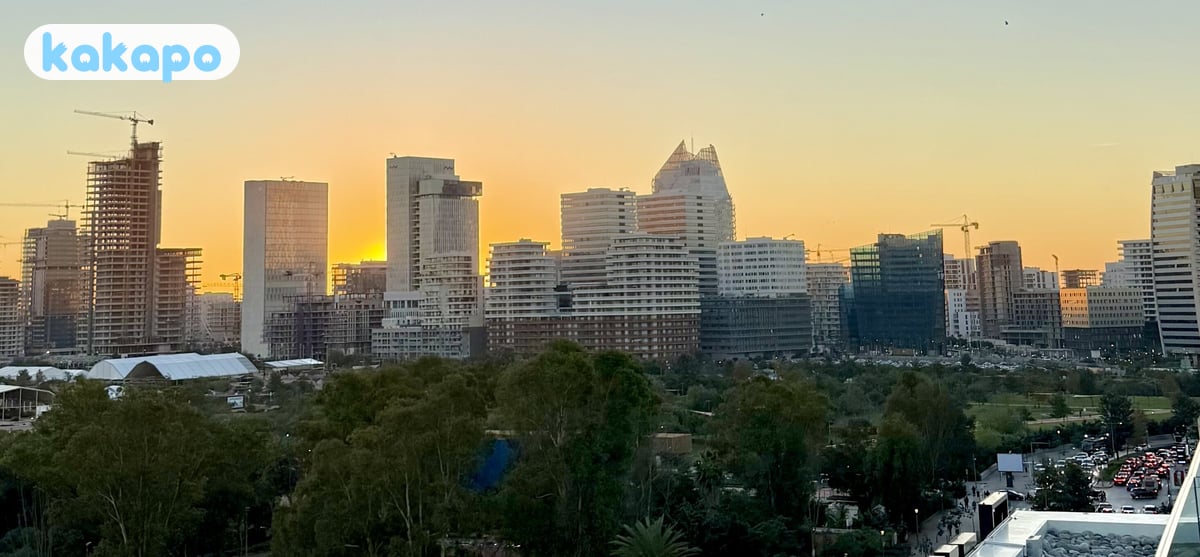
- Casablanca Finance City (CFC) + Sidi Maarouf — the business district near the airport with the new high-rises (Casablanca Marina, La Tour Crystal). Tramway Line 1 connects it to the centre. Sterile but practical for short business trips.
- Roches Noires + Hay Mohammadi (east) — working-class eastern neighbourhoods, the Casablanca that doesn't appear in tourist brochures. Not unsafe in any specific sense, but no reason for visitors to enter unless meeting locals. Hay Mohammadi was the birthplace of Moroccan popular music (Nass El Ghiwane).
- Mohammedia + the coast east — beach town 30 km east, popular weekend escape with Casablancais. Cleaner beaches than Ain Diab; the petrochemical port spoils the immediate west view.
If it's your first time visiting
- Getting in: Mohammed V International Airport (CMN) is 30 km south. The Al Boraq high-speed and the standard ONCF train run from the airport directly into Casa Voyageurs station every hour, 50 MAD (~$5), 35 min — far cheaper and faster than taxis at peak. Petits-taxis (red) from outside the train station to Centre Ville 30-50 MAD with the meter. Skip the airport taxi rank — flat-rate quotes start at 300 MAD.
- Petits-taxis are red, grands-taxis are old white sedans — petits-taxis are metered city taxis (insist on the meter — "compteur s'il vous plaît"); grands-taxis are shared inter-city rides on fixed routes from specific stations. Both are cheap (centre-to-mosque petit-taxi 15-25 MAD); both routinely try to flat-rate tourists.
- Best base neighbourhoods: Centre Ville for walkability and business (Hyatt Regency Casablanca, Mövenpick, Kenzi Tower); Corniche / Ain Diab for the sea (Le Casablanca, Four Seasons Anfa Place); Anfa / Maârif for upscale residential feel (Hôtel Le Casablanca, Pullman Casablanca City Center). Skip the medina-adjacent budget hotels on Boulevard Houphouet-Boigny — they're loud, basic, and overpriced.
- Hassan II Mosque tour booking — non-Muslim guided tours run 09:00, 10:00, 11:00 and 12:00 weekdays plus afternoon slots; 200 MAD adult, 60 MAD child. Friday only afternoon tours. Book at the on-site office or via mosquee-hassan2.com. Modest dress; shoes off. The tour lasts 50 min and includes the underground ablutions hall.
- Cash + cards — Moroccan dirham (MAD); ~10.5 to the USD, ~11 to the euro. The dirham is closed currency — you can't import/export above 2,000 MAD legally; convert at the airport on arrival or at BMCE/Attijariwafa branches. ATMs everywhere; cards work in hotels, malls, and chain restaurants — cash for the medina, taxis, smaller spots.
- Language reality — French and Arabic (Darija) are universal; English is hit-or-miss outside the big hotels. "Bonjour, je voudrais..." opens more doors than English here. Restaurant menus and street signs are typically bilingual French-Arabic.
- Friday rhythm — many businesses close for prayers 12:00-14:00 Friday; restaurants in the medina shut for the same window. The Hassan II Mosque is closed to non-Muslim tours Friday morning.
- Alcohol availability — Morocco is Muslim but alcohol is legal and available in hotels (most have bars), licensed restaurants, and dedicated stores (Carrefour, Marjane). Don't drink in the street or in mosques' vicinity. Ramadan (mid-Feb to mid-March 2026) closes most non-hotel bars and many restaurants in daylight; hotels still serve foreign guests discreetly.
- Food orientation — Rick's Café (the recreated movie set) is touristy but the rooftop is worth one drink. La Sqala (in a former bastion at the medina edge) for tagines in a courtyard. Le Cabestan for Mediterranean fine-dining on the cliff. Boulangerie Paul for French-style pastries (locals); Marché Central for the casual fish-grilling counters.
- Common rookie mistakes — paying the airport-taxi flat rate (use the train); shooting photos of police, military, or the Royal Palace gates (real consequences); refusing to bargain in the medina (it's expected, 30-50% off the opening price); confusing Casa with "tourist Morocco" (Marrakech, Fes are the souk-and-riad experience — Casa is a working African business city); wearing shorts to the Hassan II Mosque (refused entry); trying to drive yourself in central Casa traffic (chaotic, often park-where-you-can rules); buying carpets without using a hotel-recommended cooperative.
Practical info — emergency numbers
- Police: 19.
- Ambulance: 15.
- Fire / civil defence: 15 (same number).
- Royal Gendarmerie (rural / motorways): 177.
- Cheikh Khalifa Ibn Zaid Hospital (private, Casablanca): +212 5 22 49 99 99. International-standard.
- Tourist police: present at major monuments and the airport; uniformed and identifiable.
Bring: modest clothing for medina/mosque visits, a card without foreign-transaction fees (Visa/Mastercard work; Amex less reliably), enough USD or EUR to convert at the airport on arrival, an unlocked phone (Maroc Telecom, Orange, or Inwi prepaid SIMs at the airport), and travel insurance documentation. Tap water in Casablanca is treated and broadly safe but most visitors stick to bottled.
Frequently asked questions
Is Casablanca safe to visit in 2026?
Yes, broadly. US State Department lists Morocco at Level 2 (exercise increased caution, citing terrorism) and UK FCDO has no advisory against travel. Casablanca itself is Morocco's business capital, not its tourist capital, and tourist density is much lower than Marrakech or Fes. Crime against visitors is mostly petty — pickpocketing in the Old Medina and on the tram, taxi haggling, occasional moped bag-snatches — and violent crime against tourists is uncommon. The Anfa, Maarif, and Gauthier districts where most visitors stay are calm and modern.
Is Casablanca safe at night?
The modern districts (Anfa, Maarif, Gauthier, Racine) and the Corniche/Ain Diab beachfront are well-lit, active, and comfortable to walk into the evening. The Old Medina and the streets immediately around Casa-Voyageurs train station get quieter and warrant more caution after dark — stick to main thoroughfares and take a petit taxi back to your hotel from dinner. The Ain Diab nightclub strip is busy and policed but watch for moped bag-snatchers on the Corniche road. Heetch and inDrive ride-hail apps work and remove the haggling.
Is Casablanca safe for solo female travellers?
Yes, with adjustments. Casablanca is more cosmopolitan and French-influenced than Marrakech or Fes, so the harassment level is lower in Anfa and Maarif than in deeper-traditional Moroccan cities. Catcalling still happens in the medina and central downtown — sunglasses, headphones, and a firm 'la, shukran' work. Dress code is more relaxed than rural Morocco but covered shoulders and knees in public is the comfortable norm. The Hassan II Mosque requires a headscarf and modest dress for women (scarves provided at the entrance). Avoid medina alleys alone after dark.
Can you drink tap water in Casablanca?
Technically the tap is treated to drinking standards, but most visitors and many residents stick to bottled because of mineral content and old building plumbing. Bottled water is cheap (5-7 dirhams for 1.5L) and ubiquitous. Restaurants serve filtered water by default. Avoid ice in non-tourist-grade venues and street fresh juice unless the source is obvious.
What's the biggest scam to avoid in Casablanca?
Petit taxi fare inflation — drivers routinely refuse the meter for tourists and quote 3-5x the real fare. Always insist 'avec le compteur, s'il vous plaît' or agree a flat fare upfront (short hops 15-30 MAD, airport-to-downtown 250-300 MAD). Other recurring patterns: 'friendly local guide' approaches in the Old Medina that end at a carpet/tannery shop with high-pressure sales; fake Hassan II Mosque 'VIP access' touts outside the mosque (the only legitimate tickets are at the official entrance office); and moneychangers offering off-rate dirham deals (use Attijariwafa, BMCE, or Banque Populaire ATMs at bank branches).
Is Casablanca worth visiting if I have limited time in Morocco?
Mostly as a transit point rather than a destination — and that's fine to know going in. Mohammed V Airport is Morocco's main international hub, ONCF trains from Casa connect to Marrakech, Fes, Rabat, and Tangier in modern fast service, and a short Casa stop lets you see the Hassan II Mosque (one of the largest mosques in the world and the only one in Morocco open to non-Muslim visitors via guided tour) and the Corniche. For souks, medinas, and the classic 'Morocco' atmosphere, Marrakech and Fes deliver more. For a business or layover trip, Casa is comfortable, modern, and lower-friction than the tourist cities.
Sources
Run a business in Casablanca?
Show visitors your Casablanca business is a safe choice. The free Verified by Kakapo badge puts Casablanca's live safety score on your website, links back to your verified page, and updates itself. No cost.
Get the free badge →