


Is Rabat, Morocco Safe? A 2026 Travel Safety Guide
Morocco's calmer capital, the Kasbah des Oudayas, the Hassan Tower, the Medina pickpockets, and the realistic risks of an underrated political capital.

Rabat is one of Morocco's safer cities for tourists. Crime against visitors is uncommon. The realistic concerns are the Medina pickpocket density at peak hours, less aggressive tout culture than Marrakech (still present), summer heat, and the standard conservative dress + Ramadan rules.
Morocco sits at Level 2. Rabat-specific safety better than Marrakech in feel + lower per-capita scam rate. UK FCDO is similar.
The honest framing: Rabat is medium-large (~580,000 city, 1.3 million metro), Atlantic-coast political capital. The Kasbah des Oudayas (the blue + white fortified quarter), Hassan Tower + Mohammed V Mausoleum, the Medina, and Chellah Roman ruins are the visitor anchors. Most visitors stay 1-2 nights as a calmer counterpoint to Marrakech, or transit through.
| Night safety | 64/100 |
|---|---|
| Scam / petty-crime risk | Medium |
| Violent crime (tourists) | Low |
| Most common scams | faux-guides at Kasbah des Oudayas entrance; free henna outside the Medina; petits taxis 'broken meter' |
| Safer neighbourhoods | Kasbah des Oudayas, Medina, Agdal |
| Data sources cited | 4 |
| Last verified |
What the score means — 80/100
- Air quality (84) — Atlantic coastal.
- Personal safety (84) — high. Less aggressive scams than Marrakech.
- Transport (80) — petits taxis + tram + walking.
- Healthcare (76) — Cleveland Clinic Rabat + Hôpital Cheikh Khalifa tourist-grade.
Kasbah des Oudayas + Medina
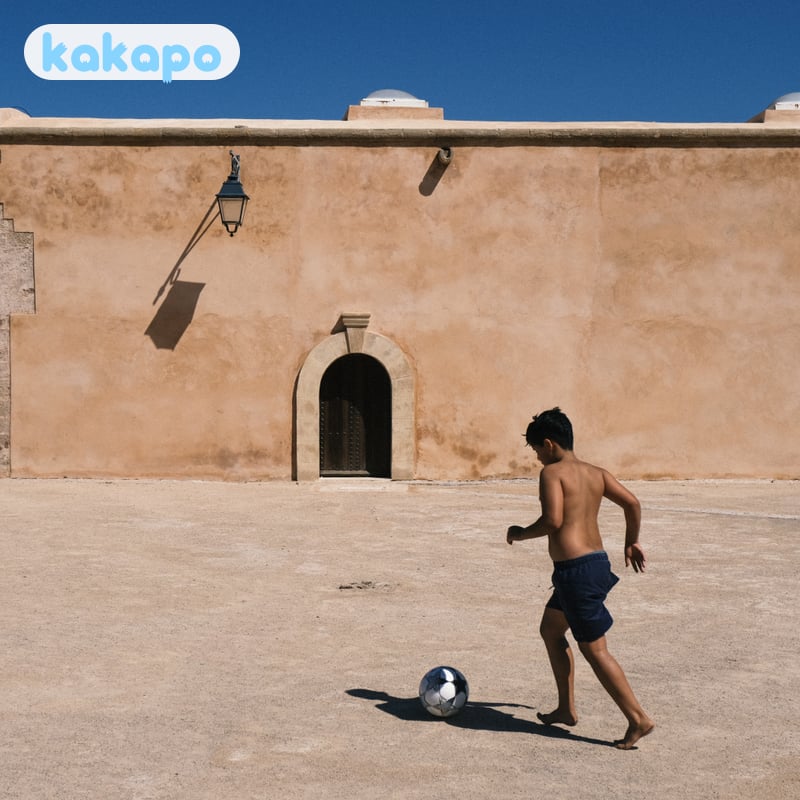
- Kasbah des Oudayas: blue-and-white painted fortified quarter (~12th c). Free entry. The "Andalusian Garden" inside.
- Cobbles + steps: medieval; sturdy shoes.
- Café Maure: the iconic terrace looking over the Bouregreg estuary.
- Medina: smaller than Fez/Marrakech; less aggressive vendors.
- Pickpockets: in densest crowds; front pocket only.
- Faux-guides: present but less pushy than Fez.
Hassan Tower + Mohammed V Mausoleum
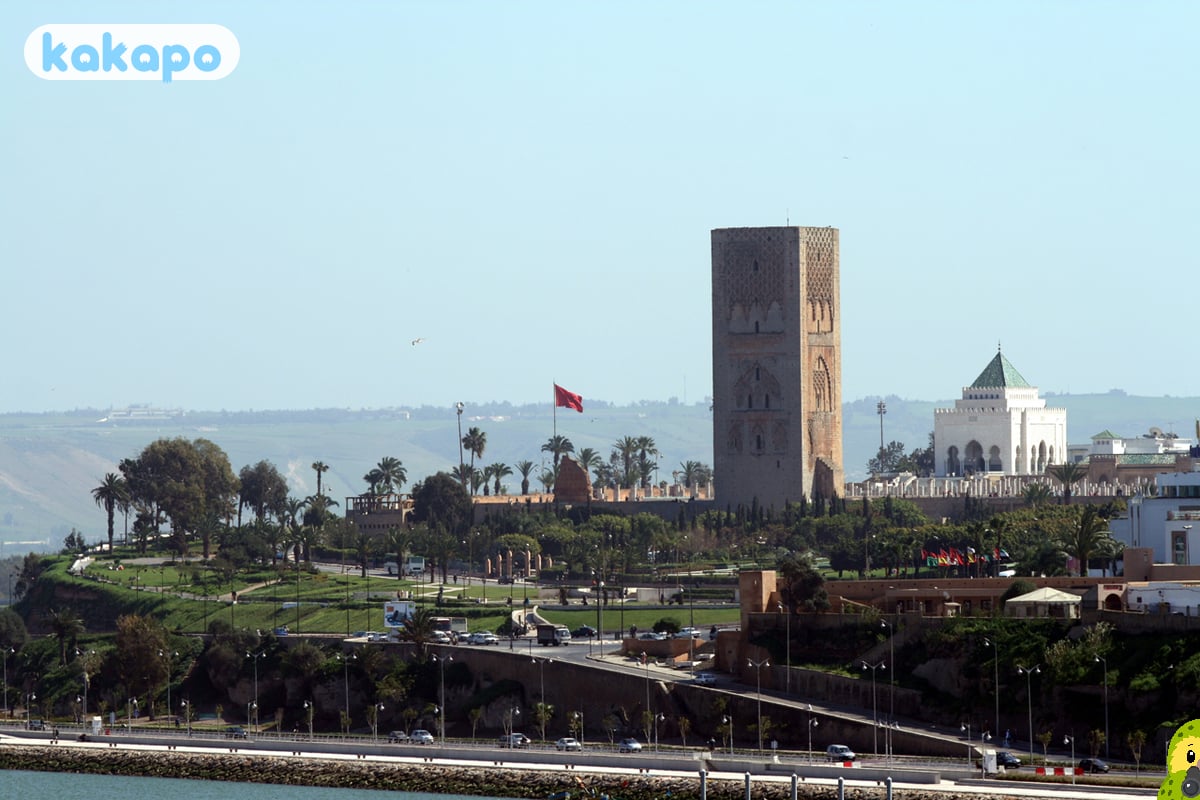
- Hassan Tower: unfinished 12th-century minaret. Free.
- Mohammed V Mausoleum: across the plaza. Free; mounted royal guards.
- Modest dress: required.
- Photography: of the guards is fine; ask permission for close-ups.
- Chellah: Roman + Marinid ruins south of the centre. MAD 100 entry. Worth the trip.
Dress + conduct
- Modest dress: covered shoulders + knees in public. Long sleeves are sun-protective.
- Mosque entry: closed to non-Muslims.
- Solo women: catcalling reported; modest dress reduces.
- Ramadan: don't eat/drink/smoke in public during daylight.
- Same-sex relationships: illegal; LGBT visitors should be discreet.
Scams — gentler than Marrakech, but the same playbook
Rabat's tourist-scam volume is genuinely lower than Marrakech or Fez. But the same patterns operate around the Kasbah, the Medina entrance on Rue Souika, and the train station (Rabat Ville).
- Faux-guide pressure at Kasbah des Oudayas entrance: a young man offers to "show you the way" through the blue-and-white lanes (which are signposted). Tip pressure at the end is €5-15. Decline politely; the Kasbah is small and easy to navigate.
- "Free henna" outside the Medina: a woman grabs your hand, paints a design, then demands MAD 200-500. Walk past with hands in pockets.
- Petits taxis "broken meter": insist on the meter ("compteur s'il vous plaît"). If they refuse, walk to the next one — there's always another within 30 seconds in central Rabat. A short central ride is MAD 10-20; airport-to-centre is MAD 150-200 metered.
- "Special price for you" carpet shop: less aggressive in Rabat than Fez but exists. Real fixed-price options are at Ensemble Artisanal (government-licensed cooperative).
- Photo charge: if you photograph a snake-charmer, water-seller in traditional costume, or anyone working in costume — they'll expect MAD 10-20. Either negotiate first or don't photograph.
- ATM skimming: rare in Rabat. Use machines inside bank branches (Attijariwafa, BMCE, Banque Populaire) over freestanding street ATMs.
- Train ticket touts at Rabat Ville: only buy from the ONCF counter or via the official app. "Discount" tickets from people outside are old/used tickets.
Ramadan + Friday rhythms — when Rabat slows
Morocco runs on the Islamic lunar calendar; the rhythms affect visitors in real ways.
- Ramadan (annual, moves earlier each year): daylight fasting for ~30 days. Most restaurants close 06:00-19:30; tourist hotels run reduced menus. Public eating, drinking, smoking is technically illegal during fasting hours and culturally jarring. Iftar (sunset breaking-fast) is the social peak — restaurants reopen and stay busy until 02:00.
- Visiting during Ramadan: 100% possible but plan accordingly. Stock water and snacks in your room for daytime. Day-tour pace slows. Hotels stay normal.
- Eid al-Fitr: 3-day holiday at the end of Ramadan. Most shops + government close; family-only celebrations. Tourist sites stay open.
- Eid al-Adha: 2-day holiday, ~70 days after Eid al-Fitr. Animal sacrifice ritual; many locals leave Rabat for family.
- Friday afternoons: many shops close 12:00-15:00 for Jumu'ah prayers. Plan major sightseeing in the morning.
- Alcohol: limited to licensed hotel restaurants, designated bars, and Carrefour/Marjane supermarkets. Don't drink in public.
- Same-sex relations: illegal under Article 489. LGBT travellers should be discreet in public spaces; hotels rarely ask.
Transport — train + tram + petits taxis
- Tram: 2 lines connecting Rabat-Salé. Cheap.
- Petits taxis: blue. Insist on meter ("compteur") or agree price.
- Train (ONCF): Rabat-Casablanca 1h, Rabat-Tangier 2h, Rabat-Marrakech 3.5h. Comfortable.
- Rabat-Salé Airport (RBA): 12 km north. Bus 7 + train + taxis. Most international visitors arrive via Casablanca (CMN) and train in (1h).
Money + cost
- Currency: Moroccan dirham (MAD).
- Cards: at hotels + bigger restaurants; cash needed for medina.
- Tipping: 10% restaurants.
- Cost: cheaper than Marrakech tourist hotels; mid-range $60-150/night.
- Tap water: not safe; bottled.
Districts — Kasbah des Oudayas to Salé
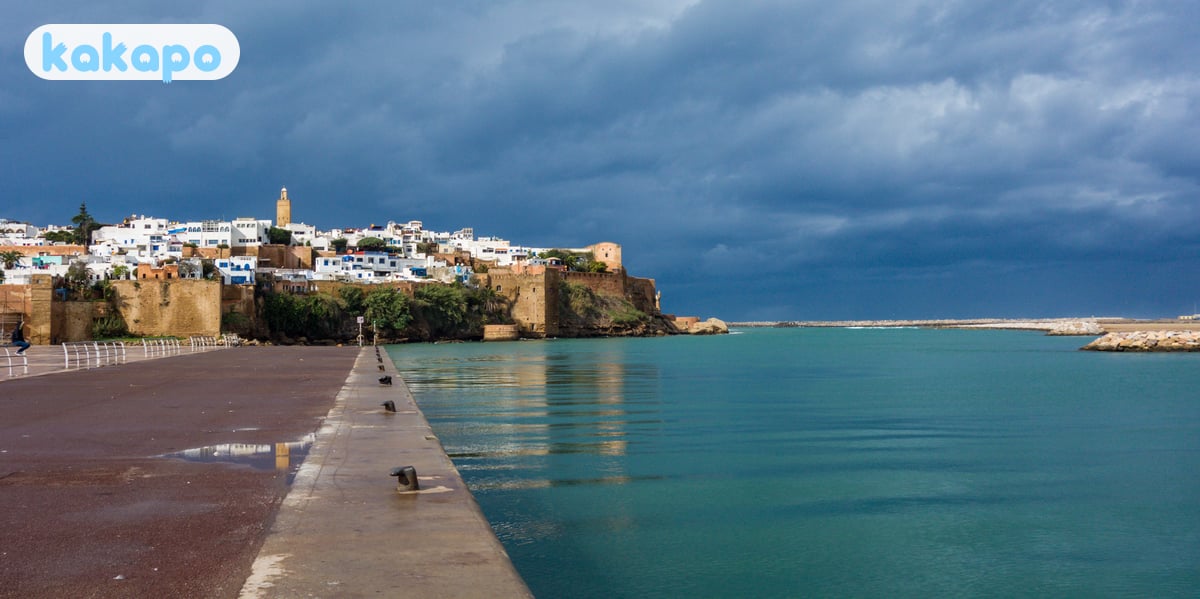
- Kasbah des Oudayas — the blue-and-white fortified quarter on the cliff above the Bouregreg estuary, built in the 12th century by the Almohads. Free entry; the Andalusian Garden inside; Café Maure on the terrace overlooking the river is the iconic mid-morning stop. Cobbled and stepped lanes; sturdy shoes. Faux-guide pressure at the entrance (declined politely; the Kasbah is small and signposted).
- Médina — the walled old town between the Kasbah and the Avenue Mohammed V. Smaller than Marrakech or Fez médinas and meaningfully less aggressive. Rue Souika and Rue des Consuls are the main spines; carpets, leather, traditional clothing. The Saturday food souk is at the southern end. Daytime is straightforward; after 22:00 the lanes get quiet and warrant awareness.
- Hassan Tower + Mohammed V Mausoleum — the unfinished 12th-century minaret (44 m of a planned 86 m, abandoned when Sultan Yaqub al-Mansur died in 1199) and the modern mausoleum of three Moroccan kings across the plaza. Free; mounted royal guards in red wool uniforms day and night. Modest dress; photography of the guards is fine but ask for close-ups. Allow 45 minutes.
- Chellah — the Roman-then-Marinid necropolis on the southern edge of the city. MAD 100 entry; one of Morocco's most underrated archaeological sites. Roman ruins of Sala Colonia, the 14th-century Marinid mosque and minaret, the stork-occupied walls. Allow 90 minutes; bring sun protection.
- Salé — the twin city across the Bouregreg, reached by a free pedestrian bridge or the Rabat-Salé tram. More conservative, less tourist-touched than Rabat. The Médina of Salé, the Great Mosque, the Marinid madrasa. A 90-minute add-on; respectful dress more important here.
- Rabat-Salé tram — two lines (L1 and L2) connecting Rabat and Salé and crossing the Bouregreg on the dedicated tram bridge. MAD 6 single; tap or buy from machines at stops. Modern, clean, the city's best transit option. Line 2 stops at Mohamed V station (the SNCF intercity rail).
- SNCF train to Casablanca + Marrakech — ONCF runs Al Boraq high-speed and conventional trains. Rabat-Ville to Casablanca-Voyageurs is 1 hour and ~MAD 80-180 (Al Boraq); Rabat to Tangier is 1h20m on Al Boraq; Rabat to Marrakech is 3h30m conventional or via Casablanca change. Book at oncf-voyages.ma or the station counter. Rabat Ville is the central station; Rabat Agdal is the second.
- Agdal + Hassan — the modern administrative districts west of the Médina. Agdal is the upscale modern quarter with the restaurant strip on Avenue Fal Ould Oumeir, embassies, the cafés-with-WiFi-and-power-outlets that the local young-professional class actually uses. Hassan is between Agdal and the Médina, more government-and-residential.
- Rabat-Salé Airport (RBA) — 12 km north of the centre near Salé. Bus 7 + train + petits taxis to Rabat-Ville. Limited international flights; most visitors arrive via Casablanca Mohammed V Airport (CMN) and take the direct train from the airport station to Rabat-Ville (1h, MAD 70-100).
- Stay aware — Rabat is one of Morocco's safer cities and most-policed (it's the political capital, the King's residence is here). The area immediately around Rabat-Ville station and the bus terminal at Place al-Joulane warrants awareness late at night; modest dress reduces catcalling especially in the Médina and at the station.
If it's your first time visiting
- Best arrival — fly to Casablanca Mohammed V Airport (CMN) and take the ONCF train directly from the airport station to Rabat-Ville in 1h for MAD 70-100. This is meaningfully cleaner than landing at Rabat-Salé (RBA) on limited routes and bus-transferring. From France/UK, both Royal Air Maroc and easyJet/Ryanair connect to CMN.
- Best neighbourhood for your first night — Médina edge near the Kasbah for atmosphere (Riad Kalaa, Riad Dar el Kebira, MAD 800-1,800 mid-range / $80-180). Agdal or Hassan for modern (Sofitel Rabat Jardin des Roses, Hotel La Tour Hassan Palace, MAD 1,500-3,500). Avoid the Avenue Mohammed V budget hotels; you can do much better for not much more.
- Petit taxi rule — always insist "avec le compteur, s'il vous plaît". Drivers refuse the meter for tourists routinely. If they refuse, walk to the next taxi — there's always another within 30 seconds in central Rabat. Short central rides MAD 10-25 metered; airport-to-centre MAD 150-200 metered. The "broken meter" is the single most-encountered scam.
- Pre-book Chellah + plan the Hassan Tower walk — Chellah opens 09:00, MAD 100 entry, allow 90 min in the cool of the morning before the sun is on the Roman walls. The Hassan Tower-Mohammed V Mausoleum plaza is free and 10 minutes north; combine into a single morning. The Kasbah des Oudayas is best at dusk for the blue-and-white photography.
- Eat where locals eat — Le Dhow (the riverboat restaurant on the Bouregreg, MAD 200-350 mains), Dar Naji (traditional Moroccan in a courtyard riad, MAD 150-250), Ty Potes in Agdal for casual French-Moroccan, the street stalls outside the Médina for sardine sandwiches and harira soup (MAD 15-35). Mint tea after every meal is the ritual.
- Ramadan + Friday rhythms — during Ramadan most restaurants close 06:00-19:30 and the day pace slows; iftar (sunset) is the social peak. Friday afternoons many shops close 12:00-15:00 for Jumu'ah prayers. Plan major sightseeing for mornings. Visiting during Ramadan is fine but stock water/snacks in your room for daytime.
- Money + cards — Moroccan dirham (MAD). Cards work at hotels and bigger restaurants; cash needed for the Médina, petits taxis, museum entries. Attijariwafa, BMCE, Banque Populaire ATMs at bank branches; avoid the freestanding tourist-zone ATMs. MAD is a closed currency — you can't legally export it; spend or exchange remainders before leaving.
- Common rookie mistakes — accepting a faux-guide's "tour" of the easily-navigated Kasbah (50-150 MAD pressure at the end); buying train tickets from a tout outside Rabat-Ville station (use only the ONCF counter or the app); shaking hands with someone who instantly hennas your hand (the 200-500 MAD "free henna" scam at the Médina edge); drinking alcohol in public outside licensed venues (limited to hotel bars and Carrefour/Marjane supermarkets); same-sex public displays of affection (Article 489 makes same-sex relations illegal; LGBT visitors should be discreet); driving rental cars into the Médina (no access).
Practical info — emergency numbers
- Police: 19.
- Ambulance: 15.
- Tourist Police (Brigade Touristique): at Medina + Kasbah.
- Cleveland Clinic Rabat: +212 5 38 90 76 76.
Bring: modest sun-protective clothing, a Moroccan SIM (Maroc Telecom, Inwi), MAD cash, contactless card, and travel insurance.
Frequently asked questions
Is Rabat safe to visit in 2026?
Yes. Morocco sits at US State Department Level 2 ('exercise increased caution' for terrorism) and UK FCDO has no advisory against travel. Rabat itself is one of Morocco's safer cities — calmer than Marrakech, less aggressive tout culture than Fez. Crime against tourists is uncommon; the realistic risks are Medina pickpockets at peak hours, occasional faux-guide pressure at the Kasbah des Oudayas entrance, summer heat, and conservative dress expectations. Tourist police (Brigade Touristique) are visible at the Medina and Kasbah and English- or French-speaking.
Is Rabat safe at night?
Yes, in the central areas. The Corniche, the Kasbah des Oudayas approaches, Avenue Mohammed V, and the Agdal restaurant district are well-lit and active into the evening. The Medina lanes get quiet after 22:00 and warrant more awareness — stick to the main souk arteries. Take a petit taxi back to your hotel rather than walking long stretches in the working-class outer arrondissements. Phone-snatching from passing scooters is documented around the Medina entrance on Rue Souika.
Is Rabat safe for solo female travellers?
Yes, with adjustments. Rabat is calmer for solo women than Marrakech or Fez — the political-capital feel means more office-and-government routine and less aggressive tourist-tout culture. Catcalling still happens in the Medina and around Rabat Ville station — covered shoulders and knees substantially reduces it; sunglasses and headphones work for non-engagement. Mosques are closed to non-Muslims. Hôpital Cheikh Khalifa and Cleveland Clinic Rabat are the tourist-grade hospitals.
Can you drink tap water in Rabat?
Technically Rabat's tap is treated to drinking standards, but most visitors stick to bottled because of mineral content and older building plumbing. Bottled water is cheap (5-7 MAD for 1.5L) and ubiquitous. Restaurants serve filtered water by default. Avoid ice in non-tourist-grade venues and street fresh juice unless the source is obvious.
What's the biggest scam to avoid in Rabat?
Petit taxi 'broken meter' — drivers routinely refuse the meter for tourists. Always insist 'avec le compteur, s'il vous plaît' or walk to the next taxi (there's always another within 30 seconds). Short central rides are 10-20 MAD; airport-to-centre is 150-200 MAD metered. Other recurring patterns: faux-guide pressure at the Kasbah des Oudayas entrance demanding 50-150 MAD after a 'tour' of the easily-navigated blue-and-white lanes; 'free henna' grabbers on the Medina edge who paint your hand then demand 200-500 MAD; and train-ticket touts outside Rabat Ville selling old or used tickets (buy only from the ONCF counter or app).
How does Rabat compare to Marrakech or Fez for tourists?
Rabat is materially calmer and less souk-driven. The Medina is smaller and the vendors substantially less pushy; the Kasbah des Oudayas is the visual headline and takes 90 minutes including the Café Maure terrace overlooking the Bouregreg estuary. The Hassan Tower plaza, Mohammed V Mausoleum, and Chellah Roman ruins are the other anchors — none demand the bargaining stamina of Marrakech's Jemaa el-Fnaa. Most visitors do Rabat as a 1-2 night counterpoint between Marrakech and Tangier (or just train through from Casablanca in 1h). It's underrated as a destination in itself if you want Morocco without the constant sales pressure.
Sources
Run a business in Rabat?
Show visitors your Rabat business is a safe choice. The free Verified by Kakapo badge puts Rabat's live safety score on your website, links back to your verified page, and updates itself. No cost.
Get the free badge →