


Is Dakar, Senegal Safe? A 2026 Travel Safety Guide
The Plateau pickpockets, the Île de Gorée slave-castle history, malaria, summer heat, the Harmattan, and the realistic risks of West Africa's most cosmopolitan capital.

Dakar is one of the safer West African capitals for tourists. Crime against visitors is moderate and concentrated in the Plateau (downtown) area: pickpocketing, occasional bag-snatching from passing scooters. Violent crime against tourists is rare.
The realistic risks for visitors are the malaria status (year-round, with prophylaxis recommended), the Harmattan dust season (December-February), the Île de Gorée day trip's emotional weight (UNESCO slave-trade memorial), summer heat (32°C+ humid), and the broader Sahel-region context (Senegal itself is stable; the regions north and east have had spillover from Mali).
Senegal sits at Level 2 on the US State Department's advisory list with carve-outs for the Casamance region (lower south) and the Mali border. UK FCDO is similar. The honest framing for first-time visitors: Dakar is large (~1.4 million city, 4 million metro), built on the Cap-Vert peninsula. The Plateau (colonial centre), Almadies (modern beach district), N'Gor (surf), Île de Gorée (UNESCO), and the African Renaissance Monument are the visitor anchors.
The thing that catches first-time visitors most off-guard about Dakar isn't crime — it's the city's cosmopolitan confidence. Senegal's "teranga" (Wolof for hospitality) is the cultural baseline; French and Wolof both work everywhere; Dakar holds Africa's most influential music festival (Saint-Louis Jazz, just up the coast), some of West Africa's best contemporary art (the Dak'Art Biennale), and a regional reputation as the "Paris of West Africa" that the city only partly earns but visibly aspires to. The Corniche (the cliff-edge coastal road from Plateau out to Almadies) is genuinely one of the great urban ocean drives, though phone-snatching from passing two-wheelers is the recurring crime pattern along it.
In 2026 the practical changes since pre-pandemic: the Train Express Régional (TER) now runs Dakar Plateau-AIBD (Blaise Diagne airport) in 45 minutes for XOF 2,500 (skip the $40-60 taxi); DDD (Dakar Dem Dikk) city buses have a rechargeable Carte Diam'BUS for XOF 200/ride; Yango, Heetch and Bolt are the ride-hail trio (Bolt is generally cheapest); and BRT Phase 1 has opened along the Plateau-Guédiawaye corridor with red BRT-only lanes.
| Night safety | 47/100 |
|---|---|
| Scam / petty-crime risk | Medium |
| Violent crime (tourists) | Low |
| Most common scams | friendship hustles; donation for the orphanage; aggressive vendors at Marché Sandaga |
| Safer neighbourhoods | Plateau, Almadies, N'Gor |
| Data sources cited | 4 |
| Last verified |
What the score means — 75/100
- Personal safety (76) — moderate. Plateau pickpockets and bag-snatching dominate.
- Air quality (78) — moderate. Harmattan dust seasonal.
- Healthcare (70) — Hôpital Principal de Dakar + Clinique Mermoz are tourist-grade; complex cases evacuate to Casablanca or Paris.
- Transport (72) — Yango + taxis; new BRT in operation.
Areas — Plateau, Almadies, N'Gor

Recommended for visitors: Plateau (the downtown core — colonial, museums; daytime fine, evening with awareness), Almadies (upscale beach district, restaurants), N'Gor (surf town, just south of the airport — backpacker-friendly), Mermoz / Sacre-Coeur (residential).
Stay aware: Plateau at night (phone-snatching from motorbikes is documented), Pikine + Guédiawaye (working-class outer districts; not on tourist itineraries).
Île de Gorée — the slave-castle ferry day trip
- Île de Gorée: small island ~3 km offshore. UNESCO-listed. Maison des Esclaves (House of Slaves) with the famous "Door of No Return".
- Ferry from Dakar Port: 20 min. Reasonable.
- Emotional weight: severe. Plan a quiet evening afterwards.
- Audio + human guides: available at the museum.
- The historical accuracy debate: the "Door of No Return" specific number-of-victims claim is contested by some historians. The site's overall significance as commemoration is widely accepted.
- Photography: permitted; respectful framing.
- Children: not recommended under 12.
Malaria + health checklist
- Malaria: present year-round. Antimalarial prophylaxis recommended.
- Yellow fever vaccination: required for entry. Bring the yellow card.
- Bug spray: DEET 25-50%.
- Tap water: not safe; bottled.
- If fever after returning: see doctor immediately.
Scams + tourist hassles
- Friendship hustles: someone befriends you, leads to commission shopping.
- "Donation for the orphanage": organised; donate to legitimate orgs (UNICEF, etc.) instead.
- Aggressive vendors: at Marché Sandaga + Plateau.
- Phone-snatching from passing scooters: don't walk with phone in hand on streets.
- Petty extortion at "informal checkpoints": rare but reported on rural drives.
Transport — Yango, taxis, the airport
- Yango + Heetch + Bolt: ride-hail apps that work in Dakar. Cheap; default tourist option.
- Taxis: yellow + black; agree price first.
- BRT (Bus Rapid Transit): opened 2024. Connects centre to suburbs.
- Don't take "car rapide" (chaotic colourful minibuses) with luggage.
- Blaise Diagne International Airport (DSS): 50 km east. Pre-booked transfer XOF 25,000-40,000 ($40-65). Train link (TER) is in operation.
Money, food, the cost story
- Currency: West African CFA franc (XOF). $1 ≈ XOF 600. Pegged to the euro.
- Cards: at hotels + bigger restaurants; cash for everything else.
- USD/EUR: useful at hotels.
- Tipping: 10% restaurants.
- Tap water: not safe.
- Local food: thieboudienne (national dish — fish + rice), yassa, mafé, pastels, attaya tea.
Neighbourhood-by-neighbourhood breakdown
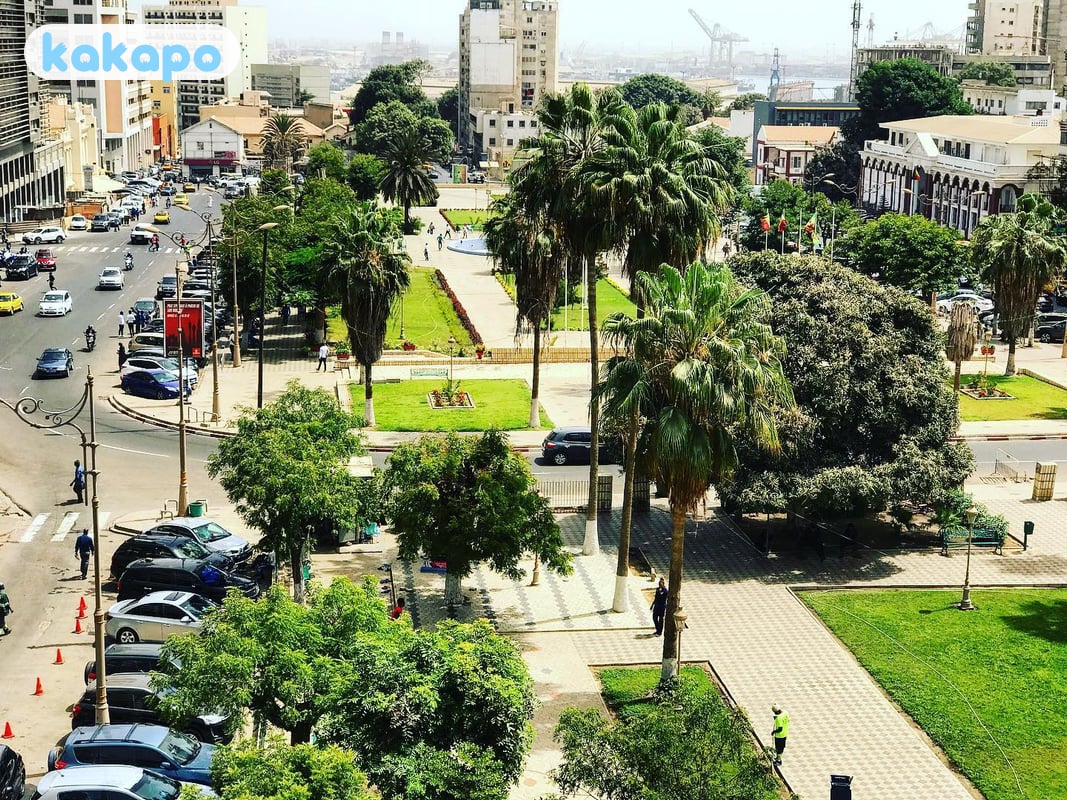
- Plateau — the colonial downtown at the tip of the Cap-Vert peninsula; Place de l'Indépendance, the Presidential Palace, the IFAN Museum, Marché Sandaga, the Cathédrale du Souvenir Africain. Daytime busy and broadly fine with awareness; evening empty fast and phone-snatching from passing motorbikes along Avenue Léopold Sédar Senghor and the Corniche is documented. Don't walk with phone in hand here at any hour.
- Almadies — the modern upscale district at the western tip of the peninsula; beach restaurants (Le Lagon 1, La Cabane du Surfeur), nightclubs, hotel-residences (Pullman, Radisson Blu). The dining-and-nightlife centre of expat / wealthy-Senegalese Dakar. Comfortable evening territory.
- Yoff — coastal residential just south of the airport / west of Almadies; large traditional fishing community (the Yoff beach pirogues are iconic), Lebou cultural heart, a few mid-range hotels. Daytime atmospheric; not for evening wandering.
- Ngor — small surf town adjacent to Almadies; Ngor Island (5 min pirogue from the beach), backpacker hostels, surf schools. The cheapest tourist-friendly base; community feel.
- Mermoz / Sacré-Coeur — middle-class residential between Plateau and Almadies; Sacré-Coeur Cathedral, the Université Cheikh Anta Diop, decent restaurants and small hotels. Comfortable and increasingly the gentrified middle ground.
- Île de Gorée (day trip) — UNESCO-listed island 3 km offshore from Dakar Port; the Maison des Esclaves with the "Door of No Return" memorial to the transatlantic slave trade. 20-min ferry (Liaison Maritime Dakar-Gorée), XOF 5,200 round-trip for foreigners. Emotional weight is severe; plan a quiet evening after.
- Petty-theft hotspots on the Corniche — the cliff-edge coastal road has stunning ocean views but is also where phone-snatching from passing two-wheelers concentrates. Walk inland or in groups; phone in zipped pocket.
- DDD (Dakar Dem Dikk) bus — the city bus network; Carte Diam'BUS rechargeable, XOF 200/ride. Limited tourist relevance; most visitors use Yango / Heetch / Bolt.
- Train Express Régional (TER) to AIBD (Blaise Diagne International Airport) — the new express train runs Dakar Plateau (Gare de Dakar) to AIBD station (50 km east) in 45 min for XOF 2,500. Way better than the $40-60 taxi alternative. Trains every 30 min, 05:30-22:00. AIBD-to-Dakar taxis from the official rank are XOF 25,000-40,000.
If it's your first time visiting
- Best arrival airport: Blaise Diagne International Airport (DSS / AIBD) is 50 km east of Dakar. The Train Express Régional (TER) to Plateau is the new game-changer — 45 min, XOF 2,500, runs every 30 min. Pre-booked transfer XOF 25,000-40,000 ($40-65); Yango/Bolt XOF 18,000-30,000.
- Public transport: Yango, Heetch and Bolt are the universal default — Bolt usually cheapest. DDD city buses run with Carte Diam'BUS at XOF 200/ride. Don't take "car rapide" (chaotic colourful minibuses) with luggage. The BRT Phase 1 runs Plateau-Guédiawaye in red BRT-only lanes.
- Best neighbourhood for your first night: Almadies for upscale beach-and-restaurant base; Plateau for proximity to Île de Gorée ferry and the colonial sights (but only if you're staying in the right hotel — Pullman Teranga, Radisson Blu Dakar Sea Plaza); Ngor for backpacker / surf vibe; Mermoz for middle-ground walkable.
- Day 1, jet-lag friendly: morning Île de Gorée ferry (2-3 hours total — emotionally heavy, plan rest of day light), lunch at La Calebasse (Plateau) or back at hotel, late-afternoon African Renaissance Monument viewpoint, sunset cocktail at Le Lagon 1 in Almadies. Skip downtown wander at night — get Bolt back.
- Common rookie mistakes: walking with your phone in your hand on the Plateau or Corniche (snatch from passing motorbikes is documented — defining Dakar petty-theft pattern), accepting "donation for orphanage" requests (organised; donate to UNICEF Senegal instead), buying tickets from touts at the Île de Gorée ferry terminal (use the official Liaison Maritime counter), drinking tap water (bottled XOF 300-500 for 1.5L), failing to take antimalarials (year-round transmission), not bringing the yellow fever WHO card (required for entry).
- Currency and tipping: West African CFA franc (XOF), pegged to the euro at €1 = XOF 655.957 (so $1 ≈ XOF 600). USD and EUR useful at hotels. Cards at hotels and bigger restaurants; cash everywhere else. ATMs at SGBS, BICIS, Ecobank inside bank branches. Tipping 10% restaurants, round-up taxis, XOF 500-1,000 per bag for porters.
- Yellow fever and malaria preparation — yellow fever vaccination required for entry (bring the yellow WHO card). Antimalarial prophylaxis recommended: Malarone, doxycycline or mefloquine. DEET 25-50%. Dengue is present in the wet season.
- Modest dress lowers hassle — Senegal is 95% Muslim though cosmopolitan; shoulders and knees covered substantially reduces catcalling in the Plateau and at Marché Sandaga. Beachwear at hotel pools/beaches only.
- Don't drive yourself outside the city — the road to Saint-Louis (4h north) and Lac Rose has occasional "informal checkpoints" extracting petty "fines" from foreign drivers; hire a registered driver via your hotel.
Practical info — emergency numbers
- Police: 17.
- Ambulance: 1515.
- Tourist Police: visible at major sites.
- Hôpital Principal de Dakar: +221 33 839 5050.
- Clinique Mermoz: +221 33 859 7575.
Bring: yellow fever card, antimalarial prophylaxis, DEET bug spray, modest clothing, a Senegalese SIM (Orange, Free, Expresso) at the airport, USD cash, and travel insurance with medical-evacuation cover.
Frequently asked questions
Is Dakar safe to visit in 2026?
Yes — Dakar is one of the safer West African capitals for tourists. Senegal sits at US State Department Level 2 ('exercise increased caution') with regional carve-outs for the Casamance south and the Mali border; UK FCDO is similar. Crime against visitors is moderate and concentrated in the Plateau (downtown): pickpocketing, occasional bag-snatching by passing scooters. Violent crime against tourists is rare. The realistic risks are malaria (year-round, prophylaxis recommended), summer heat and Harmattan dust (December-February), the emotional weight of the Île de Gorée day trip, and the broader Sahel-region context (Senegal itself is stable).
Is Dakar safe at night?
Almadies (the upscale beach district), N'Gor, and Mermoz are well-lit, active, and comfortable into the evening — Dakar's nightlife is genuinely good. The Plateau is busier with phone-snatching from passing motorbikes after dark; don't walk with phone in hand. Pikine and Guédiawaye outer working-class districts aren't on tourist itineraries and warrant pre-booked transport at any hour. Yango, Heetch, and Bolt ride-hail apps work well.
Is Dakar safe for solo female travellers?
Doable. Senegal is majority-Muslim but cosmopolitan; harassment is lower than in Morocco or Egypt but not absent — catcalling in the Plateau and at Marché Sandaga is routine. Modest dress (covered shoulders and knees) substantially reduces it. Île de Gorée's emotional weight is significant; plan a quiet evening afterwards rather than back-to-back sightseeing. Hôpital Principal de Dakar and Clinique Mermoz are the tourist-grade hospitals; complex cases evacuate to Casablanca or Paris.
Can you drink tap water in Dakar?
No — stick firmly to bottled. Dakar's municipal supply is treated but mineral-heavy and contamination at building level is routine. Bottled water is very cheap (XOF 300-500 for 1.5L) and ubiquitous. Avoid ice in non-tourist-grade venues, unpeeled raw vegetables outside reputable hotels, and street fresh juice.
What's the biggest scam to avoid in Dakar?
Friendship hustles around the Plateau and Île de Gorée ferry terminal — someone befriends you in fluent French/English, leads to commission shops or restaurants with inflated bills. Other recurring patterns: 'donation for the orphanage' canvassers (organised; give to UNICEF or registered NGOs instead), aggressive vendors at Marché Sandaga, phone-snatching from passing scooters (don't walk with phone in hand on Plateau streets), and 'informal checkpoints' on rural drives extracting petty 'fines' (rare in Dakar itself, more common heading toward Saint-Louis). Use Yango/Heetch/Bolt rather than negotiated taxis.
Is the Île de Gorée day trip worth doing?
Yes, but plan emotionally for it. The 20-minute ferry from Dakar Port reaches the UNESCO-listed island and the Maison des Esclaves with the 'Door of No Return' — a memorial to the transatlantic slave trade. The emotional weight is severe; many visitors describe it as the most significant single hour of their West Africa trip. Some historians contest the specific number-of-victims claim associated with the door, but the site's significance as commemoration is widely accepted. Bring water (the island has limited shade), book audio or human guides at the museum, and don't plan a heavy social evening afterwards. Not recommended for children under 12.
Sources
Run a business in Dakar?
Show visitors your Dakar business is a safe choice. The free Verified by Kakapo badge puts Dakar's live safety score on your website, links back to your verified page, and updates itself. No cost.
Get the free badge →