


Is Miami, United States Safe? A 2026 Travel Safety Guide
Hurricane season, rip currents, the South Beach pickpocket density, the summer heat, and the realistic risks of Florida's most international city.

Miami's tourist core (Miami Beach, Brickell, Wynwood, Coconut Grove) is moderately safe. Crime against visitors is uncommon. The realistic risks for visitors are the Atlantic hurricane season (June-November), Atlantic rip currents at the open beaches, the South Beach pickpocket density at peak nightlife hours, the genuine summer heat-and-humidity (32°C + 80% humidity), and South Florida's notoriously aggressive driving culture.
The honest framing for first-time visitors: Miami is medium-large (~470,000 in city, 6.2 million metro), divided across distinct neighbourhoods. Miami Beach (the famous Art Deco district + South Beach), Wynwood (gentrified arts), Brickell (financial), Coconut Grove (residential bohemian), Little Havana (Cuban heritage) are the visitor anchors. The Florida Keys and the Everglades are nearby day trips.
Visiting Miami for the first time, the thing that catches most travellers off-guard isn't crime — it's how thoroughly Latin Miami is. Spanish is the dominant language in many neighbourhoods (Little Havana, Hialeah, much of Brickell); 70% of Miami-Dade speaks Spanish at home; the "Hola" greeting works in many service interactions. The food culture is genuinely Cuban-Latin-American: a Cuban sandwich at Versailles or Sergio's costs $9-13, café cubano $2.50-4, ropa vieja and mojitos at Ball & Chain $25-35, a stone-crab dinner at Joe's Stone Crab in season $80-120 per person. South Beach nightlife is one of America's most expensive — $25 cocktails at LIV or E11even, $400+ club tables in season, $30+ daybeds at the Setai pool. Tipping 20%+ at restaurants is the norm.
In 2026, the specific things that have changed since pre-pandemic include: Brightline high-speed rail to Orlando opened 2023 ($89 advance) — a transformational addition for Florida day-trips; the Miami-Dade Trolley free service has expanded across Brickell, Wynwood and Miami Beach; the post-2024 hurricane season produced Helene and Milton damage along the Florida coast but Miami itself was largely spared (Florida Panhandle and Gulf Coast harder hit); the South Beach pickpocketing and tourist-overcharging on Ocean Drive remains a documented pattern; and Miami International Airport (MIA) tap-to-pay parking and Metrobus rolled out across all readers.
| Night safety | 60/100 |
|---|---|
| Scam / petty-crime risk | Medium |
| Violent crime (tourists) | Low |
| Most common scams | South Beach pickpocketing; restaurant pricing scams on Ocean Drive; drink-spiking in clubs |
| Safer neighbourhoods | South Beach, Mid-Beach, Coconut Grove |
| Data sources cited | 4 |
| Last verified |
What the score means — 76/100
- Healthcare (86) — Jackson Memorial, Mount Sinai, Baptist are world-class.
- Air quality (82) — generally clean coastal air.
- Personal safety (76) — moderate. Pickpockets in tourist areas; otherwise low.
- Transport (76) — Metromover is free in Brickell/downtown; otherwise rideshare or rental car.
Hurricane season — June-November

- Atlantic hurricane season: June 1 - November 30. Peak: mid-August to mid-October.
- Hurricane vs tropical storm: National Hurricane Center tracks systems; Florida emergency systems are well-developed.
- If a hurricane is approaching: heed evacuation orders if issued. Most major hotels follow established evacuation/shelter protocols.
- Travel insurance: confirm hurricane-cancellation coverage. Many policies cover, but only if booked before the storm was named.
- Lower hurricane risk months: December-May. The "winter season" is also when most snowbird tourism happens, hence higher prices.
- Sub-tropical storms / heavy rainfall: can cause severe flooding even without hurricane warning. Don't drive through flooded roads.
Ocean — rip currents, jellyfish
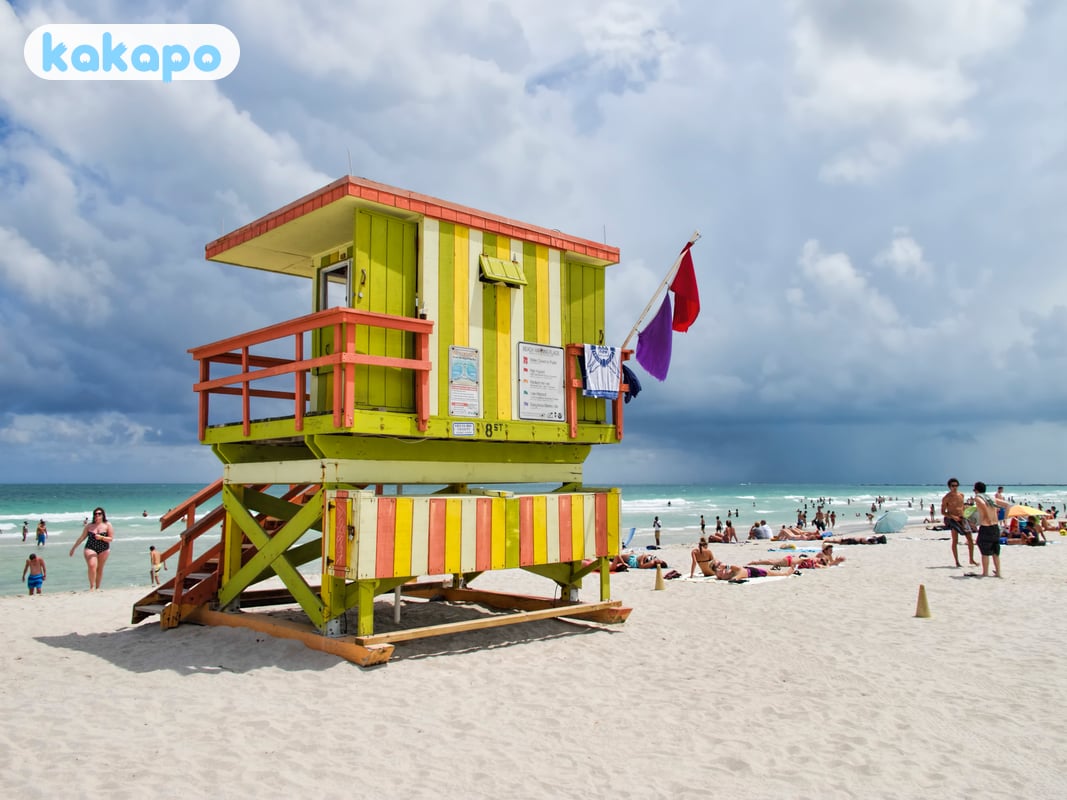
- Miami Beach rip currents: real and consistently present at certain conditions. Several drowning deaths each year.
- Lifeguard flag system: yellow = caution; red = high hazard, no swim; double red = closed; purple = jellyfish/marine life present. Heed all colours.
- If caught in a rip: don't swim against; swim parallel to shore until you escape, then in.
- Box jellyfish / Portuguese man-of-war: occasional. Stings are painful; vinegar is first aid (lifeguards have it).
- Sharks: present but tourist attacks rare. More common in Volusia County (further north).
- Sun: 25°N. Severe UV. Reef-safe sunscreen.
South Beach — pickpockets and after-dark
- Ocean Drive: the iconic Art Deco strip. Daytime and early evening fine. After 1am the strip becomes a different scene — drunker, louder, more pickpockets.
- Pickpockets: targeting bag-on-back-of-chair restaurant patrons and beach-bag walkers. Bag in front, phone in front pocket.
- Restaurant pricing scams: Ocean Drive restaurants are notorious for surprise charges, fake "minimum spend" rules, mysterious "service" fees on top of suggested tip. Read menus carefully; some carry warnings.
- Drink-spiking: rare but reported in some clubs. Watch your drink.
- Walking back to your hotel at 3am: stick to busy streets; use Uber/Lyft.
- Spring break: March-April Miami Beach gets chaotic. Some years see police curfews and beach restrictions.
Areas — where to base, where to be aware
Recommended for visitors: South Beach (south of 23rd St), Mid-Beach (24th-44th St) (quieter, family-friendly), Brickell (modern downtown), Wynwood (gentrified arts), Coconut Grove (leafy residential), Coral Gables (upscale).
Stay aware: Liberty City and Overtown — these higher-crime neighbourhoods aren't on standard tourist itineraries (you wouldn't end up there casually). The area immediately around the bus station. Some Wynwood streets after midnight when galleries close.
Driving — the South Florida culture
- South Florida traffic: aggressive lane-changing, fast speeds, distracted phone use. Insurance fraud incidents (staged crashes) are notable.
- If you're hit: stay calm, photograph everything, file police report. Don't accept a "let's settle it cash" offer.
- I-95 and the Palmetto Expressway: stress.
- The Causeways: between mainland Miami and Miami Beach. Toll-free; commute hours slow.
- Don't drive after a single drink: Florida DUI is strict.
- Parking in South Beach: limited and expensive. Use city garages.
Transport, taxis, the airport
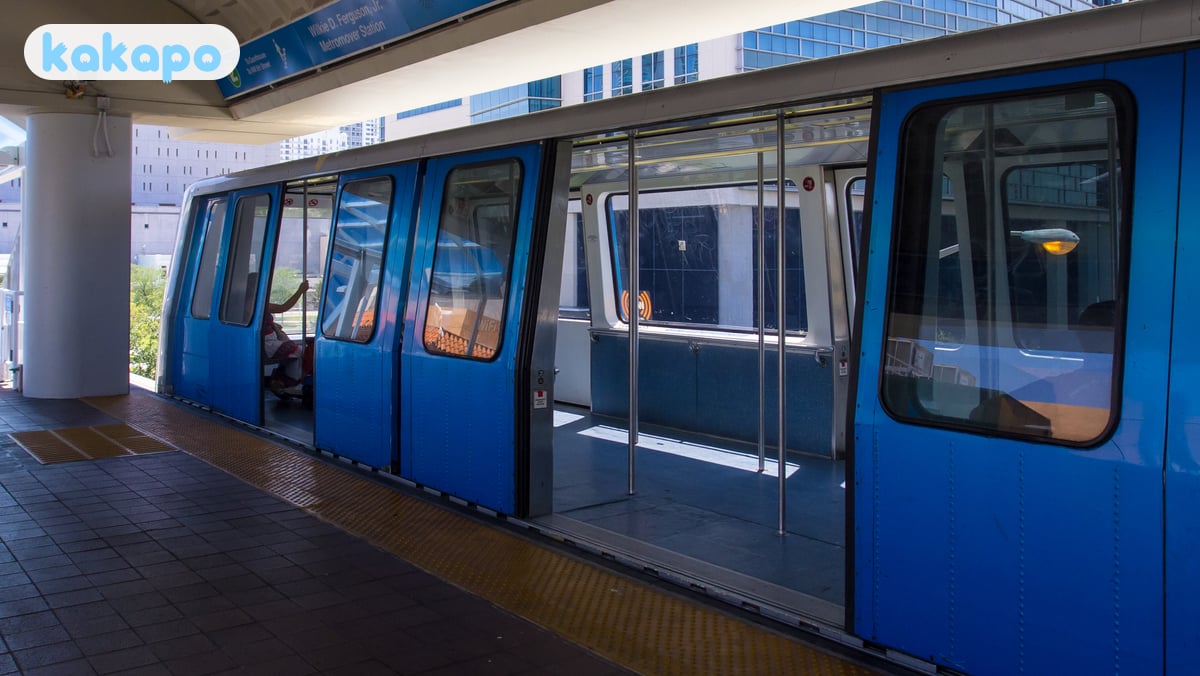
- Metromover: free elevated train in Brickell/downtown. Useful and fun.
- Metrorail: 25-mile elevated line from airport to south Miami. Useful for some routes.
- Buses: extensive; less tourist-relevant.
- Trolley: free trolley loops in Miami Beach, Coral Gables, Coconut Grove. Slow but free.
- Uber + Lyft: cheap, ubiquitous.
- Miami International Airport (MIA): 13 km west of downtown. Metrorail $2.25 to downtown direct. Uber/Lyft $25-40.
- Fort Lauderdale-Hollywood (FLL): 45 km north. Cheaper flight option, longer transfer.
Money, food, the cost story
- Currency: US dollar.
- Tipping: 18-22%.
- Tax: 7% sales tax. Hotel resort fees of $30-50/night common.
- Cost: peak winter season (Dec-March) hotels $300-700+/night.
- Tap water: safe.
- Local food: Cuban (Versailles, Sergio's), Haitian, modern Latin fusion.
Neighbourhood-by-neighbourhood breakdown
- South Beach (SoBe) — Miami Beach, Ocean Drive Art Deco strip, Lummus Park beach, the nightlife clubs (LIV, Story, E11even). Very safe by day, lively at night, pickpocket-active at the densest Ocean Drive crowds. Drink-spiking documented in clubs.
- Mid-Beach / North Beach — quieter Miami Beach to the north, Faena District, more residential. Very safe.
- Brickell — south of downtown, the financial district and modern condo towers, Brickell City Centre, restaurants on Brickell Avenue. Very safe, polished, the polished base for first-timers.
- Downtown Miami — Bayside Marketplace, Bayfront Park, the Adrienne Arsht Center. Busy by day, quieter at night, some homelessness around the edges.
- Wynwood — north of downtown, the gentrified arts district, Wynwood Walls murals, breweries, restaurants. Very safe by day and evening, occasional homelessness on the outer streets.
- Design District — north of Wynwood, the luxury fashion-and-design quarter (Hermès, Louis Vuitton, Prada flagships). Very safe.
- Little Havana (Calle Ocho) — west of downtown, the Cuban heritage district, Ball & Chain, domino park, Versailles, Sergio's. Lively, very safe day and evening.
- Coconut Grove — south-west, leafy residential and waterfront, CocoWalk shopping, restaurants. Very safe.
- Coral Gables — south-west, the upmarket residential and shopping district, Venetian Pool, Biltmore Hotel. Very safe.
- Key Biscayne — island south, beach destination, Cape Florida State Park. Very safe.
- Overtown / Liberty City / Little Haiti — historically working-class districts. Daytime fine and culturally significant; not where tourists wander at night.
If it's your first time visiting
- Best arrival airport: Miami International (MIA), 13 km west. To South Beach: Uber/Lyft $30-50 in 25 min, taxi $32 flat-rate to South Beach, SuperShuttle/SuperShuttle-equivalent $25, MIA Mover + Metrorail + bus $2.25 to downtown (the budget option). Fort Lauderdale (FLL) for some flights — 1h drive south.
- Public transport: Metrorail, Metromover (free downtown loop), Metrobus, Miami-Dade Trolley (free in Brickell, Wynwood, Miami Beach). Tap-to-pay or EASY Card. $2.25 single, $5.65 day pass. Most visitors use Uber/Lyft.
- Best neighbourhood for your first night: South Beach (SoBe) for nightlife and Art Deco atmosphere, Brickell for upmarket modern, Wynwood for hip arts, Coconut Grove for calm. Avoid first-time bookings in outer Overtown or Liberty City.
- Day 1, jet-lag friendly: drop bags, lunch at Sergio's Cuban or Joe's Stone Crab (in season, October-July), late afternoon walk along Lincoln Road Mall and Ocean Drive Art Deco strip, sunset on South Beach, evening drinks at a rooftop bar (1 Hotel, Faena) or LIV nightclub if that's your scene.
- Day 2 essentials: morning Wynwood Walls murals tour, Cuban food at Versailles or Ball & Chain in Little Havana for lunch, Vizcaya Museum and Gardens in the afternoon, dinner at a Brickell or Design District restaurant.
- Day trips: Everglades National Park (1.5h west, airboat tours), Florida Keys to Key West (3.5h south by car), Naples and Marco Island (2h west), Orlando via Brightline high-speed rail (3h, $89 advance — Disney/Universal day-trip).
- Common rookie mistakes: visiting in August-September peak hurricane season without travel insurance; renting a car and getting hit with Miami-Dade aggressive driving (defensive mindset, no lane-by-lane changes); going to South Beach clubs without booking a table or knowing the door codes ($400+ table minimums at LIV); leaving valuables on the beach while you swim (pickpocket and theft pattern); paying tourist-trap prices on Ocean Drive (the strip restaurants are notoriously overpriced — walk one block in for honest pricing).
- For hurricane season (June-November): have travel insurance, monitor National Hurricane Center, hotel-room evacuation plans matter for category 3+ storms. Miami itself dodged the worst of 2024's Helene/Milton.
- Tap water is safe but most visitors prefer bottled because of taste. Beach swimming: heed lifeguard flag system; rip currents are real.
Practical info — emergency numbers
- Emergency: 911.
- Miami Beach Police non-emergency: 305-673-7900.
- Jackson Memorial Hospital ER: 305-585-1111.
- Mount Sinai Medical Center ER: 305-674-2200.
Bring: reef-safe sunscreen, beach gear, an umbrella for sudden storms, a contactless card, an unlocked phone, US-valid travel insurance, and the FEMA app or NOAA Weather alerts during hurricane season.
Frequently asked questions
Is Miami safe to visit in 2026?
Yes — Miami's tourist core (South Beach, Mid-Beach, Brickell, Wynwood, Coconut Grove) is moderately safe. Crime against visitors is uncommon and the visible police presence on Ocean Drive and around the convention/cruise centres is heavy. The realistic concerns are environmental and behavioural: Atlantic hurricane season runs June through November, Atlantic rip currents at the open beaches kill several swimmers each year, Ocean Drive restaurants are notorious for surprise charges and predatory pricing, South Florida driving culture is genuinely aggressive (including staged-crash insurance fraud), and the summer heat-and-humidity (32°C plus 80% humidity) is its own hazard.
Is Miami safe at night?
Yes generally — Brickell, the Wharf area and Coconut Grove are calm after dark. South Beach's Ocean Drive is a different scene after 1am, with louder crowds, more pickpockets, drink-spiking reports in some clubs, and the occasional altercation. Walking back to your hotel at 3am, stick to busy streets like Collins Avenue and Washington and use Uber or Lyft rather than walking through quiet residential blocks. Spring break (March-April) routinely brings Miami Beach Police curfews and beach restrictions; check current advisories. Liberty City and Overtown have higher crime but aren't on tourist itineraries.
Is Miami safe for solo female travellers?
Yes with the standard South Beach nightlife caveats. Daytime in South Beach, Wynwood, Coconut Grove and Brickell is easy and safe; the beach is patrolled by lifeguards and busy. The genuine risks for solo female travellers concentrate on Ocean Drive after 1am — supervise drinks at the larger clubs, decline drinks from strangers, and use Uber for the ride back rather than walking. Spring break weeks amplify everything; if travelling solo, consider visiting outside March-April.
Can you drink tap water in Miami?
Yes — Miami tap water is treated by Miami-Dade Water and Sewer and meets EPA and Florida standards. It is safe across the city and Miami Beach. The taste can be mineral-heavy because of the Biscayne Aquifer source; many visitors find bottled water more pleasant, but tap is genuinely safe. Restaurants offer it free with meals. After major hurricanes, localised boil-water notices do occur — check Miami-Dade county alerts.
What's the biggest scam to avoid in Miami?
Ocean Drive restaurants. Many are notorious for surprise charges, fake "minimum spend" rules, mysterious "service" fees stacked on top of suggested tip, and menu prices that don't match what hits the bill. Read every menu carefully; some now carry warnings, and Miami Beach has cracked down with mandatory disclosure rules but enforcement is patchy. Other recurring traps include unmarked private-hire offers at MIA arrivals (use Metrorail to downtown for $2.25, a licensed taxi, or a metered Uber/Lyft), staged-crash insurance fraud on South Florida highways (always file a police report and never accept a cash settlement), and hotel resort fees of $30-50/night that aren't included in the booked rate.
How serious is hurricane risk if I visit Miami?
Genuinely serious during peak season but well-warned. Atlantic hurricane season runs June 1 to November 30, with peak risk from mid-August through mid-October. The National Hurricane Center tracks storms days in advance and Florida's emergency-management system is among the most developed in the world — evacuation orders come with real lead time. Confirm your travel insurance covers hurricane cancellation, and check the small print: most policies only cover storms that were named after you booked. December through May has much lower hurricane risk (this is also the high tourism "winter season"). Even outside named storms, sub-tropical rain bands can cause severe street flooding — never drive through flooded roads, and avoid the I-95 and Palmetto Expressway during heavy weather.
Sources
Run a business in Miami?
Show visitors your Miami business is a safe choice. The free Verified by Kakapo badge puts Miami's live safety score on your website, links back to your verified page, and updates itself. No cost.
Get the free badge →