


Is Cartagena, Colombia Safe? A 2026 Travel Safety Guide
What's safe in the walled Old City vs the outer beaches, the scopolamine scam reality, and the realistic risks of Colombia's most-visited tourist city.

Cartagena's walled Old City and its surrounding tourist anchor (Getsemaní, Bocagrande, the Centro Histórico) is one of the safer tourist environments in Latin America. The realistic visitor risks are concentrated outside the tourist core: robberies on the outer "Bocagrande" beach during empty hours, the well-documented "scopolamine" / "burundanga" drink-spiking scam targeting male visitors at certain bars and clubs, and the standard humidity-and-heat tropical-city fatigue.
Colombia sits at Level 3 on the US State Department's advisory ("reconsider travel"), with explicit carve-outs that Cartagena is one of the safer Colombian destinations. The "do not travel" zones in the advisory are border regions, not the Caribbean coast. The UK FCDO has similar language. Tourist crime in central Cartagena is low; pickpocketing happens, violent crime against tourists in the historic centre is rare.
The honest framing for first-time visitors: Cartagena is genuinely calm in the historic walled core, day or night. The outer city is more sprawling-Latin-American. The two specific things to plan for are the outer beach awareness and the scopolamine pattern (which is real and recurring, not paranoia).
Visiting Cartagena for the first time, the thing that catches most travellers off-guard isn't crime — it's how genuinely beautiful and photogenic the walled Old City is, and how Colombia's tourism rebound has pushed prices up to Caribbean-resort levels. The bougainvillea-draped balconies, the colour-saturated colonial facades, the horse-drawn evening carriages around Plaza Santo Domingo. Spanish greetings "Hola" and "Buenos días/tardes/noches" — Caribbean Colombian Spanish is fast and warm; "Gracias" closes everything. A bandeja paisa at La Mulata costs COP 35,000-50,000 (~$8-12), a ceviche at La Cevichería COP 45,000-70,000 ($10-17), an Aperol at a Centro Histórico café COP 25,000-40,000, an Uber from Rafael Núñez airport to Old City COP 35,000-50,000 ($8-12), a Rosario Islands day-trip COP 250,000-450,000.
In 2026, the specific things that have changed since pre-pandemic include: Uber, DiDi, and Cabify now dominate rideshare — the historical "unmarked taxi danger" pattern is largely solved; the Colombian peso devaluation has pushed Cartagena prices up in dollar terms (it's no longer the budget bargain it was 5 years ago); the post-2024 Caribbean cruise-tourism boom has produced more crowded days at the Old City and Castillo San Felipe; the new safety perimeter around Bocagrande beach has tightened with more visible police; and the post-2022 Petro administration's left-wing government has produced no practical visitor impact in Cartagena (politics is mostly Bogotá's noise).
| Night safety | 49/100 |
|---|---|
| Scam / petty-crime risk | Medium |
| Violent crime (tourists) | Low |
| Most common scams | scopolamine drink-spiking scam at bars and clubs; robberies on empty Bocagrande beach; pickpocketing in tourist areas |
| Safer neighbourhoods | Centro Histórico, Getsemaní, Bocagrande |
| Data sources cited | 4 |
| Last verified |
What the score means — 69/100
- Healthcare (78) — Cartagena has private clinics (Clínica Bocagrande, Hospital Bocagrande); for serious cases evacuate to Bogotá or Miami.
- Personal safety (76) — moderate. Pickpocketing in tourist areas; outer-beach robberies; scopolamine pattern.
- Transport (76) — taxis, Uber operates as InDriver/Cabify, walkable Old City.
- Night (76) — walled city alive late and policed. Outer streets less so.
Scopolamine — the actual specific risk
"Scopolamine" (also called "burundanga" or "the devil's breath") is a sedative drug used in Colombia in a documented tourist-targeting scam pattern. It's not paranoia; the US State Department and FCDO both warn about it specifically.
- The pattern: a friendly local (often female) approaches a male tourist at a bar / club / sometimes the street. After a "few drinks together," the tourist wakes up hours later with credit cards drained, valuables gone, often confused about what happened.
- The drug itself: causes compliance / amnesia. Victims describe being "fully aware but unable to refuse" what they were asked to do.
- How it's administered: dropped into a drink, occasionally on a paper "ticket" or business card, occasionally aerosolised.
- Defence: don't accept drinks from people you didn't see being made. Watch your drink. Don't follow strangers to "another bar" they suggest. If a Colombian woman approaches you alone and accelerates intimacy quickly, treat with significant caution.
- If you suspect you've been drugged: police 123, then your hotel. Tell them clearly you may have been scopolamined.
- Frequency: hundreds of cases per year nationally. Cartagena, Medellín, and Bogotá see the most. Often unreported because of the embarrassing context.
Areas — Old City, Getsemaní, Bocagrande
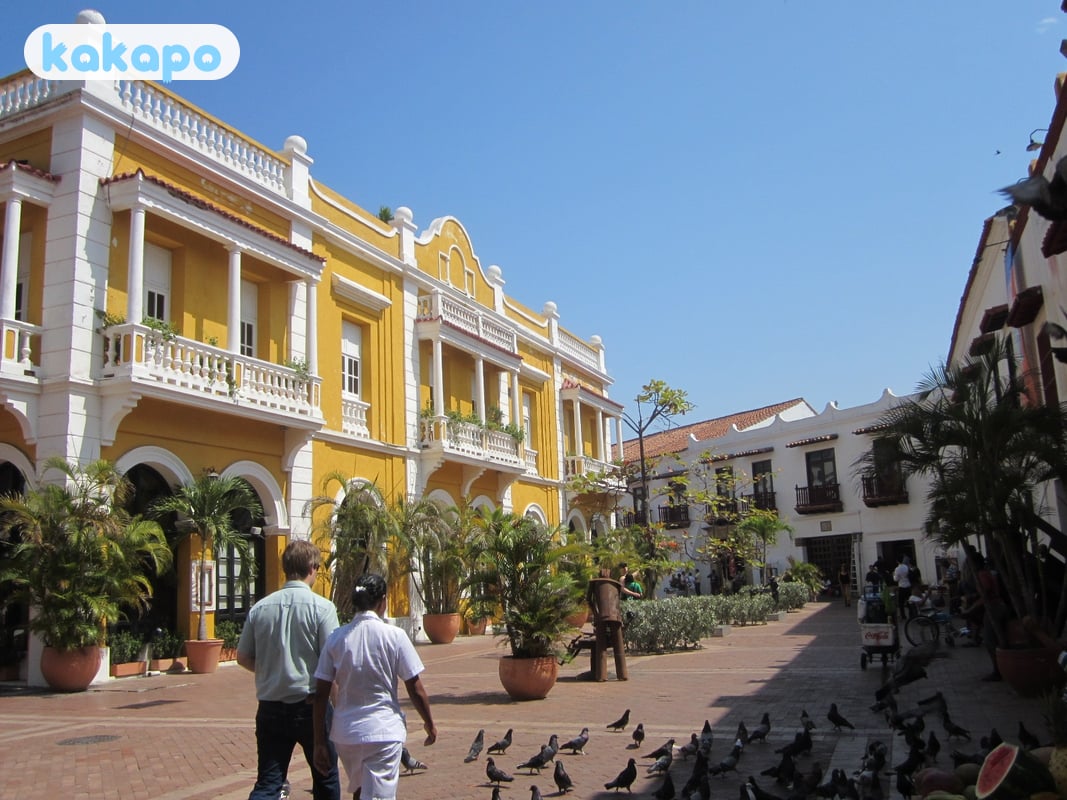
Highly recommended for visitors: Centro Histórico (the walled Old City) — colonial-era cobbled streets, Plaza Santo Domingo, Plaza San Pedro Claver, the cathedral. Heavily policed and tourist-anchored. Getsemaní — formerly working-class, now gentrified. Plaza de la Trinidad evening crowd is genuinely lovely. Bocagrande — modern beachfront strip with high-rise hotels.
Stay aware: parts of outer Bocagrande beach at sunrise/sunset (empty zones, occasional armed robbery — stay near lifeguarded sections with people around). Castillogrande southern beach — quieter, more residential, generally safe.
Avoid as a tourist: most of the south-east outer city (residential, no tourist relevance, higher reported crime), parts of San Felipe outer streets at night.
Beach safety

- Bocagrande Beach: lifeguarded in the central section. Tourist-friendly during the day. Watch valuables.
- Don't walk the empty beach sections at sunset/dawn alone. Robberies on quiet stretches recur.
- Vendor pressure: persistent jewellery / massage / fruit hawkers. Polite firm "no" works.
- Day trips: Rosario Islands and Playa Blanca are the standard. Use established operators (book through your hotel) — some unregulated boats overcharge or underdeliver.
- Sun: tropical Caribbean. Reef-safe SPF 50, hat, hydrate.
Taxis, Uber/InDriver, the airport
- InDriver / Cabify: both work in Cartagena. Uber's status has been on/off; InDriver is the local reliable option.
- Yellow taxis: regulated, metered. Flat fare from airport ~COP 30,000-40,000.
- Don't take unmarked taxis. Use rideshare or your hotel's recommended service.
- Cartagena Airport (CTG) to Old City: ~15 min, COP 25,000-40,000 by taxi/Uber.
- Walking the Old City: fully walkable. Cobblestones; comfortable shoes.
- Coche (horse carriage) rides through the Old City: tourist-friendly, animal-welfare-debated. Negotiate price.
Neighbourhood-by-neighbourhood breakdown
- Centro Histórico (Old Walled City) — the UNESCO walled core, Plaza Santo Domingo, Plaza San Pedro, the Cathedral, the bougainvillea-draped balconies. Heavily walked, very safe day and night. Restaurants on the famous plazas are tourist-priced — walk one street back for honest pricing.
- Getsemaní — just outside the walls south, gentrified former working-class district, the best evening atmosphere, Plaza de la Trinidad gathering point, the colourful Calle de los Estribos. Very safe with normal awareness, lively and vibrant.
- Bocagrande — the modern peninsula south of the Old City, modern condo towers, mid-range hotels, the calm beachfront. Very safe; the beach pickpocketing and tout pressure is the main issue.
- Castillogrande — south of Bocagrande, residential, quieter, the upmarket condos. Very safe.
- El Laguito — south tip of Bocagrande, beachfront, family-friendly resorts. Very safe.
- La Boquilla — north coast, traditional fishing village now gentrifying, beachfront restaurants, the local kite-surf hub. Daytime fine and atmospheric; not where tourists wander deep at night.
- San Diego — northern walled-city neighbourhood, quieter than Centro Histórico but inside the walls. Very safe.
- Manga — across the lagoon from the Old City, residential island, the marina. Calm, very safe.
- Outer Cartagena (Olaya Herrera, Crespo, Torices) — working-class outer neighbourhoods, no tourist relevance, fine by day, not for solo wandering.
If it's your first time visiting
- Best arrival airport: Rafael Núñez (CTG), 5 km north of the Old City. To Centro Histórico: Uber/DiDi COP 30,000-50,000 ($7-12), official taxi COP 25,000-35,000, walk from Crespo neighbourhood in 25 min if light luggage.
- Public transport: TransCaribe BRT (S/2,700 per ride), regular buses (confusing). Old City and Getsemaní are fully walkable; Bocagrande is 15-min Uber or 30-min walk from Old City.
- Best neighbourhood for your first night: inside the walls (Old City) for atmosphere and centrality, Getsemaní for cheaper and the best evening scene, Bocagrande for beach and calmer mornings. Avoid first-time bookings in outer Olaya Herrera or Torices.
- Day 1, jet-lag friendly: drop bags, ceviche lunch at La Cevichería or Carmen ($15-25), late-afternoon walk on the city walls at sunset (the most-photographed walk in Colombia, free), drinks at Café del Mar on top of the wall, dinner in Getsemaní at La Cocina de Pepina or Demente.
- Day 2 essentials: Castillo San Felipe de Barajas (the colonial fortress, COP 30,000), Old City walking tour, Getsemaní street-art tour, sunset on the walls again (it's that good), dinner at a Centro Histórico restaurant.
- Day trips: Rosario Islands (1h speedboat, $60-110 day-trip including lunch), Volcán de Lodo El Totumo mud volcano (1h north), Playa Blanca on Isla Barú (2h, the most-photographed beach), Mompox up the Magdalena River (overnight better).
- Common rookie mistakes: accepting drinks from new "friends" at Old City bars (scopolamine/burundanga drink-spike pattern documented mainly against male tourists); walking Bocagrande beach late at night solo; paying tourist-strip prices on Plaza Santo Domingo without checking menus; not bargaining with horse-carriage drivers (real rate COP 40,000-70,000 for 45-min loop, asking-price often double); buying "Colombian emeralds" from street vendors (almost always synthetic).
- For the heat: 30-33°C with humidity year-round. Hydrate, sunscreen, hat, mid-day rest indoors.
- Tap water is not safe. Bottled is universal and cheap. Even ice at street stalls: industrial cylindrical ice is safe; unknown ice not.
Practical info — emergency numbers
- Emergency: 123.
- Tourist Police: stations at major sites; English-speaking duty officers.
- Clínica Bocagrande: +57 5 656 4444.
- Hospital Bocagrande: +57 5 660 8888.
Bring: a card without foreign-transaction fees, an unlocked phone (Claro Colombia, Movistar Colombia, Tigo prepaid SIMs at the airport), reef-safe sunscreen, modest cash (COP), and travel insurance documentation. Tap water in the Centro Histórico is treated; most visitors stick to bottled.
Frequently asked questions
Is Cartagena safe to visit in 2026?
Yes — Cartagena's walled Old City and the surrounding tourist anchor (Getsemaní, Bocagrande, Centro Histórico) is one of the safer tourist environments in Latin America. US State Department lists Colombia at Level 3 ('reconsider travel') but with explicit Cartagena carve-outs; the Level 4 'do not travel' zones are border regions far from the Caribbean coast. UK FCDO is similar. Tourist crime in central Cartagena is low — pickpocketing happens, violent crime against tourists in the historic centre is rare. The realistic risks are outer-beach robberies in empty hours, the scopolamine drink-spiking pattern, and standard tropical heat and humidity.
Is Cartagena safe at night?
Yes — the walled Old City and Plaza de la Trinidad in Getsemaní are alive late, well-lit, and heavily policed. Locals and tourists fill the plazas until well past midnight. Bocagrande's high-rise strip is also calm. Avoid empty stretches of Bocagrande beach at sunset/dawn (occasional armed robbery on quiet sections) and outer San Felipe streets after midnight. The scopolamine drink-spiking risk is concentrated in late-night bars and clubs — don't accept drinks from strangers and don't follow new acquaintances to 'another bar' they suggest.
Is Cartagena safe for solo female travellers?
Yes — Cartagena is one of the easier Latin American destinations for solo women, and the gentrified Getsemaní cafe and walking culture is solo-friendly. Catcalling and street vendor approaches are persistent but rarely threatening. Use InDriver or Cabify rather than street taxis. The scopolamine drink-spiking pattern is documented to target both men and women — watch your drink, especially in tourist-bar settings. Cartagena private hospitals are adequate for most cases; serious cases evacuate to Bogotá or Miami.
Can you drink tap water in Cartagena?
No — stick to bottled. Coastal Caribbean water supply is treated but not for visitor consumption, and the humidity-and-heat profile means dehydration becomes a quick problem. Bottled water is cheap and ubiquitous. Avoid ice in non-tourist-grade venues, raw vegetables outside reputable Old City restaurants, and street fresh juice unless you trust the vendor. Hotels and major restaurants serve filtered water by default.
What's the biggest scam to avoid in Cartagena?
The scopolamine ('burundanga') drink-spiking pattern — a friendly local (often female) approaches a tourist at a bar or club, drinks together, and the tourist wakes up hours later with credit cards drained and valuables gone. The US State Department and UK FCDO both warn about it specifically. Defence: don't accept drinks you didn't see made, watch your drink, don't follow new acquaintances to 'another bar' or back to their apartment, treat rapid intimacy escalation with caution especially via dating apps. Other recurring patterns: unmetered street taxis at the airport (use InDriver or Cabify); aggressive Old City vendor pricing on emeralds and pearls (negotiate hard, verify hallmarks); and unregulated Rosario Islands boat operators (book through your hotel).
What about the Rosario Islands and Playa Blanca day trips?
Both are popular and worth doing, but the operator quality varies wildly and shapes the safety story. Book through your hotel or a Tourism-Board-registered operator — established options include Bocagrande tour desks, Hotel Las Américas, and Aviatur. Avoid unregulated 'cheaper' boat operators on the dock who overload boats, skip life jackets, or leave you stranded with unexpected lunch fees. Playa Blanca is busy and not pristine — vendor pressure is constant, and overnight stays at the rougher cabanas have had reports of theft and assault. The Rosarios proper (Isla Grande, Isla del Rosario) are calmer and prettier. Bring reef-safe SPF 50, hat, and small bills for boat-to-shore taxis.
Sources
Run a business in Cartagena?
Show visitors your Cartagena business is a safe choice. The free Verified by Kakapo badge puts Cartagena's live safety score on your website, links back to your verified page, and updates itself. No cost.
Get the free badge →