


Is Comuna 13, Medellín Safe to Visit in 2026?
The transformation story is real — and the escalator tourist trail is genuinely safe. The honest 2026 picture of guided-tour vs. solo, the post-2024 events, and what the locals say.

Comuna 13 is the Medellín neighbourhood whose story changed faster than any other in the city — from the deadliest urban combat in 21st-century Colombian history (Operation Orion, October 2002) to a globally Instagrammed tourist circuit of escalators, graffiti tours and hip-hop performances in barely 20 years. The transformation is real; the area is genuinely visitable; the escalator route is one of the safer tourist experiences in Medellín. It's also still a low-income community living with the legacy of Colombia's armed-conflict era, the influence of Oficina-de-Envigado-affiliated combos, and the periodic re-emergence of inter-combo violence.
The 2026 picture: doing the standard Comuna 13 escalator tour (a 2-3 hour guided experience following the famous outdoor escalators up through the comuna with graffiti stops, hip-hop dance performances, and street-food breaks) is safe and a well-worth-doing Medellín highlight. Going beyond the tour route — wandering into the upper sectors of the comuna alone, especially after dark — is a different experience and one most locals advise against for casual tourists.
This page is for the visitor deciding whether to do Comuna 13, how to do it, and what the post-2024 events mean for the current safety picture. We'll cover the guided-tour standard, what the route does and doesn't include, the recent events worth knowing, and what going off-route actually means.
| Night safety | 60/100 |
|---|---|
| Scam / petty-crime risk | Medium |
| Violent crime (tourists) | Medium |
| Most common scams | phone-snatch on the escalator route; wandering off-route into upper sectors; free-tour-from-a-flyer |
| Safer neighbourhoods | Comuna 13, San Javier, El Poblado |
| Data sources cited | 4 |
| Last verified |
From Operation Orion to the escalator tour
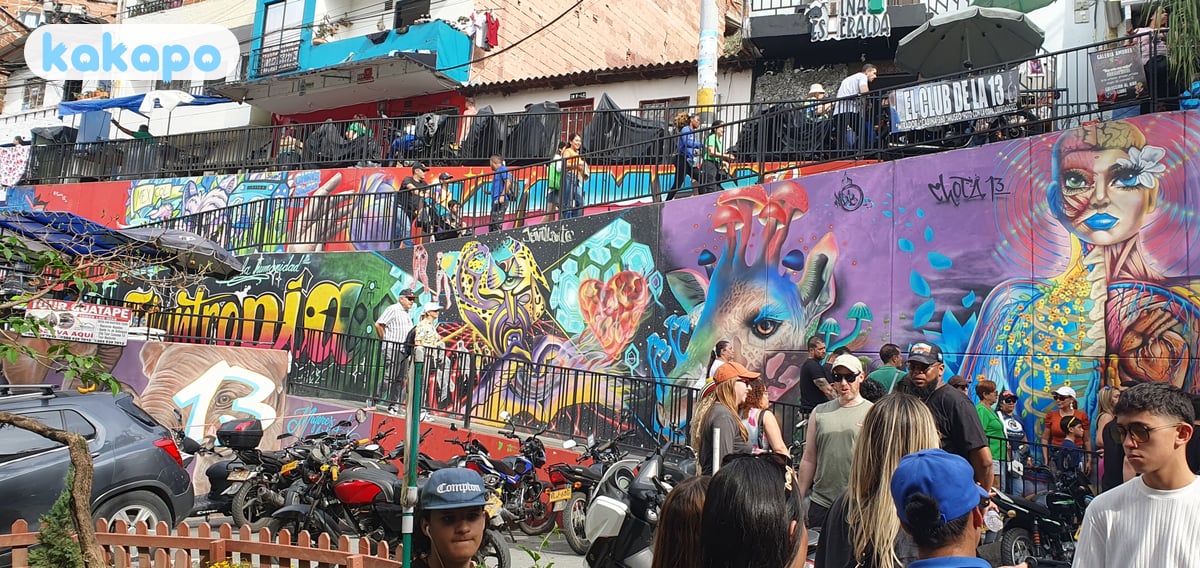
- October 2002 — Operation Orion: the Colombian Army assault on the comuna to dislodge FARC and ELN cells, the deadliest urban combat in 21st-century Colombia. The legacy includes documented forced-disappearances at La Escombrera (a hillside dump site) still being investigated by the JEP transitional-justice tribunal in 2026.
- 2008-2011 — Transformation projects: under Mayor Sergio Fajardo and successors, the city built the outdoor escalators (electric stair-network up the comuna's steep hillside, opened December 2011), the Metrocable cable cars to outer comunas, and the library-parks programme.
- The escalator tour grew organically from about 2014; by 2018-2019 it was the third-most-visited tourist experience in Medellín. The post-Covid recovery has seen visitor numbers continue to grow.
- What's true in 2026: the tour route is heavily-visited daily; local tour guides (Casa Kolacho is the most-recommended cooperative) are residents earning a living from the visits; community-engagement infrastructure has stabilised. Combo presence in the comuna remains real but spatially distant from the tour route.
- Late 2024 events: a flare-up of inter-combo violence in the upper sectors of Comuna 13 (San Javier, El Salado, El Corazón) led to temporary local restrictions and a brief media-cycle of "is Comuna 13 safe again" questioning. Tour operations on the escalator route continued; the disturbance was real but spatially limited.
The standard guided tour — what to expect
- Route: starts at San Javier Metro Station (Line B), walks up Calle 110A through the lower sector, takes the outdoor escalators in 6 stages up the hillside, stops at the graffiti viewpoints (Mirador), watches hip-hop dance performances at the small plazas (Casa Kolacho, Casa Morada), descends through the middle sector with food stops. 2-3 hours total.
- Cost 2026: small group tours 50,000-80,000 COP (US$12-19); private tours 150,000-250,000 COP; tip the guide 20,000-30,000 COP at the end. Free walking tours operate on a tip-only model from San Javier Metro.
- Best operators: Casa Kolacho (resident hip-hop cooperative, considered the most authentic), Real City Tours (the established Medellín walking-tour operator), Zippy Tour. Book via Airbnb Experiences, GetYourGuide or direct.
- What the tour does: tells the comuna's transformation story; explains the murals; visits family-run shops and food stalls; introduces you to resident artists and dancers. Genuinely worth doing.
- What the tour doesn't do: take you to El Salado, El Corazón, or the upper-hillside sectors where combo activity concentrates; visit La Escombrera (the documented forced-disappearance site); stay past sunset.
- Best time to go: morning tours (9-10am start) are calmer; afternoon tours (1-2pm start) are busier with school groups and bigger crowds. Avoid Saturday/Sunday afternoons for crowd density.
- Safety on the tour: very high — tour groups are visible, local guides are residents with deep neighbourhood relationships, the escalator route is heavily-used by visitors and locals alike. Phone-snatch is the realistic petty-crime risk; pickpocket and snatch incidents on the tour route specifically are rare.
Going solo vs. guided
- Solo on the lower-sector escalator route — possible and increasingly common for repeat Medellín visitors. The route is well-signed (follow the "Las Escaleras Eléctricas" signs from San Javier Metro); other tourists are visible; the experience is safe with normal precautions (no flashy electronics, no flagrant cash display).
- What you miss going solo: the storytelling. The graffiti is striking on its own but the murals tell specific stories about specific people and events; without a local guide you'll see the colours but miss the meaning.
- What you should not do solo: wander off-route into the upper sectors. The combo-influence boundary in Comuna 13 is not signposted and not obvious to a visitor; going past the escalator route into the unknown is where the risk profile changes.
- Solo at night: not advisable. Tour operations stop before sunset for reasons. After dark the comuna empties of tourists and the off-route risk profile applies to the on-route streets too.
- Going with a group of friends — perfectly fine; a small group of 3-5 walking the escalator route in daylight without a guide is normal and uneventful.
What the late-2024 events mean for 2026
- The flare-up: in October-November 2024 inter-combo violence in the upper sectors of Comuna 13 (San Javier, El Salado, El Corazón) led to brief local restrictions, displaced families, and a media cycle questioning Comuna 13's tour-safety.
- The reality: the events were real and concerning for residents in the affected sectors. Tour operations on the standard escalator route continued throughout; visitor numbers dipped briefly in November-December 2024 and recovered through Q1 2025.
- Where it left things in 2026: the standard tour route is safe; the upper-sector picture is unsettled in pockets. Tour operators have updated their routes to avoid the most-affected blocks.
- Local recommendation: do the tour, but stick to a known operator (Casa Kolacho, Real City) rather than free-tour-from-a-flyer; ask the operator about their current route and what they're avoiding.
- Ongoing situations to monitor: the JEP investigation into La Escombrera; any reported incidents in the upper sectors. Both reported widely in Colombian media.
Practical — Metro, food, money, photography
- Getting there: Medellín Metro Line B to San Javier Station; total journey from El Poblado ~25-35 minutes via Línea A transfer at San Antonio. 2026 fare: 3,400 COP per ride on Cívica card.
- Cash to bring: 100,000-150,000 COP per person covers the tour, food, drinks, and tips. Card payments are accepted at a growing number of food and souvenir stalls but bring cash.
- Food stops on the tour route: arepas, empanadas, mango biche, fresh juices, the famous "raspao" (shaved ice with syrup) at the top of the escalators. 5,000-15,000 COP per item.
- Photography: ask before photographing residents close-up; the murals are public art and photographing them is welcomed. Drones: don't, unless you've cleared it with the tour operator and Colombian Aeronáutica Civil.
- Toilets: at the top-of-escalator café complex; otherwise at the cafes and small restaurants on the descent.
- Weather: Medellín is "eternal spring" — typical 18-26°C year-round. The escalator route is exposed; bring sunscreen, water and rain gear for the wet-season afternoons (April-May, October-November).
Frequently asked questions
Is Comuna 13 safe to visit in 2026?
Yes for the standard guided escalator tour — that route is one of the safer tourist experiences in Medellín, heavily visited daily, with resident guides earning a living from the visits. Doing Comuna 13 with a known operator (Casa Kolacho, Real City Tours) in daylight is a Medellín highlight worth doing. Going off-route into the upper sectors of the comuna (San Javier, El Salado, El Corazón) is different and not advisable for casual tourists, especially after the late-2024 inter-combo flare-up; the boundary isn't signposted and the risk profile changes.
Should I go to Comuna 13 with a guide or solo?
Guided is the strong recommendation for first-time visitors. The graffiti tells specific stories about specific people and events; without a local guide you'll see the colours but miss the meaning, and you might miss the route boundary. Solo on the lower-sector escalator route in daylight is possible and increasingly common — well-signed from San Javier Metro, plenty of other tourists visible. Solo at night is not advisable; tour operations stop before sunset for reasons.
How much does a Comuna 13 tour cost in 2026?
Small group tours 50,000-80,000 COP per person (US$12-19); private tours 150,000-250,000 COP; tip the guide 20,000-30,000 COP at the end. Free walking tours operate on a tip-only model from San Javier Metro; 30,000-50,000 COP is the typical tip. Best operators: Casa Kolacho (resident hip-hop cooperative — most authentic), Real City Tours (established Medellín operator), Zippy Tour. Book via Airbnb Experiences, GetYourGuide or direct via operator websites.
What happened in Comuna 13 in late 2024?
Inter-combo violence in the upper sectors (San Javier, El Salado, El Corazón) led to brief local restrictions and displaced families in October-November 2024. Tour operations on the standard escalator route continued throughout; visitor numbers dipped briefly in November-December and recovered through Q1 2025. Tour operators have since updated routes to avoid the most-affected blocks. The events were real for residents; the standard tour-route picture in 2026 is safe with the route adjustments in place.
What is the escalator tour route in Comuna 13?
Starts at San Javier Metro Station (Line B) — walks up Calle 110A through the lower sector — takes the outdoor escalators in 6 stages up the hillside with graffiti viewpoints (Mirador) — stops at small plazas for hip-hop dance performances (Casa Kolacho, Casa Morada) — descends through the middle sector with food stops (arepas, empanadas, raspao shaved-ice). Total 2-3 hours. The route does not include El Salado, El Corazón or the upper-hillside sectors.
Is Comuna 13 safe at night?
No. Tour operations stop before sunset for reasons — after dark the comuna empties of tourists and the off-route risk profile applies to the on-route streets too. Visiting Comuna 13 is a daytime activity; the experience is the murals, the dance performances, the food stalls and the conversations with guides, all of which work in daylight. Plan your tour for morning (9-10am start) or early afternoon (1-2pm start); be back at San Javier Metro by 5-6pm.
How do I get to Comuna 13 from El Poblado?
Medellín Metro Line A from El Poblado station to San Antonio (the central interchange), transfer to Line B, ride to San Javier. Total journey 25-35 minutes; 2026 fare 3,400 COP per ride on a Cívica card. From San Javier Metro the escalator route is well-signed; tour operators meet groups at the station exit. Uber from El Poblado is an alternative at 25,000-40,000 COP and ~25 minutes.
Sources
Run a business in Comuna 13, Medellín?
Show visitors your Comuna 13, Medellín business is a safe choice. The free Verified by Kakapo badge puts Comuna 13, Medellín's live safety score on your website, links back to your verified page, and updates itself. No cost.
Get the free badge →