


Is Rosario, Argentina Safe? A 2026 Travel Safety Guide
The post-2020 drug-violence escalation, Messi's birthplace, the Monumento a la Bandera, the Paraná riverfront, and the realistic risks of Argentina's third city.

Rosario has had a significant crime rise since 2020 — drug-trafficking-related violence has made Rosario notably more dangerous than the rest of Argentina. Tourist crime in the central tourist core (around the Monumento a la Bandera, the riverfront promenade, the historic Pichincha + Centro neighbourhoods) is moderate; outer city has documented severe issues.
Argentina sits at Level 1 on the US State Department's advisory list, with Rosario specifically mentioned as having elevated risk. UK FCDO is similar.
The honest framing: Rosario is large (~950,000 city, 1.5 million metro), 300 km north-west of Buenos Aires, on the Paraná River. It's Lionel Messi's birthplace + Che Guevara's. Most visitors are domestic + transit. Monumento a la Bandera (national flag monument), the riverfront promenade, Boulevard Oroño (jacaranda-lined), and the football tour (Newell's + Rosario Central) are visitor anchors.
| Night safety | 49/100 |
|---|---|
| Scam / petty-crime risk | Medium |
| Violent crime (tourists) | High |
| Most common scams | express kidnapping at ATMs; mustard/soda-on-shirt distraction; ATM skimming at outdoor machines |
| Safer neighbourhoods | Centro, Pichincha, Puerto Norte |
| Data sources cited | 4 |
| Last verified |
What the score means — 75/100
- Personal safety (56) — pulled down significantly by post-2020 statistics.
- Air quality (80) — moderate.
- Healthcare (76) — Hospital Italiano + Sanatorio de la Mujer tourist-grade.
- Transport (70) — buses + Cabify + Uber.
The post-2020 crime escalation
- Drug-trafficking-related violence: documented major escalation 2020-2024. Murder rate is multiple times Argentina's national average.
- Mostly between gangs: tourists in tourist areas are not typical targets. But "wrong place at wrong time" risk has increased.
- Don't go to outer Rosario neighbourhoods casually.
- Don't display: phones, jewellery, expensive watches.
- ATMs: inside bank branches/malls only.
Areas — Centro, Pichincha, Puerto Norte

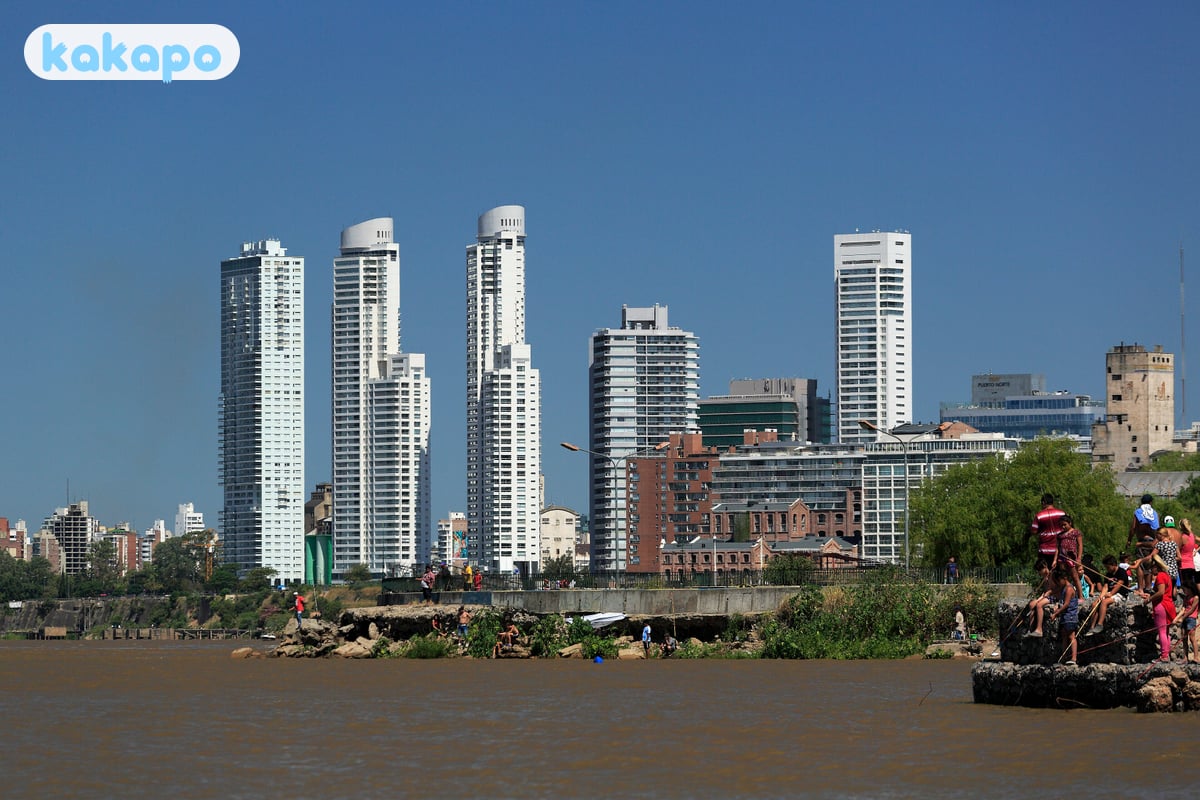
Recommended for visitors: Centro (around Plaza 25 de Mayo + the Monumento — daytime), Pichincha (gentrified bar + restaurant district), Puerto Norte (modern riverside redevelopment), Paraná riverfront promenade.
Stay aware: outer western Rosario (Las Flores, Empalme Graneros), centro at night in less-busy stretches. Many areas to avoid; tourist core safer.
Messi-tourism + football
- Messi-tour: walking tour passing his childhood home + first club Newell's Old Boys + the Plaza Estanislao López. Half-day ~$30-50.
- Newell's Old Boys home games: at Estadio Marcelo Bielsa. Match-day awareness — drink-spiking + petty theft elevated.
- Don't wear opposing-team colours on derby days.
Money — blue dollar, MEP, cuevas, and why USD cash matters
Argentina's currency situation is the single most-confusing thing for first-time visitors. There are multiple exchange rates, and using the right one effectively doubles your purchasing power.
- Official rate (what you get with a foreign credit card at a Rosario merchant): worst rate. Often 30-50% less peso than blue-market.
- Blue dollar / dólar blue: the informal cash exchange rate at cuevas (informal exchange houses). Historically much better than official. Bring crisp USD bills ($50s and $100s — smaller notes get worse rates) and exchange at established cuevas — Western Union also matches blue-market for transfers.
- MEP / dollar tourist: since 2022, Visa + Mastercard apply a "tourist rate" close to blue-market on Argentine charges. Check before relying on this — the policy has changed multiple times and is partial.
- Western Union: send USD to yourself, pick up ARS in Rosario. Branches at Centro and Pichincha. Often the cleanest blue-rate path.
- ATMs: dispense ARS at the official rate + huge withdrawal fees ($10-15 per transaction + low caps). Use only as last resort and only inside bank branches (Banco Galicia, BBVA, Santander, Macro).
- Inflation: Argentine inflation has been 100%+ annually in recent years. Prices change weekly. Confirm before booking; don't pre-pay months ahead in pesos.
- Carry small USD notes for tips + emergencies: $1, $5, $10 bills are widely accepted at hotels and tourist shops, often at blue-market rate.
Scams + the express-kidnapping pattern
- Express kidnapping ("secuestro virtual"): the Rosario-specific risk that has elevated since 2020. Drivers (sometimes posing as taxis) force tourists to ATMs at gunpoint. Counter: never use street taxis. Always Uber, Cabify, or hotel-arranged transfers. The licence-plate trail keeps you out of the pattern.
- "Mustard" / soda-on-shirt distraction: a passerby spills something on you, a "helpful" second person cleans you off — and lifts your wallet. Classic Buenos Aires scam now spreading to Rosario. Step back, walk to a busy area before cleaning anything.
- ATM skimming: skimmers documented at outdoor ATMs near the bus terminal and Centro. Use machines inside bank lobbies during business hours.
- Counterfeit pesos: ARS notes are now plastic-feeling polymer. Old paper-style notes still circulate but are easier to fake. Spot-check change for the right feel.
- Phone snatch from motorbike: rosario riders ride past pedestrians and grab phones held in hand. Hold your phone in front of your chest, not at arm's length, and never on a café table by the kerb.
- Match-day petty theft: Newell's vs Central derby is one of South America's most heated. Don't wear team colours unaware. Match-day rideshare surge prices triple.
Transport — Uber, Cabify, the airport
- Uber + Cabify: both work; cheap.
- Don't take street taxis: occasional "express kidnapping" (forced ATM withdrawal) reports.
- Buses (TUP): extensive city network.
- Rosario Airport (ROS): 8 km west. Limited flights. Most visitors fly to Buenos Aires (EZE/AEP) and 4-5h drive or bus.
Money + cost
- Currency: Argentine peso (ARS). Volatile.
- USD cash: useful.
- Cards: at hotels + tourist restaurants.
- Tipping: 10%.
- Cost: cheaper than Buenos Aires. Mid-range dinner $15-25.
- Tap water: safe.
Districts — Centro to Puerto Norte
- Centro — the historic core around Plaza 25 de Mayo, with the Catedral Basílica, the Palacio Municipal, and the start of the pedestrian Calle Córdoba shopping spine. Daytime fine with phone discipline; the Monumento a la Bandera (national flag monument, free entry, 70 m tower lift AR$1,500) anchors the eastern edge facing the Paraná. After dark gets sketchier in the less-busy stretches; use Uber or Cabify.
- Pichincha — the gentrified bar-and-restaurant district 10 blocks north-west of the centre. Pasaje Pichincha is the nightlife strip; weekend crowds run until 04:00. Restored 19th-century buildings, the heritage of what was Argentina's most famous red-light district in 1900. Safer-feeling than Centro at night because of the security presence and crowd density.
- Macrocentro — the broader central district extending west along Boulevard Oroño, the jacaranda-lined boulevard with the Parque Independencia at its end. Hospitals, the Stadium del Newell's Old Boys (Estadio Marcelo Bielsa), the Museo Castagnino. Calm residential mid-blocks.
- Paraná river + Costanera — the riverfront promenade running 15 km along the Paraná, with Spinetta Park, La Florida beach (yes, river beach), the Museum of Contemporary Art (MACRo, the silo conversion). Busy and policed until 23:00; the river breeze is the city's summer compensation. Safe by day; stay in busy stretches after dark.
- Monumento a la Bandera — Argentina's national-flag monument, where Manuel Belgrano first raised the blue-and-white in 1812. Free entry to the crypt and ceremonial Propileo; AR$1,500 for the 70 m tower lift for the city view. Eternal flame, daily flag-raising ceremony 08:00. The political-symbolic heart of Rosario.
- Newell's Old Boys + Rosario Central — two of Argentina's most-storied football clubs and one of South America's most-heated derbies (the Clásico Rosarino). Newell's plays at Estadio Marcelo Bielsa (where Messi grew up watching), Central at Estadio Gigante de Arroyito. Don't wear opposing-team colours on derby days; match-day rideshare surge prices triple; standard pickpocket density around both stadiums.
- Puerto Norte — the redeveloped northern waterfront, former grain-export silos converted into condos, restaurants, and the MACRo museum. Modern, upscale, calm. Among the safer-feeling nighttime neighbourhoods.
- Buenos Aires 4-hour bus — the standard inter-city connection. Chevallier, Andesmar, Crucero del Norte from Terminal de Ómnibus Mariano Moreno run Rosario-Buenos Aires Retiro every 30-60 minutes, AR$15,000-25,000 single (~$15-25 USD at blue-market), 4 hours. The terminal at night is the city's most-reported snatch-theft area; arrive in daylight if possible.
- Rosario Airport (ROS) — 8 km west of the centre. Limited flights (mostly Aerolíneas Argentinas domestic). Most international visitors fly into Buenos Aires (Ezeiza EZE or Aeroparque AEP) and bus or drive 4-5 hours. Taxi/Uber ROS-to-centre AR$8,000-12,000.
- Stay aware — outer western and northern Rosario neighbourhoods (Las Flores, Empalme Graneros, Tablada, parts of Villa Gobernador Gálvez) — the post-2020 drug-trafficking violence is concentrated here, tourists have no reason to be there but the city-wide statistics are real. Stick to the Costanera-Boulevard Oroño-Pichincha corridor.
If it's your first time visiting
- Best arrival — Buenos Aires Aeroparque (AEP) or Ezeiza (EZE) plus 4-hour bus is the standard route. Chevallier, Andesmar from Retiro to Rosario Terminal Mariano Moreno AR$15,000-25,000 (~$15-25 USD blue-rate), every 30-60 min. Aerolíneas Argentinas domestic into Rosario (ROS) is the express option; taxi/Uber AR$8,000-12,000 from ROS to centre. Avoid arriving at the bus terminal after dark.
- Best neighbourhood for your first night — Pichincha or the Boulevard Oroño/Macrocentro corridor (Esplendor Savoy, Holiday Inn Rosario, Hotel Plaza del Sol, AR$80,000-180,000 mid-range, $80-180 USD at blue). Puerto Norte for modern upscale (Pullman Rosario City Center). Avoid budget hotels around the bus terminal; the saving isn't worth the night-time street character.
- Use Uber or Cabify, never street taxis — express-kidnapping ("secuestro virtual") has been documented in Rosario since 2020: drivers posing as street taxis force tourists to ATMs at gunpoint. The licence-plate-and-app trail of Uber/Cabify keeps you out of the pattern. Both apps work and are cheap.
- Money + the blue dollar reality — Argentina has multiple exchange rates. The "blue" cash rate is currently the best for tourists: bring crisp USD $50/$100 bills and use Western Union branches (centro, Pichincha) to send USD to yourself and pick up ARS at near-blue rate, OR exchange at established cuevas. Foreign credit cards at most merchants apply the "MEP/dólar tourist" rate (close to blue since 2022, but check). ATMs use the official rate plus huge fees — last resort. Inflation 100%+ annually; confirm prices before booking, don't pre-pay months ahead in pesos.
- Phone discipline — don't walk with your phone visible in hand on busy downtown streets. Motorbike phone-snatching (motochorros) is the dominant tourist-targeting pattern. Hold the phone with both hands away from the kerb when you must use it, or step into a shop doorway. Anti-theft case with lanyard is the visible deterrent.
- Eat where locals eat — parrilla (Argentine grill) at La Marina or Don Ferro in Pichincha (asado for two AR$30,000-50,000, $30-50 USD blue), pizza Rosario-style (thick, gooey) at El Cairo or La Farola del Bulevar, helados at Davigel or Don Sandwich. Mate culture is everywhere; bring your own thermos or buy one at any kiosko. Tip 10%.
- The Monumento + Messi-tour — Monumento a la Bandera free, allow 90 min including the tower lift (AR$1,500). The Messi walking tour (half-day, $30-50 USD via Airbnb Experiences or local operators) passes his childhood home in Las Heras 681, his first club Newell's Old Boys at Estadio Marcelo Bielsa, Plaza Estanislao López where he played as a kid. The Casa Natal de Che Guevara (his 1928 birthplace) is the other landmark walk.
- Common rookie mistakes — taking a street taxi instead of Uber/Cabify (express-kidnapping risk); changing dollars at the airport at the official rate (use Western Union or a cueva in town); arriving at Terminal Mariano Moreno bus station after dark; walking the Centro with phone visible in hand; wearing opposing-team football colours near Newell's or Rosario Central on derby days; expecting Buenos Aires-style nightlife pace (Rosario is meaningfully smaller and quieter); pre-paying months ahead in ARS (100%+ inflation makes the prepaid price meaningless).
Practical info — emergency numbers
- Emergency: 911.
- Police: 911.
- Hospital Italiano Garibaldi: +54 341 410 8000.
Bring: an Argentinian SIM, USD cash backup, contactless card, anti-theft phone holder, and travel insurance with full medical. Use Uber/Cabify; don't walk with phone visible; stick to the central tourist core.
Frequently asked questions
Is Rosario safe to visit in 2026?
Mixed — Rosario scores 64/100 here, the lowest tier among Argentina's tourist cities. Argentina sits at US State Department Level 1, but Rosario is specifically called out for elevated risk because of the post-2020 drug-trafficking violence (largely tied to disputes around the Paraná port and the trans-shipment economy). UK FCDO is similar. The central tourist core — Monumento a la Bandera, the riverfront promenade, Boulevard Oroño, Pichincha and the Centro — is moderate risk during the day; the outer barrios have a serious homicide problem that almost never touches visitors but raises the city-wide statistics dramatically. Don't wander north or west of the centre on foot.
Is Rosario safe at night?
Be selective. The riverfront promenade (Costanera) is busy and well-policed until around 23:00, and Pichincha's bar strip on Pasaje Pichincha runs late with crowds and security. Boulevard Oroño and the central restaurant streets feel comfortable until midnight. After that, use Uber or Cabify rather than walking — even short hops. Avoid the area around the bus terminal (Terminal de Ómnibus Mariano Moreno) after dark; it has the city's most-reported snatch-thefts. Football matchdays at Newell's or Rosario Central produce localised disorder around the stadiums; don't wear opposing colours nearby.
What scams should I watch out for in Rosario?
The dominant tourist threat is opportunistic snatch-theft (phone, bag, watch) rather than scam: motochorros — robbers on motorbikes who grab phones from pedestrians at red lights — are the city's signature pattern. Hold your phone with both hands away from the kerb, or keep it pocketed. ATM-skimming is moderate; use ATMs inside bank branches during business hours. The peso situation makes currency exchange messy — the official rate and the 'blue' rate diverge wildly; Western Union transfers at the local agency consistently get the best rate for tourists. Don't change money with street touts shouting 'cambio' near the Monumento.
Can you drink tap water in Rosario?
Yes — tap water in Rosario is treated and safe to drink. It's drawn from the Paraná River, treated by Aguas Santafesinas, and meets Argentine drinking-water standards. The taste is mineral-heavy because the Paraná carries a lot of sediment upstream, so many locals drink filtered or bottled water by preference, but it isn't a health issue. Carry a refillable bottle. In peak summer (Dec-Feb) when daytime temps hit 35-40°C and humidity is brutal, drink more than feels natural — the riverfront is exposed and visitor heat exhaustion is far more common than any crime incident.
How dangerous is the drug-trafficking violence for tourists?
Almost zero direct risk if you stay in the tourist core, and significant indirect impact through the homicide-rate optics. Rosario's homicide rate has run 4-7x the Buenos Aires figure since 2022 — but the violence is overwhelmingly intra-cartel, concentrated in specific outer neighbourhoods (Empalme Graneros, Las Flores, Tablada, parts of Villa Gobernador Gálvez), and tourists have no reason to be there. The recurring pattern is targeted shootings, sometimes spray-painted threats at businesses that refuse extortion. The 2024 federal security deployment (Plan Bandera) has reduced headline numbers. Stick to the riverfront-to-Boulevard-Oroño corridor and you will not see it.
Sources
Run a business in Rosario?
Show visitors your Rosario business is a safe choice. The free Verified by Kakapo badge puts Rosario's live safety score on your website, links back to your verified page, and updates itself. No cost.
Get the free badge →