


Is Aruba Safe? A 2026 Travel Safety Guide
Outside the hurricane belt, Atlantic-side rip currents, jet-ski operator quality, the Sahara dust events, and the realistic risks of the southern Caribbean's calmest island.

Aruba is one of the safer Caribbean destinations. The island sits below the hurricane belt (last direct hit was 1955 — almost unique in the region) and crime against tourists is rare. The realistic risks for visitors are the genuine Atlantic-side rip currents and shore-break (the calm leeward beaches are different from the rougher windward), jet-ski and watersports operator quality variation, the occasional Sahara-dust events that drop air quality, and the standard "leave nothing visible in the parked car" caution.
Aruba is a constituent country of the Kingdom of the Netherlands; sits at Level 1 on the US State Department's advisory list. UK FCDO is the same. The honest framing for first-time visitors: Aruba is small (180 km², ~110,000 residents), 25 km off the Venezuelan coast. Oranjestad is the capital. Most visitors stay in the high-rise hotel zone (Palm Beach) or the lower-rise Eagle Beach area. The leeward (west) beaches are the famous calm-turquoise ones; the windward (east, Atlantic) coast is rough and unswimmable but spectacular.
Aruba is part of the ABC islands (Aruba, Bonaire, Curaçao) off the South American coast. Its position at 12°N puts it below the Atlantic hurricane belt — the last direct hit was Janet in 1955, which is genuinely unusual in the Caribbean and the marketing department leans on it. The official languages are Dutch and Papiamento (a Portuguese-Spanish-Dutch creole), with English and Spanish universally spoken in tourist transactions. The Aruban florin (AWG) is the official currency pegged at 1 USD = 1.79 AWG, but USD is widely accepted at all tourist places and often quoted in USD directly.
The 2026 details worth knowing in advance: US Pre-Clearance at Queen Beatrix Airport (AUA) means you clear US immigration in Aruba and arrive at US airports as a domestic passenger — significant time-saver. Uber does NOT operate in Aruba (local taxi associations prevented entry); use the regulated fixed-rate taxis (prices posted) or the Arubus public bus. Tap water is excellent, sourced from one of the world's largest desalination plants (WEB Aruba) and meets WHO standards — bottled is unnecessary. The 12°N UV is severe even in winter — SPF 50 mandatory.
| Night safety | 88/100 |
|---|---|
| Scam / petty-crime risk | Medium |
| Violent crime (tourists) | Low |
| Most common scams | cheap walk-up beach operators with variable quality; jet-ski crashes; aggressive vendor culture around the cruise port |
| Safer neighbourhoods | Palm Beach, Eagle Beach, Oranjestad |
| Data sources cited | 4 |
| Last verified |
What the score means — 88/100
- Personal safety (90) — exceptional. Aruba's tourism economy depends on its safety reputation.
- Air quality (88) — generally clean trade-wind air. Sahara dust events drop AQI temporarily.
- Transport (84) — Arubus + rental cars; small enough to circle by car in a day.
- Healthcare (84) — Hospital Dr. Horacio Oduber is the main facility; serious cases evacuate to Curaçao or Miami.
Outside the hurricane belt
- Aruba's location (12°N): south of the main Atlantic hurricane track. The last direct hurricane hit was Janet (1955).
- Tropical-storm grazes: occasional. Most years see no significant disruption.
- Year-round travel: weather is genuinely consistent (28-32°C, trade winds keep it pleasant).
- Best season: technically December-April (lowest rainfall) but Aruba's "rain" is brief showers most of the year.
- Travel insurance: hurricane-specific cover is less critical than for other Caribbean islands but still useful.
Beaches — leeward calm vs windward rough
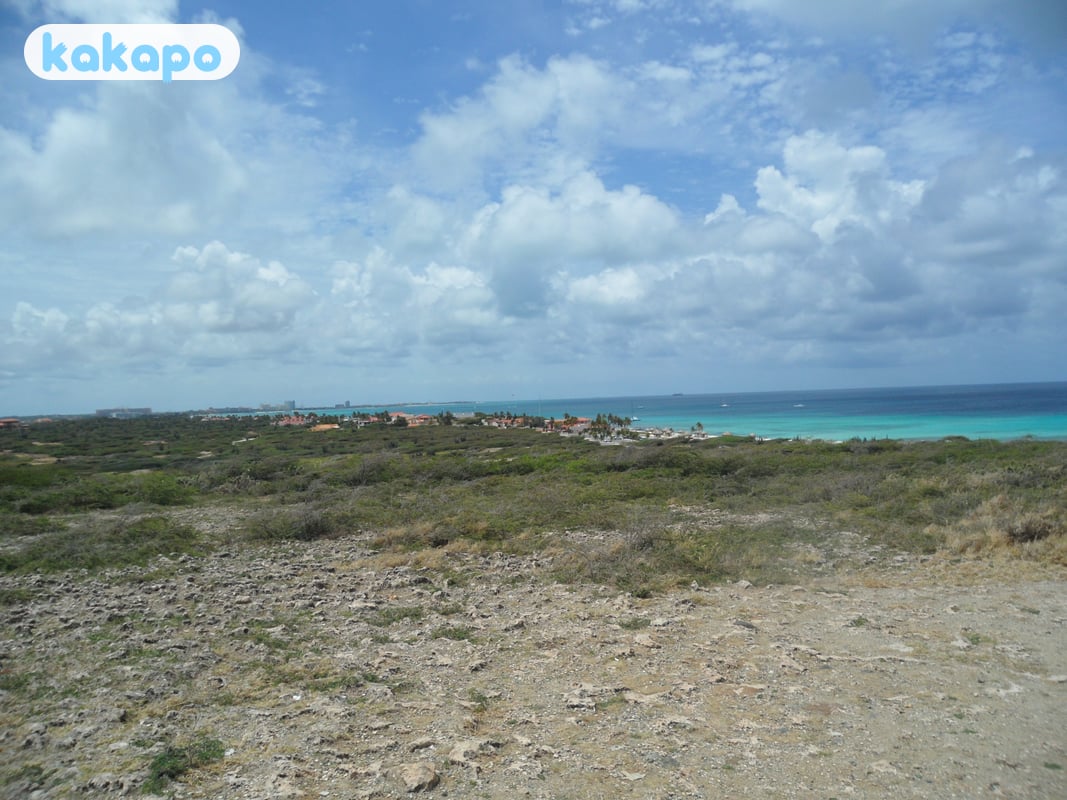
- Leeward (west) beaches: calm, swimmable. Eagle Beach (often ranked among world's top), Palm Beach (high-rise hotel zone), Baby Beach (south, shallow lagoon — great for kids).
- Windward (east, Atlantic) coast: rough, dangerous to swim, spectacular for photos. Andicuri, Bachelor's Beach, Wariruri. Don't enter the water.
- Boca Catalina: small calm cove, snorkelling.
- Mangel Halto: snorkelling beach.
- Lifeguards: at major resort beaches. Heed flag colours.
- Sea urchins: present at rocky beaches. Reef shoes for snorkelling.
- Reef-safe sunscreen: increasingly required at marine sites.
- Don't swim near the natural pool ("Conchi"): rough Atlantic; people have drowned trying.
Jet-skis and watersports
- Jet-ski rentals: ~$80-120/hour. Reputable operators (Red Sail Sports, De Palm Tours).
- Cheap walk-up beach operators: variable; have produced both fatalities and minor incidents in recent years.
- Jet-ski crashes: real Caribbean problem; Aruba less than some islands but not zero.
- Helmet, life jacket, briefing: insist on all three.
- Catamaran day trips: standard sunset-cruise + snorkel combos. Reputable operators provide briefings.
- Diving: Antilla shipwreck is the famous dive. Choose PADI-certified operators (Aruba Pro Dive, Native Divers).
- Don't snorkel after drinking: the leading watersports-fatality factor in the Caribbean.
Areas — Palm Beach, Eagle Beach, Oranjestad
Recommended for visitors: Palm Beach (the high-rise hotel strip — Hilton, Marriott, Ritz-Carlton, Hyatt), Eagle Beach (lower-rise resorts, often the best beach ranking), Oranjestad (capital — small, walkable downtown with cruise port), San Nicolas (south end, smaller, alternative town).
Stay aware: very few "stay aware" zones on Aruba. Around Oranjestad cruise port at peak times can have aggressive vendor culture. Some San Nicolas back streets at night.
Transport — Arubus, rental car, the airport
- Arubus: regular bus service from Oranjestad / Palm Beach / San Nicolas. Cheap (~$2.60 single).
- Taxis: regulated, fixed-rate (no meter). Reasonable.
- Uber: NOT operational in Aruba. Local taxi associations prevented entry.
- Rental car: useful for windward-coast / Arikok National Park exploration. Right-hand drive (Aruba drives on the right). Major chains at the airport.
- Don't leave anything visible in parked car: especially at Arikok NP trailheads and rural windward-coast pull-offs.
- Queen Beatrix International Airport (AUA): 4 km south of Oranjestad. Pre-booked transfer or taxi $25-40 to Palm Beach.
- US Pre-Clearance: Aruba has US Customs pre-clearance — you clear US immigration in Aruba, arrive in US as a domestic passenger. Convenient.
Money, food, the cost story
- Currency: Aruban florin (AWG). $1 USD = AWG 1.79 (pegged).
- USD widely accepted: at all tourist places. Often quoted in USD.
- Cards: universal.
- Tipping: 15-18% restaurants; some restaurants add 10-15% service charge — check before tipping more.
- Cost: hotels $300-700/night standard winter peak; $200-400 shoulder.
- Tap water: safe (desalinated, excellent quality).
- Local food: pastechi (fried pastries), keshi yena, fresh seafood. Papiamento is the local language but Dutch and English are universal.
Neighbourhood + beach breakdown
- Oranjestad — the small Dutch-colonial capital with pastel-painted facades, the Renaissance Mall, the cruise port, and the free streetcar trolley along Main Street. Walkable centre; aggressive vendor culture around the cruise port at peak times but not dangerous. Bali Floating Restaurant and Casa Vieja are the locally-trusted spots.
- Eagle Beach — often ranked among the world's top beaches. White sand, calm turquoise water, the iconic divi-divi tree (the wind-bent national symbol). Lower-rise resorts (Bucuti & Tara, Manchebo, Amsterdam Manor) — adult-leaning and quieter than Palm Beach. The most photogenic Aruban beach.
- Palm Beach — the high-rise hotel strip: Hilton Aruba Caribbean, Marriott Aruba Surf Club, Ritz-Carlton, Hyatt Regency, Holiday Inn. Beach-front pools and bars, the most-developed and most-trafficked beach, the standard family destination. The Palm Beach Plaza Mall is adjacent.
- Arikok National Park — the rugged windward east-coast park covering ~20% of the island. Cunucu landscape, the Natural Pool ("Conchi") tide-pool, the Indian rock paintings at Fontein Cave, and the Daimari coast. 4x4 access mostly; UTV/buggy tours common. Don't swim at Conchi unless conditions are calm — drownings happen.
- Windward (east) "Conchi" pool — the natural tidal pool on the rough Atlantic side, reached via a long 4x4 track in Arikok or a strenuous hike. Spectacular when calm, deadly when the surf is up — multiple drownings over the years from visitors who wade in despite signs. Heed the warning.
- Baby Beach (south end) — a shallow turquoise lagoon at the southern tip near San Nicolas. Family-friendly, calm, snorkelling. Drive 30 min from Oranjestad.
- San Nicolas — the smaller second town at the south end. Street-art murals (the annual Aruba Art Fair has transformed the centre), Charlie's Bar, the Aruba Carnival hub. Daytime fine; back streets thinner at night.
- Boca Catalina + Malmok — north-west calm snorkelling coves with reef fish and the Antilla shipwreck dive. Mangel Halto on the south side is similar.
- Cruise port (Oranjestad) — handles 2-3 ships daily in peak winter season. Aggressive vendor culture in the port-adjacent shops; better to walk into the regular Oranjestad town. The Renaissance Island private cay (free shuttle for guests) is the resort escape.
- USD widely accepted — Aruban florin (AWG) is the official currency at 1 USD = 1.79 AWG (pegged), but USD is universally accepted at hotels, restaurants, and tourist sites with prices often quoted in USD directly. Change in AWG is normal. Cards everywhere.
- Stay aware — Aruba has essentially no tourist no-go zones. Around the Oranjestad cruise port can have aggressive but non-dangerous vendor culture; some San Nicolas back streets thin at night. Don't leave valuables visible in parked cars at Arikok trailheads or rural windward-coast pull-offs.
If it's your first time visiting
- Best arrival: Queen Beatrix International Airport (AUA) is 4 km south of Oranjestad. Pre-booked transfer or fixed-rate taxi $25-40 to Palm Beach; Arubus airport route is $2.60 and runs every 30-60 minutes. US Pre-Clearance means you clear US immigration on departure from Aruba and arrive in US as a domestic passenger — bring extra time on the return trip.
- Uber does NOT operate in Aruba — local taxi associations prevented entry. Use the regulated fixed-rate taxis (prices posted at the airport and major hotels; no meter, but you can see the official rate table) or Arubus public buses. Hotel transfer-shuttle services run $15-25 per person.
- Best neighbourhood for your first night: Eagle Beach if you want the world's-top-10 beach with adult-leaning lower-rise resorts (Bucuti & Tara, Manchebo, $300-700/night); Palm Beach for the full high-rise hotel experience with beach bars and pools (Hilton, Marriott, Ritz-Carlton, Hyatt, $300-700+/night); Oranjestad for cheaper non-beach options ($100-250/night). The hurricane-belt-free reputation keeps demand high; book 2-3 months ahead for Dec-April peak.
- UV at 12°N — non-negotiable: SPF 50 mandatory year-round. Reef-safe sunscreen increasingly required at snorkelling sites (Boca Catalina, Mangel Halto, the Antilla shipwreck). Drink double water in summer. Take an 11:00-15:00 sun break — the Aruban locals' midday-pool habit isn't laziness, it's UV avoidance.
- Beach safety — leeward vs windward: the leeward (west) beaches (Eagle, Palm, Baby, Boca Catalina, Mangel Halto) are calm turquoise and swimmable with lifeguards at major resort beaches. The windward (east) Atlantic coast (Andicuri, Wariruri, Conchi) is spectacular and brutal — do not enter the water. Lifeguard flag colours apply at major beaches: red = no swim.
- Arikok National Park — the rugged windward park needs a 4x4 or UTV. Self-drive UTV rental $150-250/day; organised tours $80-150/person. Don't swim at the Natural Pool ("Conchi") unless conditions are calm. Pack 2L water per person, sun protection, sturdy shoes.
- Watersports safety: reputable jet-ski operators (Red Sail Sports, De Palm Tours, $80-120/hour) include helmet, life jacket, briefing — insist on all three. Cheap walk-up beach operators are variable. Snorkelling after drinking is the leading watersports-fatality factor across the Caribbean; the catamaran sunset cruises that hand out unlimited rum punch then drop swimmers at snorkel stops are the typical scenario.
- Currency + tipping: Aruban florin (AWG) official, USD widely accepted. $1 USD = AWG 1.79 (pegged). Cards universal. Tipping is 15-18% at restaurants; some restaurants add 10-15% service charge automatically — check the bill before tipping more.
- Food: pastechi (fried pastries with cheese, beef, or chicken filling — breakfast standard), keshi yena (cheese-stuffed dish), fresh seafood, Dutch pancakes, and the Indonesian rijsttafel (Dutch-colonial heritage). Zeerovers in Savaneta is the local seafood-shack favourite; Madame Janette is the standard tourist white-tablecloth. Papiamento is the local creole language but Dutch and English are universal.
- Common rookie mistakes: assuming Uber is available (it isn't — use fixed-rate taxis or Arubus); entering the water at windward beaches (Conchi drownings are real); skipping reef-safe sunscreen at marine sites; not allowing time for US Pre-Clearance on departure (it can take 60-90 minutes); booking December-April without realising it's peak ($700+/night standard); ignoring the 12°N UV severity even on cloudy days.
Practical info — emergency numbers
- Emergency: 911.
- Police: 100.
- Ambulance: 911.
- Tourist Police: visible in main tourist areas.
- Hospital Dr. Horacio Oduber: +297 587 4300.
Bring: reef-safe sunscreen, water shoes for rocky beaches, a hat, sun protection (12°N latitude — UV is severe), an Aruban SIM (Setar, Digicel) at the airport, a contactless card, and travel insurance. Tap water is safe; bottled is unnecessary.
Frequently asked questions
Is Aruba safe to visit in 2026?
Yes — Aruba scores 88/100 and is one of the safer Caribbean destinations. Both UK FCDO and US State Department list Aruba at Level 1 (exercise normal precautions). Aruba is a constituent country of the Kingdom of the Netherlands with a tourism-dependent economy that polices itself accordingly. The island sits at 12°N, below the main Atlantic hurricane track — the last direct hurricane hit was Janet in 1955, which is almost unique in the region. Realistic risks are environmental: Atlantic-side rip currents and shore-break on the windward east coast (Andicuri, Wariruri, the natural pool 'Conchi' have drowning fatalities), jet-ski operator quality variation, and the occasional Sahara dust event that drops AQI temporarily.
Is Aruba safe at night?
Yes — Palm Beach (the Hilton/Marriott/Ritz-Carlton/Hyatt high-rise hotel strip), Eagle Beach (lower-rise resorts), Oranjestad and the cruise port area are routinely walked late by tourists and locals. The aggressive vendor culture around Oranjestad cruise port at peak times can feel pushy but isn't dangerous. The asterisk is some San Nicolas back streets after dark, where you've left the tourist zone entirely. Uber does NOT operate in Aruba — local taxi associations prevented entry — so use the regulated fixed-rate taxis ($25-40 airport to Palm Beach, no meter, prices posted) or Arubus ($2.60 single). Police: 100; emergency: 911.
How dangerous are the windward beaches really?
Genuinely dangerous — don't enter the water on the Atlantic-facing east coast. The leeward (west) beaches — Eagle, Palm, Baby, Boca Catalina, Mangel Halto — are calm turquoise and swimmable with lifeguards at the major resorts. The windward beaches — Andicuri, Bachelor's Beach, Wariruri — have rough Atlantic shore-break with rip currents and rocks; they're spectacular for photos and brutal for swimming. The natural pool ('Conchi') inside Arikok National Park has drownings every few years from visitors who wade in despite the warning signs and get washed onto the rocks. Lifeguard flag colours apply at the major beaches: red = no swim. The Antilla shipwreck dive is fine with a PADI-certified operator (Aruba Pro Dive, Native Divers).
Can you drink tap water in Aruba?
Yes — Aruba has some of the cleanest tap water in the Caribbean. The island runs on desalinated water from the WEB Aruba plant (the world's second-largest desalination operation when it opened) and the output meets World Health Organization standards. Bottled is unnecessary; carry a refillable bottle. Even ice in beach bars and food trucks is fine. The high UV at 12°N is more dangerous than the water — wear reef-safe sunscreen, drink double water in summer, and take an 11:00-15:00 break. Pastechi (fried pastries) and keshi yena are the local food bets.
What's the jet-ski risk in Aruba?
Real but lower than some Caribbean islands. Reputable operators (Red Sail Sports, De Palm Tours) charge $80-120/hour and include helmet, life jacket and a briefing — insist on all three. The cheap walk-up beach operators are variable in quality and have produced both fatalities and minor incidents in recent years. Snorkelling after drinking is the leading watersports-fatality factor across the Caribbean and Aruba is no exception — catamaran sunset cruises that hand out unlimited rum punch then drop swimmers at a snorkel stop are exactly the scenario to watch. Reef shoes for snorkelling (sea urchins are present at rocky beaches). Travel insurance with watersports coverage is essential.
Sources
Run a business in Aruba?
Show visitors your Aruba business is a safe choice. The free Verified by Kakapo badge puts Aruba's live safety score on your website, links back to your verified page, and updates itself. No cost.
Get the free badge →