


Is Adelaide, Australia Safe? A 2026 Travel Safety Guide
Adelaide Fringe crowd density, summer 40°C heat, Barossa wine drink-drive, the road and ferry to Kangaroo Island, bushfires, and the realities of one of Australia's quietest capitals.

Adelaide — population ~1.4 million, the capital of South Australia — is one of Australia's calmest capital cities. The "20-minute city" reputation holds: small, walkable CBD; gridded streets within parklands; very low crime by global standards; consistently ranked among the world's most-liveable cities.
The honest concerns are environmental and seasonal. Adelaide Festival and Adelaide Fringe (the world's second-largest fringe festival after Edinburgh) run February-March — accommodation triples, central Garden of Unearthly Delights and Fringe venues become genuinely dense, and late-night Hindley Street nightlife sees the standard cluster of incidents. South Australian summers are brutal — Adelaide regularly hits 40-45°C in January-February (the city has the highest average summer temperature of any Australian capital). The Barossa Valley wine region (60 km north) is a drink-drive trap; tour-bus operators address this for visitors. Kangaroo Island is reached by SeaLink ferry from Cape Jervis (90 min south) — the crossing can be rough, and the island has post-2020-bushfire road conditions in places. Bushfires are a recurring South Australian risk; 2020 and the December 2019 Cudlee Creek fires both reached Adelaide outskirts.
The US State Department lists Australia at Level 1; UK FCDO has no advisories. Both note the standard outdoor-weather and bushfire context.
The shape of the city is unusually legible for newcomers because Colonel William Light laid it out in 1837 as a one-mile-square grid wrapped entirely in parkland — the green belt is now the Adelaide Park Lands National Heritage place and you cross it on every approach to the CBD. The five squares (Victoria, Light, Hindmarsh, Hurtle, Whitmore) plus the central crossroads at Victoria Square / Tarntanyangga still anchor wayfinding 188 years later, which is why Adelaide feels smaller than its million-plus metro population. Distances inside the square mile are 10-15 minutes on foot; almost everything most short-stay visitors do — Central Market, Rundle Mall, the cultural boulevard of North Terrace, Chinatown on Gouger Street, the Riverbank precinct — sits inside that perimeter.
Two practical context points the standard guides skip: first, Adelaide runs on Australian Central Standard Time (UTC+9:30) — the country's only 30-minute-offset zone, and a recurring source of missed-flight panic when southbound interstate visitors forget to wind back. Second, the city has been quietly investing in cooling for the heatwaves — the Adelaide Park Lands carry a free water-fountain network (over 100 refill points), Adelaide Metro tram stops have shaded seating, and the CBD's "Splash Pads" run through January-February. Use them; tourists who try to "tough out" 42°C end up in the Royal Adelaide Hospital ED.
| Night safety | 84/100 |
|---|---|
| Violent crime (tourists) | Low |
| Most common scams | drink-spiking during Adelaide Fringe; pickpocketing risk at Garden of Unearthly Delights; late-night alcohol-related incidents on Hindley Street |
| Safer neighbourhoods | Adelaide Park Lands, Central Market, Rundle Mall |
| Data sources cited | 4 |
| Last verified |
What the score means — 84/100
- Personal safety (92) — exceptional. Hindley Street late-night is the asterisk.
- Transport (88) — Adelaide Metro buses, trams (free in CBD zone), trains; Adelaide Airport (ADL); Kangaroo Island ferry from Cape Jervis.
- Healthcare (92) — Royal Adelaide Hospital is the regional referral; private Calvary, North Adelaide; RHCA reciprocal cover.
- Air quality (90) — generally excellent; bushfire smoke episodes in summer can drop AQI sharply.
Adelaide Fringe and festival season
Adelaide's "Mad March" is when the city becomes its festival self. Adelaide Festival, Adelaide Fringe, WOMADelaide, Adelaide Writers' Week, and Adelaide 500 (Supercars) all overlap in February-March.
- Adelaide Fringe (mid-February to mid-March): world's second-largest fringe after Edinburgh; 1,300+ shows; ~3 million attendances over 4 weeks. Garden of Unearthly Delights, Gluttony, Royal Croquet Club are the big hub venues.
- Crowd density: weekend evenings at Garden of Unearthly Delights and Hindley/Rundle Streets get genuinely dense; pickpocketing risk peaks; standard precautions.
- Hindley Street nightlife: late-night, alcohol-related incidents (assaults, drunk-and-disorderly) cluster here. SA Police presence visible. Walk in groups; don't engage with aggressive intoxicated.
- Drink-spiking: occasional reports during Fringe; standard precautions; SA introduced spike-detection wristbands at some venues (2024 trial).
- Accommodation: triples in price during Fringe; book by November for February. Walk-up impossible.
- Heat overlap: Fringe overlaps with peak summer heat; outdoor venue queue-lines in 38°C without shade catch out tourists. Hydrate, hat, sunscreen.
- Outside Mad March: Adelaide is genuinely calm; the festival energy is unique to that window.
Summer heat — Australia's hottest capital average
- Numbers: Adelaide averages the highest summer maximum of any Australian state capital — Jan-Feb 30°C+ daily, with regular 40-45°C heat events. The 2009 heatwave hit 45.7°C; 2024 saw multiple 42°C+ days.
- Heatwaves: 4-5 consecutive 40°C+ days are normal in heatwave summers. Heatstroke ED admissions spike.
- Defences: hydrate aggressively; indoor mid-day breaks (Rundle Mall, Adelaide Central Market are AC); avoid bushwalks 11:00-15:00; the "Adelaide gully breeze" cools afternoons but isn't always reliable.
- Don't leave anyone in parked cars: SA Police enforce; criminal penalties.
- Bushfires: heatwaves coincide with bushfire risk; check Country Fire Service warnings.
- Best windows: April-May (autumn — mild, wine country golden); September-November (spring — warming up, jacaranda).
- UV: SA has the highest UV index of any state in summer. SPF50+ Australian-grade sunscreen (the local stuff is among the world's best); slip-slop-slap.
Barossa, McLaren Vale, and the drink-drive trap
- The wine regions: Barossa Valley (60 km north of Adelaide), McLaren Vale (40 km south), Adelaide Hills (30 min east). Australia's most-renowned wine destinations.
- Drink-driving: SA has zero-tolerance for L and P platers, 0.05% for full-licence; police breath-test rural roads aggressively; severe penalties.
- Use a tour bus: Barossa Valley Tours, Wine Tours Adelaide, A Taste of the Barossa — A$120-200 per person for full-day with several wineries. Removes the drink-drive issue entirely.
- Designated driver: works only if your driver actually doesn't drink (see also: Barossa cellar-door temptation).
- Train to Barossa: doesn't exist; the old line was discontinued.
- Cellar-door etiquette: most charge A$5-15 tasting fee, refundable on purchase. Free is increasingly rare.
- Reputable cellar doors: Penfolds Magill Estate, Henschke, Yalumba, Seppeltsfield, Jacob's Creek visitor centre.
- McLaren Vale alternative: closer to Adelaide; smaller-scale wineries; d'Arenberg Cube (interactive cellar door + restaurant).
Kangaroo Island — the ferry, the road, the post-fire context
- Kangaroo Island (KI): 4,400 km² island, 90 min south of Adelaide by road + 45 min ferry from Cape Jervis. Australia's third-largest island; wildlife (sea lions at Seal Bay, koalas, kangaroos), Flinders Chase National Park, the Remarkable Rocks.
- Ferry: SeaLink Cape Jervis-Penneshaw (45 min); A$54 adult passenger / A$209 vehicle return. Multiple daily departures.
- Sea conditions: Backstairs Passage (the strait between Cape Jervis and KI) can be rough — known for choppy ride. Take seasickness meds if prone.
- Cancellations: rough weather cancels ferries 5-10% of days; build buffer time.
- 2019-2020 bushfire context: the catastrophic Black Summer fires destroyed ~50% of KI bushland, killed 2 people, devastated Flinders Chase NP. Recovery is well-advanced; some areas (Western River Conservation Park) still rebuilding through 2025-26.
- Driving on KI: gravel roads outside main routes; speed limits 80-100 km/h; nighttime kangaroo-strike risk extreme. Don't drive country roads at dawn, dusk, or after dark.
- Fly-in alternative: Qantaslink flights from Adelaide to Kingscote (KGC) ~30 min; pricier, weather-dependent.
- Wildlife etiquette: Australian sea lions at Seal Bay are wild; pay for the guided beach walk; don't approach within 50 m unguided.
Bushfires and the SA Country Fire Service
- Season: November-April. Adelaide Hills, Mt Lofty, Fleurieu Peninsula, KI all in high-risk zones.
- Recent severe events: Cudlee Creek fire December 2019 (Adelaide Hills, 86 homes lost); KI January 2020 (catastrophic); Wirrabara Forest 2014.
- Catastrophic Fire Days: declared by Country Fire Service; entry to bushland and many parks closed. Stay out of the hills.
- Smoke episodes: when fires burn east of Adelaide and the wind brings smoke to the city, AQI hits "hazardous". Stay indoors; AC on; N95 if going outside.
- Total Fire Bans: declared on extreme days; no open flames including BBQ; A$25,000+ penalties for breaches.
- If staying in the Adelaide Hills: have a bushfire plan; know your bushfire-survival options (leave early, or stay-and-defend with proper preparation — most travellers should leave early). The CFS posts daily alerts and bushfire-survival guides.
- If a fire warning is issued for your area: leave early — ABC Local Radio (Emergency Broadcaster) carries live bushfire information; CFS app pushes warnings.
Areas, the trams, and getting around
Recommended bases: Adelaide CBD (centred on Rundle Mall / Victoria Square) — walking distance to most attractions, free CBD tram zone. North Adelaide — leafy residential just over the parklands, boutique B&Bs. Glenelg — beach suburb 25 min by tram from CBD; family-friendly.
Free CBD tram: the entire central tram zone (Entertainment Centre to Festival Plaza to South Tce) is free. Useful for tourists.
Adelaide Metro buses, trains: tap MetroCard or contactless. Day pass A$11.20.
Adelaide Airport (ADL): 7 km west of CBD. JetExpress bus A$11.50 (25 min); taxi A$25-40; Uber A$20-35.
There are no genuinely dangerous neighbourhoods in Adelaide. Hindley Street late-night is the standard nightlife caveat.
Neighbourhood-by-neighbourhood breakdown
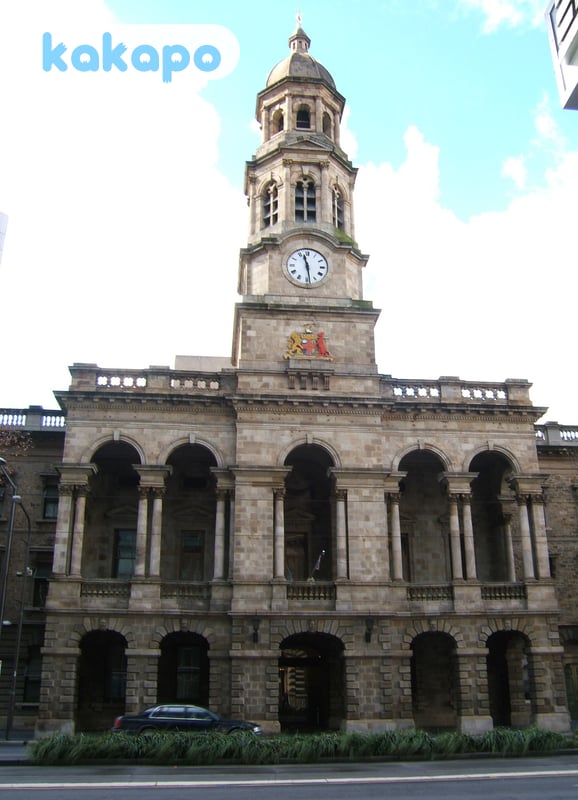
- Adelaide CBD (the square mile) — Colonel Light's 1837 grid bounded by North, East, South and West Terraces. Rundle Mall (pedestrianised; Myer, David Jones, the bronze pigs at the Beehive Corner), Victoria Square / Tarntanyangga at the centre, and the cultural strip along North Terrace (Art Gallery of SA, SA Museum, State Library, Government House). Walking-first; safe at every hour bar the Hindley Street late-night caveat.
- Hindley Street + the West End — the late-night bar strip running west from King William Street. By day it's University of Adelaide overflow (UniSA City West campus, Light Square cafés like Field Street Coffee). By 1am it's the city's incident cluster — SA Police visible, A$5 cab-rank to Currie Street. The good bars (Maybe Mae, Hains & Co.) are tucked off the main drag; the strip itself is the rougher edge.
- East End (Rundle Street + Ebenezer Place) — the bohemian half-mile east of Pulteney Street: Rundle Street's restaurant strip (Mesa Lunga, Africola, Madame Hanoi), Ebenezer Place laneway bars, Vardon Avenue's late-night Greek (Estia). Safer late than Hindley; this is where locals actually go out.
- North Adelaide — across the Park Lands and the Torrens via Adelaide Oval. O'Connell Street's pubs and bakeries (Wellington Hotel, The Lion, Mr Nick's Charcoal Chicken), Melbourne Street's boutiques, and the Adelaide Oval (Test cricket, AFL, the rooftop walk). Leafy, Georgian-bluestone residential — quieter than the CBD and a good base for families.
- Glenelg + Henley Beach — the beach suburbs. Glenelg is reached by the Tram (free in the CBD zone, A$3.90-7.20 to the beach) — Moseley Square, Jetty Road shops, the HMS Buffalo replica. Henley is quieter, locals' beach, no tram (bus 130). The Adelaide coast faces west — sunsets over the water; the Patawalonga marina at Glenelg is the centre of summer evenings.
- Adelaide Central Market + Chinatown — between Grote Street and Gouger Street, behind Victoria Square. 80+ stalls — Smelly Cheese Co., Lucia's Pizza & Spaghetti Bar (since 1957), Mama's Place. Closed Sunday and Monday — first-time tourist mistake. Chinatown on Gouger and Moonta is genuinely good for late-night yum cha and Vietnamese (Ying Chow, Star House).
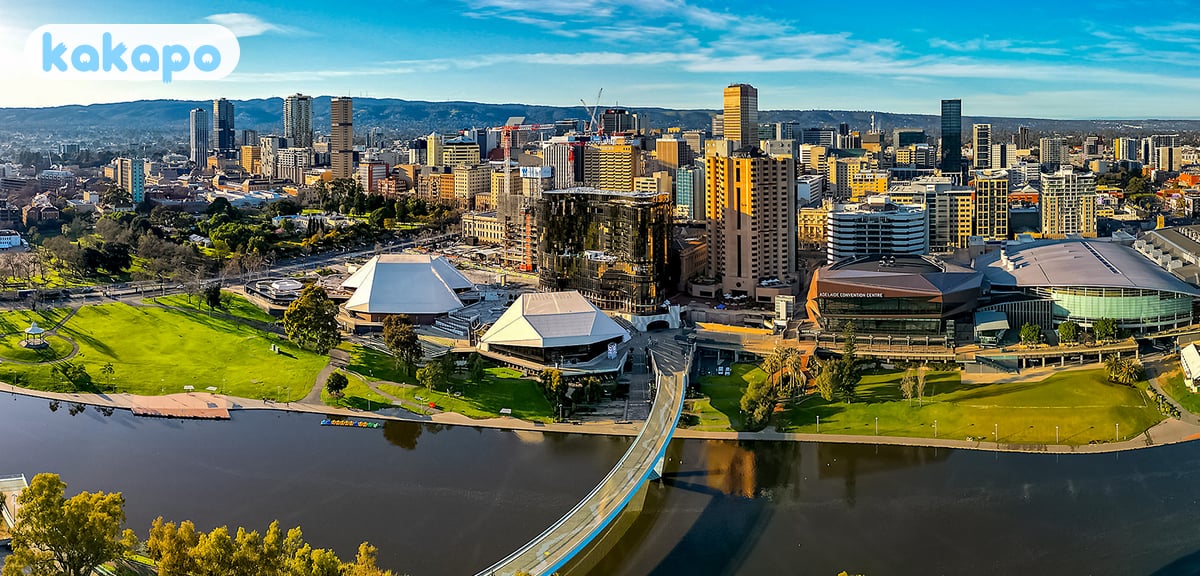
- Riverbank + Adelaide Oval precinct — north of the CBD across the Torrens. Adelaide Festival Centre, Adelaide Convention Centre, SkyCity Adelaide Casino in the heritage railway station, and the Oval's footbridge. The Riverbank promenade runs along the south side and connects to the Botanic Garden.
- Adelaide Hills + Hahndorf — 20-minute drive east; bus 864 to Hahndorf 1h. Australia's oldest surviving German settlement (1839); Hahndorf Inn, the Beerenberg farm shop, German Arms Hotel. Mt Lofty Summit lookout 727m. High bushfire risk Nov-Apr; check the SA Country Fire Service warning level before driving up.
- Port Adelaide — the historic working port 14 km north-west; train from Adelaide Station 25 min. Heritage warehouses (now galleries and the Maritime Museum), the dolphin-spotting cruises, the Sunday Fishermen's Wharf Markets. Gentrifying but still rougher than the CBD; daytime visit fine, night visit not necessary.
- Norwood + Unley + Goodwood (the inner suburbs) — the leafy "near-east" and "near-south" suburbs. The Parade (Norwood), King William Road (Unley/Hyde Park) and Goodwood Road are the three eat-streets where locals brunch. Tram to Goodwood/Unley is the easy way in; cycling the Linear Park trail along the Torrens reaches Norwood in 20 minutes.
If it's your first time visiting
- Best arrival: Adelaide Airport (ADL) is 7 km west of the CBD. JetExpress bus (Route J1/J2) is A$11.50 (~25 min, every 30 min); taxi A$25-40; Uber A$20-35. The airport is one of Australia's quieter capital airports — minimal queue stress, but the SkyBus competitor "JetBus" branding can confuse newcomers — JetExpress is the right service.
- Use the free CBD tram zone — the entire central section between the Entertainment Centre and South Terrace (via Festival Plaza and Victoria Square) is fare-free. Tap on/off only when you cross outside the zone (heading to Glenelg, for instance). MetroCard A$10 + top-up or contactless bank card both work.
- Best base neighbourhoods: CBD East End for walkability and Rundle Street restaurants (Mayfair Hotel, Eos by SkyCity); North Adelaide for leafy quiet and the Oval (Majestic Old Lion Apartments, Princes Lodge); Glenelg for beach and family-friendly (Stamford Grand, Oaks Plaza Pier).
- Booking timing reality — Adelaide accommodation triples or quadruples Feb-mid-March for Fringe / Festival / WOMADelaide / Adelaide 500. Book by November or accept staying in Glenelg or Norwood with longer commutes. Outside Mad March, walk-up rates are reasonable.
- The 30-minute time zone — Adelaide is on Australian Central Standard Time, UTC+9:30. Coming from Melbourne or Sydney you wind back 30 minutes; coming from Perth you wind forward 90 minutes. Flight-app times are correct; manually-set watches are the trap.
- Drink-drive in the wine regions — SA has zero-tolerance for L/P platers and 0.05% for full licences, with aggressive rural breath-testing. The Barossa, McLaren Vale and Adelaide Hills all sit just past the breath-test thresholds. Book a tour (Barossa Valley Tours, A Taste of the Barossa) for A$120-200 per head and skip the problem entirely.
- Central Market timing — closed Sunday and Monday. Open Tuesday 7am-5:30pm, Wednesday-Thursday 9am-5:30pm, Friday 7am-9pm, Saturday 7am-3pm. Friday night is the social slot; Saturday morning is the produce slot. Lucia's pizza and Big Table breakfast are the local staples.
- Heat tactics — on 40°C+ days, plan indoor mid-day blocks (Art Gallery of SA and SA Museum are free and air-conditioned), carry a refillable bottle, use the Park Lands fountain network. Don't try to walk Glenelg-to-Henley along the beach mid-afternoon in January; do it before 9am or after 6pm.
- Common rookie mistakes — flying out without re-checking the half-hour time zone; planning a Sunday Central Market visit; underestimating the Adelaide Hills bushfire-day closures (check the CFS app before driving up Mt Lofty); booking only one night for Kangaroo Island (the ferry plus drive eats most of the day — minimum two nights); and trying to walk Rundle Street to Hindley Street late-night without realising they're different worlds two blocks apart.
Money, healthcare, emergency numbers
- Currency: Australian dollar (AUD). $1 USD ≈ A$1.55.
- Cards: contactless universal.
- Tipping: not expected.
- RHCA reciprocal cover: UK, NZ, Ireland, Sweden, Belgium, Italy, Malta, Netherlands, Norway, Slovenia, Finland citizens get Medicare-equivalent care for medically necessary treatment.
- Emergency: 000 (police, fire, ambulance). 112 mobile fallback. SES (storms, floods) 132 500.
- Hospitals: Royal Adelaide Hospital (08 7074 0000); Calvary Adelaide Hospital (08 8239 9100); North Adelaide Hospital.
- SA Country Fire Service: cfs.sa.gov.au; CFS app; ABC Local Radio for live emergency broadcast.
- Driving: drive on the LEFT.
- SIM: Telstra (best regional/KI coverage), Optus, Vodafone — at airport or 7-Eleven.
- Food: Adelaide Central Market (fresh produce, multicultural food); North Tce restaurant strip; Gouger Street Chinatown; Karen Martini's restaurants.
Frequently asked questions
Is Adelaide safe to visit in 2026?
Yes — Adelaide is one of Australia's calmest capitals and consistently ranks among the world's most liveable cities. The US State Department lists Australia at Level 1 and the UK FCDO has no advisories. Crime against tourists is low, the gridded CBD within the parklands is easy to navigate, and the free CBD tram zone makes getting around painless. The realistic concerns are environmental and seasonal: Adelaide has the highest summer maximum of any Australian state capital with regular 40-45°C heatwaves, the February-March "Mad March" festival period dramatically changes the city's density and prices, and the Adelaide Hills are a serious bushfire zone in summer.
Is Adelaide safe at night?
Yes — the CBD, North Adelaide and Glenelg are calm after dark. The exception is Hindley Street, the central late-night bar strip, where SA Police track the usual cluster of alcohol-related assaults and drunk-and-disorderly. During Fringe (mid-Feb to mid-March) the Garden of Unearthly Delights and surrounding streets get genuinely dense; pickpocketing risk rises and drink-spiking reports tick up — Adelaide trialled spike-detection wristbands at some venues in 2024. Walk in company, supervise drinks, and book a known rideshare home. There are no genuinely dangerous neighbourhoods in central Adelaide.
Is Adelaide safe for solo female travellers?
Yes — Adelaide is one of the easier Australian cities for solo female travel. The compact CBD, free CBD tram, and high concentration of cafes and bookshops around Rundle Street and the Central Market make daytime exploring effortless. Street harassment is uncommon. The standard advice applies on Hindley Street late at night and during Fringe season. On Barossa wine-region day trips, a guided tour bus removes both the drink-drive issue and any solo-driving fatigue.
Can you drink tap water in Adelaide?
Yes — Adelaide tap water is treated by SA Water to Australian Drinking Water Guidelines and is safe across the metro area, the Adelaide Hills and the Barossa. Historically the city water has had a stronger taste than Melbourne or Sydney's because of the River Murray source, but desalination from the Port Stanvac plant and ongoing upgrades have improved it. A refillable bottle is fine; restaurants offer it free with meals.
What's the biggest scam to avoid in Adelaide?
Adelaide has no meaningful scam culture. The recurring practical trap is Fringe-season accommodation: prices triple in February-March, and a flurry of unlicensed short-stay listings appear on third-party sites with no recourse if the booking falls through — use established platforms or hotels and book by November. The other one is the drink-drive trap in the Barossa and McLaren Vale: SA Police breath-test rural roads aggressively and penalties are severe. Use a tour bus (Wine Tours Adelaide, A Taste of the Barossa) for A$120-200 per person and the problem disappears.
What should I know about Adelaide's bushfire risk?
It's serious in summer. November to April is the bushfire season; the Adelaide Hills, Mt Lofty, Fleurieu Peninsula and Kangaroo Island are all in high-risk zones. The Cudlee Creek fire in December 2019 destroyed 86 homes in the Adelaide Hills, and the January 2020 KI fires were catastrophic. On Catastrophic Fire Days the SA Country Fire Service closes bushland parks and Total Fire Bans prohibit any open flame including BBQs (penalties exceed A$25,000). If you're staying in the Hills, download the CFS app, know the property's bushfire-survival plan, and leave early on extreme days — "stay and defend" requires preparation most travellers don't have. ABC Local Radio is the official emergency broadcaster.
Sources
Run a business in Adelaide?
Show visitors your Adelaide business is a safe choice. The free Verified by Kakapo badge puts Adelaide's live safety score on your website, links back to your verified page, and updates itself. No cost.
Get the free badge →