


Is Edinburgh, UK Safe? A 2026 Travel Safety Guide
Fringe Festival pickpockets, Arthur's Seat weather, the slippery cobbles, and the realistic visitor risks of Scotland's capital.

Edinburgh is one of the safer European capitals for tourists, with the realistic concerns being pickpocket density during the Fringe Festival (August), the genuinely changeable weather on Arthur's Seat and Holyrood Park, the slippery cobblestones in the Old Town, and post-pub aggression around Cowgate after midnight.
Police Scotland maintain visible presence; the UK's overall low advisory level applies. Crime against tourists in central Edinburgh is uncommon. The city is small, walkable, and well-lit.
The honest framing: Edinburgh during the Fringe (the biggest arts festival in the world) is a very different experience than Edinburgh in February. The festival's crowd density and pickpocket activity peak together; off-season, the Old Town's cobbled lanes are calm, scenic, and safe to walk almost any hour.
What surprises most first-time visitors is the city's vertical geometry. Edinburgh is built on volcanic ridges, and the Old Town's Royal Mile sits 30 metres above the New Town's Princes Street, with stepped closes and bridge streets connecting them. You'll walk further uphill than the map suggests. Edinburghers are reserved but dryly warm — small talk with a barista or shopkeeper is welcome but should be brief and self-deprecating. Scottish English is a real challenge for some visitors (Glaswegian is harder, but Edinburgh's older locals can be impenetrable too); "aye" means yes, "wee" means small, "tae" means to, and "no bad" means really quite good.
In 2026, the practical updates: the new Newhaven tram extension is well-bedded in and is the cheapest airport-to-port route; Police Scotland piloted a "Festival Streets" programme for Fringe 2025 with body-camera-enforced street closures on the Royal Mile after 22:00; UK ETA pre-authorisation is now required for all non-British nationals visiting Scotland (£10, fast online application — do it before flying); Edinburgh introduced a tourist accommodation tax (5%, due to start applying 2026); and Channel-side air links to Amsterdam, Dublin, and Geneva from Edinburgh have multiplied with low-cost competition. Tap-to-pay with a contactless bank card works on every Lothian Bus and tram.
| Night safety | 78/100 |
|---|---|
| Scam / petty-crime risk | Medium |
| Violent crime (tourists) | Low |
| Most common scams | Fringe Festival pickpocketing; drunken pedestrian collisions in Cowgate; slippery cobblestones in the Old Town |
| Safer neighbourhoods | Old Town, New Town, Stockbridge |
| Data sources cited | 4 |
| Last verified |
What the score means — 86/100
- Healthcare (88) — NHS Lothian handles emergencies regardless of citizenship. Royal Infirmary of Edinburgh is the major emergency hospital.
- Personal safety (88) — high. Most reported tourist incidents are theft (Fringe-period pickpocketing), not violence.
- Transport (86) — Lothian Buses, Edinburgh Trams, ScotRail. Clean, on-time. The tram extension to Newhaven (opened 2023) connects the city centre to the port area.
- Night (80) — central Edinburgh is alive late and policed. Cowgate gets drunken after midnight.
The Fringe Festival — August's specific reality

The Edinburgh Festival Fringe (and the parallel International Festival, Book Festival, Tattoo) brings ~2 million visitors to a city of 500,000 every August. The crowd density on the Royal Mile reaches the highest of any UK street.
- Pickpocketing peaks during Fringe: 4-5× normal levels per Police Scotland data. Front-pocket phone, daypack zipped in front.
- Royal Mile and Cowgate at 1am during Fringe: standing-room-only with drunk performers, drunk tourists, and aggressive flyer-pushers. Most "incidents" are drunken-pedestrian collisions.
- Accommodation: book 6-12 months ahead for August. Prices are 3-5× normal.
- Off-Fringe Edinburgh (September-July): the city is calm, photographable without crowds, and substantially cheaper. Genuine recommendation if you don't specifically need the festival.
Arthur's Seat — the weather is the risk
The 251m extinct volcano in Holyrood Park is Edinburgh's signature hike — short (1-2h round trip), scenic, free, and well-trafficked. Mountain Rescue does respond to incidents on it every year, almost all weather-related.
- Weather changes fast. Sunshine to driving rain to fog in 30 minutes is normal. Wind on the summit is strong.
- Bring a windproof / waterproof layer even if it looks sunny when you start.
- Wear shoes with grip. The basalt rocks are smooth and slippery when wet; falls are the typical incident.
- Don't go up at sunset without a torch — coming down in the dark on slick rocks is the classic mistake.
- Salisbury Crags (the cliff face on the city side): the path along the top is unrailed in places. Stay back from the edge in high winds.
Old Town and the cobbles
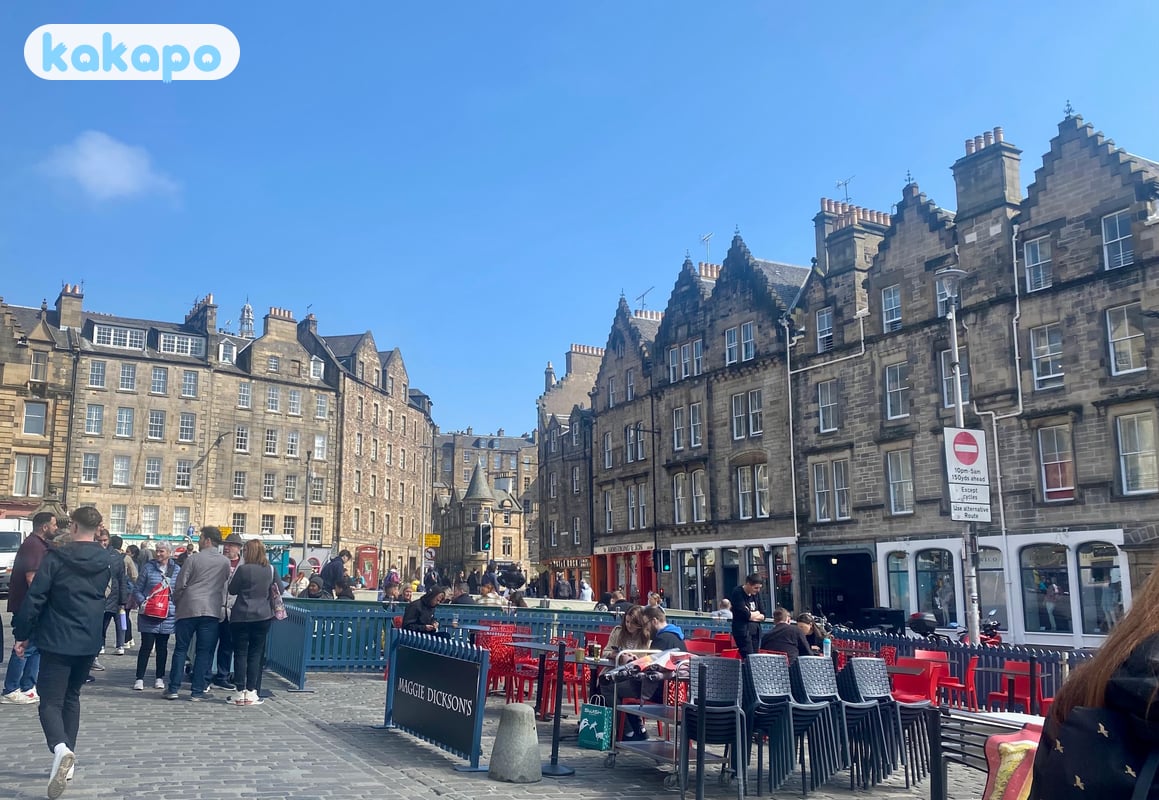
- The Royal Mile, Grassmarket, Victoria Street — the famous cobbled streets. Beautiful, atmospheric, slippery when wet (it rains often).
- Twisted-ankle ER visits are recurring among tourists in inappropriate footwear.
- The closes (narrow alleys) off the Royal Mile — fully safe by day; unlit at night. Stay on the main streets after midnight.
- Cowgate — the lower-level street that runs under the Royal Mile bridges. Cluster of late-night clubs. Fine to go to one club; less fine to wander between them at 3am alone. Walk in pairs.
Areas — comfortable everywhere a tourist would go

Comfortable everywhere: Old Town (Royal Mile, Castle, Grassmarket), New Town (Princes Street, George Street, Charlotte Square), Stockbridge, Marchmont, Bruntsfield, Morningside, Leith (port area, gentrified), Dean Village, Newington.
Lively, drunken late: Cowgate, Lothian Road clubs, parts of George Street weekends.
Stay aware: parts of Leith outer streets after midnight (not because of violence, but because some streets are unlit and quiet). Pilrig and Easter Road outer areas — daytime fine, evening less tourist-relevant.
There are no specific "no-go" zones for tourists in Edinburgh.
Trams, buses, taxis, the airport
- Lothian Buses: extensive, reliable. Contactless tap-and-go. Day passes available.
- Edinburgh Trams: line runs from Newhaven (port) through the city to the airport. Single ticket / day pass.
- Black cabs: regulated, metered, drivers know the city. Hail on the street.
- Uber and Bolt: both work, cheaper than black cabs.
- Edinburgh Airport (EDI): Tram (£8) or Airlink 100 bus (£6.50) to city centre, ~30 min. Taxi £25-30.
- From King's Cross London: LNER Azuma trains 4h20m direct. Lumo discount alternative.
Neighbourhood-by-neighbourhood breakdown
- Old Town (Royal Mile, Castle, Grassmarket) — UNESCO-listed medieval streets, the closes and wynds. Heavily policed, very safe day; during Fringe the Royal Mile crowd density tops every other UK street. Slippery cobbles after rain.
- New Town (Princes Street, George Street, Charlotte Square) — Georgian grid north of the rail tracks. Calm, polished, very safe. Princes Street Gardens between the Old and New Town is the city's central park.
- Stockbridge — north-west of New Town, across the Water of Leith. Independent shops, cafés, the Sunday market, the Botanic Garden walk. Calm, residential, very safe.
- Bruntsfield and Marchmont — south of the centre, student-heavy, leafy. Very safe; great mid-priced restaurant strip on Bruntsfield Place.
- Leith — the historic port, gentrified hard since 2000 (the Trainspotting Leith is mostly gone). The Shore is one of Edinburgh's best restaurant strips; Michelin-starred restaurants here. Generally very safe; some outer Leith streets get quiet and unlit at night but no real danger.
- Cowgate and Grassmarket lower level — the late-night-club strip directly under the South Bridge. Fully safe to go to one venue; less fine to wander between them at 3am alone, where most post-pub scuffles happen.
- Dean Village and Water of Leith walkway — hidden village in a wooded gorge, 10 minutes from Princes Street. Very safe, very photogenic, mostly daytime walking.
- Outer areas (Wester Hailes, Niddrie, Craigmillar) — residential schemes with higher reported crime stats. No tourist relevance.
If it's your first time visiting
- Best arrival airport: Edinburgh (EDI), 13km west. The tram to the city centre is £8 in 30 minutes — direct, clean, runs every 7 minutes. The Airlink 100 bus is £6.50 in 25 minutes. Taxi/Uber is £25-30 in 25 minutes. The train from London King's Cross (LNER Azuma) is 4h20m direct, often cheaper booked in advance than the flight.
- Buy a Lothian Buses day ticket or tap a contactless bank card on every bus and tram reader. Day ticket is £5; single is £2. Skip cash entirely.
- Best neighbourhood for your first night: New Town for elegance, Old Town for atmosphere (expect noise during Fringe), Stockbridge for calm, Bruntsfield for residential charm and easy access to the centre. Avoid booking right on Cowgate during Fringe unless you want to be inside the noise.
- Day 1, jet-lag friendly: walk the Royal Mile from the Castle down to Holyrood Palace, take in the views from Calton Hill (15-minute climb), then drop into a New Town pub like the Cumberland or Cafe Royal for fish-and-chips. Hilly but rewarding, 4-5km total.
- Common rookie mistakes: hiking Arthur's Seat in flat-soled shoes after rain (genuinely slippery basalt; the most common Mountain Rescue call-out); booking a Fringe show without checking the venue location (some "Edinburgh" Fringe venues are 25 minutes from the Royal Mile); not booking a Castle ticket in advance during Fringe (timed-entry sells out daily); tipping at the bar (you don't tip on pints in Scotland — round up in restaurants); calling Scottish people "English" (the distinction matters).
- Pack waterproofs and grippy shoes. Edinburgh weather can shift four times in an hour — sunshine to horizontal rain to fog to wind is a normal afternoon. The cobbles in the Old Town and on Victoria Street are genuinely treacherous in heels.
- Book the Castle, the Royal Yacht Britannia, and any major Fringe shows in advance. Fringe walk-ups exist (the half-price hut on the Mound sells day-of) but the marquee shows sell out weeks ahead.
- Don't try to "do" Edinburgh and the Highlands as a day trip. Even Loch Ness is a full 12-hour coach day. Loch Lomond, Stirling, and East Lothian beaches are realistic day trips; the Highlands deserve at least one overnight.
Practical info — emergency numbers
- Emergency: 999 (police, fire, ambulance) or 112.
- Police Scotland (non-emergency): 101.
- NHS health line: 111.
- Royal Infirmary of Edinburgh: +44 131 536 1000.
- Mountain Rescue (Arthur's Seat / Pentlands): dial 999 and ask for police, then mountain rescue.
Bring: waterproof outer layer, comfortable shoes for cobbles, a contactless bank card for trams/buses, an unlocked phone (Three, Vodafone, EE prepaid SIMs), and travel insurance — A&E will treat you, follow-up care is billable for non-residents.
Frequently asked questions
Is Edinburgh safe to visit in 2026?
Yes. Edinburgh is one of the safer European capitals. US State Department lists the UK at Level 2 (terrorism baseline); UK FCDO has no overall advisory. The realistic risks are pickpocketing during the August Fringe Festival, weather-related incidents on Arthur's Seat, and slippery cobblestones in the Old Town — not violent crime.
Is Edinburgh safe during the Festival?
Yes, but the Royal Mile during August is the densest crowd on any UK street and pickpocketing runs 4-5x normal levels per Police Scotland. Bag-snatching at outdoor shows and on Cowgate after midnight is the main concern. Book accommodation 6-12 months ahead; expect prices 3-5x normal. Off-Fringe Edinburgh (September-July) is calm and substantially cheaper.
Is Edinburgh safe at night?
Yes for central Edinburgh (Royal Mile, New Town, Grassmarket, Stockbridge). Cowgate and Lothian Road clubs get drunken after midnight on weekends — most incidents are post-pub aggression, not targeted violence. The closes (narrow alleys off the Royal Mile) are unlit at night; stay on main streets. Uber and Bolt both operate.
Is Edinburgh safe for solo female travellers?
Yes. Edinburgh ranks among the safer UK cities for solo women. Standard urban awareness applies in Cowgate late at night and walking back from Lothian Road clubs. The Old Town and New Town are well-lit and busy until late. Lothian Buses and the tram are safe at all operating hours.
Can you drink tap water in Edinburgh?
Yes. Scottish tap water is among the safest in the world — sourced from Pentland and Talla reservoirs and extensively tested. Drinkable everywhere; free at restaurants on request. Refill bottles anywhere.
Is Arthur's Seat dangerous to hike?
Not technically difficult — 251m, 1-2h round trip on well-trafficked paths. But weather is the genuine risk: sunshine to driving rain to fog in 30 minutes is normal, and Mountain Rescue does respond to incidents every year. Wear shoes with grip (the basalt rocks are slippery when wet), bring a waterproof layer, and don't descend after sunset without a torch. Salisbury Crags has unrailed edges in places.
Sources
Run a business in Edinburgh?
Show visitors your Edinburgh business is a safe choice. The free Verified by Kakapo badge puts Edinburgh's live safety score on your website, links back to your verified page, and updates itself. No cost.
Get the free badge →