


Is Playa del Carmen, Mexico Safe? A 2026 Travel Safety Guide
The Riviera Maya cartel context, sargassum seaweed, Quinta Avenida pickpockets, cenote operator quality, and the realistic risks of the Yucatán's most-walked beach town.

Playa del Carmen is one of Mexico's most-visited beach towns. The realistic risks for visitors are the recent (2021-onwards) uptick in cartel-related incidents on the Riviera Maya — most don't target tourists but a few have caught visitors in crossfire — sargassum seaweed accumulation on east-facing beaches, the standard Quinta Avenida pickpockets at peak hours, the cenote and snorkel boat operator quality variation, and the genuine summer heat.
Mexico sits at Level 2 on the US State Department's advisory list. Quintana Roo (where Playa del Carmen sits) is at Level 2 — most cartel violence is concentrated in northern and Pacific Mexican states. Playa del Carmen specifically: tourist incidents have risen since 2021 but remain rare relative to visitor numbers. UK FCDO is similar.
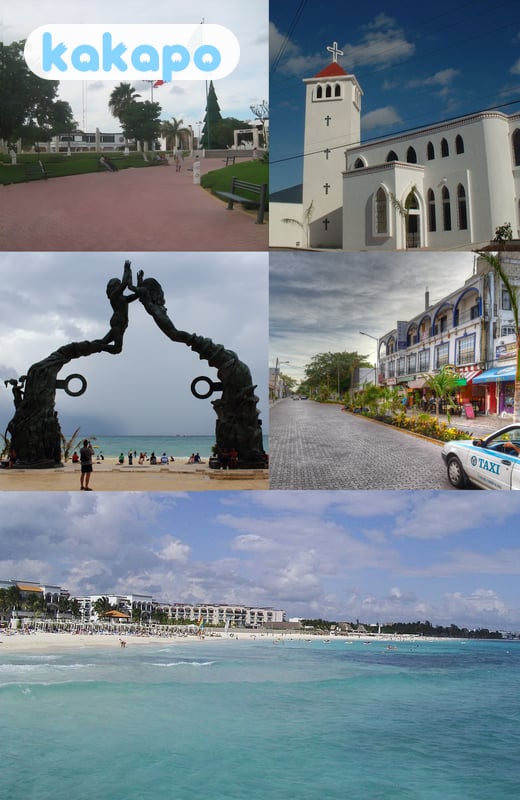
The honest framing for first-time visitors: Playa del Carmen is medium-sized (~330,000 in city), built along Quinta Avenida (Fifth Avenue) — the famous pedestrianised tourist street parallel to the beach. The Cozumel ferry, Cenote Xunaan-Ha and similar cenote day trips, Tulum (1h south) and Cancún (1h north) are the surrounding draws.
The headline-vs-reality split is the entire story for Playa: the US cable-news framing of Mexico as a war zone meets the day-tourist reality of a 4-km pedestrian beach strip lined with Italian gelaterías, time-share kiosks and Lululemon outlets. Both are true at the same time. Cartel-related incidents on the Riviera Maya have risen since 2021 (Hyatt Ziva October 2021, Xcaret January 2022, a handful of smaller events) and tourist deaths in those incidents are a real-but-rare phenomenon against millions of annual visitors. The honest practical answer is that resort-corridor and Quinta Avenida-area visitors who don't get involved in any drug-purchase situation almost always have entirely uneventful trips. The wider Riviera Maya ecosystem — ADO buses, the new Tren Maya partly operational since 2024, the Cozumel ferry, the Cancún Airport (CUN) 1 hour north — works well and connects everything.
| Night safety | 50/100 |
|---|---|
| Scam / petty-crime risk | Medium |
| Violent crime (tourists) | Medium |
| Most common scams | pickpockets on Quinta Avenida; fake bracelet scam on Quinta Avenida; aggressive time-share touts on Quinta Avenida |
| Safer neighbourhoods | Playacar, Centro Histórico, Quinta Avenida |
| Data sources cited | 4 |
| Last verified |
What the score means — 81/100
- Air quality (86) — clean coastal.
- Healthcare (80) — Hospiten Riviera Maya is excellent for tourists.
- Transport (78) — taxis, ADO buses, the new Tren Maya partly operational.
- Personal safety (76) — moderate. Most reported incidents are pickpockets and bag-theft; cartel incidents rare but not zero.
The cartel context — the honest version
- What's true: cartel-related violence has increased on the Riviera Maya since around 2021. Notably the October 2021 Hyatt Ziva incident (3 killed in beach gun battle, 1 a tourist), the January 2022 Xcaret cartel incident, and several smaller events.
- What's also true: tourist deaths in cartel incidents are rare relative to the millions of annual visitors. Most cartel activity is between groups; tourists caught up are unlucky bystanders.
- What's exaggerated: the headline "Mexico is a war zone" framing of US cable news doesn't reflect the actual visitor experience.
- Practical advice: stay in resort-corridor or Quinta Avenida-area hotels. Don't get involved in any drug-purchase situation. Don't engage if you witness anything. Get inside if you hear sustained noise that could be gunfire.
- Don't go casually to outer Cancún or Playa-Cancún highway exits at night.
- Photography of police/military operations: avoid.
Sargassum seaweed
- Sargassum: brown-yellow seaweed that washes up on Caribbean beaches in floating mats. Smelly, unsightly, varies year-to-year and beach-to-beach.
- Worst months: typically May-October.
- Affected beaches: most east-facing Riviera Maya beaches at some times. Resort beaches do daily clean-up.
- Skin contact: not dangerous but sometimes irritating. Don't enter the water through dense floating mats.
- Sargassum tracker: Sargassum Monitoring Network publishes daily reports.
- Western-facing beaches (Cozumel west side, Isla Mujeres): less affected.
Quinta Avenida — the walking street
- Quinta Avenida: ~4 km of pedestrianised tourist strip. Restaurants, shops, bars, time-share touts.
- Pickpockets: present in densest crowds. Front pocket only.
- Time-share touts: aggressive. Smile and walk; "no, gracias".
- Drink-spiking: rare but reported in some clubs. Watch your drink.
- Walking back to your hotel at 2am: stick to Quinta and main streets.
- "Fake bracelet" scam: someone gives you a "free" friendship bracelet, demands payment.
Cenotes and snorkel boats
- Cenotes: natural sinkhole pools. Cool, clear, beautiful. Standard day-trip stops.
- Operator variation: reputable (Edventure, Alltournative) provide life jackets, briefings, snorkel gear. Cheap walk-up cenote operators sometimes don't.
- Cliff-jumping at cenotes: tempting and injury-prone. Don't, unless explicitly told depths by the guide.
- Snorkel boats from Playa to Cozumel reefs: reputable operators provide proper gear and briefings; some budget operators overload boats.
- Reef-safe sunscreen: legally required at most cenotes and the Cozumel reef.
Transport — taxis, ADO, the Tren Maya
- Taxis: agreed fare; some Playa taxis have a cartel-related dispute with Uber that has caused problems. Use Uber where available; check current local advice on the rivalry.
- ADO buses: comfortable, reliable, cheap. From Playa to Cancún (~75 min, $5), Tulum (45 min, $3), Cozumel ferry pier (5 min walk).
- Tren Maya: new train (opened 2024) connecting Cancún, Playa, Tulum, Mérida and beyond. Check current schedule.
- Cancún Airport (CUN): 60 km north. ADO bus $20 to Playa. Pre-booked shuttle $20-40.
- Cozumel ferry: from Playa to Cozumel (45 min, $20 each way). Two operators (Ultramar, Winjet) — use either.
- Don't drive the Cancún-Playa highway at night: occasional incidents.
Hurricane season
- Atlantic hurricane season: June 1 - November 30.
- If a hurricane is approaching: heed evacuation orders. Major resorts have protocols.
- Travel insurance: confirm hurricane cover; book before storms are named.
- Best low-hurricane months: December-May.
Areas — Quinta, Playacar, and the surrounding Riviera
- Quinta Avenida (Fifth Avenue) — the 4 km pedestrianised tourist strip parallel to the beach, from Calle 1 north past Calle 38. Restaurants, shops, bars, gelaterías, the time-share touts. Patrolled by tourist police, comfortable late, but the standard pickpocket and "fake bracelet" risks live here. The single most-walked stretch of Mexico's Caribbean coast.
- Playacar (Phase 1 + Phase 2) — the gated residential + resort enclave immediately south of Quinta. Phase 1 has the all-inclusives (Riu, Iberostar, Sandos, Royal Hideaway); Phase 2 is residential with the Playacar Golf Club. Beaches here are quieter than downtown and have a cenote-style park at Xaman-Ha. Gated, lifeguarded, very safe.
- Centro Histórico (Avenida Juárez area, west of Quinta) — the actual local town where most year-round residents live. Calmer, cheaper, less tourist-priced; the Mercado 28 produce market is here. Safe daytime; thins out late.
- Cozumel ferry pier (Calle 1) — at the south end of Quinta. Ultramar and Winjet run the 45-min crossing to Cozumel ($20 each way, every 30-60 min until 22:00-23:00). Cozumel's western shore is sargassum-protected and is the snorkelling capital of Mexico — Palancar, Columbia, Santa Rosa reefs. Day trip or overnight.
- Tulum (1 hour south via Hwy 307) — the Mayan cliff ruins, the increasingly-developed beach hotel zone (with the cartel-incident reputation), the chic Boho aesthetic. ADO bus 45-60 min $3-5; rental car $50/day; van shuttles $20-30 per person.
- Cancún (1 hour north) — Cancún Hotel Zone for the package-resort scene, downtown Cancún (Avenida Tulum) for local-priced food, CUN airport for almost all international flights to the Riviera Maya. ADO bus Playa-Cancún 75 min $5; pre-booked shuttle $20-40.
- Cenotes day-trip arc — Cenote Xunaan-Ha, Cenote Jardín del Eden, Cenote Azul, Cenote Cristalino all sit on the Hwy 307 corridor between Playa and Tulum. Most charge MXN 200-400 entry; reputable operators (Edventure, Alltournative) provide life jackets and briefings. Reef-safe sunscreen legally required at most.
- Cártel news context vs day-tourist reality — Quintana Roo has had documented cartel-incident uptick since 2021 (Hyatt Ziva Oct 2021, Xcaret Jan 2022). Most don't target tourists; a few have caught visitors in crossfire. Stay in resort-corridor / Quinta Avenida-area hotels, don't get involved in drug-purchase situations, get inside if you hear sustained noise that could be gunfire. Cable-news framing of "war zone" doesn't match the day-tourist experience but the underlying risk isn't zero.
- ADO bus station (Calle 1 + Avenida 20) — the regional transport hub. ADO is the comfortable long-distance coach company; tickets via app or window; runs to Cancún (75 min), Tulum (45 min), Mérida (4h), Bacalar (5h), Chetumal (6h). The new Tren Maya station opened on the western edge of town — useful for Mérida and Chichén Itzá once schedules stabilise.
If it's your first time visiting
- Best arrival airport: Cancún (CUN) 60 km north — the only realistic option. ADO bus $20 one-way (75 min, every 30 min, comfortable + safe); pre-booked shuttle $20-40 per person door-to-hotel; private transfer $80-120. The new Tulum Airport (TQO) opened 2024 — useful if you're going straight to Tulum but not for Playa.
- Best neighbourhood for your first night: walking distance to Quinta (Hotel Cacao, Be Playa, Thompson Playa, Reina Roja) for the most-walked strip and ferry access; Playacar (Riu Yucatán, Iberostar Tucan, Sandos Playacar) for the all-inclusive perimeter and quieter beach; northern beach (Mahekal, Grand Hyatt, Maya Vista) for slightly fewer crowds with Quinta still walkable.
- Day 1, jet-lag friendly: Quinta Avenida walk from Calle 12 down to the Cozumel pier (1 km, allow 2 hours with stops); lunch ceviche at La Cueva del Chango or street tacos at Las Mañanitas ($8-15); afternoon beach at Mamita's Beach Club or the public stretch immediately south; sunset on the pier; dinner late at Aldea Corazón (Yucatecan) or Imprevist (chef-driven).
- Real prices in 2026: Cancún Airport ADO bus to Playa $20; Cozumel ferry $20 each way; ADO Tulum $3-5; cenote entry MXN 200-400 ($12-25); mid-range Quinta dinner MXN 500-900/person ($30-50); Corona at a beach bar MXN 80-120 ($5-7); local taco at street stand MXN 30-50 ($2-3); Uber within Playa MXN 60-120 ($4-7); reef-safe sunscreen at a pharmacy MXN 350-500 ($20-30).
- Currency: Mexican peso (MXN). $1 ≈ MXN 17. USD widely accepted at tourist sites but always at unfavourable rates; pay in MXN with a card. ATMs: stick to Banamex, BBVA, Santander, HSBC bank-branch machines (avoid the free-standing Cardtronics ones — card-cloning risk). Always pay in MXN on card terminals, decline DCC.
- The taxi-vs-Uber friction: Uber works in Playa but the local taxi union has had public disputes with it; rides may be cancelled or delayed near taxi ranks. Use Uber from inside your hotel or restaurant; alternatively the hotel's own taxi service is regulated and safe. Unmarked taxis quoting 3-5× the Uber rate exist — agree the fare before getting in.
- Common rookie mistakes: accepting time-share tout pitches on Quinta for a "free breakfast" or "free snorkel trip" that turn into 4-6 hour high-pressure sales sessions (decline firmly); buying a "free" friendship bracelet that turns into a MXN 200-500 demand (the classic Playa Quinta scam); driving the Cancún-Playa highway at night (occasional incidents); using gas-station ATMs (card-cloning real — use bank branches); ignoring the sargassum tracker (redsargazo.com) and ending up on a stinking dense seaweed week; getting involved in any drug-purchase situation; drinking tap water (use bottled — MXN 10-20 for 1.5L, ubiquitous); skipping reef-safe sunscreen at cenotes (legally enforced).
- Bring: reef-safe sunscreen, water shoes for cenotes (rocks), a Mexican SIM (Telcel or AT&T MX, MXN 200-400 with data) or eSIM (Airalo, Holafly), a contactless card, oral rehydration salts, and travel insurance with hurricane cancellation cover (June-November).
Practical info — emergency numbers
- Emergency: 911.
- Tourist Police (Quintana Roo): at major sites.
- Hospiten Riviera Maya: +52 984 803 1002.
Bring: reef-safe sunscreen, water shoes for cenotes (rocks), a Mexican SIM (Telcel, AT&T MX) or eSIM, a contactless card, and travel insurance with hurricane cancellation cover.
Frequently asked questions
Is Playa del Carmen safe to visit in 2026?
Yes, with awareness. Mexico sits at US State Department Level 2 ('exercise increased caution') and Quintana Roo specifically has had a documented uptick in cartel-related incidents on the Riviera Maya since 2021. Most don't target tourists but a few have caught visitors in crossfire (Hyatt Ziva 2021, Xcaret 2022). UK FCDO is similar. The realistic risks for Playa visitors are Quinta Avenida pickpockets, sargassum seaweed (May-October), cenote and snorkel operator quality variation, and the standard 'avoid drug-purchase situations' rule. Most visitors have entirely uneventful trips.
Is Playa del Carmen safe at night?
Quinta Avenida (the pedestrianised tourist strip) is alive late, well-lit, patrolled by tourist police, and comfortable for walking back to your hotel — stick to it and main cross-streets. Avoid the Cancún-Playa highway exits after dark and don't walk far inland from the beach late. A few specific late-night clubs have had incidents in recent years; ask your hotel concierge which venues are currently considered low-risk. Don't accept drinks from strangers — drink-spiking has been reported at some clubs.
Is Playa del Carmen safe for solo female travellers?
Yes, with adjustments. Quinta Avenida has an active solo-female travel scene and the resort corridor is comfortable. Catcalling and timeshare-tout pressure are routine on Quinta; firm 'no, gracias' works. Avoid the 'fake bracelet' scam (someone gives you a 'free' friendship bracelet then demands payment). Hospiten Riviera Maya in Playa is the tourist-grade hospital. Use Uber where available rather than taxis (the local taxi-vs-Uber dispute has occasionally caused friction).
Can you drink tap water in Playa del Carmen?
No — stick firmly to bottled. Riviera Maya tap is desalinated and treated but irregular, and most visitors and many residents drink bottled. Bottled water is cheap (MXN 10-20 for 1.5L) and ubiquitous. Resort ice is generally fine; avoid ice in non-resort venues and street fresh juice. Bring oral rehydration salts — traveller's diarrhoea is the most common visitor health issue.
What's the biggest scam to avoid in Playa del Carmen?
Time-share touts on Quinta Avenida — aggressive 'free breakfast' or 'free snorkel trip' pitches that turn into 4-6 hour high-pressure sales. Decline firmly. Other recurring patterns: the 'fake bracelet' scam (someone ties a 'gift' bracelet on your wrist then demands MXN 200-500), unregulated cenote and snorkel boat operators with no life jackets or briefings (use Edventure, Alltournative, or hotel-recommended operators), card-cloning at gas station ATMs (use Banamex/BBVA/Santander branch ATMs), DCC card-terminal scams (always pay in MXN), and unmarked taxis quoting 3-5x the Uber rate. Don't drive the Cancún-Playa highway at night.
How does sargassum seaweed affect Playa's beaches?
Significantly during bad seasons (typically May to October). Sargassum is brown-yellow seaweed that washes up on east-facing Caribbean beaches in floating mats — smelly, unsightly, and varies year-to-year and beach-to-beach. Resort beaches do daily clean-up; less-attended public beaches accumulate more. Skin contact isn't dangerous but the smell of decomposing piles is unpleasant and dense floating mats are uncomfortable to swim through. Check the Sargassum Monitoring Network's daily reports (redsargazo.com) before booking specific beach days. Cozumel west side and Isla Mujeres are less affected; many Playa visitors do day trips there during peak sargassum weeks.
Sources
Run a business in Playa del Carmen?
Show visitors your Playa del Carmen business is a safe choice. The free Verified by Kakapo badge puts Playa del Carmen's live safety score on your website, links back to your verified page, and updates itself. No cost.
Get the free badge →