


Is Corfu, Greece Safe? A 2026 Travel Safety Guide
Scooter crashes, the Kavos party strip, the road to Paleokastritsa, sea-cliff jumping, and the realistic risks of the Ionian's greenest island.

Corfu is one of the safer Greek islands for tourists. Crime against visitors is rare. The realistic risks are the scooter-rental crash record (Greek-island-standard concern), the Kavos party strip in the south (British package-tourism nightlife concentrated), the famously winding mountain roads (especially the road to Paleokastritsa and the route to Mt Pantokrator), and the temptation of cliff-jumping at certain beaches.
Greece sits at Level 1 on the US State Department's advisory list. UK FCDO is the same. The honest framing for first-time visitors: Corfu is medium-large for a Greek island (~104,000 residents on 593 km²), the second-largest of the Ionian Islands. The UNESCO Old Town in Corfu Town (Kerkyra), Paleokastritsa's cliff-and-cove coast, the Achilleion palace, Mt Pantokrator, and Kassiopi/Sidari resorts are the main destinations.
The character that catches first-time visitors most off-guard is how Italian Corfu feels. Four hundred years of Venetian rule (1386-1797), followed by a French Napoleonic interlude and a British protectorate (1815-1864), means the Old Town's narrow lanes ("kantounia"), the French-arcade Liston café strip, and the cricket pitch on the Esplanade are nothing like Mykonos or Santorini. Corfu also splits sharply by audience: the north-east coast (Kassiopi, Nissaki, Barbati) is the calm-family/Durrell-Family-British-literary side; Paleokastritsa is the postcard cove coast; Sidari is the package-tour family middle ground; Kavos in the south is the chaotic British 18-30 party strip. Knowing which Corfu you've booked matters more than for most Greek islands.
In 2026 the practical changes since pre-pandemic: KTEL Kerkyras (the green inter-village bus) now accepts contactless cards on most routes; the Old Town vehicle exclusion zone has expanded (park outside and walk in); the new Igoumenitsa ferry terminal has cut crossing times to 1h15m on fast catamarans; and Corfu Airport (CFU) Terminal 2 expansion has reduced summer crush. The Greek climate tax is now €1.50-10/night depending on category and is added at hotel check-in.
| Night safety | 75/100 |
|---|---|
| Scam / petty-crime risk | Medium |
| Violent crime (tourists) | Low |
| Most common scams | drink-spiking at Kavos party strip; free shots from promoters at Kavos; beach-bag theft when swimming |
| Safer neighbourhoods | Kassiopi, Sidari, Paleokastritsa |
| Data sources cited | 4 |
| Last verified |
What the score means — 86/100
- Air quality (88) — clean Ionian air.
- Personal safety (84) — high. Beach-bag theft when swimming is the most-reported.
- Transport (80) — buses (KTEL Kerkyras) work; rental car is the practical option.
- Healthcare (80) — General Hospital of Corfu is the main facility; serious cases evacuate to Athens or Ioannina.
Scooter and quad rentals

- Same Crete-style warning: Class-A licence and IDP required for proper insurance; rental shops rarely check.
- Conditions on Corfu: north-coast roads have steep gradients and sharp hairpins; sand patches at corners; tour-bus traffic in summer.
- Helmet: mandatory by law. Use a full-face one.
- "Damage scam": photograph the bike before riding away.
- Olive groves and rural roads: olive nets in autumn can catch on tyres.
Kavos — the party strip
- Kavos: Corfu's southern resort, dominated by British 18-30 package tourism. Cheap drinks, late hours, occasional chaos.
- Crime: low to moderate. Pickpocketing, drink-spiking reports, occasional fights.
- Drink-spiking: documented. Watch your drink.
- "Free shots from promoters": decline.
- Drugs: illegal; sting operations occur. Penalties severe.
- Drowning at night: drunk swimming has caused fatalities. Don't swim impaired.
- Walking back to your hotel: stick to busy streets; use a taxi.
- Alternative: Sidari (north) and Kassiopi (north-east) are calmer family-tourism alternatives.
Mountain roads and driving
- The road to Paleokastritsa: famous winding ascent and descent. Two-way, narrow at points, with stunning sea views that distract drivers.
- Mt Pantokrator (906 m): highest point on Corfu. Drivable to summit; road is steep and narrow. Don't drive in fog.
- Driving on the right: standard Greek rules. Some side-road give-ways are unsigned.
- Parking in Corfu Town Old Town: difficult. Park outside and walk in.
- Goats on rural roads: routine. Slow down.
Beaches and sea safety
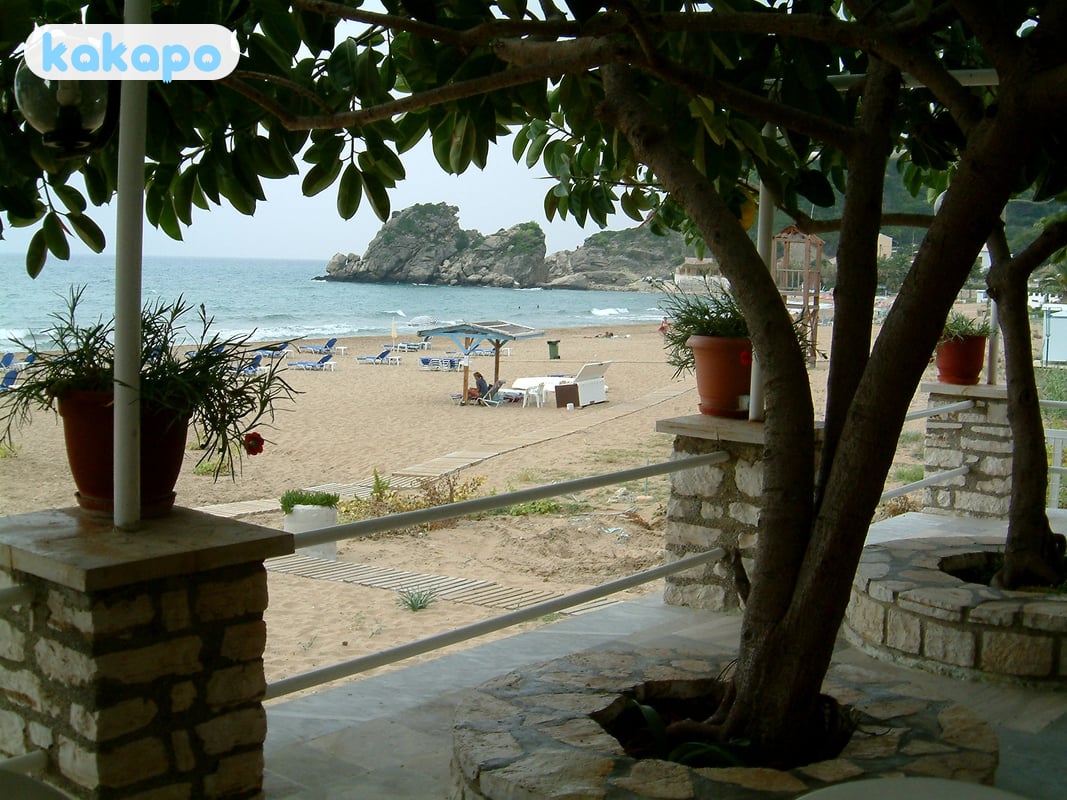
- Paleokastritsa: cove beaches with cliff backdrops. Calm in summer, lifeguarded.
- Glyfada: sandy west-coast beach. Some rip currents on choppy days.
- Cape Drastis: famous cliff formations. Don't pose for photos near edges; people have fallen.
- Cliff-jumping at "Canal d'Amour" (Sidari): minor injury reports each summer. Adult divers know the depths; tourists who don't get hurt.
- Sea urchins: present at rocky beaches. Reef shoes.
- Jellyfish: occasional in late summer.
- Reef-safe sunscreen: voluntary; Greek marine parks increasingly request it.
Corfu Town (Kerkyra) Old Town

- UNESCO Old Town: Venetian fortifications, narrow lanes ("kantounia"), the Esplanade square, the Old and New fortresses.
- Pickpockets: low-level in summer crowds. Front pocket only.
- Walking Old Town at night: generally safe and pleasant.
- The Liston: the French-arcade café strip. Touristy and pleasant; drinks expensive.
- Cobbles + slope: the lanes are stepped in places. Sturdy shoes.
Transport, taxis, the airport
Corfu's regions — pick your island carefully

- Kerkyra Old Town (Corfu Town) — the UNESCO-listed Venetian-era centre on the east coast; Old Fortress (Palaio Frourio) and New Fortress (Neo Frourio), the Esplanade (Spianada) with the cricket pitch and Liston French arcade, Saint Spyridon Church (the island's patron saint), the Mon Repos park with the Achilleion-period villas. Walkable end-to-end in 30 minutes; comfortable any hour; the museums (Antivouniotissa Byzantine, Archaeological) are the headline indoor attractions.
- Paleokastritsa — 25 km north-west on the famous winding road; six cove beaches with cliff backdrops, the 13th-century Theotokos Monastery on the headland, summer-only glass-bottom boats to the sea caves. The postcard Corfu most photos come from. Two-way narrow access road with hairpins and sea-view distraction.
- Sidari — northern coast resort, calmer than Kavos, family-and-couples package tourism; Canal d'Amour (the sandstone cliff-cleft beach where cliff-jumping injury reports happen each summer — the depths vary and tourists who don't know get hurt).
- Kavos — Corfu's southern party strip, dominated by British 18-30 package tourism; cheap drinks, late hours, occasional chaos. Drink-spiking, occasional fights, drunk-swimming fatalities at night. The classic "is this on your itinerary?" Corfu zone — if you didn't book it deliberately, you don't want to wander in.
- The Durrells coast (Kalami, Kouloura, Agni) — quiet north-east coast around Lawrence Durrell's "Prospero's Cell" Kalami; sailing-yacht-friendly coves, no nightlife, restaurants on jetties. Family / literary-pilgrim crowd.
- Achilleion Palace — 10 km south of Corfu Town; the 1890 palace built for Austrian Empress Elisabeth ("Sisi"), later owned by Kaiser Wilhelm II. €10 entry; lovely gardens with the Achilles statues; reachable by KTEL bus from Corfu Town or rental car.
- Mt Pantokrator (906m) — the highest point on Corfu, drivable to the summit on a steep narrow road; 360° views to Albania, Italy on a clear day. Don't drive in fog.
- Kerkyra Port — the cruise-ship and inter-island ferry port; large cruise days flood the Old Town between 09:00-17:00.
- Ferry Igoumenitsa — the mainland Greek port directly opposite; 1h15m on fast catamaran, 1h30m on conventional ferry, €10-15 foot passenger, €40-60 with car. Multiple operators (Anek, Kerkyra Lines) daily.
- Ferry Bari/Brindisi (Italy) — overnight ferry to Italy 8h+; useful for Italy-Greece combined trips.
- Corfu International Airport (CFU) — 3 km south of Corfu Town; bus 15 (€1.70) or taxi €10-15 to the Old Town. Summer crush is real — arrive 2.5h ahead.
If it's your first time visiting
- Best arrival airport: Corfu International (CFU) is the only airport — direct seasonal flights from London, Manchester, Frankfurt, Vienna, Amsterdam, Paris, Athens. Bus 15 to Corfu Town €1.70, taxi €10-15. Alternative: fly Athens (ATH) then ferry from Igoumenitsa.
- Public transport: KTEL Kerkyras (green inter-village buses) is genuinely reliable and now accepts contactless cards on most routes; €1.70-5 depending on distance. Blue buses cover Corfu Town and immediate suburbs. Rental car is the practical option for the cove-and-cape coast — book 1-2 months ahead in July-August.
- Best base for your first trip: Corfu Town (Kerkyra) for the cultural-historic experience and ferry/airport convenience; Paleokastritsa for the postcard cove coast; Kassiopi (north-east) for calm-family / sailing; Sidari for family package-tour middle ground; Kavos ONLY if you booked it deliberately for party tourism.
- Day 1, jet-lag friendly: walk the Esplanade and Liston arcade, climb the Old Fortress (€6, panoramic views), lunch at Rouvas Estiatorio or Pane e Souvlaki in the Old Town, sundowner at one of the Spianada cafés, dinner at Klimataria. The Old Town is walkable end-to-end in 30 min.
- Common rookie mistakes: renting a scooter without a Class-A motorcycle licence + IDP (Greek law requires both; insurance void without; rental shops don't check but it doesn't change your legal position after a crash), cliff-jumping at Canal d'Amour without knowing the depths (real injuries each summer), driving Paleokastritsa or Pantokrator roads in fog (visibility ends abruptly), accepting drinks from strangers at Kavos (drink-spiking documented), parking inside the Old Town vehicle exclusion zone (€80 fine — park outside and walk).
- Currency and tipping: euro. Tipping 10% at restaurants, round-up taxis, €1-2 per bag for hotel porters. Pints €4-7 in normal pubs, €8-9 on the Liston tourist strip. Greek climate tax €1.50-10/night added at hotel check-in (real, not a scam).
- Photograph rental scooters before riding away — the "damage claim" scam (shop finds a scratch you didn't do, demands €100-300) is the recurring Corfu rip-off. Photo/video every angle including existing scratches, and email a timestamped copy to yourself.
- Book Paleokastritsa, Achilleion and Mt Pantokrator drives by daylight — narrow roads, sea-view distraction, no streetlights past the villages. Goats on rural roads are routine; slow down.
- Heed beach flags — green safe, yellow caution, red no-swim. Glyfada has some rip currents on choppy days; Cape Drastis (famous cliff formations) has had selfie-fall fatalities — don't pose near unrailed edges.
Practical info — emergency numbers
- European emergency: 112 (with Greek wildfire/earthquake/severe-weather alerts).
- Tourist Police: 1571.
- Ambulance: 166.
- Coast Guard: 108.
- General Hospital of Corfu: +30 26613 60400.
Bring: reef-safe sunscreen, water shoes, an International Driving Permit + Class-A endorsement if you plan to ride, a Greek SIM (Cosmote, Vodafone GR), and travel insurance with watersports cover.
Frequently asked questions
Is Corfu safe to visit in 2026?
Yes. Corfu scores 84/100 and is one of the safer Greek islands. Greece sits at Level 1 on the US State Department advisory (the lowest level) and UK FCDO is the same. Crime against visitors is rare. The realistic risks are scooter and ATV rental crashes (the Greek-island-standard concern), the Kavos party strip in the south (British 18-30 package nightlife with drink-spiking reports and occasional fights), winding mountain roads especially the route to Paleokastritsa and Mt Pantokrator, and cliff-jumping injuries at Canal d'Amour in Sidari.
Is Corfu safe at night?
Yes in most places — Corfu Town's UNESCO Old Town is alive late and well-policed, and family-resort areas like Kassiopi, Sidari, and Paleokastritsa are calm. Kavos is the exception: the southern party strip has documented drink-spiking, occasional fights, and drunk-swimming fatalities at night. If you stay in Kavos, watch your drink, decline 'free shots from promoters,' don't swim after drinking, and stick to busy streets walking back. Quieter alternatives include Sidari and Kassiopi on the north coast.
Is Corfu safe for solo female travellers?
Yes, generally. Corfu Town and the family resorts (Kassiopi, Sidari, Paleokastritsa) are comfortable for solo women — Greek island culture is welcoming and catcalling is mild. Solo dining at tavernas is routine. The Old Town is well-lit and policed. Avoid Kavos solo at night — the drinking culture there is unfriendly to solo women and drink-spiking reports are real. Scooter rental as a solo rider works if you're licensed and helmeted.
Can you drink tap water in Corfu?
Yes in most places — Corfu Town and the major resorts have safe drinkable tap water tested to EU standards. Locals drink it routinely in Corfu Town. Some smaller villages and remote properties draw from local wells or cisterns and bottled is safer. Hotel reception can confirm. Carry a refillable bottle; summer 32-35°C makes hydration essential. Bottled water is cheap (around €0.50-1 for 1.5L from minimarkets).
What's the biggest scam to avoid in Corfu?
Scooter and ATV rental 'damage claims' — you return the bike and the shop suddenly finds a scratch they claim is yours, demanding €100-300 for repair. Always photograph or video the bike from every angle before riding away, focusing on existing scratches. Other recurring cons: 'free' boat-trip leaflets near the New Port with undisclosed port fees, taxi flat-fare inflation from the airport (around €10-15 to Corfu Town is normal), and DCC at card terminals (always pay in EUR). Greek tourist tax (€0.50-4/night) and climate tax (€1.50-10/night) are real and added at check-in, not scams.
Should I rent a scooter or quad on Corfu?
Only if you have a proper Class-A motorcycle licence plus an International Driving Permit — Greek law requires both and your travel insurance is void without them. Rental shops rarely check, which doesn't change your legal position after a crash. Corfu's roads are particularly demanding: the north-coast routes have steep gradients and sharp hairpins, sand patches and olive nets catch tyres at corners, and tour-bus traffic crowds the road in summer. Helmets are mandatory by law. If you don't have the licence and IDP, take KTEL Kerkyras green buses or pre-arranged taxis — the bus network is reliable and cheap.
Sources
Run a business in Corfu?
Show visitors your Corfu business is a safe choice. The free Verified by Kakapo badge puts Corfu's live safety score on your website, links back to your verified page, and updates itself. No cost.
Get the free badge →