


Is Athens, Greece Safe? A 2026 Travel Safety Guide
Plaka pickpockets, Omonia at night, Exarcheia's reputation vs reality, summer heat, and the realistic visitor risks of Greece's capital.

Athens is broadly safe for tourists, with the realistic risks concentrated in pickpocketing on Metro line 2 and around Plaka, the visibly rough Omonia Square area at night, and the 40°C+ summer heat that hospitalises visitors who climb to the Acropolis at midday.
Greece sits at low advisory levels in both UK FCDO and US State Department guidance. Violent crime against tourists is rare. The 2010s economic-crisis austerity period left Athens with more visible homelessness and ambient street disorder than other European capitals; the 2020s have seen gradual recovery but the gap persists in specific zones.
The honest framing for first-time visitors: Athens is dirtier and more chaotic than the Greek islands and most of European peers. The Acropolis is breathtaking. Plaka is photogenic. The contrast between tourist-anchor calm and outer-district edge is sharper than in, say, Rome or Madrid.
What surprises most first-time visitors is how Athens still functions as a working Mediterranean capital rather than a heritage park. The Acropolis floats above 3.7 million people who actually live, work, drive, and complain about parking; the Plaka tavernas are open because Athenians eat in them too, not just tourists. Greeks are warm, loud, and quick to invite you to share food or wine after about three minutes' conversation. Greet with "yassas" (formal) or "yassou" (informal); tip 5-10% in restaurants by leaving coins or rounding up; expect dinner to start at 21:00 and end around midnight.
In 2026, the practical updates: Metro Line 4 ("Alsos Veikou - Goudi") is partially open with full completion targeted for 2027 — relieves Line 2 congestion considerably; the Athens Riviera redevelopment around the old Hellinikon airport site is now home to the Ellinikon Mall (Europe's largest) and the Riviera Tower; the Acropolis hard capacity limit is enforced (20,000 visitors per day, four-hour timed slots, mandatory online pre-booking) — winging it at the gate no longer works; summer 2024 and 2025 saw 40°C+ heat-fatality closures of the Acropolis, and 2026 will likely repeat; and the Greek government's tourist tax doubled in 2024 (now €1.50-10/night depending on hotel class).
| Night safety | 62/100 |
|---|---|
| Scam / petty-crime risk | Medium |
| Violent crime (tourists) | Low |
| Most common scams | pickpocketing on Metro line 2; restaurant tourist menus in Plaka; taxi flat-fee scams |
| Safer neighbourhoods | Plaka, Monastiraki, Psyrri |
| Data sources cited | 4 |
| Last verified |
What the score means — 76/100
- Healthcare (80) — Greek public healthcare struggles since the financial crisis; private hospitals (Hygeia, Iatriko) are excellent. EU citizens with EHIC pay nothing in public.
- Transport (80) — Athens Metro 3 lines + tram + trolley + bus. Cheap.
- Night (76) — Plaka, Monastiraki, Psyrri alive late and policed. Omonia rougher.
- Personal safety (72) — moderate. Pickpocketing on Metro line 2 (the Acropolis line) and at Monastiraki is concentrated.
Areas — Plaka, Monastiraki, Omonia, Exarcheia

Comfortable everywhere: Plaka (the photogenic Old Town under the Acropolis), Monastiraki (flea market square — busy, fine), Psyrri (formerly bohemian, now upmarket-ish, lots of restaurants), Thissio (residential on the western Acropolis flank), Koukaki (gentrified residential), Kolonaki (upmarket — embassies, designer shops).
Visit during the day, careful at night: Omonia Square — the historic centre, severely affected by the post-2010 austerity period. Heavy homelessness, public drug use, occasional aggressive begging. Police presence has stepped up since 2023; daytime is fine, late-night solo walking less so.
Reputation vs reality: Exarcheia — Athens' famous "anarchist neighbourhood." Has been the historic site of squats, anti-government graffiti, and sporadic protest-related disturbances. For tourists who don't engage with the politics, the area is safe to walk through, photograph, and eat in. The 2022 Metro construction has gentrified the neighbourhood considerably. Standard awareness, no special concern.
Stay aware after dark: parts of Patission Avenue / Acharnon, parts of Petralona outer streets, Piraeus port area at night (working port, no tourist relevance after sunset).
Acropolis — heat is the issue
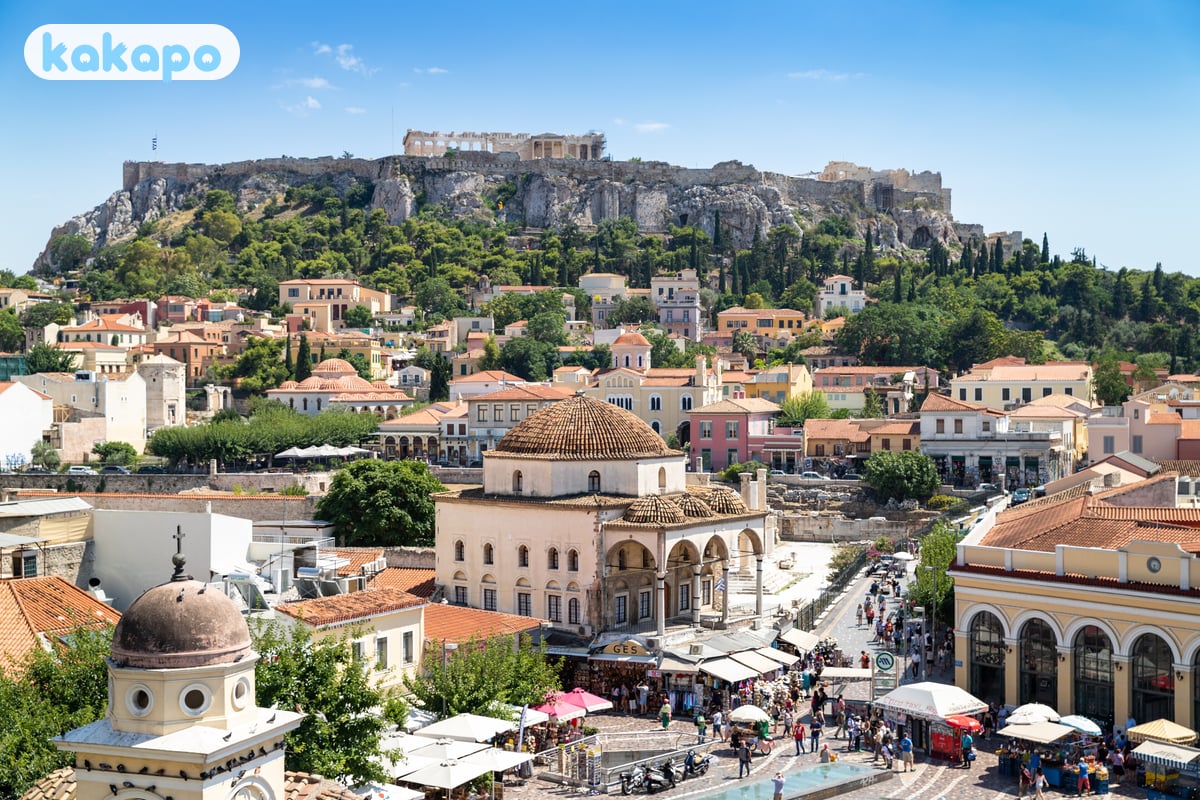
The Acropolis is one of the most-visited monuments in the world. The actual safety concern is heat and slip-injuries.
- Mid-day in summer at the Acropolis is brutal. The marble surfaces radiate heat back at you; there's no shade.
- The "polished marble" — millions of visitors over millennia have polished the steps to a slip surface. Rubber-soled shoes essential.
- Multiple visitor heat-fatalities per summer on the climb up. Greek authorities now close the site during extreme-heat warnings (>40°C).
- Best visiting times: 8am opening (cooler, fewer crowds) or 5-6pm just before close.
- Buy combined ticket at the official booth — covers Acropolis, Ancient Agora, Roman Agora, Olympieion, etc.
- Acropolis Museum: brilliant; air-conditioned; great mid-day refuge.
Pickpockets and tourist-area scams
- Metro line 2 (red): connects the Acropolis to Omonia and the city centre. Most-pickpocketed line.
- Monastiraki Sunday flea market: dense crowd, classic pickpocket environment.
- "Friendly local" carries you off-route: scam patterns similar to other European capitals. Polite firm decline.
- Restaurant tourist menus in Plaka: prices double those one block away. Walk inland.
- Taxi flat-fee scams: agree the meter beforehand. Athens-airport flat rate to central is ~€48 daytime, €68 night.
- Strikes: Greek transport strikes happen periodically. Metro and ferries can be affected. Check the Greek government strike-update page (or Twitter).
Metro, taxi, trains, the airport

- Athens Metro: 3 lines. Cheap (€1.20 single, €4.10 24h). Pickpockets on line 2 / Acropolis run.
- Trams: connect city centre to Pireaus and the southern coast (Glyfada, Voula).
- Taxis: yellow, regulated, metered. Beat-Taxi or Free Now apps remove the haggling.
- Athens Airport (ATH): Metro line 3 to centre €9, ~40 min. Suburban rail €9. Bus X95 €5.50, ~60 min. Taxi flat €48 day / €68 night.
- Ferries from Piraeus: to all Greek islands. See our Santorini guides for ferry-specific notes.
Demonstrations and political backdrop
- Athens has a strong protest tradition: November 17 (the 1973 Polytechnic uprising anniversary), May Day, and labour-action days produce regular demonstrations along Panepistimiou and at Syntagma Square.
- Most are peaceful; some end in tear-gas exchanges between police and small groups of activists.
- Photography at demonstrations is allowed but be aware some protesters object aggressively.
- If a march is happening: walk around it. The sirens, helicopter, and visible police presence are usually adequate warning.
Neighbourhood-by-neighbourhood breakdown
- Plaka and Anafiotika — directly below the Acropolis. The "Old Athens": narrow lanes, Cycladic-white Anafiotika cluster, taverna terraces. Heavily policed, very safe day and night. Tourist menu prices are doubled — walk one street inland.
- Monastiraki and Psyrri — west of Plaka, the flea market and the most lively dining/nightlife strip. Very safe day; Psyrri after midnight is busy and fine but watch for pickpockets in the Sunday flea-market crush at Monastiraki.
- Thissio and Koukaki — south and west of the Acropolis. Residential, gentrified, calmer than Plaka. Some of the best rooftop views back at the Parthenon. Very safe.
- Syntagma and central — the constitutional square, Parliament, the changing of the Evzones guards, the main Metro interchange. Very safe; the square is where most political demonstrations happen.
- Kolonaki — east of Syntagma, Athens' old-money district. Designer shopping, embassies, Lykavittos hill. Polished, calm, very safe; quiet at night.
- Exarcheia — north of the centre, the historic anarchist/anti-authoritarian quarter. Gentrified considerably since 2022 Metro construction. Squats and graffiti remain but it's full of bookshops, tavernas, and street art. Safe for tourists who don't engage with political events; standard awareness on protest dates (Nov 17, May 1).
- Omonia — west of Exarcheia. Historically Athens' commercial heart; severely affected by post-2010 austerity. Visible homelessness, public drug use, occasional aggressive begging. Daytime fine if you walk through with purpose; late-night solo walking less so. Police presence stepped up since 2023.
- Glyfada and the southern Riviera — 20km south, by tram. Beachfront, cosmopolitan, expensive. Very safe; locals' weekend escape.
- Outer areas (parts of Patission, outer Petralona, the Piraeus port at night) — working-class, low tourist relevance, fine in daylight but not your evening destination.
If it's your first time visiting
- Best arrival airport: Athens International Eleftherios Venizelos (ATH), 30km east. Metro Line 3 to central Athens is €9 in 40 minutes. Suburban rail Proastiakos is €9 in 50 minutes. Bus X95 to Syntagma is €5.50 in 60+ minutes. Regulated taxi flat rate is €48 daytime / €68 night to central — agree before getting in. Beat or Free Now apps are usually cheaper.
- Buy a 24-hour or 5-day Metro/bus pass at any Metro vending machine (€4.10 for 24h, €8.20 for 5-day, includes airport transfers on the 3-day). Or use contactless tap on Metro turnstiles (rolled out 2024). Single is €1.20.
- Best neighbourhood for your first night: Plaka or Koukaki for atmosphere and Acropolis views; Monastiraki/Psyrri for nightlife; Kolonaki for upmarket calm; Syntagma for transport convenience. Avoid booking around Omonia or directly on Patission unless you don't mind walking past visible street disorder to your hotel.
- Day 1, jet-lag friendly: visit the Acropolis at 08:00 opening (cooler, less crowded), drift down through the Ancient Agora, lunch in Plaka at a taverna one street back from the main drag, end with souvlaki at Bairaktaris on Monastiraki square. Walkable, 4-5km, finished by 16:00.
- Common rookie mistakes: climbing the Acropolis at midday in summer (the marble radiates 50°C+ heat, multiple visitor fatalities each summer); walking the Acropolis steps in flat-soled fashion shoes (the marble is polished to ice by 50 million pairs of feet); eating in the front-row Plaka tourist menus (walk inland for half the price); confusing the meter taxi with the airport flat rate (drivers sometimes try both at once); skipping the Acropolis Museum (it's air-conditioned and contextualises everything you saw on the hill).
- Book the Acropolis online via the official site. Walk-up tickets are no longer available — timed entry, 20,000/day cap, sold out 1-2 weeks ahead in peak season. The €30 combination ticket covers 7 sites.
- Hydrate constantly in summer. Carry 2L of water on Acropolis days; refill at the Plaka public fountains. The site has shaded zones at the museum-side entrance but the hilltop is exposed.
- Don't drive in central Athens. The lanes are anarchic, parking is impossible, and the historic-centre LEZ zone fines non-resident cars automatically.
Practical info — emergency numbers
- European emergency: 112.
- Police: 100.
- Tourist police: 1571.
- Ambulance: 166.
- Coast Guard (port): 108.
- Hygeia Hospital (private, English-speaking): +30 210 686 7000.
Bring: shoes with grip (the Acropolis marble), reef-safe sunscreen, a hat, an unlocked phone (Cosmote, Vodafone, Wind Greece prepaid SIMs at the airport), a card without foreign-transaction fees, and travel insurance documentation. Tap water is technically drinkable but most visitors use bottled.
Frequently asked questions
Is Athens safe to visit in 2026?
Yes — Athens scores 76/100 here. Greece sits at low advisory levels in both UK FCDO and US State Department guidance, and violent crime against tourists is rare. The score is pulled down by visible street disorder around Omonia Square (a legacy of post-2010 austerity that the 2020s recovery hasn't fully erased), pickpocketing on Metro line 2 (the Acropolis line), and Plaka tourist-trap traps. The 2024-2025 summer 40°C+ heat waves now cause Greek authorities to close the Acropolis at midday — multiple visitor heat-fatalities per summer on the climb. Plaka, Monastiraki, Psyrri, Thissio, Koukaki and Kolonaki are all comfortable day or night.
Is Athens safe at night?
Yes in the tourist zones; less pleasant around Omonia. Plaka, Monastiraki, Psyrri and Thissio are alive late, well-lit and policed — tavernas and rooftop bars under the Acropolis stay busy until 2am. Kolonaki is upmarket-quiet at night. Omonia Square has heavy homelessness, public drug use and aggressive begging; daytime is fine, late-night solo walking less so. Police presence has stepped up since 2023 but the gradient is still sharp. Parts of Patission Avenue/Acharnon and outer Petralona are worth avoiding solo after dark. Piraeus port area at night is a working port with no tourist relevance after sunset.
Is Athens safe for solo female travellers?
Yes, with standard awareness. Plaka, Monastiraki, Psyrri, Thissio, Koukaki and Kolonaki are routine solo experiences day or night. Solo dining at tavernas works fine — Greek dinner culture is communal but accepts solo diners. The harassment density in Athens is lower than Rome or Naples. The specifics: Metro line 2 pickpockets target everyone, bag in front; Omonia after dark is the area to skip; taxi apps (Beat, Free Now) remove the haggling and feel safer at 2am than flagged street cabs. Exarcheia's anarchist reputation is overstated — it's gentrified, completely walkable, just don't engage with political events.
Can you drink tap water in Athens?
Technically yes — Athens tap water meets EU drinking standards and is drawn from the Marathon and Mornos reservoirs. Practically, most visitors use bottled because the taste varies by district and the older building plumbing in central Athens can affect it. You won't get sick from tap. Restaurants serve bottled by default; tap on request. Bottled water is cheap (~€0.50 at supermarkets). Carry refillables and top up at hotels. On Acropolis days hydration is non-negotiable — multiple heat fatalities each summer happen to people who climbed without water in 40°C heat. The marble radiates heat back at you and there's no shade.
What's the biggest scam to avoid in Athens?
Plaka tourist menus where prices run double a street back, plus restaurant 'cover charges' that materialise after you order. Walk one block inland from the main Plaka drag for better food at half the price. Beyond that: Metro line 2 pickpocketing between Acropolis and Omonia stops, taxi flat-fee scams (the airport-to-centre rate is regulated at ~€48 daytime/€68 night — agree the meter beforehand or use Beat/Free Now apps), and Monastiraki Sunday flea market pickpockets in the crowd density. 'Friendly local' off-route gambits exist but are less aggressive than in Rome or Barcelona.
How risky is Exarcheia really — should I avoid the anarchist neighbourhood?
No, you can walk through Exarcheia normally. The reputation as Athens' anarchist neighbourhood is historically accurate — squats, anti-government graffiti, sporadic protest-related disturbances around November 17 (Polytechnic uprising anniversary) and May Day — but for tourists who don't engage with the politics, the area is safe to walk through, photograph and eat in. The 2022 Metro construction has gentrified the neighbourhood considerably and pushed many squats out. Standard awareness around protest dates: if you see riot police gathering on Stournari Street, walk around. Otherwise enjoy the bookshops, tavernas and street art.
Sources
Run a business in Athens?
Show visitors your Athens business is a safe choice. The free Verified by Kakapo badge puts Athens's live safety score on your website, links back to your verified page, and updates itself. No cost.
Get the free badge →