


Is Antwerp, Belgium Safe? A 2026 Travel Safety Guide
Antwerp is comfortably safe. The honest concerns: diamond-district scams, the rough fringe near Centraal station, the port (don't wander it), and cycling congestion.

Antwerp is a comfortably safe Flemish city. Crime against tourists is moderate-low. The realistic concerns are concentrated: opportunistic scams in the diamond district (where 80% of the world's rough diamonds change hands), the rougher fringe immediately around Antwerpen-Centraal station and the De Coninckplein area, the port (a working industrial zone with serious-crime undertones, not a tourist attraction), and the busy cycling infrastructure that catches out walking visitors.
Belgium sits at Level 2 on the US State Department advisory (terrorism, baseline). UK FCDO is similar. The honest framing for visitors: walking around central Antwerp is unremarkable; the city has a quietly affluent rather than gritty feel. The two big visitor experiences — the cathedral with the Rubens paintings, and the Centraal station building itself (one of the world's most beautiful) — are inside the safer core.
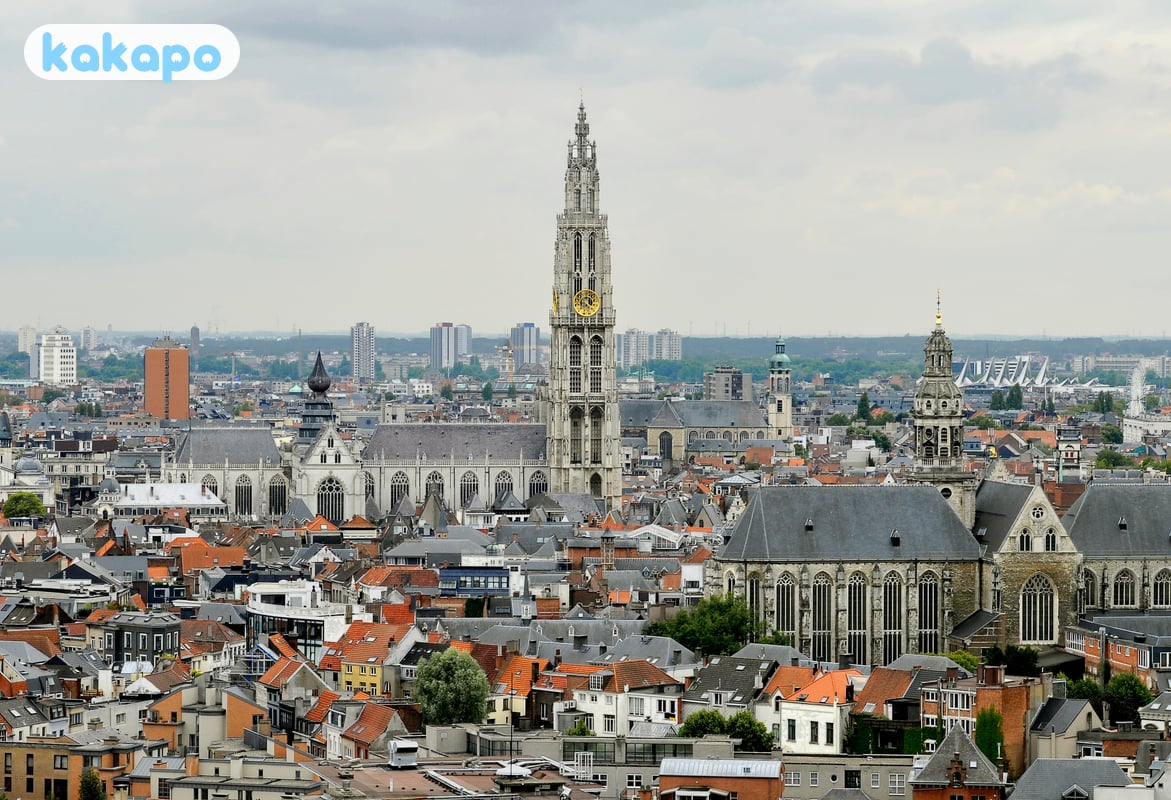
Antwerp is mid-sized (~530,000 residents). The Cathedral of Our Lady, Grote Markt with the Brabo fountain, MAS museum and the harbour-front, the diamond district immediately east of Centraal, the Het Steen castle, and the Plantin-Moretus Museum are the anchor experiences.
What surprises first-time visitors is how cleanly the city splits into distinct quarters. Antwerpen-Centraal station (regularly voted one of the world's most beautiful) sits east of the centre with the diamond district pressed up against its eastern flank; the Meir pedestrian shopping spine runs west from Centraal to the Cathedral and Grote Markt; the gentrified Het Eilandje docklands sit north with the MAS museum and the Red Star Line emigration museum; Het Zuid south of the centre is the museum-and-nightlife quarter with KMSKA and FOMU; and the Plantin-Moretus / de Wilde Zee shopping streets sit just west of the Meir. Walking between any two of these is 15-25 minutes.
The 2026 details worth knowing in advance: KMSKA (the Royal Museum of Fine Arts) reopened in 2022 after an 11-year restoration and is essential; the Rubens House remains closed for restoration through 2027 (Cathedral's Rubens paintings are the alternative); Westminster-style Westminster Council action on Diamond District counterfeit-cert workshops has accelerated since 2023; the port's cocaine-related violence (Antwerp is Europe's largest entry point for cocaine, 100+ tonnes intercepted in recent years) remains gang-on-gang and does not touch tourists who stay clear of port-area gates; and the de Wilde Zee small-shopping-streets quarter has become the best alternative to the Meir's chain dominance.
| Night safety | 86/100 |
|---|---|
| Scam / petty-crime risk | Medium |
| Violent crime (tourists) | Low |
| Most common scams | lab-grown diamonds sold as natural in the diamond district; private workshop tours that are sales pressure events; fake AWDC stickers |
| Safer neighbourhoods | Chinatown, Het Eilandje, Centraal Station |
| Data sources cited | 4 |
| Last verified |
What the score means — 86/100
- Healthcare (88) — UZA (university hospital) and ZNA Stuivenberg are major facilities.
- Transport (88) — De Lijn trams + buses; SNCB rail; Centraal Station as the hub.
- Personal safety (82) — high. The diamond + port-area scams are the real concerns.
- Air quality (80) — moderate; the port + ring road push NO₂ and PM2.5 up.
Diamond district — what to know if you're buying
- The reality: 1 sq km between Centraal Station, Pelikaanstraat, Hoveniersstraat. Most of the world's rough-diamond trade and ~50% of polished. Heavily Orthodox Jewish business community.
- Tourists buying: walking in cold is fine but you'll struggle to know real value. AWDC (Antwerp World Diamond Centre) certification + IGI/HRD lab certificates are the baseline.
- Common scams: lab-grown diamonds sold as natural at natural prices; "private workshop" tours that are sales pressure events; fake AWDC stickers.
- Buy from: established retailers with a permanent shopfront (Beguelin, Diamondland for tourists). Avoid hotel-introduced "private dealers".
- Pickpockets: the streets are dense + the bag in your hand may have €10,000 of jewellery. Cross-body bag in front; never put it down at a counter.
- Photography: many businesses prohibit photos in the streets near workshops. Respect the no-photo signs.
Centraal Station and the De Coninckplein fringe
- Centraal Station itself: the building is one of Europe's grandest. Safe inside; police + security visible.
- The rougher fringe: De Coninckplein and the streets immediately north of the station (around Astridplein, Van Wesenbekestraat) have visible drug-dealing and homelessness. Daytime fine; less comfortable late evening.
- The Chinatown area: clean, safe; immediately north of the station.
- Pickpockets: meaningful at the station crowds, especially the weekend Thalys/Eurostar arrivals from Paris.
- Walking from Centraal to Grote Markt: 20 min via De Keyserlei → Meir. Daytime safe; evening fine on the main pedestrian streets.
- Late night solo: stick to Meir or take a tram/Bolt rather than the side streets.
The port — don't wander it
- The reality: Antwerp is Europe's second-largest port. It's also the largest cocaine-entry point into Europe (~100+ tonnes intercepted in recent years). The port has a serious organised-crime economy operating in industrial spaces.
- Tourist relevance: zero. The port is a working industrial zone — you won't be invited; if you trespass, security and police take it seriously.
- The harbour-front you should visit: MAS museum, Het Eilandje (gentrified docklands with restaurants), Het Steen castle. These are the developed waterfront — completely safe.
- Don't accept "port tours" from anyone who isn't a licensed operator (Flandria boats run legitimate harbour cruises, ~€18).
- Port-area assassinations: drug-related; tourists never targeted, but stay clear of the working-port gates.
Cycling, walking, the trams
- Cycle infrastructure: dense and well-used. Velo bike share works.
- Walking in bike lanes: don't. Same hazard as Aarhus or Amsterdam. The bike lane is usually a red strip; the footpath is grey.
- Trams: De Lijn underground tram (premetro) under the centre. Single ticket €2.50. Most tourists won't need it — Cathedral, Grote Markt, MAS are walkable.
- Cobbles: Grote Markt and the medieval streets. Slippery in rain. Sturdy shoes.
- Cars in the centre: low-emission zone (LEZ); Belgian-registered foreign cars sometimes get caught by the system. Confirm your hire car compliance.
Cathedral, Rubens, MAS
- Cathedral of Our Lady: €13. Houses Rubens' Descent from the Cross + Elevation of the Cross. Don't skip — these are world-class.
- Rubens House: closed for restoration through 2027 — check status.
- MAS: Museum aan de Stroom. €12 main exhibits; the rooftop view is free. Worth a half-day.
- Plantin-Moretus: UNESCO printing-press museum. €12. Quietly excellent.
- Royal Museum of Fine Arts (KMSKA): reopened 2022 after long restoration. €20.
- Pickpockets: minor at Cathedral entrance crowd; otherwise low.
Money, food, the local etiquette
- Currency: euro.
- Cards: nearly universal. Many places are card-only post-pandemic.
- Tipping: not required (service included). Round up at restaurants for good service.
- Food: chocolate (Del Rey, The Chocolate Line), waffles (Désiré de Lille), Belgian beer everywhere. Bocadero brewery taproom is the new highlight.
- Cost: hotels €120-€250/night; the city is cheaper than Amsterdam or Brussels.
- Tap water: safe.
- Language: Dutch primary, French secondary, English very widely spoken.
Quarters of Antwerp — where to stay and what they feel like

- Centraal Station + Diamond District (Pelikaanstraat) — Antwerpen-Centraal itself is one of the world's most beautiful stations (the soaring 1905 cathedral-of-iron interior is the photograph). Immediately east is the 1 sq km diamond quarter: Pelikaanstraat, Hoveniersstraat, Schupstraat. Heavy plain-clothes and uniformed Politiezone Antwerpen presence; Orthodox Jewish community; many businesses photo-prohibited. The street fringe immediately north (De Coninckplein, Astridplein, Van Wesenbekestraat) has visible drug activity and homelessness late evening. Daytime fine.
- Meir + Cathedral / Grote Markt — the pedestrian shopping spine running west from Centraal to the medieval core. The Meir itself is chains; the side streets (Lange Klarenstraat, Wiegstraat) hold the independents. Cathedral of Our Lady (€13) with the Rubens Descent and Elevation; Grote Markt with the Brabo fountain, the City Hall and the guild houses. Tourist-saturated by day, lively by evening, sleepy by midnight.
- Het Eilandje (the docklands quarter, north) — gentrified former harbour district, now restaurants, MAS museum (€12, free rooftop view), Red Star Line museum, the Felix Pakhuis. The water still smells of port; the buildings are converted warehouses. Felix Pakhuis Saturday market (food and design). Walk from the Cathedral in 15 minutes via Sint-Paulusplaats.
- Het Zuid (the southern museum and nightlife quarter) — KMSKA (the Royal Museum of Fine Arts, €20, reopened 2022 after 11-year restoration — essential), FOMU photography museum, M HKA contemporary art. Bar streets along Vlaamsekaai and Waalsekaai. Antwerp's after-midnight quarter for the design-and-fashion crowd. Tram 12 from the centre.
- De Wilde Zee + Plantin-Moretus — the small-shopping-streets quarter just west of the Meir, the best alternative to the Meir's chain dominance. Korte Gasthuisstraat, Wiegstraat, Lombardenstraat. Plantin-Moretus UNESCO printing museum (€12, quietly excellent). The chocolate shops (Del Rey, The Chocolate Line in the former royal palace) and the Stadsfeestzaal converted shopping arcade.
- Sint-Andries ("het Quartier Latin") — the bohemian inner-west quarter between the Meir and the Schelde. Independent boutiques (Ann Demeulemeester, Dries Van Noten's flagship at the Modepaleis), the MoMu fashion museum, the Friday Market for antiques and books. Comfortably gentrified; safe day and night.
- Zurenborg + Cogels-Osylei — the eclectic-architecture residential pocket south-east of Centraal, the famous Art Nouveau / Neo-Renaissance / Tudor-revival street that fits ten styles into one block. Tram 11 from the centre. Residential and safe; daytime architectural walk.
- Linkeroever (the left bank) — across the Scheldt via the St. Anna pedestrian tunnel (free, 1933 wooden escalators down). Sint-Anneke beach (city beach with skyline views) and quiet residential streets. Day-trip rather than overnight base.
- The Port (Haven) — Europe's second-largest. Not a tourist destination; serious organised-crime undertones (cocaine entry point). Tourists should stay clear of the working-port gates. The harbour you should visit is Het Eilandje and the Het Steen castle — those are the developed waterfront.
If it's your first time visiting
- Best arrival: Eurostar/Thalys (now "Eurostar" since the 2023 merger) from Paris-Nord, London-St Pancras (via Brussels), Amsterdam-Centraal direct to Antwerpen-Centraal — 1h10m from Brussels, 2h from Amsterdam, 1h55m from Paris, 3h20m from London. Brussels Airport (BRU) to Centraal direct train, 35 min, €13. Brussels Charleroi (CRL — Ryanair) shuttle bus + train, ~2h, €25. Antwerp has no major commercial airport; Deurne (ANR) handles small regional flights.
- Best neighbourhood for your first night: between the Cathedral and Het Eilandje for the best walking radius (Hotel Julien, Pilar, Hotel O); Het Zuid for design-and-nightlife (FOMU + KMSKA on your doorstep); around Centraal for connection convenience but stay one block south of the station, not north into De Coninckplein.
- Day 1, jet-lag friendly: walk from Centraal down the Meir to the Cathedral (Rubens Descent of the Cross, €13, allow 90 min), lunch at one of the de Wilde Zee restaurants (Lombardia for veg, Camino for tapas, De Vagant for jenever and Flemish stew, €15-25), afternoon north to Het Eilandje and up the MAS rooftop (free), dinner around Vrijdagmarkt or Sint-Andries.
- De Lijn premetro is cheap and quick: €2.50 single, €7.50 day pass, contactless tap at gates. Most tourists won't need it — Cathedral, Grote Markt, MAS are walkable. Useful for KMSKA in Het Zuid (Tram 12) and Cogels-Osylei in Zurenborg (Tram 11). Velo bike share (€4 daily pass + €0.50 per 30 min over the first half-hour) is the local default.
- Eat the chocolate, drink the beer, skip nothing. Del Rey (the institutional pâtissier on De Keyserlei), The Chocolate Line in the former royal palace on the Meir (Dominique Persoone's flagship), Désiré de Lille for waffles (the original "lukken" recipe). Belgian beer: Bocadero Brewery taproom for new wave, De Vagant for traditional jenever, Den Engel on Grote Markt for the classic De Koninck Bolleke (the spherical local glass).
- Diamond-buying: don't try to wing it. If you actually want to buy, go to an established retailer with a permanent shopfront (Beguelin, Diamondland) and demand IGI, GIA or HRD lab certification. AWDC stickers are the local baseline. Lab-grown diamonds are now ~10-20% the cost of natural and are routinely sold as natural to unwary tourists. Avoid hotel-introduced "private dealers" and "private workshop" tours — these are sales-pressure events. Photography is prohibited in many diamond-quarter streets near workshops.
- Don't walk in bike lanes — Antwerp's cycle infrastructure is dense and well-used, the bike lane is usually a red strip with the footpath in grey. Locals will ring at you, fast cyclists will not. Same hazard as Amsterdam or Aarhus.
- Common rookie mistakes: standing in the bike lane to photograph Centraal (you'll get hit); booking a hotel north of Centraal in De Coninckplein on price (the fringe area is rough late); trying to visit the Rubens House (closed for restoration through 2027 — the Cathedral Rubens paintings are the alternative); driving into the centre (low-emission zone fines for non-compliant rentals, paid parking €4-6/hour); accepting unlicensed "port tours" (only Flandria boats, €18 for 75 minutes).
- If you only have one day: Cathedral + Rubens + Grote Markt morning, de Wilde Zee lunch, MAS rooftop afternoon, KMSKA closes at 17:00 so save it for a second day; dinner in Het Zuid or Sint-Andries.
Practical info — emergency numbers
- European emergency: 112.
- Police non-emergency: 101.
- Antwerp Police (Politiezone Antwerpen): 03 338 53 00.
- UZA (university hospital): +32 3 821 30 00.
Bring: a rain shell (Atlantic weather), shoes with grip for cobbles, a contactless card, an unlocked phone (Proximus, Orange BE, Base prepaid), and an EHIC/GHIC card.
Frequently asked questions
Is Antwerp safe to visit in 2026?
Yes. Antwerp scores 84/100 and is a comfortably safe Flemish city. Belgium sits at Level 2 on the US State Department advisory (baseline terrorism caveat). The realistic concerns are concentrated: opportunistic scams in the diamond district (where 80% of the world's rough diamonds change hands), the rougher fringe immediately around Antwerpen-Centraal station and the De Coninckplein area (drug-dealing, homelessness), the cocaine-related port underworld (which never touches tourists but means don't wander port-area gates), and standard cycling-pedestrian conflict. Walking around central Antwerp is unremarkable and quietly affluent in feel.
Is Antwerp safe at night?
Yes — the centre (Grote Markt, Cathedral area, Meir pedestrian street, Het Eilandje gentrified docklands) is safe and lively late. The fringe immediately around Centraal Station — De Coninckplein, Astridplein, Van Wesenbekestraat north of the station — has visible drug activity and homelessness late evening. Daytime fine, less comfortable after 10-11pm. Walk Meir or take a tram or Bolt rather than side streets. The Chinatown area north of Centraal is clean and safe. Solo women generally find Antwerp comfortable late.
Is Antwerp safe for solo female travellers?
Yes. Antwerp is among Europe's safer cities for solo women — Flemish street culture is reserved rather than catcalling, the centre is well-lit and compact, and the local fashion-and-design demographic skews progressive. Standard precautions in nightlife (drink awareness on Het Zuid bars and around Centraal Station late) handle the only realistic risks. Solo women routinely cycle alone and use the De Lijn premetro at all hours. Avoid the De Coninckplein fringe late.
Can you drink tap water in Antwerp?
Yes — Belgian tap water is safe, tested to EU standards, and locals drink it routinely (though Belgians sometimes prefer bottled for taste, particularly carbonated Spa Rouge). Restaurants serve tap water (kraantjeswater / eau du robinet) on request, though Belgian custom historically defaults to bottled and waiters sometimes resist. Public taps are common across the centre. Carry a refillable bottle.
What's the biggest scam to avoid in Antwerp?
Diamond-district lab-grown-as-natural fraud — a 'private dealer' offers a 'wholesale price' on a diamond that's actually a lab-grown stone (~10-20% the cost of natural) sold at natural prices. Only buy from established retailers with a permanent shopfront and demand IGI, GIA or HRD lab certificates (the gold-standard labs). AWDC certification is the local baseline. Avoid hotel-introduced 'private dealers' and 'private workshop' tours that are sales-pressure events. Also: DCC at card terminals (always pay in EUR) and pickpocketing on weekend Thalys/Eurostar arrivals at Centraal.
Should I worry about cocaine-related port violence?
No — it does not touch tourists. Antwerp is Europe's largest cocaine entry point (100+ tonnes intercepted in recent years) and there is real, serious organised-crime violence in the port economy — including the high-profile 2022 attempted assassination of the Justice Minister. But the violence is gang-on-gang, occurring in industrial port spaces, and tourists are never targeted. The risk is only if you trespass into the working port (don't) or accept unlicensed 'port tours' (only book Flandria boats or other licensed operators, about €18 for 75 minutes).
Sources
Run a business in Antwerp?
Show visitors your Antwerp business is a safe choice. The free Verified by Kakapo badge puts Antwerp's live safety score on your website, links back to your verified page, and updates itself. No cost.
Get the free badge →