


Is Brussels, Belgium Safe? A 2026 Travel Safety Guide
Gare du Midi pickpockets, the Molenbeek reputation vs reality, the post-2016 security backdrop, and the realistic visitor risks of the EU's de-facto capital.

Brussels is broadly safe for tourists, with the realistic concerns concentrated at Gare du Midi (the high-speed rail terminal — Europe's most-pickpocketed station per some surveys), the persistent reputation of Molenbeek (which is mostly outsized — daytime visits are entirely fine), and the post-2016 elevated terror-threat baseline that informs the visible police presence at major monuments and metro hubs.
Both the UK FCDO and the US State Department list Belgium at low advisory levels with general European baseline notes. Crime against tourists in central Brussels is moderate; pickpocketing at Gare du Midi, on Metro line 1, and around Grand Place is the dominant pattern; violent crime against tourists rare.
The honest framing for first-time visitors: Brussels is more layered than its tourism-marketing image. The Grand Place is genuinely magnificent. The EU quarter is bureaucratic and quiet. The Saint-Gilles and Ixelles districts are gentrified and lively. The South-station area is industrial and rough at the edges. The whole city is bilingual (French + Dutch) and runs on bureaucratic time.
Visiting Brussels for the first time, the thing that catches most travellers off-guard isn't crime — it's how bilingual and bureaucratic the city feels at the same time. Every street sign, every metro announcement, every official notice is in both French and Dutch (and the EU quarter adds English). Wallonians, Flemish and bruxellois mix; Brussels itself is officially bilingual French-Dutch but functionally French-dominant. Greet with "Bonjour" or "Goedendag" depending on context, but locals will switch to English fluently if you struggle. The city's food culture is genuinely good and underrated — moules-frites at any brasserie €22-28, Belgian fries at Maison Antoine €4 with sauce, a Trappist beer at A La Mort Subite €5-7, dark chocolate at Mary or Pierre Marcolini €60+ a box (for the real stuff, not the tourist-strip "samples").
In 2026, the specific things that have changed since pre-pandemic include: STIB tap-to-pay rolled out across every metro, tram and bus reader (€2.10 single, €7.50 day, €15 group day for up to 5); the Gare du Midi renovation is finally underway with disruption through 2026-2027; the city's Low Emission Zone (LEZ) has tightened — rental cars with older diesel engines face €350 fines unless registered in advance at lez.brussels; the post-2016 elevated terror-threat baseline remains visible (armed Sentinelle-style police at metro hubs, Grand Place, Atomium) but day-to-day operates exactly like pre-2016 Brussels; and the Eurostar service to London now operates from a refurbished Midi terminal with French/Belgian passport pre-checks integrated.
| Night safety | 67/100 |
|---|---|
| Scam / petty-crime risk | Medium |
| Violent crime (tourists) | Low |
| Most common scams | Grand-Place petition/clipboard pattern; free Belgian chocolate sample; restaurant cover-charge surprise |
| Safer neighbourhoods | Grand Place / Centre, Sablon, Ixelles / Saint-Gilles |
| Data sources cited | 4 |
| Last verified |
What the score means — 76/100
- Healthcare (90) — Belgian universal healthcare excellent. Saint-Pierre, Erasme, and Saint-Luc university hospitals all major emergency facilities.
- Transport (84) — STIB metro, trams, buses. Cheap. SNCB intercity rail. The Eurostar/TGV terminals are at Midi.
- Personal safety (76) — moderate. Pickpocketing concentrated at Midi/Nord stations; otherwise low-violence.
- Night (76) — Saint-Gilles, Ixelles, Sablon alive late and policed. Specific zones around Midi/Nord less polished after dark.
Gare du Midi — the actual #1 risk
Brussels-South (Gare du Midi / Brussel-Zuid) is the high-speed rail hub for Eurostar, TGV, and Thalys. It's also one of the most-pickpocketed stations in Europe.
- Pickpocket teams work the platform escalators, the indoor concourse, and the metro interchange at peak commute and arrival times.
- The streets immediately around Midi (Rue de France, Boulevard du Midi, the area toward Anderlecht) are visibly grittier than central Brussels. Daytime fine; late-night solo walks not advised.
- Sunday markets at Gare du Midi — one of Europe's largest. Vibrant; pickpocket-active. Phone in front pocket; wallet in front pocket.
- Practical advice: arrive at Midi, get on the metro/taxi, leave. Don't linger. Same goes for Gare du Nord — same dynamic, smaller scale.
Molenbeek — reputation vs reality
- Molenbeek-Saint-Jean is a working-class district just north-west of the centre. It became internationally known after the 2015 Paris attacks and 2016 Brussels attacks because some of the perpetrators were linked to the area.
- For tourists in 2026: Molenbeek is a normal Brussels district — multicultural, residential, with cafés and shops. Daytime visits are completely safe. The Canal walk along Quai des Charbonnages is genuinely pleasant.
- What you won't experience: anything resembling the international media's "no-go zone" caricature. Police presence is normal; the area is fully integrated into the rest of Brussels.
- What's true: the wider Brussels security posture (visible armed police at metro hubs, Atomium, Grand Place) is partly a legacy of 2016. That's noticeable but not alarming.
Areas — comfortable everywhere a tourist would go
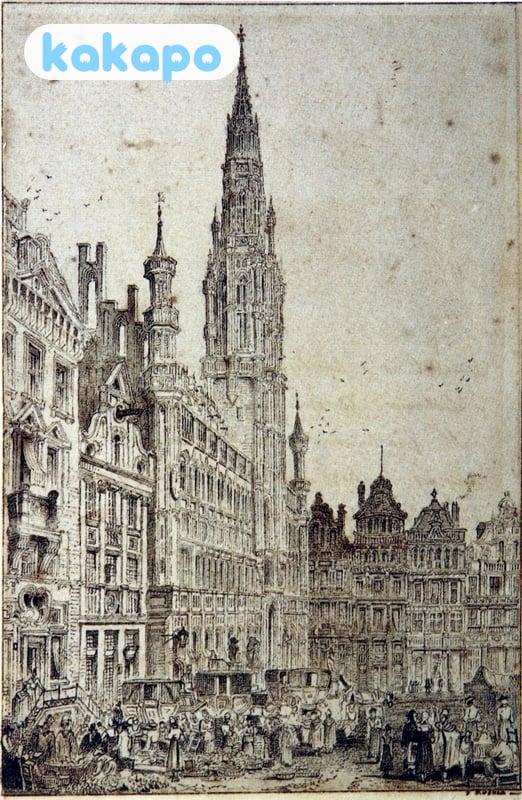
Recommended for visitors: Grand Place / Centre (the historic core — heavily policed and tourist-anchored), Sablon (chocolate shops, antiques, calm), Ixelles / Saint-Gilles (gentrified, cafés, restaurants), European Quarter (Quartier Européen) (EU institutions, business, quiet weekends), Marolles (gentrified, flea market at Place du Jeu de Balle), Schaerbeek (mostly residential, fine).
Stay aware after dark: around Gare du Midi and Gare du Nord (transit-edge areas), parts of Anderlecht outer streets (residential, no specific tourist relevance).
There are no zones we'd actively tell tourists to avoid in central Brussels.
Metro, tram, taxis, the airport

- STIB Metro: 4 lines (1, 2, 5, 6). Single ticket €2.10, day pass €7.50. Tap-on with bank card or MOBIB transit card.
- Trams: the historic 92 (Schaerbeek-Forest), the 81 (Saint-Gilles), tram 7 along the inner ring.
- Taxis: regulated, metered; airport flat-rate ~€45.
- Bolt and Uber: both work, generally cheaper.
- Brussels Airport (BRU) to centre: SNCB train €11, ~17 min to Midi. Taxi €45 fixed-rate.
- Brussels-Charleroi (CRL): low-cost airport 50 min south. Shuttle bus €18.50.
Scams + the Bruxelles-Midi station pattern

- Bruxelles-Midi / Brussels-South / Brussel-Zuid station: Brussels' Eurostar + Thalys hub. The single most-pickpocketed station in northern Europe. Wallet front pocket, phone zipped, bag in front on escalators. Don't loiter outside the station — the surrounding blocks (Cureghem, the Anderlecht side) are scrappier than the typical European arrival impression.
- Grand-Place petition / clipboard pattern: standard European scam. Decline at start.
- "Free Belgian chocolate sample": tourist-strip touts; the "free" sample leads to high-pressure €60-100 box sales. Reputable chocolatiers (Mary, Marcolini, Neuhaus, Wittamer, Laurent Gerbaud) post fixed prices in their own boutiques.
- Mannekin Pis tourist-strip pricing: a few cafes near the statue charge €8-12 for a coffee (vs €3-5 a few blocks away). Walk one block; pricing normalises.
- Restaurant cover-charge surprise: a few tourist-trap restaurants in the Îlot Sacré (the lane behind Grand-Place) add automatic €5+ per-person cover charges. Reputable Belgian restaurants don't; check the menu before sitting.
- Pickpockets on Metro Line 1 + 5: real, especially around Gare Centrale + De Brouckère stops.
- Beggar-children pattern: child + adult teams approach tourists; child distracts while adult lifts wallet. Walk past without engaging.
- ATM skimming: prefer ATMs inside bank lobbies (BNP Paribas Fortis, KBC, ING).
- Card-terminal DCC: always pay in EUR.
Day trips — Bruges, Ghent, Antwerp, Waterloo
- Bruges: 1h by direct train from Brussels-Midi. The medieval canal-town day-trip. Stay overnight if possible (see our Bruges guide for the day-vs-night magic-hour rule).
- Ghent: 35 min by train. Combining Bruges + Ghent on the same day is workable but tight. Ghent has fewer day-trippers + similar architecture.
- Antwerp: 45 min by train. Diamond district, Cathedral of Our Lady (Rubens paintings), fashion-school scene. Less touristed than Bruges.
- Waterloo battlefield: 20 min south. 1815 Napoleonic-war site, lion's mound, museum. Half-day visit.
- Leuven: 30 min east by train. University town, the Stella Artois brewery + Old Market beer hall ("the longest bar in the world").
- Mechelen: 30 min north by train. Calm, medieval, underrated. The bell-ringing school (Carillon) is world-famous in its niche.
- Mons: 1h south. European Capital of Culture 2015. Doudou festival mid-June.
- Driving: limited use for day-trips since the SNCB rail network is comprehensive. If driving, the Belgian motorway tolls don't exist (free) but city-centre LEZ (Low Emission Zones) require online registration — fines $200+ for non-compliance.
Neighbourhood-by-neighbourhood breakdown
- Grand-Place / Îlot Sacré (Centre) — the magnificent UNESCO square, the Town Hall, the Galeries Royales Saint-Hubert, Manneken Pis. Heavily policed, very safe. The Îlot Sacré lanes behind the square are tourist-trap restaurant territory — read menus and check for cover charges before sitting.
- Sablon — south-east of Grand-Place, antiques quarter, chocolate boutiques (Wittamer, Marcolini, Neuhaus). Calm, upscale, very safe.
- Saint-Gilles — south, gentrified former working-class district, Art Nouveau architecture, Parvis de Saint-Gilles café strip. Lively at night, very safe with normal awareness.
- Ixelles / Elsene — south-east, the most enjoyable evening neighbourhood, the Châtelain square, Place Flagey, the Étangs d'Ixelles ponds. Gentrified, restaurant-rich, very safe.
- Marolles — south of Grand-Place, gentrifying working-class district, the famous Place du Jeu de Balle flea market (daily). Atmospheric, safe, with character.
- European Quarter / Schuman — east, the EU institutions, Parc du Cinquantenaire, the Berlaymont building. Polished, very safe, dead quiet on weekends.
- Molenbeek — north-west, working-class multicultural district. Famous internationally for the 2015-2016 attacks media coverage but in 2026 it's a normal residential Brussels district with cafés and shops. Daytime visits entirely safe; the Canal walk along Quai des Charbonnages is pleasant.
- Around Gare du Midi (Brussels-South / Brussel-Zuid) — the Eurostar/TGV/Thalys terminal. The single most-pickpocketed station in northern Europe. The streets immediately outside (Cureghem, toward Anderlecht) are visibly scrappier than central Brussels — daytime fine, late-night solo less so. Sunday market on the station forecourt is one of Europe's largest and most pickpocket-active.
- Schaerbeek — north, mixed residential, the Halles de Schaerbeek and African quarter (Matonge). Mostly safe, some scrappier outer streets.
- Anderlecht (around the abattoir market) — west, working-class, Sunday morning food market is excellent. Some outer streets gritty.
If it's your first time visiting
- Best arrival airport: Brussels-Zaventem (BRU), 12 km north-east. To centre: SNCB train €11 in 17 min to Bruxelles-Midi, Central or Nord (the standard option), or taxi €45 flat-rate. Brussels-Charleroi (CRL) for low-cost — Flibco shuttle €18.50 in 50 min to Midi.
- Public transport: STIB metro (4 lines), trams and buses. Tap-to-pay on every reader or use the MOBIB card. €2.10 single, €7.50 day pass, €15 group day. SNCB intercity rail from Midi/Central/Nord to Bruges, Ghent, Antwerp, Liège.
- Best neighbourhood for your first night: Sablon or Grand-Place for centrality, Ixelles or Saint-Gilles for atmosphere and food. Avoid first-time bookings directly around Gare du Midi or Gare du Nord — the rooms are cheaper but you're in the city's grittiest pocket.
- Day 1, jet-lag friendly: walk Grand-Place at golden hour, the Galeries Royales Saint-Hubert for chocolate browsing, moules-frites lunch at a Sablon brasserie, afternoon Magritte Museum (€10), evening Belgian beer tasting at A La Mort Subite or Délirium (the bar with 2,000+ beers). No EU institutions; no Bruges day-trip yet.
- Day trips: Bruges (1h direct train from Midi, €15.40), Ghent (35 min, €9.20), Antwerp (45 min, €7.90), Waterloo (20 min south), Leuven (30 min east). Combine Bruges + Ghent in a tight day or do them properly with an overnight in Bruges.
- Common rookie mistakes: arriving at Midi and accepting a "I'll help with your bag" from a stranger (it's the lift); buying a chocolate "free sample" that turns into a €60 box; sitting at an Îlot Sacré restaurant without checking for cover charges; paying €10 for a coffee at a tourist-strip café next to Manneken Pis (walk one block); paying tolls (Belgium has no road tolls, it's free).
- Belgian fries: from a friterie/frietkot stand, not a restaurant. Maison Antoine (Place Jourdan, Etterbeek) and Frit'Flagey (Place Flagey, Ixelles) are the classics — €4 with sauce, eaten standing up.
- Tap water is safe but Belgians don't habitually drink it at restaurants — you can ask for "une carafe d'eau" but expect a polite refusal at fancier places. The beer culture is the alternative.
Practical info — emergency numbers
- European emergency: 112.
- Police (non-emergency): 101.
- Saint-Pierre Hospital: +32 2 535 31 11.
- Tourist Police: at Grand Place; English-speaking.
Bring: a card without foreign-transaction fees, an unlocked phone (Proximus, Orange BE, Base prepaid SIMs), comfortable shoes, and a waterproof jacket (Brussels rains). Tap water is safe.
Frequently asked questions
Is Brussels safe to visit in 2026?
Yes — broadly safe. Real concerns are concentrated at Gare du Midi (the high-speed rail terminal — Europe's most-pickpocketed station per some surveys), the persistent reputation of Molenbeek (which is mostly outsized), and the post-2016 elevated terror-threat baseline that informs visible police presence at major monuments.
Is Molenbeek dangerous?
No for visitors in 2026. Molenbeek-Saint-Jean is a normal working-class Brussels district — multicultural, residential, with cafés. Daytime visits are completely safe. The 2015-2016 terror-attack media coverage attached an outsized 'no-go zone' caricature that doesn't match reality.
Is Gare du Midi really that bad for pickpockets?
Yes. The Eurostar/TGV/Thalys hub is one of the most-pickpocketed stations in northern Europe. Pickpocket teams work the platform escalators, indoor concourse, and metro interchange at peak commute + arrival times. Practical advice: arrive, get on metro/taxi, leave. Don't linger.
Is Brussels safe at night?
Yes for central areas (Grand Place, Saint-Gilles, Ixelles, Sablon). Stay aware around Gare du Midi + Gare du Nord (transit-edge areas, scrappier after dark). Use Bolt/Uber for late-night transfers.
Can you drink tap water in Brussels?
Yes — Belgian tap water is safe + free at restaurants if you ask.
Do I need to worry about terrorism in Brussels?
Belgium's threat level remained elevated post-2016 (the March 2016 Brussels Airport + metro attacks). Visible armed police at metro hubs + Atomium + Grand Place is normal. Practical day-to-day visitor impact: zero. No specific Brussels attack since 2016.
Sources
Run a business in Brussels?
Show visitors your Brussels business is a safe choice. The free Verified by Kakapo badge puts Brussels's live safety score on your website, links back to your verified page, and updates itself. No cost.
Get the free badge →