


Is Ankara, Turkey Safe? A 2026 Travel Safety Guide
Ankara is comfortably safe and less touristy than Istanbul. The honest concerns: government-quarter security, conservative dress norms, summer + winter extremes, and Cappadocia day trips.

Ankara is comfortably safe for visitors and notably less tourist-targeted than Istanbul. Crime against foreigners is mild. The realistic concerns are practical: Anıtkabir (the Atatürk mausoleum) and the government quarter (Çankaya) have their own security etiquette + occasional protest closures, dress norms are more conservative than Istanbul (especially around mosques), summer heat regularly tops 35°C and winter dips below -10°C with snow, and Ankara is a 4-5h drive from Cappadocia which most visitors come to combine with.
Turkey sits at Level 2 on the US State Department's advisory list ("exercise increased caution"); UK FCDO advises against all but essential travel within 10 km of the Syrian border (very far from Ankara). The honest framing for visitors: Ankara is the political capital, ~5.7 million population, with a serious-government feel rather than a touristic one. Most tourists come for the Anıtkabir + the Museum of Anatolian Civilizations and treat it as a 1-2 day stop on the way to Cappadocia.
The defining experiences: Anıtkabir, Ankara Citadel (Ankara Kalesi), Museum of Anatolian Civilizations, the old Hamamönü neighbourhood, Atakule observation tower, and Cappadocia 280 km southeast.
The city's shape divides cleanly into three layers that orient any visit. Ulus, in the historic north, is the original city — Roman-era Augustus Temple, the cobbled citadel quarter, Hacı Bayram Mosque, and the Ottoman Hamamönü streets. Kızılay, in the centre, is the modern political and commercial heart — government offices, the metro hub, Atatürk Boulevard cutting north-south. Çankaya, climbing the hills to the south, is the embassy, ministry, and upmarket residential quarter, anchored by Atakule and the Tunalı Hilmi café strip. Most short-stay visitors base themselves in Kızılay or lower Çankaya and treat Ulus as a daytime excursion. Anıtkabir sits on its own hill between Kızılay and the western edge, reached by a steady walk from Tandoğan metro.
| Night safety | 76/100 |
|---|---|
| Scam / petty-crime risk | Low |
| Violent crime (tourists) | Low |
| Most common scams | DCC card-reader scam; pickpocketing in the bus station area; political demonstrations in Kızılay |
| Safer neighbourhoods | Hamamönü, Bahçelievler |
| Data sources cited | 4 |
| Last verified |
What the score means — 80/100
- Healthcare (86) — Hacettepe University Hospital + Ankara City Hospital are among Turkey's best.
- Transport (84) — Ankaray + 4-line metro + buses; high-speed rail (YHT) to Istanbul/Konya.
- Personal safety (82) — high. Pickpocketing is mild compared with Istanbul.
- Air quality (76) — moderate; winter lignite-heating + traffic inversions push particulate up.
Anıtkabir — the etiquette

- What it is: Atatürk's mausoleum. Free entry; the most important secular monument in Turkey.
- Dress: smart-casual; no shorts, no tank tops, no flip-flops. You will be turned away.
- Behaviour: silent on the ceremonial plaza; walk slowly; no Instagram poses on the steps. Photography fine elsewhere.
- Honour Guard: motionless soldiers; do not pose with them.
- Closing: ~5pm winter, 5:30pm summer. Allow 2-3 hours total.
- Approach: through metal detectors at outer gate. Bag inspection. Genuinely respectful security.
- Atatürk + Independence War Museum: included in the complex. Excellent.
Government quarter + protest awareness
- Çankaya district: presidential complex, ministries, embassies. Visible police presence; barricades on certain anniversaries.
- Kızılay Square: the central square; political demonstrations are occasional, sometimes broken up.
- What to do during a protest: walk away, not toward. Police presence is heavy; tourists are not targeted but tear gas dispersal can affect bystanders.
- Photography: fine of city + monuments. Don't photograph police, military buildings, or police operations.
- Embassy quarter (Çankaya): heavily secured. Don't loiter near gates; you may be questioned politely.
- News awareness: check before visits during major political dates (April 23, October 29, anniversaries).
Dress norms + mosque etiquette
- The reality: Ankara is more conservative than Istanbul, less than rural Anatolia. Modern central neighbourhoods (Kavaklıdere, Tunalı Hilmi, Bahçelievler) feel European; older neighbourhoods (Hamamönü, Ulus) more conservative.
- Mosque entry: shoulders + knees covered for everyone; women cover hair. Free entry; remove shoes.
- Hacı Bayram Mosque: free; near Ulus.
- Kocatepe Mosque: largest in Ankara; free entry.
- Daily life: jeans + t-shirts fine in modern neighbourhoods; smart-casual recommended for evenings.
- Solo women: comfortable in modern neighbourhoods + main streets at most hours; in older neighbourhoods + at night, dress slightly more conservatively.
- Alcohol: legal + widely available in modern neighbourhoods; limited or absent in conservative areas.
Weather — continental Anatolian extremes
- Summer (July-August): 30-35°C standard, occasional 38°C+. Dry heat.
- Winter (Dec-Feb): -5 to 5°C, cold snaps to -15°C. Snow several days a month.
- Spring + autumn: best months — April-May, September-October.
- UV: 9-10 in summer; sunscreen + hat.
- Snow + ice in winter: pavements get glassy. Sturdy boots.
- Air quality: winter coal-heating + traffic produces inversions. Sensitive lungs notice.
Citadel, museums, the old town
- Ankara Citadel (Hisar): 7th-century walls; free to walk inside. Cobbled, steep, 360° city view from the top.
- Museum of Anatolian Civilizations: world-class Bronze Age + Hittite collection. ~₺200 (~€6).
- Hamamönü: restored 19th-century Ottoman quarter; bars + cafés + galleries.
- Cobbles in citadel: irregular + slick when wet; sturdy shoes.
- Pickpockets: low; mild at Ulus + crowded buses.
- Late-night Hamamönü: gentrified + safe; police visible.
Trains, buses, Cappadocia day-trip reality
- Esenboğa Airport (ESB): 28 km north. Belko Air bus to AŞTİ ~₺50, 45 min. Taxi ₺350-500.
- YHT high-speed rail: Ankara ↔ Istanbul Pendik 4h, ~₺350-600. Ankara ↔ Konya 1h45m.
- Buses: from AŞTİ (Ankara intercity bus station) to Göreme/Cappadocia ~5h, ~₺400-600. Comfortable; Kamil Koç + Metro Turizm are reliable.
- Driving to Cappadocia: 280 km via O-21. ~3-4h. Roads good.
- Currency: Turkish lira (TRY/₺). High inflation — confirm prices before paying.
- Cards: widely accepted; small lokantas + markets cash.
- "Don't pay in TRY" (DCC): card-reader scam; always pay in lira.
Neighbourhood-by-neighbourhood breakdown
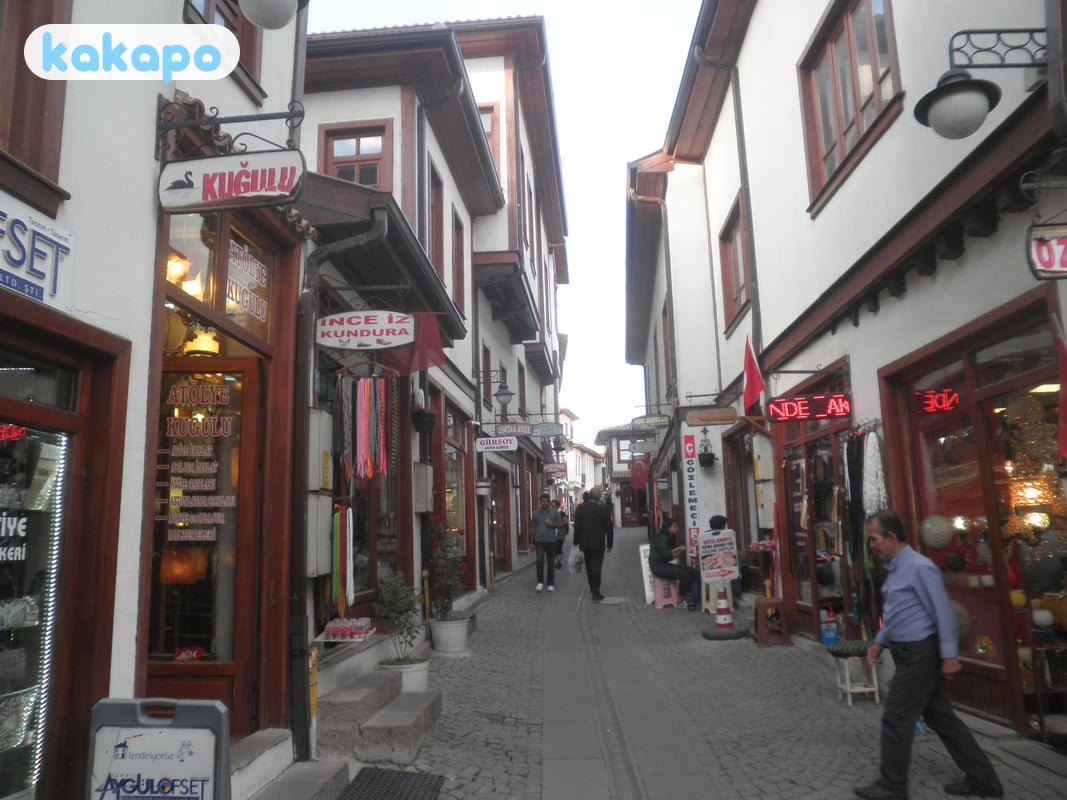
- Kızılay — the modern centre. Atatürk Boulevard, Kızılay Square (the original Red Crescent building giving the area its name), Sakarya Caddesi pedestrian eat-street with cheap meze and beer halls, and the Kızılay metro interchange. Police presence visible; this is where occasional political demonstrations happen, but tourist incidents are rare. The default base for most visitors.
- Çankaya + Tunalı Hilmi — the affluent south, climbing toward the presidential complex. Tunalı Hilmi Caddesi is Ankara's middle-class promenade — cafés (Brew Lab, Caribou), bookshops, mid-range shopping. Atakule observation tower (₺50, ~125m, the city's old skyline marker) sits at the top. Embassies cluster south of here — visible police, no loitering near gates.
- Ulus + the Citadel (Hisar) — the historic north. Roman-era Augustus and Roma Temple, the 7th-century citadel walls you can freely walk inside, the Museum of Anatolian Civilizations (₺200, world-class Hittite collection), and the steep cobbled lanes around Hisarparkı Caddesi. Conservative dress preferred; petty pickpocketing in the bus station area; safer than its reputation. Daytime visit; not a base.
- Hamamönü — restored late-Ottoman quarter just south-west of Ulus. Whitewashed wooden houses, calligraphy workshops, art galleries, çay bahçesi tea gardens. Gentrified, evening-pleasant, photogenic without being touristy. The 18th-century Karacabey Hamam still operates.
- Bahçelievler + Emek — the leafy 1950s residential streets west of Kızılay, around 7. Cadde. Restaurant row of the academic-bureaucratic middle class — Karadeniz Pidecisi, Köfteci Yusuf, the Atakule-area meyhane circuit. Safe any hour.
- Kavaklıdere — south-east of Kızılay, the original embassy area before Çankaya took over. The Sheraton Ankara and Hilton Garden Inn sit here; the older "diplomatic" feel persists. Quiet residential evenings.
- Anıtkabir + Maltepe — Atatürk's mausoleum sits on its own hill in Maltepe district, west of Kızılay. Reach via Tandoğan metro and a 15-minute uphill walk, or taxi to the gate. Free, ceremonial-secular pilgrimage site. Strict dress code (no shorts, tank tops, flip-flops) and no posing on the ceremonial plaza.
- Söğütözü + the YHT station — the modern business district anchoring the Ankara high-speed rail terminus. Armada and CEPA shopping centres, the bus station (AŞTİ) two metro stops further. Soulless but practical for transit-heavy itineraries.
- Sincan + Mamak (outer districts) — sprawling working-class suburbs north-west and east. Not unsafe in any tourist sense — just nothing to see and a long way back. Skip unless visiting friends.
- Beypazarı + Gordion (regional day-trips) — Beypazarı, 100km west, is the preserved Ottoman town with the silver-jewellery bazaar and the famous 80-layer baklava. Gordion (60km west), the ancient Phrygian capital with Midas's tumulus, is a half-day archaeology trip.
If it's your first time visiting
- Getting in: Esenboğa Airport (ESB) is 28 km north. Belko Air shuttle bus to AŞTİ via Kızılay is ₺140 (~$4, every 30 min, 45-60 min). Taxi ₺500-700; BiTaksi app is reliable. Skip "freelance" airport touts in arrivals — they overcharge 3-4×.
- YHT high-speed rail from Istanbul: Istanbul Pendik to Ankara YHT 4h, ₺350-600 in eko / business; runs hourly. Book on tcddtasimacilik.gov.tr or in the TCDD app. Cheaper, more reliable, and more comfortable than flying when you factor airport time. Pendik is the Asian-side Istanbul terminus; Söğütözü is the Ankara end.
- Best base neighbourhoods: Kızılay for walkability and metro access (Swissôtel, Lugal — A Luxury Collection Hotel, Divan Ankara); Çankaya / Tunalı Hilmi for upmarket residential feel (Sheraton Ankara, Hilton Garden Inn). Avoid budget guesthouses in Ulus on a first visit — the citadel area is fine but unfamiliar narrow streets at night aren't where you want to learn.
- Metro + Ankaray: 4 metro lines plus the Ankaray light rail. Kentkart (₺18 + top-up at any station kiosk) gets you the local fare ₺15 a ride; contactless bank card works at ₺27. The M1 line (Kızılay-Batıkent) and M2 (Kızılay-Çayyolu) cover most visitor routes. Closes 00:00.
- Cash + cards: lira inflation has been high; prices update fast — re-confirm hotel and tour quotes near the date of travel. ATMs at İş Bankası, Garanti BBVA, and Akbank give the best rates; airport Forex is brutal. Always decline DCC on the card reader and pay in lira (saves 5-10%). Cards work in restaurants and shops; cash for taxis, bazaars, and small lokantas.
- Mosque etiquette: Kocatepe Mosque (the largest, modern, free entry) and Hacı Bayram (next to the Augustus Temple, free, more atmospheric) both need shoulders and knees covered for everyone, hair covered for women (scarves available at the door). Shoes off. Avoid prayer times (5 daily; midday and Friday lunchtime are the dense slots).
- Day-trip planning: Cappadocia is 280km — book a 2-night overnight, not a day trip. Beypazarı (Ottoman Sunday lunch + silver bazaar, 100km west) makes a real day trip; Gordion (Phrygian capital, 60km west) a half-day. The road to both is straightforward; rent through a hotel desk rather than from the airport.
- Food orientation: Ankara's signature is Ankara tavası (lamb shank casserole) and kuzu tandır (clay-oven lamb). Sakarya Caddesi for cheap rakı + meze; Kebapçı İskender (the Ankara branch of the Bursa original) for the best İskender kebap; Quick China and Trilye for restaurant dinners; Hamamönü's Çengelhan Brasserie for atmosphere. Vegetarian: Bistro Vegetarian on Tunalı Hilmi.
- Common rookie mistakes: arriving in shorts at Anıtkabir (refused entry); photographing the presidential complex or any military installation (penalties severe); accepting unofficial airport taxis; not booking the YHT in advance for weekend slots (sells out); planning Cappadocia as a same-day return; assuming Istanbul's bar-friendly dress code applies in Ulus mosques; forgetting that Ankara closes earlier than Istanbul (most cafés shut by 23:00, restaurants by midnight).
Practical info — emergency numbers
- Unified emergency: 112.
- Police: 155.
- Tourist police (Ankara): 0312 384 06 06.
- Ankara City Hospital: +90 312 552 60 00.
- Hacettepe University Hospital: +90 312 305 50 00.
Bring: layered clothing for big seasonal swings, sturdy grippy shoes, a head scarf if visiting mosques, a contactless card, an unlocked phone (Turkcell, Vodafone TR, Türk Telekom prepaid), and travel insurance.
Frequently asked questions
Is Ankara safe to visit in 2026?
Yes — Ankara scores 80/100 and is notably less tourist-targeted than Istanbul. The US State Department lists Turkey at Level 2 (exercise increased caution); UK FCDO advises against all but essential travel within 10km of the Syrian border, which is roughly 700km from Ankara. Crime against foreigners is mild. Realistic concerns are practical rather than violent: the Çankaya government quarter and Kızılay Square see occasional political demonstrations (April 23, October 29 anniversaries are flashpoints), winter air quality drops from lignite-heating inversions, and the conservative dress norms (especially around mosques and in Ulus/Hamamönü) are stricter than Istanbul.
Is Ankara safe at night?
Yes in the modern central neighbourhoods. Kavaklıdere, Tunalı Hilmi (the main café/restaurant strip), Bahçelievler and the gentrified Hamamönü are routine evening walks, well-lit and police-visible. Avoid loitering near the embassy gates in Çankaya or near the presidential complex — you may be politely questioned. Older neighbourhoods around Ulus feel more conservative after dark, and solo women should dress slightly more conservatively there. BiTaksi is the working taxi app (Uber operates as a taxi-hail in Turkey, not a private-driver service since 2019); BolT is gaining ground. Always insist on the meter. Unified emergency is 112; police 155.
What's the Anıtkabir etiquette I need to know?
Anıtkabir is Atatürk's mausoleum and the most important secular monument in Turkey — it's not a casual photo stop. Dress smart-casual: no shorts, no tank tops, no flip-flops, or you will be turned away at the outer gate. On the ceremonial plaza, walk slowly and stay silent — no Instagram poses on the steps. Don't pose with the motionless Honour Guard soldiers. Entry is free; allow 2-3 hours including the excellent Atatürk and Independence War Museum within the complex. Bags go through metal detectors. Closing is around 17:00 winter, 17:30 summer. Photography is fine elsewhere on site.
Can you drink tap water in Ankara?
Officially yes but practically no — Ankara tap water meets Turkish standards on paper but the chlorine and mineral taste push virtually everyone to bottled, and the municipal supply has had periodic E. coli alerts in outer districts (Mamak, Sincan) historically. Bottled water is cheap (₺5-10 for 1.5L from any bakkal) and the universal default. Hotels stock it; restaurants serve it. Tea (çay) and Turkish coffee are made with boiled water and are fine everywhere. Ice in modern Kavaklıdere restaurants is fine; be cautious with ice in roadside köfte stands. Watch the high-inflation pricing — confirm the bill before paying with card, and always pay in lira (decline DCC).
Should I worry about the Cappadocia day trip from Ankara?
Logistically more than safety-wise. Cappadocia is 280km southeast via the O-21, a 3-4h drive or 5h intercity bus from AŞTİ (Kamil Koç and Metro Turizm are the reliable operators, ₺400-600). For a real Cappadocia experience you need 2 nights minimum — day-tripping is exhausting and you'll miss the dawn hot-air balloon flights which are the headline. The YHT high-speed rail from Ankara to Konya (1h45m) is an alternative jumping-off point if you want a stop en route. Roads are good but winter snow on the central Anatolian plateau closes them periodically — check before driving December-February. Don't photograph military installations along the route.
Sources
Run a business in Ankara?
Show visitors your Ankara business is a safe choice. The free Verified by Kakapo badge puts Ankara's live safety score on your website, links back to your verified page, and updates itself. No cost.
Get the free badge →