


Is Cappadocia, Turkey Safe? A 2026 Travel Safety Guide
Hot-air balloon crashes, cave-hotel stairs, winter ice, the road from the airport, and the realistic risks of Turkey's most photographed region.

Cappadocia is one of the safer Turkish tourist destinations in the personal-crime sense — Göreme is small, walkable, and the local economy depends entirely on tourism. The realistic risks are what people come for: hot-air balloon flights (the iconic photo and the iconic risk), winter cold and ice on cave-hotel stairs, the highway drive from the regional airports, and Turkey's broader seismic context.
Turkey sits at Level 2 on the US State Department's advisory list. The "exercise increased caution" language is mostly about the south-eastern border with Syria — not Cappadocia. Cappadocia-specific safety is closer to Level 1.
The honest framing for first-time visitors: Cappadocia isn't a city — it's a region of small towns built into volcanic-rock landscapes. Göreme is the main tourist village; Ürgüp is the slightly larger nearby alternative; Avanos, Uçhisar, Çavuşin, and Mustafapaşa are smaller. Most visitors stay in cave hotels in Göreme or Ürgüp.
The 2026 context: Cappadocia is one of Turkey's tourism success stories. The Turkish lira has continued to weaken (TRY 30+ to USD), which makes Cappadocia exceptional value by global standards — a luxury cave hotel that ran $400 in 2019 is closer to $200-280 now, and the €150-250 balloon flight remains the single biggest spend. Kayseri (ASR, 1 hour east) is the main international gateway; Nevşehir (NAV, 45 min west) is the smaller alternative. The 2013 fatal balloon collision drove permanent Turkish Civil Aviation Authority licensing reform; operator quality is documented and reputable companies disclose pilot hours. Salt Lake (Tuz Gölü) is 2 hours north-west — the white salt flats and pink water make it a sunrise day-trip from Cappadocia on the way to Ankara.
| Night safety | 86/100 |
|---|---|
| Scam / petty-crime risk | Medium |
| Violent crime (tourists) | Low |
| Most common scams | independent photographers charging for balloon photos; cave hotels with unventilated rock rooms |
| Safer neighbourhoods | Göreme, Uçhisar, Ürgüp |
| Data sources cited | 4 |
| Last verified |
What the score means — 78/100
- Personal safety (86) — high. Crime against tourists is rare; villages are tiny.
- Air quality (86) — clean, high-altitude (1,000+ m). Some balloon-fuel haze at peak season sunrise.
- Transport (74) — local minibuses ("dolmuş") work well; Cappadocia roads are mostly good but icy in winter.
- Healthcare (70) — Nevşehir state hospital is the nearest serious facility; complex cases evacuate to Ankara (4 hours) or Istanbul.
Hot-air balloons — the safety conversation
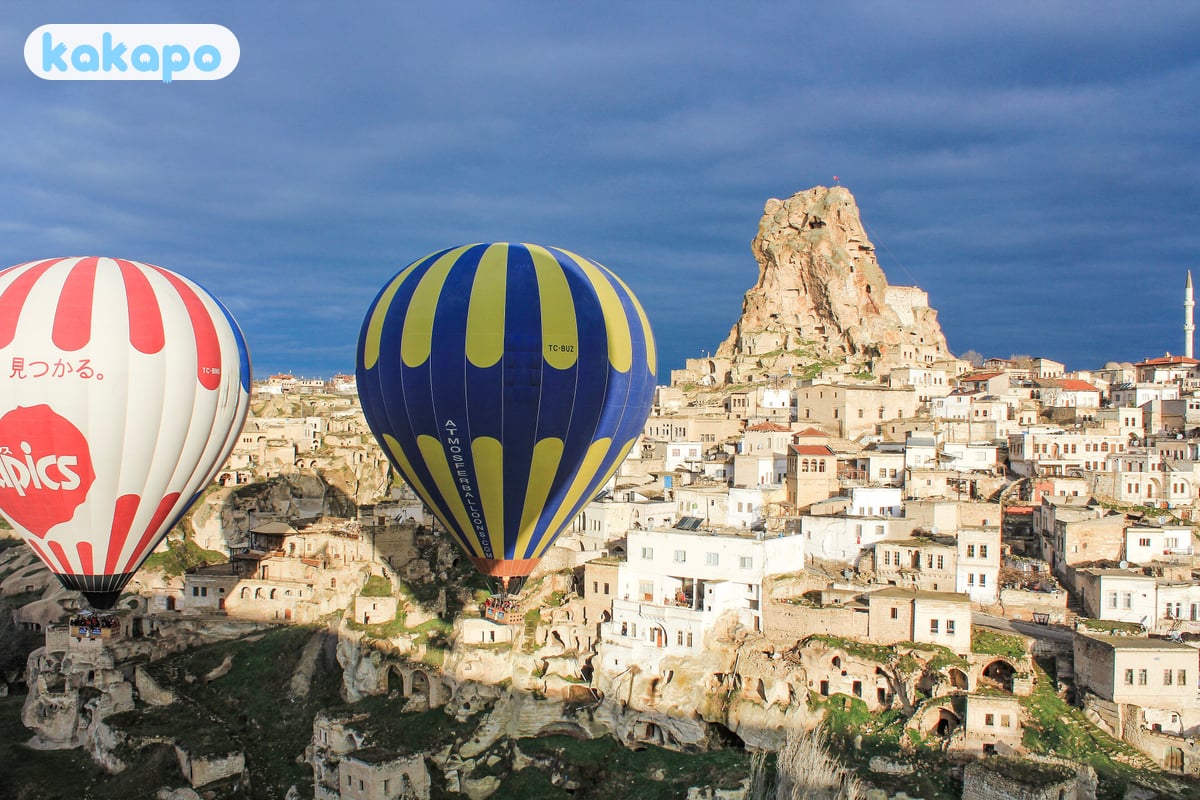
Cappadocia is the world's most-flown balloon destination. ~150-200 balloons take off most fair-weather mornings. Most flights are uneventful and spectacular. The crashes that have happened — including a 2013 fatal collision — are the reason this section exists.
- Operator quality varies: Royal Balloon, Voyager, Kapadokya Balloons, Butterfly Balloons are the most-cited as reputable. Don't book the cheapest; the price gap (~€150 vs €250) reflects real differences in pilot experience and equipment.
- Pilot licensing: Turkish Civil Aviation Authority licenses pilots; reputable companies disclose pilot experience.
- Weather cancellations: ~30% of mornings cancel due to wind. Reputable operators reschedule or refund — confirm policy before booking.
- Don't fly on borderline days: pilots are paid per flight; some take marginal weather. Royal Balloon has a stricter cancellation reputation.
- Insurance: confirm operator carries it. Your travel insurance should explicitly cover hot-air ballooning (some policies exclude it).
- Children: minimum age varies by operator (usually 6).
- The basket landing: brief but bumpy; bend knees, hold the ropes, follow pilot instructions.
- Best months: April-June, September-November. Winter flies less often.
- The "ground photographer": independent photographers will photograph your balloon for ~€30-50 and email the photos. Real and worth it.
Cave hotels — stairs, ventilation, charm
- Cave hotels are carved into volcanic rock. Charming, photogenic, and almost universally have steep, irregular, sometimes-slippery stone stairs.
- Mobility: the famous instagram cave hotels typically have 30-100 stairs from entrance to room. Not for guests with mobility issues. Confirm before booking.
- Heating: caves stay 10-15°C year-round naturally, with electric heaters. Comfortable in summer, may feel chilly in winter. Some cheaper rentals have ventilation issues — fan-heaters in unventilated rock rooms can produce CO build-up.
- Choose hotels with carbon-monoxide detectors. Reputable cave hotels have them.
- Winter ice: stone stairs become very slippery when wet/icy. Boots with grip in winter.
- Damp: some lower-budget caves have moisture issues. The smell will be obvious; switch rooms.
Hiking the valleys

- The Red, Rose, Love, and Pigeon valleys: well-trodden paths through the fairy-chimney landscape. Most are 2-3 hours; well-marked.
- Getting lost: can happen — paths fork without signs. Maps.me / AllTrails offline maps are useful.
- Falls: cliff-edges in Love Valley and Red Valley are not always railed. Don't pose for photos near edges.
- Heat: July-August can hit 35°C. Hike at dawn.
- Underground cities (Derinkuyu, Kaymaklı): cool, dim, claustrophobic. Bring a small torch. Skip if claustrophobic.
- Ihlara Valley: 14 km canyon walk south of Cappadocia, beautiful, full-day trip.
Getting in and around
- Kayseri Airport (ASR): 1 hour east of Göreme. Most international transfers.
- Nevşehir Airport (NAV): 45 min west. Closer; smaller.
- Airport shuttle: ~250-400 TL/person, drops at your hotel. Book through your hotel before arrival.
- Buses (otobüs) from Istanbul/Ankara: 11-hour overnight. Comfortable and cheap.
- Local dolmuş minibuses: 50-100 TL between Göreme/Ürgüp/Avanos. Useful for day-tripping.
- Renting a scooter or quad: don't. Roads are dusty and operator quality varies.
- Renting a car: useful for off-the-beaten-path day trips. Cappadocia roads are mostly good; rural ones can be rough.
- Tour operators: Green Tour, Red Tour, Blue Tour — standardised day trips. Useful for a non-driver's first day.
Winter Cappadocia — beautiful and treacherous
- December-February: -5 to 5°C standard, snow.
- Snow on fairy chimneys: world-class photo conditions.
- Balloon flights: continue when wind allows; cancellations more frequent than other seasons.
- Cave-hotel stairs: icy. Boots with grip mandatory.
- Driving: snow chains advisable on rural roads.
Villages-by-village breakdown

- Göreme — the main tourist village (~2,000 residents), built into volcanic-tuff cliffs in the heart of the fairy-chimney landscape. The Göreme Open-Air Museum (UNESCO, TRY 350 entry) with 10th-century rock-cut Byzantine churches is on the village edge. Cave hotels dominate accommodation; otogar (bus station) anchors the centre. This is where 90% of first-time visitors stay.
- Uçhisar — 5 km west of Göreme, perched around the castle-like Uçhisar rock fortress (TRY 100 to climb, panoramic views over the entire region). Higher-end cave hotels (Argos in Cappadocia, Museum Hotel) cluster here. Quieter than Göreme, sunset photography spot.
- Ürgüp — 8 km east of Göreme, the slightly larger town with a more developed restaurant and wine scene (Cappadocia wine country surrounds Ürgüp). Better hotel options for those wanting a real town feel rather than a cave-hotel-only village. Direct airport transfers easier.
- Avanos — 10 km north of Göreme on the Kızılırmak (Red River). Famous for traditional pottery — workshops run demonstrations and let visitors throw on the wheel. Less hotel infrastructure; visit as a half-day stop rather than a base.
- Çavuşin — 3 km north of Göreme on the Avanos road, smaller and quieter. The Rose Valley (Güllüdere) and Red Valley (Kızılçukur) hike trails start near here. A few boutique cave-hotels; less restaurant choice.
- Hot-air balloon flights and weather — ~150-200 balloons take off on most fair-weather mornings. Reputable operators (Royal Balloon, Voyager, Kapadokya Balloons, Butterfly Balloons) cost €150-250; the cheapest tier (€100-130) reflects real differences in pilot experience and equipment. ~30% of mornings cancel for wind — confirm reschedule policy before booking. The "ground photographer" pattern (€30-50 for printed photos of your balloon) is real and worth it.
- Cave hotels and stairs reality — the famous instagram cave hotels typically have 30-100 stairs from entrance to room and are not for guests with mobility issues. Caves stay 10-15°C year-round naturally with electric heaters; cheaper rentals can have ventilation issues (fan-heaters in unventilated rock rooms can produce CO build-up — choose hotels with carbon-monoxide detectors). Winter stone stairs become very slippery when wet/icy.
- Salt Lake (Tuz Gölü) day-trip — 2 hours north-west of Göreme, on the road to Ankara. Turkey's second-largest lake; in summer it crystallises into vast white salt flats with pink-tinted water at the edges. Sunrise photography spot; combine with Konya if continuing west, or as an out-and-back from Cappadocia on a long day.
- Kayseri Airport (ASR) and Nevşehir Airport (NAV) — ASR is 75 km east of Göreme (1 hour by transfer, ~TRY 250-400 per person hotel-pickup), most international transfer point with Pegasus, Turkish Airlines, and AnadoluJet to Istanbul, Ankara, and European cities. NAV is 45 km west (45 min), smaller, fewer flights. Most operators book through your hotel before arrival; airport touts are unregulated.
- Underground cities — Derinkuyu (40 km south, 8 levels deep) and Kaymaklı (30 km south, 5 levels) are the famous Byzantine-era hidden cities. Cool, dim, claustrophobic; skip if you're claustrophobic. TRY 350 entry each; bring a small torch. Half-day combined with a Green Tour.
If it's your first time visiting
- Best arrival: book a hotel transfer from Kayseri Airport (ASR) before arrival — TRY 250-400 per person (~$10-15), drops you at the cave-hotel door, takes 1 hour. Pegasus and Turkish Airlines run multiple daily ASR flights from Istanbul (1h15m, ~$40-80 one-way). Nevşehir (NAV) is closer (45 min) with fewer flights. Overnight bus from Istanbul or Ankara works (11 hours, comfortable, ~TRY 600-900 / $20-30) — book Kamil Koç or Metro Turizm.
- Best village for your first night: Göreme if you want walkability and the bar/restaurant scene (Sultan Cave Suites, Cappadocia Cave Suites, Mithra Cave Hotel — TRY 4,000-8,000 / $130-260); Uçhisar if you want quieter and higher-end (Argos in Cappadocia, Museum Hotel — TRY 12,000+); Ürgüp if you want a real-town feel with restaurants and wine bars. Skip Çavuşin and Avanos unless you specifically prefer a small-village base.
- Pre-book a balloon flight with a reputable operator — Royal Balloon, Voyager, Kapadokya Balloons, Butterfly Balloons at €150-250 per person. Book directly through their websites or via your hotel; avoid third-party aggregators with no-name operators. Confirm: pilot licensing disclosure, reschedule/refund policy if weather cancels (~30% cancellation rate), insurance coverage, minimum age. Your travel insurance must explicitly cover hot-air ballooning; many policies exclude it.
- Balloon morning timing — 04:30 hotel pickup is standard, 05:00 launch, 06:30 landing, 07:30 back at hotel for breakfast. Wear layers (cold at altitude even in summer); closed shoes; don't drink heavily the night before. The "champagne breakfast" after landing is a marketing tradition, not a meal.
- Hike the valleys at dawn or skip July-August midday — Red, Rose, Love, Pigeon valleys all 2-3 hours each. AllTrails or Maps.me offline maps are essential because paths fork without signs. Real cliff-edge risk in Love and Red valleys — don't pose near edges for selfies, falls have happened. 2L water per person minimum; no resupply on trails. Hiking shoes, not trainers.
- Day-trip menu via "Green Tour" or "Red Tour" — standardised regional day-trips (~TRY 1,500-2,500 / $50-80). Red Tour covers Göreme area (open-air museum, Uçhisar, Avanos pottery, Pasabag, Devrent). Green Tour covers the far valleys (Derinkuyu underground city, Ihlara Valley canyon walk, Selime Monastery). Useful for non-drivers' first day in the region.
- Food worth seeking out: testi kebab (slow-cooked meat in a sealed clay pot, broken open at the table — try Topdeck Cave Restaurant in Göreme or Ziggy's in Ürgüp), mantı (Turkish ravioli with yoghurt-garlic sauce), gözleme (savory flat-bread pancakes) at any village café, local Cappadocia wines (Kocabağ, Turasan — visit the wineries near Ürgüp). Coffee culture is strong — Turkish coffee TRY 30-60 at any kafe.
- Cave-hotel CO awareness — fan-heaters in unventilated rock rooms can produce dangerous carbon-monoxide build-up. Stay only at hotels with confirmed carbon-monoxide detectors in rooms (reputable cave hotels have them as standard). If your cheaper rental smells musty or you wake with a headache, switch rooms immediately. Damp is the other lower-budget cave issue — the smell is obvious.
- Common rookie mistakes: booking the cheapest balloon operator (€100-130 tier — real differences in pilot experience and equipment); flying on borderline-weather days (pilots are paid per flight, some take marginal weather); skipping travel insurance with explicit "hot-air ballooning" coverage (many policies exclude it); posing for cliff-edge photos in Love or Red valleys (real fall risk); renting a scooter or quad on Cappadocia roads (dusty, operator quality variable, single-vehicle accidents are routine); and forgetting to bring a small torch for the underground cities (Derinkuyu and Kaymaklı are dim and disorienting).
Practical info — emergency numbers
- Police: 155.
- Ambulance: 112.
- Jandarma (rural police): 156.
- Nevşehir State Hospital: +90 384 213 6300.
- Tourism Police (Göreme): at the bus station; English-speaking.
Bring: warm layers (cool mornings even in summer for balloon launch), hiking shoes, a Turkish SIM (Turkcell, Vodafone TR), travel insurance with explicit "hot-air ballooning" coverage, and a CO detector if you're a long-stay cave-rental visitor.
Frequently asked questions
Is Cappadocia safe to visit in 2026?
Yes — Cappadocia scores 78/100 here. US State Department rates Turkey at Level 2 with the 'exercise increased caution' language directed at the south-eastern Syrian border — not Cappadocia, which behaves closer to Level 1 in practice. UK FCDO is similar. Crime against tourists is rare; Göreme is small and walkable and the local economy depends entirely on tourism. The realistic risks are what people come for: hot-air balloon flights (the iconic photo and the iconic risk), cave-hotel stairs (steep, irregular, slippery in winter), getting lost or falling on the valley hikes (Red, Rose, Love, Pigeon valleys have unrailed cliff edges), and Turkey's seismic context. Police 155; ambulance 112; Jandarma rural police 156; Nevşehir State Hospital +90 384 213 6300.
Is Cappadocia safe at night?
Yes — Göreme and Ürgüp are tiny, the bars and restaurants are local, and the streets are walkable at any hour. Crime against tourists is essentially nonexistent. The realistic night-time concerns are cave-hotel stairs in winter (stone becomes treacherous when wet or icy — boots with grip), CO build-up in cheaper cave rentals from unventilated fan heaters in rock rooms (choose hotels with carbon-monoxide detectors), and the 04:30 wakeup for balloon launch which means most evenings end early. There's no Uber — local taxis only; the Göreme Otogar (bus station) taxi rank is regulated, and the Tourism Police (English-speaking, at the bus station) are the on-the-ground resource for any incident.
Are the hot-air balloon flights actually safe?
Statistically yes but operator quality varies and weather cancellations matter. ~150-200 balloons take off most fair-weather mornings; most flights are uneventful and spectacular; the 2013 fatal collision that killed two Brazilian tourists remains the warning. Royal Balloon, Voyager, Kapadokya Balloons and Butterfly Balloons are the most-cited reputable operators — the €150 vs €250 price gap reflects real differences in pilot experience and equipment. Turkish Civil Aviation Authority licenses pilots; reputable companies disclose experience. ~30% of mornings cancel for wind — confirm reschedule or refund policy before booking. Don't fly on borderline weather days even if the operator is willing. Confirm your travel insurance explicitly covers hot-air ballooning (many policies exclude it). Minimum age varies by operator — usually 6.
Can you drink tap water in Cappadocia?
Technically yes in Göreme and the major villages — Turkish municipal water is chlorinated and meets domestic standards — but the cultural default everywhere in Turkey is bottled (Erikli, Pınar, Hayat at TRY 5-10 per 1.5L). Cave hotels supply bottled in rooms. Locals drink tap water in Istanbul and Ankara more readily than tourists do; in Cappadocia bottled is recommended for first-week visitors regardless. Don't drink from village fountains or rural sources without filtering. The underground cities (Derinkuyu, Kaymaklı) are bring-your-own-water — there's no supply down there, and the spaces are cool and dim but unventilated so light dehydration creeps up.
What's the actual risk hiking the valleys solo?
Real but manageable. The Red, Rose, Love and Pigeon valleys have well-trodden paths but they fork without signs and the cliff edges in Love Valley and Red Valley are not always railed. Falls have happened — usually tourists posing for photos near edges. AllTrails or Maps.me offline maps are essential. Hike at dawn in July-August (35°C+ by midday); carry 2L+ water. The Ihlara Valley walk (14 km canyon, full-day trip south of Cappadocia) is more remote — go with a guide or as part of an organised Green Tour. If you're claustrophobic, skip the underground cities (Derinkuyu reaches eight levels and the connecting passages are narrow). Helmet and headtorch helpful — bring a small one.
Sources
Run a business in Cappadocia?
Show visitors your Cappadocia business is a safe choice. The free Verified by Kakapo badge puts Cappadocia's live safety score on your website, links back to your verified page, and updates itself. No cost.
Get the free badge →