


Is Antalya, Turkey Safe? A 2026 Travel Safety Guide
All-inclusive resorts, jet-ski scams, the Mediterranean swim, the seismic context, and the realistic risks of Turkey's most-visited beach destination.

Antalya is one of the safer European-Mediterranean beach destinations for tourists. Crime against visitors is rare; the city has a long-established package-tourism economy with strong tourist-policing and English-speaking infrastructure.
The realistic risks for visitors are jet-ski / parasail operator quality at the busiest beaches, occasional rip currents at Konyaaltı and Lara, all-inclusive resort over-pouring (the "Bayou volume" problem), the road conditions on the highway routes to Cappadocia or Istanbul, and the broader regional seismic context (Antalya is south of the main 2023 earthquake zone but still in a seismically active region).
Turkey sits at Level 2 on the US State Department's advisory list — most "exercise increased caution" language is about the south-eastern border with Syria, not Antalya. UK FCDO is similar. The honest framing: Antalya is a 2.5-million-person Turkish city with a modern airport, a UNESCO Old Town (Kaleiçi), Roman ruins (Aspendos, Perge), and 30-50 km of beach hotels east and west. Most visitors are at all-inclusive resorts in Lara (east) or Belek (further east).
Antalya's airport (AYT) is now the busiest in Turkey by international passenger numbers (overtaking Istanbul-IST for inbound tourism in 2023-24), with most arrivals on charter from Germany, the UK, Russia and the CIS, plus a fast-growing Gulf segment. The city's tram network (Antray) extended to AYT and Lara in 2023, which has transformed the airport-to-hotel logistics — the old taxi-cartel dominance is gone, replaced by a €1 tram ride to Lara or central Antalya in 25-40 minutes.
The Turkish lira's continued high inflation (year-on-year prints in the 40-60% range through 2025) means every published price ages quickly. Restaurants update menus weekly; quoted prices in this guide are USD-anchored equivalents rather than fixed TRY figures because the lira drift makes precise lira numbers misleading within a season. Always pay card terminals in TRY (not your home currency — DCC is 7-10% worse) and use bank ATMs (Garanti BBVA, İş Bankası, Akbank) for cash, ignoring the airport currency-exchange counters.
| Night safety | 84/100 |
|---|---|
| Scam / petty-crime risk | Medium |
| Violent crime (tourists) | Low |
| Most common scams | jet-ski damage scams at Lara hotel beaches; over-pouring at all-inclusive resorts; jet-ski / parasail operator quality at busy beaches |
| Safer neighbourhoods | Kaleiçi, Konyaaltı, Belek |
| Data sources cited | 4 |
| Last verified |
What the score means — 80/100
- Air quality (84) — coastal sea-breeze keeps things clean.
- Personal safety (82) — high. Petty theft on busy beaches; otherwise low.
- Healthcare (80) — Antalya has multiple JCI-accredited private hospitals (Memorial Antalya, Medical Park Antalya) — Turkey is a major medical-tourism destination.
- Transport (80) — modern tram, fleet of taxis, well-paved roads.
Beaches — Konyaaltı, Lara, Olympos

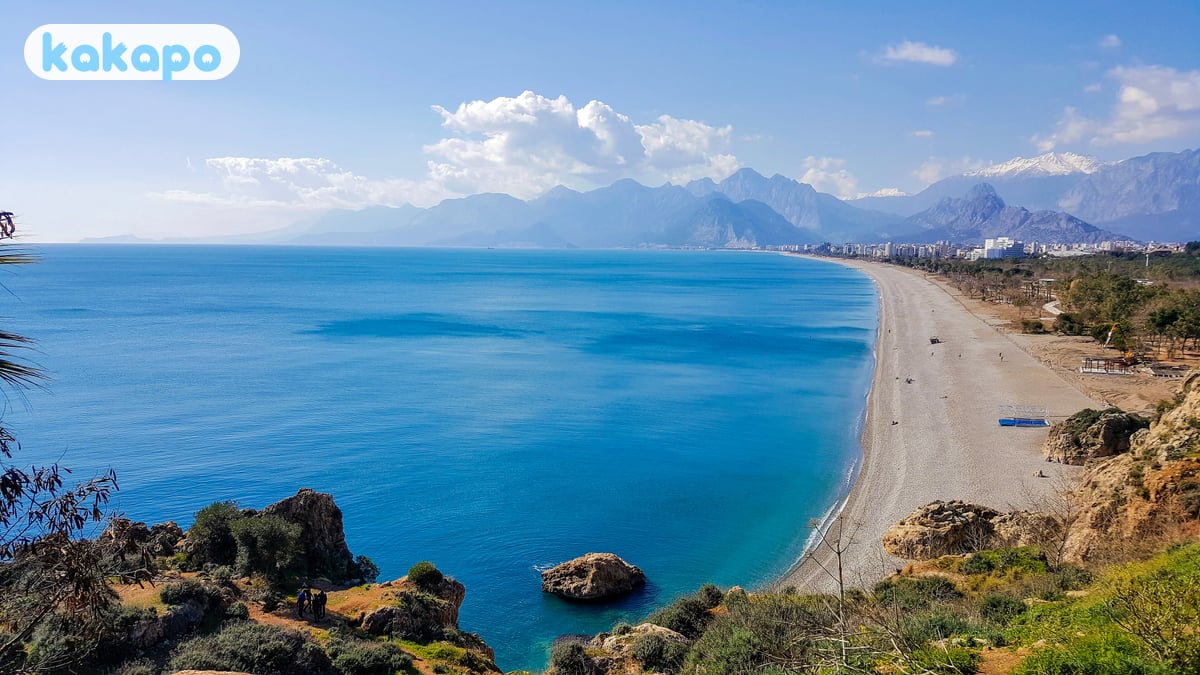
- Konyaaltı Beach: west of the city, 7 km long, blue flag, lifeguarded in season. Pebbly, not sandy. Family-friendly.
- Lara Beach: east of the city, sandy, lined with mega-resorts. Calmer water generally.
- Mermerli Beach: small, in Kaleiçi (the Old Town). Rocky, restaurant-only access.
- Olympos / Çıralı: 1.5 hours west — backpacker beach, treehouse hostels, the Chimaera flames.
- Cleopatra Beach (Alanya): 2 hours east, famously fine sand. Rip currents possible on windy days.
- Mediterranean rip currents: do form during storm-shoulder days. Heed lifeguard flag colours: red = no swim.
- Jellyfish: rare in this part of the Med, but possible.
- Sun: 36°N latitude. UV severe in summer. Reef-safe sunscreen + 11am-4pm break.
Jet-skis, parasails, and operator overcharging
- Jet-ski 30 min: ~600-1,200 TL ($18-35). Parasail: ~800-1,500 TL.
- "Damage" scams: photograph the jet-ski / boat from every angle before boarding; refuse if they won't allow it.
- Negotiate before; pay only after; get a written receipt.
- Boat day-trips from Antalya harbour: ~700-1,200 TL/person. Choose ones with English-speaking crews and life jackets visible.
- "Pirate ship" cruises: cheap and fun if you don't take them seriously. Loud, drinks-heavy, and the swim stops are real.
All-inclusive resorts — the over-pour problem
- The economy: Lara and Belek are dominated by 5-star all-inclusive resorts. Drinks "free" 24/7.
- The result: tourist over-drinking is the most-reported "incident" type at these resorts. Falls from balconies, pool-area stumbles, drunk pool dives.
- Drink quality: most reputable resorts pour real-brand spirits; budget ones use local Turkish equivalents which are perfectly safe but stronger than expected.
- Kids' clubs: licensed, supervised, generally good.
- "Hotel doctor": most resorts have one on call; expect to pay.
Seismic context
- Antalya is in a seismic zone but south of the East Anatolian Fault (which produced the devastating February 2023 earthquakes 800+ km away).
- Local hazard: smaller occasional tremors. Modern hotel buildings are post-1999 code (the Marmara earthquake legislation).
- If a tremor hits: drop, cover, hold under sturdy furniture or in a doorway/stairwell. Don't run outside during shaking.
- Tsunami risk: low but non-zero on the Mediterranean coast. If you feel a strong earthquake AND see the sea recede, head inland and uphill immediately.
Transport, taxis, the airport
- Antray: the modern tram network. Cheap, useful for Konyaaltı + city centre.
- Buses: extensive city network.
- Taxis: yellow, metered; insist on meter. The BiTaksi app is the local Uber-equivalent.
- Uber: legally restricted in Turkey; works inconsistently.
- Antalya Airport (AYT): 13 km east. Tram extension to Lara/airport opened 2023. Taxi 200-300 TL.
- Driving: roads are good; rural roads have potholes. Police checkpoints are normal — show passport.
- To Cappadocia: 8-hour drive or 1-hour flight. Most opt for the flight.
- To Istanbul: 1-hour flight. Bus is 12 hours.
Money, food, the cost story
- Currency: Turkish lira (TL/₺). Volatile; expect high inflation. $1 ≈ 35-40 TL (varies).
- Cards: widely accepted; some places give a discount for cash.
- ATMs: Garanti, İş Bankası, Akbank. Honest fees. Avoid airport currency-exchange counters.
- Tipping: 10% in restaurants if not included; round up taxis.
- Tap water: not for drinking. Bottled.
Antalya districts, the coast, the Antray tram

- Kaleiçi (UNESCO Old Town) — the walled Ottoman-and-Roman core wrapped around the yacht harbour. Hadrian's Gate (Üçkapılar), Hıdırlık Tower, the Yivli Minare, narrow lanes of restored timber-frame konaks now boutique hotels (€60-150/night). Walkable, lit-up at night, Tourism Police English-speaking. Restaurants on the harbour at €15-25/head; one block back at €8-15.
- Konyaaltı — west of the city, the 7 km blue-flag pebbly beach backed by mountains. Antalya Aquarium, Migros 5M shopping mall, family-friendly hotels. Tram T1 runs from central Antalya along the seafront. Less party-vibe than Lara.
- Lara — east of the city, sandy beach lined with 5-star all-inclusive mega-resorts (Titanic, Rixos, Delphin, Granada Luxury). The "kid-in-a-pool" Antalya many British/German families know. Tram T1 extension reaches the eastern resorts.
- Belek (35 km east) — the golf-resort corridor — 16 international championship courses, the highest concentration in Turkey. Maxx Royal, Regnum Carya, Cornelia Diamond. Family-oriented and quieter than Lara.
- Side (65 km east) — the Roman ruin town with its own beach. Temple of Apollo at sunset is the photo. Day-trip workable from Antalya; many independent travellers base here.
- Olympos + Çıralı (75 km west) — the bohemian backpacker beach with treehouse hostels, the Chimaera flames (natural methane vents burning on the mountainside), and the Lycian Way trailhead. Different Antalya entirely.
- Aspendos + Perge + Termessos — Roman ruins 30-50 km from Antalya. Aspendos has the best-preserved Roman theatre in the eastern Mediterranean and hosts the summer Aspendos International Opera and Ballet Festival.
- Düden Waterfalls — upper falls 15 km north of the city (park setting); lower falls drop straight into the sea east of Lara (best viewed by boat from Antalya harbour, €15-25 for 90 min).
- Jet-ski-damage-scam zones — concentrated on Lara hotel beaches and Konyaaltı's central segments. Photograph the jet-ski / parasail boat from every angle before boarding, refuse if denied. Negotiate price before, pay after, get a receipt.
- Antalya Airport (AYT) + the new Antray tram — the T1A airport tram extension (opened 2023) runs from AYT to central Antalya and Lara hotels for around 30 TL (~$1 USD). The taxi flat rate is 250-400 TL ($7-12) to most hotels — meter is fairer if traffic is light. Don't accept the unmetered "private VIP transfer" approaches in arrivals.
If it's your first time visiting
- Best arrival: Antalya Airport (AYT) is 13 km east of the city — the Antray T1A tram extension (opened 2023) is the cheapest and easiest route, around 30 TL ($1) to central Antalya or Lara in 25-40 minutes. Taxi flat-rate is 250-400 TL ($7-12); insist on the meter for fares matching the route. Hotel transfers are usually 800-1,500 TL ($25-45) for a private car.
- BiTaksi app is the local taxi-app working answer. Uber is legally restricted in Turkey since 2019 and works inconsistently. Always insist on the yellow-taxi meter (taksimetre) or you'll get tourist-rate fixed pricing 2-3× the genuine fare.
- Currency reality: Turkish lira (TL/₺) with continued high inflation (annual 40-60% through 2025). Quoted prices in this guide are USD-equivalents — actual TRY menu numbers drift weekly. Always pay in TRY on card terminals; decline DCC. Use bank ATMs (Garanti BBVA, İş Bankası, Akbank) for cash, never the airport exchange counters (rates are 10-15% worse). $1 ≈ 35-42 TL through 2025.
- Best neighbourhood for your first night: Kaleiçi Old Town for atmosphere (Akra Hotel, Tuvana Hotel, Mediterra Art Hotel — converted Ottoman konaks, $80-180/night); Lara if all-inclusive beach is what you want ($120-400/night for a 5-star); Konyaaltı for mountain-and-beach with less party-vibe ($80-200). Avoid the cheap-looking unbranded "apart-otels" advertised on metasearch — many are unlicensed.
- The jet-ski damage scam — and how to avoid it: you rent a jet-ski for 30 min ($18-35), return it, operator claims damage (a pre-existing scratch), demands €200-500. Photograph the jet-ski from every angle BEFORE boarding (hull, deck, handlebars, throttle), refuse to rent if the operator denies you. Same protocol for parasail boats. Negotiate full price before, pay only after, written receipt with operator stamp.
- Food beyond hotel buffet: Vanilla Restaurant (Kaleiçi, contemporary Turkish, $25-45/head), 7 Mehmet (the historic kebab institution, $15-30), Seraser Fine Dining (the Old Town's tasting-menu spot, $60-100), Manti at hole-in-the-wall lokantas (Turkish dumplings, $4-8), grilled-fish meyhanes around the yacht harbour with rakı (Turkey's anise spirit). Confirm bill totals before paying — high inflation means tourist-menu mark-ups in Kaleiçi can be 50-100% above one-street-back local prices.
- Day-trip planning: Aspendos Roman theatre (45 km east, $15 entry, best in the morning); Perge ruins (15 km east, $10); Termessos mountain ruins (35 km north-west, $5, requires a moderate hike); Düden Waterfalls (15 km north, free); Pamukkale travertines (3.5h drive north, organised day-tour $40-70 — long day, overnight better); Olympos + Chimaera flames (75 km west, 2-day backpacker circuit).
- Mosque etiquette: shoulders and knees covered at the Yivli Minare and the Murat Paşa Mosque. Free scarves at the entrance for women. Remove shoes. No prayer-time visits (5 daily times posted at the entrance).
- Tap water — bottled only: Antalya tap water is treated and technically safe but the high mineral content, chlorine taste and aging Kaleiçi distribution pipes mean virtually everyone drinks bottled (cheap, 15-25 TL for 1.5L). Ice in chain restaurants is filtered; street stalls less so.
- Common rookie mistakes: jet-ski rental without photographing the bike first (damage-scam pattern); driving the D400 coast road at night (truck traffic, no streetlights, fatal accidents routine); booking accommodation in "Antalya" that turns out to be in Belek or Side 60 km away; paying card terminals in your home currency rather than TRY (DCC 7-10% worse); over-pouring at all-inclusive resorts then balcony falls (the most-reported "incident" type in Lara); attempting Pamukkale as a single-day round-trip (7+ hours of driving, exhausting).
Practical info — emergency numbers
- Police: 155.
- Ambulance: 112.
- Tourism Police: at Kaleiçi Old Town entry; English-speaking.
- Memorial Antalya Hospital: +90 242 314 6666 (24h ER, English).
- Medical Park Antalya: +90 242 314 3434.
Bring: reef-safe sunscreen, water shoes for pebble beaches, modest clothing for mosque visits (Hıdırlık Tower / mosques in Kaleiçi), a Turkish SIM (Turkcell, Vodafone TR, Türk Telekom) at the airport for ~$15-20, and travel insurance with watersports.
Frequently asked questions
Is Antalya safe to visit in 2026?
Yes — Antalya scores 80/100 and is one of the safer European-Mediterranean beach destinations. The US State Department lists Turkey at Level 2 (most 'exercise increased caution' language relates to the Syrian border, 700+ km away); UK FCDO is similar. Crime against tourists is rare; the city has a long-established package-tourism economy with strong tourist-policing. Realistic risks are watersports-operator quality (the jet-ski damage scam is the signature Antalya rip-off), all-inclusive resort over-drinking incidents in Lara and Belek, occasional rip currents at Konyaaltı during storm-shoulder days, and the broader seismic context (Antalya is south of the East Anatolian Fault that produced the February 2023 earthquakes 800km away).
Is Antalya safe at night?
Yes. Kaleiçi (the UNESCO Old Town) is well-policed and walked late by tourists and locals; the Hadrian's Gate area, the harbour and the Hıdırlık Tower lookout are routine evening territory. Konyaaltı's beachfront promenade, the Lara hotel strip and the Antray tram corridor are all fine. Avoid wandering the unlit hillside lanes above Kaleiçi alone after midnight. BiTaksi is the local working taxi app (Uber is restricted in Turkey since 2019 and works inconsistently); always insist on the meter in yellow taxis or you'll get tourist-rate fixed pricing. Tourism Police are stationed at the Kaleiçi entry and speak English. Police: 155; ambulance: 112.
What's the jet-ski damage scam and how do I avoid it?
The signature Antalya rip-off: you rent a jet-ski for ~600-1,200 TL ($18-35) for 30 minutes, return it, and the operator claims you damaged the hull — producing a scratch that was already there — and demands €200-500 to settle. The fix is to photograph the jet-ski from every angle (hull, deck, handlebars, throttle) BEFORE boarding, and refuse to rent if the operator won't let you. Same protocol for parasail boats and small rental boats. Negotiate the full price before, pay only after, and get a written receipt with the operator's stamp. The pirate-ship cruises (700-1,200 TL/person from the harbour) are loud and cheap but generally legitimate if life jackets are visible.
Can you drink tap water in Antalya?
No — not for drinking. Antalya tap water is treated and technically safe but the high mineral content, chlorine taste and aging distribution pipes in older Kaleiçi neighbourhoods mean virtually everyone (locals included) drinks bottled. Bottled is cheap — ₺10-15 for 1.5L from any bakkal. Hotels stock it, all-inclusive resorts pour it. Tea (çay), Turkish coffee and ice in modern restaurants are fine. Brushing teeth with tap is generally tolerated. Confirm bill totals before paying — high inflation means prices change weekly and tourist-menu mark-ups in Kaleiçi can run 50-100% above what locals pay one street back.
Should I worry about earthquakes in Antalya?
Aware but not alarmed. Antalya is in a seismic zone but well south of the East Anatolian Fault that produced the catastrophic February 2023 Kahramanmaraş earthquakes (800+km away). Local hazard is occasional smaller tremors. Modern hotel buildings are built to post-1999 code (the Marmara earthquake legislation) and the major Lara and Belek 5-star resorts are reinforced concrete. If a tremor hits: drop, cover and hold under sturdy furniture or in a doorway/stairwell — don't run outside during shaking. Tsunami risk on the Mediterranean coast is low but non-zero: if you feel a strong earthquake AND see the sea recede unusually, head inland and uphill immediately. AFAD (Turkey's disaster agency) publishes real-time tremor data.
Sources
Run a business in Antalya?
Show visitors your Antalya business is a safe choice. The free Verified by Kakapo badge puts Antalya's live safety score on your website, links back to your verified page, and updates itself. No cost.
Get the free badge →