


Is Baghdad, Iraq Safe? A 2026 Travel Safety Guide
Iraq's capital, the Level 4 advisory framing, the Green Zone vs Red Zone reality, terrorism + kidnapping risk, regional escalation context, and the realistic risks.

Baghdad is one of the world's highest-risk travel destinations. The US State Department lists Iraq at Level 4 ("do not travel") — citing terrorism, kidnapping, armed conflict, civil unrest, and Mission Iraq's restricted ability to provide consular services. The UK FCDO advises against all but essential travel to Baghdad, and against all travel to several other parts of Iraq. Most travel insurance refuses to cover Iraq.
This guide is reference-only. If you are still considering travel — typically academic, journalist, NGO, diplomatic, or family-visit context — work with an experienced security firm + your embassy + a local fixer. Do not attempt independent tourism in Baghdad.
The realistic risks include: terrorism (ISIS remnant + other groups; targeting of public spaces, markets, religious sites), kidnapping (foreigners are high-value targets), the regional escalation context (Iran-aligned militia presence + occasional missile/drone exchanges with US/Israel-aligned forces), checkpoint risk (mistaken identity, militia checkpoints outside the formal security forces), unexploded ordnance in some districts, and severe summer heat (50°C+). The historic Abbasid + Ottoman heritage that draws curious travellers is real — but the current security context dominates any trip.
Iraq's current government is led by Prime Minister Mohammed Shia' al-Sudani, in power since October 2022. The Iraqi Security Forces (ISF) — Iraqi Army, Federal Police, and Counter-Terrorism Service — share the security space with the Popular Mobilisation Forces (PMF / al-Hashd al-Sha'bi), an umbrella of Iran-aligned militias formally integrated into the security apparatus but operationally independent. PMF checkpoints exist alongside ISF checkpoints; the distinction matters. At any checkpoint, comply, don't argue, have ID and visa documents accessible, and let your driver speak. The 2024-2025 period saw cross-fire between US forces (at Ain al-Asad airbase and Erbil) and Iran-aligned militias, including missile strikes near Baghdad. The post-2023 Israel-Hamas-Iran escalation has produced occasional airspace closures and brief flight diversions affecting Baghdad International (BGW).
The 2026 details worth knowing in advance: Iraqi visa-on-arrival for many Western nationalities (US, UK, EU) at BGW is $75 USD, currently valid 60 days — but rules change; confirm 48 hours before flying. Most retail travel insurance refuses Iraq outright; specialist providers (corporate-grade, KGS / IISS / W. Bro. Williams Insurance Group) with armed-conflict and kidnap-and-ransom (K&R) cover are required. The Iraqi dinar (IQD) is the official currency but USD cash in small bills dominates tourist transactions. Najaf and Karbala, the two Shia holy cities south of Baghdad, are handled separately from this guide — they have their own security context (much higher Shia-pilgrim density, different militia footprint, lower violent-crime baseline than Baghdad but still Level 4 advisory). This guide is reference-only.
| Night safety | 26/100 |
|---|---|
| Scam / petty-crime risk | High |
| Violent crime (tourists) | High |
| Most common scams | kidnapping of foreigners; terrorism targeting public spaces; militia checkpoints |
| Data sources cited | 4 |
| Last verified |
What the score means — 34/100
- Transport (40) — taxis + private cars; the airport road historically the highest-risk drive.
- Healthcare (38) — Iraq's health system has been degraded since 2003. Critical cases evacuate to Amman, Beirut, Dubai, or Istanbul.
- Air quality (32) — pulled down by sandstorms + power-station + generator pollution.
- Personal safety (30) — by far the lowest among capitals we cover. The score reflects the advisory + kidnapping + terrorism context.
Check the advisory before any planning
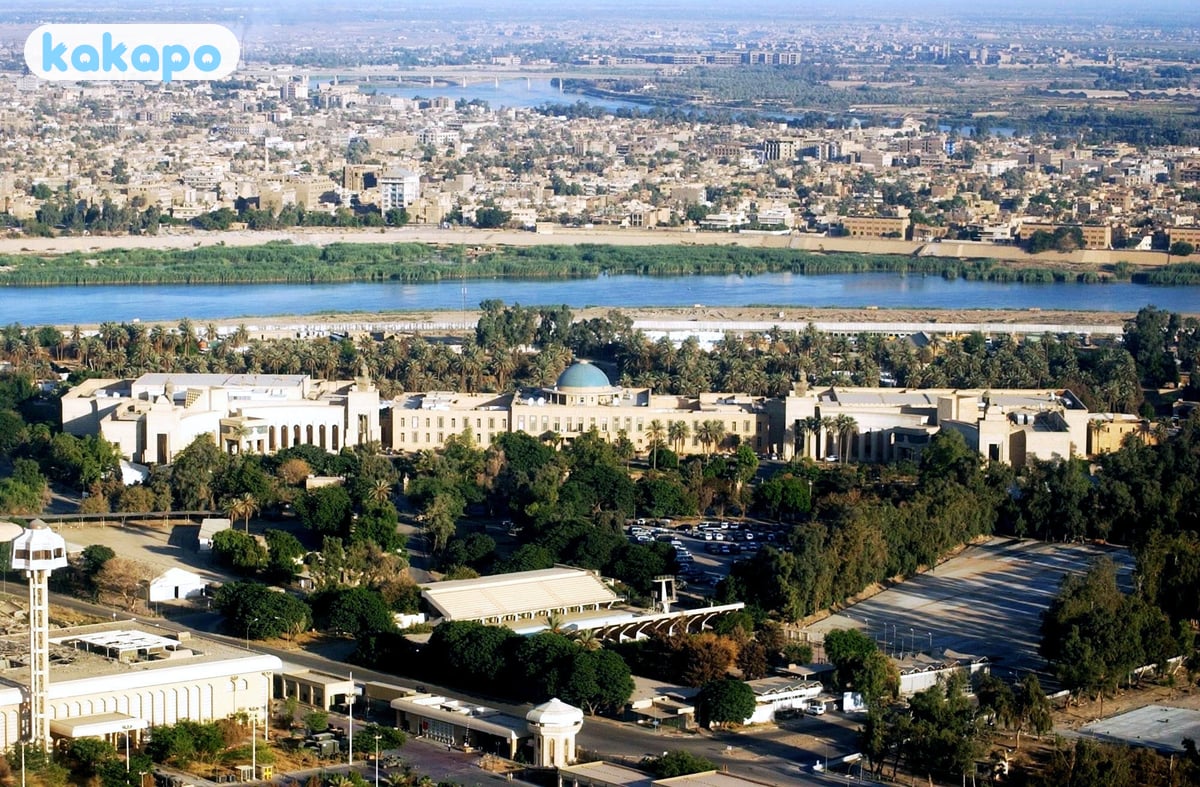
This is the most important safety step for any Iraq trip.
- US State Department: Level 4 ("do not travel") for Iraq.
- UK FCDO: advises against all but essential travel to Baghdad; against all travel to several governorates.
- Most other Western governments: similar.
- Travel insurance: most retail policies refuse Iraq. Specialist providers (e.g. World Nomads-style with armed-conflict riders, or KGS / IISS / corporate-grade) are required.
- STEP enrollment: US citizens — register with embassy.
- Embassy proximity: most Western embassies are in the Green Zone with restricted public access.
The security context
- Terrorism: ISIS-K + other groups remain active. Markets, religious sites, government buildings are targets.
- Kidnapping: foreigners (NGO, journalist, contractor, oil-company, tourist) are high-value targets. Iran-aligned militias have detained Western nationals.
- Regional escalation: Baghdad has been struck by missiles + drones in cross-fire between US-aligned forces + Iran-aligned militias (multiple incidents 2024-2025).
- Civil unrest: large protests can shut central Baghdad with no notice.
- Checkpoints: many. Some legitimate (Iraqi Security Forces), some militia. Don't argue. Have ID + visa documents accessible.
- Photography: avoid all military, government, infrastructure, security-checkpoint sites.
Green Zone vs Red Zone
- Green Zone (International Zone): ~10 sq km west of Tigris. Most Western embassies, Iraqi Parliament, hardened. Limited public access; you typically need an embassy or NGO sponsor.
- Red Zone (everywhere else): the rest of Baghdad. Where the city actually is.
- Mansour, Karrada, Jadiriyah: traditionally the more visitor-friendly Red Zone neighbourhoods (where journalists + NGOs base). Still high-risk.
- Sadr City + outer eastern districts: militia-controlled; foreigners do not enter.
Transport — the airport road, drivers
- Baghdad International Airport (BGW): 16 km west.
- Airport Road: historically known as one of the world's most dangerous; substantially safer post-2010 but still requires a vetted driver.
- Pre-arranged transfer: essential. Your hotel/security-provider arranges. Never accept rides from touts.
- Within Baghdad: vetted private driver only. Do not self-drive.
- Curfews: occasional; check the day of.
Cultural rules
- Modest dress: long sleeves, long trousers/skirts, headscarf for women in religious areas + on the street in conservative neighbourhoods.
- Alcohol: legal but socially restricted; sold at some hotels, Christian-area shops in Karrada.
- Friday prayers: limit movement.
- Ramadan: don't eat/drink in public during fasting hours.
- Photography of people: ask first.
Money + practical
- Currency: Iraqi dinar (IQD).
- USD cash: widely used; bring small bills.
- Cards: hotels only; cash dominates.
- ATMs: limited international card acceptance.
- Tap water: not safe; bottled.
- Cost: international hotels (al-Mansour Melia, Baghdad Hotel) $150-400/night.
- Heat: June-August 45-50°C. Avoid summer.
Districts of Baghdad — the honest map
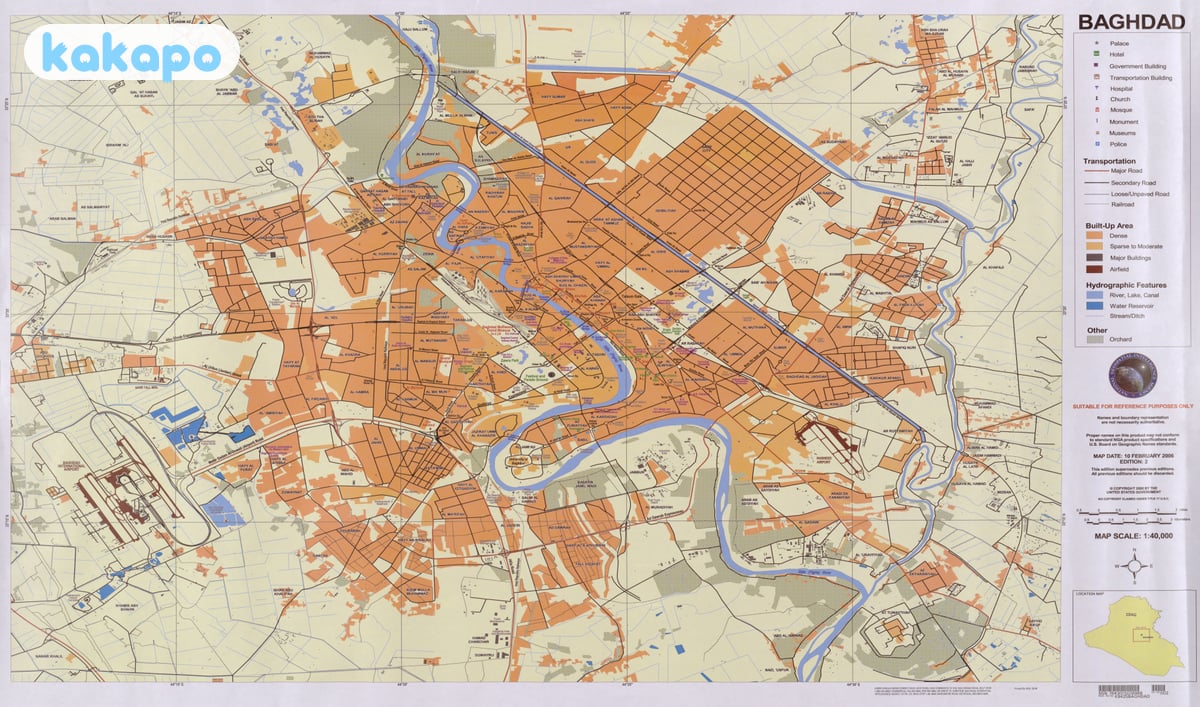
- Karrada — the central Tigris-bank commercial district. Traditionally the most foreigner-frequented Red Zone neighbourhood, with hotels, restaurants and shops; Christian-area liquor stores; the al-Mansour Melia and Baghdad Hotel are both within reach. Still high-risk: 2016 saw a devastating ISIS bombing here and security has not normalised.
- Mansour — west-central middle-class district with embassies-adjacent infrastructure, journalist hangouts (Babylon Hotel, al-Rasheed historically), and the Zawra Park area. Better security baseline than Karrada but still requires vetted private drivers.
- Jadriya (Jadiriyah) — south-central district along the Tigris bend, home to Baghdad University and several NGO compounds. Similar security profile to Mansour.
- Green Zone (International Zone, IZ) — ~10 sq km hardened compound west of the Tigris. Most Western embassies (US, UK, German, French), Iraqi Parliament, the al-Rashid Hotel. Access is restricted — typically you need an embassy or NGO sponsor and a pre-vetted badge. Foreign tourists do not enter casually.
- Red Zone (everywhere else in Baghdad) — the rest of the city. Where Baghdad actually is. Within "safer" Red Zone areas (Karrada, Mansour, Jadriya) vetted private drivers and hardened vehicles are standard. Embassy notification of movements is standard.
- Tigris river quays + Abu Nuwas Street — the riverside promenade with the famous mazgouf (grilled-carp) restaurants. Daytime visits with vetted drivers are done by foreign journalists and NGO staff; evening visits much less so. The river itself has been the scene of multiple security incidents over the years.
- Sadr City + outer eastern districts — densely-populated Shia neighbourhoods under heavy Iran-aligned militia influence. Foreigners do not enter at any hour. Militia checkpoints distinct from ISF.
- Mutanabbi Street + book market — Friday-morning book market on the historic literary street. Atmospheric, recently restored after a 2007 bombing. Vetted-driver visits are done but not casually.
- PMF vs ISF checkpoints — the Iraqi Security Forces operate the official checkpoints; the Popular Mobilisation Forces (PMF / al-Hashd al-Sha'bi) operate parallel ones, particularly in eastern Baghdad and on the airport road. Both share the security space — under PM Sudani's government PMF are formally integrated into the security apparatus but operationally independent. At any checkpoint, comply, don't argue, have ID and visa documents accessible, let your driver speak.
- Level 4 advisory honestly — US State Department lists Iraq at Level 4 ("do not travel") citing terrorism, kidnapping, armed conflict, civil unrest, and Mission Iraq's restricted ability to provide consular services. UK FCDO advises against all but essential travel to Baghdad. Most retail travel insurance refuses Iraq outright. This guide is reference-only — work with a security firm, embassy, and local fixer.
- Najaf + Karbala (separate) — the two Shia holy cities ~160 km south of Baghdad have their own security context. Higher Shia-pilgrim density, different militia footprint, lower violent-crime baseline than Baghdad but still Level 4 advisory. Standard route requires vetted private driver; many independent pilgrims use organised tour-group convoys via Iran or Najaf-direct flights to bypass Baghdad.
If you're really going — practical setup
- Pre-trip — non-negotiable: confirm US State Department Level 4 / UK FCDO advisories within 48 hours of travel. Register with STEP (US) or equivalent. Specialist insurance with armed-conflict and K&R cover is mandatory (KGS, IISS, corporate-grade providers cover Iraq; standard retail policies do not). Embassy notification of arrival and movements. Vetted local fixer + security firm arranged before flying.
- Visa: Iraqi visa-on-arrival for many Western nationalities (US, UK, EU) at Baghdad International (BGW) is currently $75 USD, valid 60 days. Rules change frequently; confirm 48 hours before flying. Federal Region of Iraqi Kurdistan (Erbil) operates its own visa system separately.
- Airport + Airport Road: Baghdad International Airport (BGW) is 16 km west of the centre. The Airport Road has historically been one of the world's most dangerous drives. Pre-arranged vetted transfer is essential — your hotel or security provider arranges. Never accept rides from touts at arrivals. Typical security-provider transfer runs $80-200 in a hardened vehicle with a vetted Iraqi driver.
- Accommodation: international-grade hotels in the Red Zone — al-Mansour Melia, Babylon Hotel, Baghdad Hotel — run $150-400/night with their own security perimeters, vetted staff, and pre-cleared rooms. The al-Rashid inside the Green Zone is access-restricted.
- Money mechanics: Iraqi dinar (IQD) is official but USD cash in small bills ($1, $5, $10, $20) dominates tourist transactions. Bring more than you think — ATMs accept few international cards and exchange rates outside the airport are variable. Cards only at international hotels. Don't carry large bills visibly.
- Communications + tracking: bring a satellite communicator (Garmin inReach Mini 2) for redundancy — mobile networks can drop during security incidents. Iraqi SIMs (Asiacell, Zain, Korek) available at the airport for $10-20 with data; useful but not a primary safety device. Share your itinerary with embassy and trusted contacts.
- Checkpoint discipline: ID and visa documents accessible at every checkpoint. Comply, don't argue, let your driver speak Arabic. PMF checkpoints can be slower than ISF; don't show frustration. Don't photograph any military, government, infrastructure or checkpoint sites — phone-camera apps that geotag are a separate liability.
- Heat + sandstorms: June-August routinely 45-50°C with heat-illness deaths annually. Sandstorms drop AQI to hazardous levels. Plan winter (December-March) for any non-essential travel; the Najaf-Karbala pilgrimage season is its own logistics challenge.
- Cultural rules: modest dress mandatory — long sleeves and trousers/skirts, headscarf for women in religious areas and on the street in conservative neighbourhoods. Alcohol is legal but socially restricted; sold at some hotels and Christian-area shops in Karrada. During Ramadan don't eat, drink, or smoke in public during fasting hours. Photography of people only with permission.
- Common rookie mistakes (do not do these): independent tourism without a security firm; accepting airport rides from touts; photographing checkpoints or government buildings; carrying obvious tourist behaviour (cameras visible, Western flag patches on luggage); arguing at PMF checkpoints; not registering with embassy; assuming Kurdistan (Erbil) safety profile applies to Baghdad (it does not); planning Najaf/Karbala visits without separate security planning.
Practical info — emergency numbers
- Police: 104.
- Ambulance: 122.
- Fire: 115.
- US Embassy Baghdad: +964 760 030 3000.
- UK Embassy Baghdad: +964 (0) 7901 926 280.
- Ibn Sina Hospital (private): +964 1 778 3000.
Bring: USD cash in small bills, modest clothing (incl. headscarf for women), a vetted local fixer + driver, satellite communicator (Garmin inReach) for redundancy, comprehensive specialist travel insurance with armed-conflict + kidnap-and-ransom cover, embassy registration, no obvious-tourist behaviour. Do not travel here without confirming current government advisories + arranging a vetted local security provider.
Frequently asked questions
Is Baghdad safe to visit in 2026?
No — Baghdad scores 35/100 here, one of the lowest scores any city we cover gets. The US State Department lists Iraq at Level 4 ('do not travel') citing terrorism, kidnapping, armed conflict, civil unrest and Mission Iraq's restricted ability to provide consular services. UK FCDO advises against all but essential travel to Baghdad and against all travel to several other Iraqi governorates. Foreigners are high-value kidnap targets (Iran-aligned militias have detained Western nationals in recent years), ISIS-K remnants continue to target markets and religious sites, and Baghdad has been struck by missiles and drones in cross-fire between US-aligned forces and Iran-aligned militias during 2024-2025. This guide is reference-only — do not attempt independent tourism here.
Is Baghdad safe at night?
No. Curfews are occasional and can be imposed with no notice; militia checkpoints (distinct from legitimate Iraqi Security Forces checkpoints) become more aggressive after dark; the airport road has historically been one of the world's most dangerous drives. Mansour, Karrada and Jadiriyah are the traditional journalist/NGO neighbourhoods and the least-risky Red Zone areas, but they're still high-risk. Sadr City and the outer eastern districts are militia-controlled and foreigners do not enter at any hour. There is no rideshare app worth naming — vetted private drivers arranged by your security provider or hotel only. Police: 104; ambulance: 122; US Embassy Baghdad: +964 760 030 3000; UK Embassy Baghdad: +964 7901 926 280.
What's the difference between the Green Zone and the Red Zone?
The Green Zone (officially the International Zone) is the ~10 sq km hardened compound west of the Tigris housing most Western embassies, the Iraqi Parliament, and a small number of accredited hotels. Access is restricted — you typically need an embassy or NGO sponsor and a pre-vetted badge. The Red Zone is everywhere else in Baghdad — where the actual city is. Mansour, Karrada and Jadiriyah neighbourhoods are the most-frequented by foreigners (journalists, NGO workers, oil-company staff) and are where independent travellers who insist on coming tend to stay (al-Mansour Melia, Baghdad Hotel, $150-400/night). Sadr City and outer eastern districts are no-go. Even within 'safer' Red Zone areas, vetted security, hardened vehicles and embassy notification are standard.
Can you drink tap water in Baghdad?
No — Baghdad tap water is not safe to drink. The municipal system has been degraded since 2003, with chronic infrastructure problems, contamination episodes and outright supply failures during the hot summers. Bottled is universal; bring small USD bills for purchases. Don't take ice in informal restaurants; international hotels (al-Mansour Melia, Baghdad Hotel) use filtered ice and are fine. The bigger health issues are the summer heat (June-August routinely 45-50°C, with heat-illness deaths annually), sandstorms that make AQI hit hazardous levels, and Iraq's degraded health system — critical cases evacuate to Amman, Beirut, Dubai or Istanbul. Most standard retail travel insurance refuses Iraq; you need specialist cover with armed-conflict and kidnap-and-ransom riders.
What if I really do have to go (journalist, NGO, family visit)?
Work with an experienced security firm, your embassy and a local fixer. Register with STEP (US citizens) and equivalent for other nationalities. Specialist insurance with armed-conflict and K&R cover is mandatory — KGS, IISS and corporate-grade providers cover Iraq; standard retail policies do not. Pre-arrange every transfer (the airport road is the single highest-risk drive); never accept rides from touts. Carry USD cash in small bills, modest clothing including a headscarf for women, a satellite communicator (Garmin inReach) for redundancy, and don't photograph any military, government, infrastructure or checkpoint sites. Have ID and visa documents accessible at every checkpoint — some are legitimate ISF, some are militia, and you don't argue with either. Confirm current advisories within 48 hours of travel.
Sources
Run a business in Baghdad?
Show visitors your Baghdad business is a safe choice. The free Verified by Kakapo badge puts Baghdad's live safety score on your website, links back to your verified page, and updates itself. No cost.
Get the free badge →