


Is the Seoul Subway Safe at Night for Women? 2026
One of the cleanest, best-policed transit systems in the world — with a specific molka (spy-cam) caveat. A 2026 guide for solo female riders.

The Seoul Metropolitan Subway is, by international standards, one of the best transit systems in the world for solo female travellers. Clean, ubiquitous, English-signposted, free station Wi-Fi, station bathrooms in every station, real-time train tracking on Naver and KakaoMap, and a low background sexual-assault rate compared to other megacities.
What's specifically worth knowing for women riding at night in 2026: molka (spy-cam) inspection of station bathrooms is a continuous Korean municipal effort, the "women-help" buttons at platforms connect directly to station agents, and the system shuts down completely at midnight which forces a switch to night bus or KakaoT. Sexual harassment incidents on the trains themselves are statistically uncommon but not zero; the response infrastructure (station agents, transit police, the Seoul Sexual Violence Counseling Centre) is more developed than in most cities.
| Night safety | 86/100 |
|---|---|
| Scam / petty-crime risk | Low |
| Violent crime (tourists) | Low |
| Safer neighbourhoods | Hongdae, Gangnam, Itaewon |
| Data sources cited | 4 |
| Last verified |
Operating hours and last-train timing
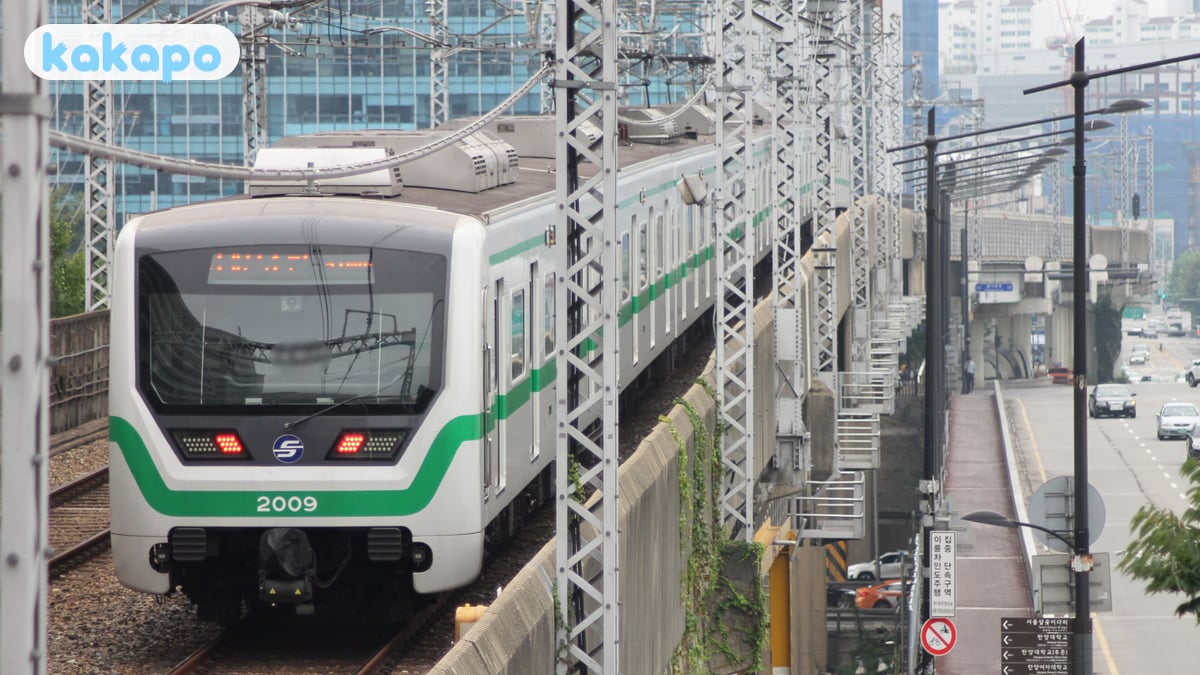
- System hours: 05:30 to roughly midnight, varying by line and direction. Last trains generally depart terminal stations between 23:00 and 00:30 with most major-line last trains around 00:00.
- Friday/Saturday extended hours: some lines run 30-60 minutes later on weekend nights. Confirm via the Subway Korea app or Naver Map for your specific station.
- Frequency: 3-4 minutes during peak hours, 6-10 minutes off-peak, 10-15 minutes after 22:00.
- Last-train alarm: stations broadcast a "last train" announcement in Korean and English about 5 minutes before the last train. Don't sprint; if you miss it, the system has good night-bus alternatives.
- Post-midnight: night-bus network ("심야버스" N-routes) covers Seoul comprehensively from ~23:30 to ~05:00, 2,200 KRW per ride on a T-money card. KakaoT for door-to-door.
Line-by-line late-night picture
- Line 2 (green, the loop) — Hongdae, Hapjeong, Gangnam, Sinchon, Ewha, Konkuk. The party-line. Late-night density is high (the post-club exodus from Hongdae and Gangnam falls onto Line 2 in the last hour). Safe but crowded and occasionally drunk.
- Line 1 (dark blue) — Seoul Station, Jongno, Cheongnyangni, runs out to Incheon and Suwon. Older trains; longer late-night gaps; some outer-suburban stretches feel emptier than Line 2. Still safe by international standards.
- Line 3 (orange) — Gyeongbokgung, Anguk, Apgujeong, Itaewon (one stop via Line 6 transfer at Yaksu). Calm.
- Line 4 (light blue) — Myeongdong, Seoul Station, Hyehwa, Dongdaemun. Tourist-heavy in the centre; calm at night.
- Line 6 (brown) — Itaewon, Noksapyeong, Hapjeong, World Cup Stadium. The Itaewon-Hongdae connector; late-night density is moderate.
- Line 7 (olive) — passes through Gangnam and the southern districts; calmer late at night.
- Line 9 (gold, the express) — Express trains to Gimpo Airport; the line has fewer late-night services than the local lines.
- Bundang / Sinbundang / outer lines — calmer, last trains earlier; check the app.
- Where to sit alone late at night: cars near the operator (front or back) and away from any single visibly drunk passenger. Move cars at the next station if needed; doors open every 1-2 minutes on busy lines.
Molka (spy-cam) awareness in station bathrooms
- What molka is: hidden cameras placed in public bathrooms, changing rooms and hotels — a long-running Korean problem extensively covered in domestic media since the 2018 protests.
- Seoul Metro response: Seoul Metropolitan Government runs continuous molka-inspection sweeps of all subway-station bathrooms. Detection equipment is deployed routinely; cameras are removed; offenders are prosecuted under the Sexual Violence Prevention Act.
- Practical check: when using a subway bathroom, scan for unusual holes in fixtures (especially hooks, soap dispensers, toilet-paper holders, vents), unusual mirror angles, and anything pointing at the toilet from above.
- If you find one: photograph it, leave the bathroom, report at the station agent booth and call 112. Korean police have a dedicated digital sexual-crime unit.
- Apps: free molka-detection apps detect IR LEDs and unusual radio signals; reliability is mixed but some travellers find them reassuring.
- Risk vs. reaction: molka detection rates in subway bathrooms specifically are low compared to hotels, university dorms or capsule hotels. The reaction time of Korean municipal inspection has improved markedly since 2019.
Sexual harassment on the trains
- Background rate: Seoul's on-train sexual-harassment rate is low by major-city standards but non-zero. The pattern when it happens — touching, frottage on packed carriages, photography — is similar to Tokyo's chikan problem but at meaningfully lower incidence.
- If it happens: shout (the standard Korean phrase is "성추행이에요!" — "this is sexual harassment!"); fellow passengers will intervene; press the emergency button or alert the operator. Korean public norms strongly favour the victim's framing.
- No women-only car — unlike Tokyo, Seoul Subway does not operate a designated women-only car. Pink-section "courtesy" seating exists but is for pregnant women, elderly and disabled passengers.
- Filming offences: Korean law treats illegal filming as a sexual-violence offence; perpetrators on trains have been prosecuted. If someone is visibly filming you, alert the operator immediately.
- Drunken passengers: more common on Line 2 and Line 1 after 22:00 on Friday/Saturday. Most are sleeping; the loud-and-aggressive minority can be moved away from by changing cars at the next station.
Practical tips for solo female riders
- T-money card — buy at any convenience store (CU, GS25, 7-Eleven) or station kiosk for 2,500 KRW + load. Single ride 1,450 KRW (under 10km), tap in and out. Faster than buying single tickets and saves 100-150 KRW per ride.
- Apps: Subway Korea (offline, English) for route planning; Naver Map and KakaoMap for door-to-door; Subway Map for visualisation. Real-time train arrival on platform screens and in-app.
- Free Wi-Fi on all trains and platforms; Korean SIM not required.
- Station bathrooms — every station has them, free, generally clean. Inside the ticket gates at most stations.
- Foreign tourist passes — Discover Seoul Pass and similar include unlimited subway; T-money card embedded.
- Solo dining and bars near subway stations — completely normal in Seoul for solo women; the post-pandemic 1인 (one-person) dining culture means most restaurants have visible solo diners at night.
Frequently asked questions
Is the Seoul Subway safe at night for solo female travellers in 2026?
Yes, by international standards — Seoul Subway is one of the better large-city transit systems in the world for solo women. The trains are clean and CCTV-monitored, stations are staffed with English-speaking agents at major tourist stations, emergency buttons connect to operators within seconds, and Seoul's overall sexual-assault rate is low by major-city comparison. Specific 2026 caveats: be aware of the molka (spy-cam) issue in station bathrooms (Seoul Metropolitan Government runs continuous inspection), and remember the system shuts down completely around midnight.
What time does the Seoul Subway close?
Service generally runs from 05:30 to roughly midnight, varying by line and direction. Last trains depart terminal stations between 23:00 and 00:30 with most major-line last trains around 00:00. Friday and Saturday nights have extended hours on some lines (30-60 minutes later). Confirm via the Subway Korea app or Naver Map for your specific station — the last-train alarm broadcasts in Korean and English about 5 minutes before the last train.
Does the Seoul Subway have a women-only car?
No, unlike Tokyo, Seoul Subway does not operate a designated women-only car. Pink-section 'courtesy' seating exists at the ends of each car but is for pregnant women, elderly and disabled passengers — not a women-only space. On-train sexual harassment rates in Seoul are low by major-city standards; emergency buttons and operator response are the system's first line of defence.
What is the molka risk and how do I check for it?
Molka (몰카) means hidden-camera — the long-running Korean problem of spy cameras placed in public bathrooms. Seoul Metropolitan Government runs continuous molka-inspection sweeps of subway-station bathrooms; detection has improved markedly since 2019. When using a station bathroom, scan for unusual holes in fixtures (hooks, soap dispensers, toilet-paper holders, vents), unusual mirror angles, and anything pointing at the toilet from above. If you find one, photograph it, leave the bathroom and report to the station agent + 112.
What should I do if I'm harassed on the Seoul Subway?
Shout the standard Korean phrase '성추행이에요!' ('this is sexual harassment!') — fellow passengers will intervene; Korean public norms strongly favour the victim's framing. Press the yellow emergency button near the doors, alert the operator, or get off at the next station and use the platform emergency button. The Seoul Metropolitan Police transit unit responds quickly; sexual-violence counselling 24/7 at 1366 (English support available).
What are the busiest and quietest subway lines at night?
Line 2 (the green loop) is by far the busiest late at night — Hongdae, Sinchon, Hapjeong, Gangnam, Konkuk all feed into it and the post-club exodus falls onto Line 2 in the last hour. Lines 3, 4, 6 and 7 are calmer. Line 1 has older trains and longer outer-suburban stretches; still safe but feels less populated. All lines remain safer than equivalent major-city metros — the calm-vs-busy difference is comfort, not risk.
How do I get home if I miss the last subway train?
Three options. (1) Seoul night buses (심야버스, N-routes) cover the city from ~23:30 to ~05:00 for 2,200 KRW on a T-money card — the N16, N26, N62 are core trunk routes. (2) KakaoT (Korean Uber equivalent) covers everywhere; typical fares 8,000-25,000 KRW for most central rides; surge 1.2-1.5x after 02:00; international credit cards via KakaoT International work. (3) Walk — Seoul streets at night are safe in central districts, just check distance.
Sources
Run a business in Seoul Subway?
Show visitors your Seoul Subway business is a safe choice. The free Verified by Kakapo badge puts Seoul Subway's live safety score on your website, links back to your verified page, and updates itself. No cost.
Get the free badge →