


Is Kyoto, Japan Safe? A 2026 Travel Safety Guide
Gion's strict photography ban, Arashiyama crowd density, summer heat, and the practical concerns of a 1,000-year-old city.

Kyoto is one of the safest cities in the world for crime — comparable to Tokyo on most measures, calmer in tone. The realistic visitor concerns are summer heat, the strictly-enforced no-photography rules in the Gion geisha district (introduced after years of tourist harassment), bus and Higashiyama-area crowd density, and the rare wildlife encounter on the outer trails.
Both the UK FCDO and the US State Department list Japan at their lowest advisory levels. Crime against tourists in Kyoto is genuinely rare. The Kyoto Prefectural Police are visible and responsive; English-speaking officers at major sites.
Kyoto's distinctive challenges for first-time visitors: the city is geographically dispersed (sights spread over 25 km, not a walkable single core), the bus system is the practical backbone but extremely crowded in season, and August humidity is brutal in a way the photographs don't communicate.
The thing that throws most first-time visitors is that Kyoto is a real working city of 1.4 million, not a theme park. The bus you take to Kinkaku-ji is the same one Kyoto University students use to commute; the bakery near your ryokan opens at 6am because actual locals need bread. Behaving as though you're in a museum exhibit — blocking narrow Higashiyama lanes for selfies, talking loudly on the bus, ignoring the queue-formation conventions on the subway — is what the recent "overtourism" backlash is responding to. Watch what locals do, mirror it, and the city opens up.
In 2026, the practical changes you should know about: Kyoto City Bus introduced an "express tourist loop" service in 2025 — flat ¥500 day pass, runs Kyoto Station → Kiyomizu → Gion → Ginkaku-ji → Kinkaku-ji → Arashiyama, every 10 minutes, less crowded than the regular 100/101 routes; the city has banned suitcase-rolling through Gion's narrow lanes (use coin lockers at Kyoto Station, ¥700/day, or the takkyubin same-day luggage service from hotel to hotel); Fushimi Inari is now formally open 24/7 and the official advice is to visit between 19:00-06:00 to avoid the photo-impossible mid-day density; and Visit Japan Web pre-arrival registration is mandatory before customs — do it on the plane to skip the airport queue.
| Night safety | 92/100 |
|---|---|
| Scam / petty-crime risk | Low |
| Violent crime (tourists) | Low |
| Most common scams | geisha photography ban in Gion; crowd-related risks at Fushimi Inari; crowd-related risks at Arashiyama |
| Safer neighbourhoods | Higashiyama, Gion, Pontochō and Kawaramachi |
| Data sources cited | 4 |
| Last verified |
What the score means — 95/100
- Personal safety (96) — at the top of our scale. Kyoto's reported crime is among the lowest of any major Japanese city.
- Night (92) — walking back from Pontochō or Gion at midnight is fine. Lighting is good throughout the central districts.
- Transport (90) — the bus network covers the temples; the limited subway covers downtown; the JR + private rail handle inter-city.
- Healthcare (88) — Kyoto University Hospital is a major teaching hospital; Kyoto City Hospital handles 24h emergencies.
Gion — the geisha photography ban
The Gion district is Kyoto's traditional geisha quarter. It's also been the site of years of tourist harassment of geiko and maiko (Kyoto's geisha and apprentice geisha) by aggressive photographers.
- Since 2024, the historic Hanami-koji street has banned tourist photography of geisha entirely. Signage is posted; fines are real (¥10,000 on the spot).
- Don't chase, surround, or block geisha. They're working professionals walking to appointments. The "harassment of national-treasure cultural workers" complaints made the local news for years.
- Don't enter private alleys or open doors. Many of Gion's narrow lanes are private property; sign-posted ones are residential-only.
- The teahouses themselves are accessed by personal introduction only — you can't walk in. Don't try.
- Photographs of the architecture, Yasaka Shrine, and the public Shirakawa canal area — fine. Just not pursuing geisha.
Crowd density — Arashiyama, Fushimi Inari, Kiyomizu-dera

Kyoto's most-photographed sights are also the most over-touristed. The crowd-related risks are not crime; they're slip-and-fall on temple steps, heat-related collapse in queues, and the simple stress of moving through 50,000 people on a 4-metre-wide path.
- Fushimi Inari Shrine (the famous orange torii path): essentially carpeted with tourists 9am-5pm. Go at 6:30am for the photographs you've seen, or after 7pm for evening light. Open 24h.
- Arashiyama Bamboo Forest: the path is short (~500m). Mid-day in season is wall-to-wall people. 7am or 5pm makes it bearable.
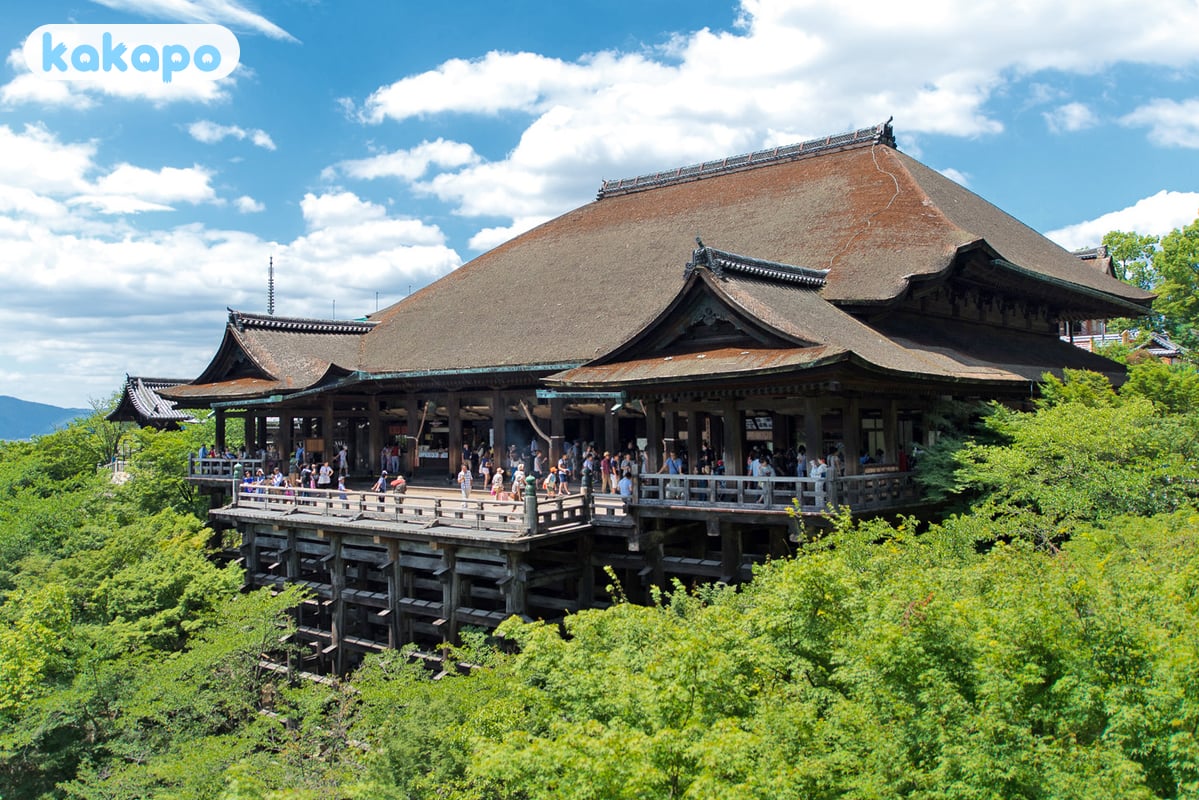
- Kiyomizu-dera: the wooden stage temple. Steep approach steps; slippery when wet. Buy tickets at the entrance only.
- Cherry blossom season (late March-early April) and autumn leaves (mid-November): peak crowds. Hotels book 6-9 months ahead.
- Buses: the 100, 101, 102, 205 (the major tourist routes) get standing-room only at peak hours. The K Pass (city bus pass) helps your wallet but not the crowding.
Buses, subway, and getting around

- Buses are the main way to reach temples. ¥230 single, ICOCA card or cash. Front-door boarding, pay on exit.
- Subway: Karasuma line (north-south) and Tōzai line (east-west). Useful for downtown but doesn't reach most temples.
- Cycling: Kyoto is flat and bicycle-friendly. Many hotels and rental shops offer bikes (¥1,000-2,000/day). Be aware that bike lanes share with cars or pedestrians depending on street.
- Taxis: honest and metered. Don't grab the door — automatic.
- Walking: the eastern Higashiyama district (Kiyomizu → Sannenzaka → Yasaka → Maruyama → Heian Shrine) is the famous walking route. Wear good shoes.
- From Kansai Airport (KIX): HARUKA limited express to Kyoto Station, ~75 min, ¥3,640.
- From Tokyo: Shinkansen Nozomi to Kyoto, ~2h15m, ~¥14,000.
Summer heat — the underrated danger
Kyoto sits in a basin and bakes harder in summer than coastal Japan.
- July-August regularly hits 35-37°C with 80% humidity. Heatstroke hospitalisations spike.
- Plan around mid-day: temples 7-10am, indoor shops/museums/department stores noon-4pm, more temples 5-7pm.
- Hydrate aggressively: vending machines on every block. Convenience stores are public cooling stations.
- Ozeki shrines have water stations at cleansing fountains — but it's for ritual purification, not drinking. Use a vending machine.
Wildlife on the trails — the rare bear
- The Kibune-Kurama mountain trails (north of Kyoto), and parts of Mount Hiei: black bear sightings have increased in recent years. Encounters are rare but real.
- Carry a bear bell if hiking into the mountain temples (Kurama-dera, Mt. Hiei). Make noise. Don't carry food in unsealed bags.
- Monkeys on the Arashiyama Monkey Park hill: don't make eye contact, don't carry visible food.
- Wild boar: occasionally on the outer trails. Give them space; don't approach.
Neighbourhood-by-neighbourhood breakdown

- Higashiyama (eastern hills) — Kiyomizu-dera, Sannenzaka and Ninenzaka cobbled lanes, Yasaka Shrine, Maruyama Park, Chion-in. The temple corridor. Very safe; the only risk is foot traffic crushing on Sannenzaka in cherry blossom and autumn season.
- Gion — south of Yasaka Shrine. Tea-houses, the Shirakawa canal at dusk, the strict no-photography geisha rules on Hanami-koji. Always very safe; ¥10,000 fine zones for tourist photography of geiko/maiko are signed.
- Pontochō and Kawaramachi (downtown) — the narrow Pontochō alley along the Kamogawa river is the city's most atmospheric dinner strip. Surrounding Kawaramachi is the modern shopping and bar district. Very safe day and night.
- Arashiyama — western edge of city, 20 minutes by Sagano Line. Bamboo grove, Tenryū-ji, Togetsukyō bridge, the monkey park. Daytime crowds are brutal; the area itself is fully safe. Don't feed or touch the monkeys.
- Northern temples (Kinkaku-ji, Ryōan-ji, Daitoku-ji) — quieter spread-out temple zone reached by bus. Safe and calm; you'll need most of an afternoon to do them properly.
- Fushimi (south) — Fushimi Inari Shrine and the sake district. Inari path is open 24h; nighttime climb is genuinely peaceful and safe (carry a phone-light for the back section). The sake breweries around Gekkeikan are fully visitable.
- Kyoto Station and Shimogyō (south-central) — Station building itself, Higashi Honganji and Nishi Honganji temples, the Toji pagoda. Calm, residential, very safe. Best base if you want quick access to Shinkansen day trips.
If it's your first time visiting
- Best arrival airport: Kansai International (KIX) for international, then HARUKA limited express to Kyoto Station in 75 minutes for ¥3,640 (or ¥1,800 with the foreign-passport-only ICOCA & HARUKA discount — buy at KIX station). From Tokyo, the Shinkansen Nozomi to Kyoto is 2h15m at roughly ¥14,000.
- Buy an ICOCA card at any JR station vending machine (¥500 deposit + load). Works on every bus, subway, and JR/private train in Kansai, plus most convenience stores. Or use Apple Pay with a Suica wallet — works identically.
- Best neighbourhood for your first night: a ryokan or hotel in Higashiyama for atmosphere, Kawaramachi/Pontochō for downtown convenience, or near Kyoto Station for easy day trips to Nara, Osaka, Himeji. Avoid booking far up in north-western Kita-ku unless you have a specific reason — you'll waste hours commuting.
- Day 1, jet-lag friendly: take a slow walk through Gion at golden hour, dinner along the Pontochō alley, then a riverside stroll along the Kamogawa. All flat, all walkable from any central hotel, no tickets needed.
- Common rookie mistakes: chasing geiko/maiko for photos in Gion (¥10,000 fine, signed enforcement); eating while walking in Nishiki Market (every stall has a "no walking" sign — eat at the counter); rolling a wheeled suitcase through narrow Higashiyama lanes (banned, and you'll be asked to move); standing on the right side of escalators in Kyoto Station (left in Kyoto/Osaka — opposite of Tokyo); leaving shoes pointed inward when removing them at a temple or ryokan entrance (point them outward, ready to re-don).
- Book Kyoto Imperial Palace and Katsura Imperial Villa at least a week ahead via the Imperial Household Agency site — free but slots are limited.
- Go to the famous sights at 6:30am or after 18:00. Mid-day Arashiyama bamboo and Fushimi Inari are unphotographable in season; the same sites at dawn are empty.
- Carry your passport. Japanese law requires it on your person; police occasionally spot-check at JR stations. Lost wallets are usually returned via koban (police boxes) within 48 hours.
Practical info — emergency numbers
- Police: 110.
- Ambulance / Fire: 119.
- Tourist hotline (English-speaking, 24h): +81 50 3816 2787.
- Kyoto City Hospital (24h ER): +81 75 311 5311.
- Kyoto University Hospital: +81 75 751 3111.
Bring: passport (carry it by Japanese law), comfortable walking shoes, a refillable water bottle, an unlocked phone (Bic Camera and Yodobashi sell prepaid SIMs/pocket Wi-Fi at major stations and airports), and an ICOCA or PASMO card. Tap water is excellent.
Frequently asked questions
Is Kyoto safe to visit in 2026?
Yes — exceptionally so. Kyoto is one of the safest cities in the world for crime. UK FCDO and US State Department list Japan at their lowest advisory levels. Realistic concerns are summer heat (the Kyoto basin is brutally humid in July-August), the strictly enforced no-photography rules in Gion, bus and Higashiyama crowd density, and rare wildlife encounters on outer mountain trails — not violent crime.
Is Kyoto safe at night?
Yes. Walking back from Pontochō or Gion at midnight is fine. Lighting is good throughout central districts and the social compact makes harassment vanishingly rare. Kyoto buses stop around 22:30-23:00 so plan return transit; subway and taxi are the late-night options. Solo travel at any hour is genuinely safe.
Is Kyoto safe for solo female travellers?
Yes — among the safest destinations globally for solo women. Kyoto's reported crime rate is among the lowest of any major Japanese city. Standard urban awareness is sufficient; lost wallets get returned via the police lost-and-found system. The only practical note: chikan (groping) on packed rush-hour trains has been historically reported — women-only carriages are marked pink at peak hours.
Can you drink tap water in Kyoto?
Yes. Japanese tap water is excellent — among the safest in the world, extensively tested. Free at every restaurant on request. Refill bottles anywhere. Vending machines are on every block if you prefer chilled bottled. Note: shrine cleansing fountains are for ritual purification, not drinking.
Will I get fined for photographing geisha?
Yes — ¥10,000 on the spot since 2024 when Hanami-koji street in Gion banned tourist photography of geisha entirely. The ban came after years of tourist harassment of geiko and maiko (Kyoto's geisha and apprentice geisha). Don't chase, surround, or block them — they're working professionals walking to appointments. Don't enter private alleys or open doors; many narrow Gion lanes are private property. Photographs of architecture, Yasaka Shrine, and the public Shirakawa canal area are fine — just not pursuing geisha.
Is the tourism density a problem?
Yes, at the famous sights. Fushimi Inari, the Arashiyama Bamboo Forest, and Kiyomizu-dera are wall-to-wall tourists 9am-5pm in season — Fushimi Inari is open 24h so go at 6:30am for the photographs you've seen, or after 7pm for evening light. Arashiyama at 7am or 5pm is bearable. Cherry blossom (late March-early April) and autumn leaves (mid-November) are peak; hotels book 6-9 months ahead. The crowd risks are slips on temple steps and heat collapse in queues, not crime — Kyoto's policing easily handles density.
Sources
Run a business in Kyoto?
Show visitors your Kyoto business is a safe choice. The free Verified by Kakapo badge puts Kyoto's live safety score on your website, links back to your verified page, and updates itself. No cost.
Get the free badge →