


Is Cape Town, South Africa Safe? A 2026 Travel Safety Guide
What's safe, what isn't, and how to enjoy one of the world's most beautiful cities without getting caught out.

Cape Town is one of the world's most beautiful cities and one of the most genuinely complex from a tourist safety perspective. The realistic risks are concentrated in a few specific patterns: smash-and-grab from cars at red lights, hiking incidents on Table Mountain (the most-injured tourist spot in South Africa), the township tours where operator quality matters enormously, and the gap between the "tourist Cape Town" experience and the city's broader reality.
The UK FCDO and US State Department list South Africa at Level 2 ("exercise increased caution") with notes about violent crime in some areas. For Cape Town's tourist core (V&A Waterfront, City Bowl, Atlantic Seaboard, southern peninsula resorts), the practical day-to-day risk is moderate. Most reported tourist crimes are property — phone theft, smash-and-grab — not violent.
Two specific operational facts that affect every visitor: load shedding (scheduled rolling power cuts, typically 2-6 hours per day depending on the national grid status) and the absolute necessity of using Uber/Bolt over street taxis. Both shape your daily logistics.
What surprises most first-time visitors is the visual drama of the city itself. Table Mountain rises 1,000 metres directly behind the city centre; the Atlantic Seaboard beaches sit at the foot of the Twelve Apostles; the wine farms of Constantia are 20 minutes from your hotel; and the Cape Peninsula drive past Hout Bay, Chapman's Peak, and on to Cape Point ranks with anything globally. Capetonians are friendly, outdoorsy, and proud — greetings include "howzit" (informal) or "hello, how are you?" (formal), tipping 10-15% is standard at restaurants and 10-20 ZAR for car-guards (the high-vis-jacketed informal parking attendants you'll see at every public lot — pay them; it works).
In 2026, the practical updates: load shedding has reduced substantially since the 2023 peak — most of 2025 saw Stage 0-2 days with occasional Stage 3-4; EskomSePush remains the universal app and confirms schedules in your area; the post-pandemic Garden Route tourism push has reopened most lodges and game reserves at robust capacity; the South African e-Visa rolled out for most major nationalities (UK, US, Canadian, Australian, EU passports get visa-free entry up to 90 days); MyCiTi's airport bus service has expanded and is now reliable; and the V&A Waterfront's Time Out Market is now the best food-hall option in the city. The crime situation is broadly stable — the headlines are the same, the tourist-zone experience is the same as 2019.
| Night safety | 30/100 |
|---|---|
| Scam / petty-crime risk | High |
| Violent crime (tourists) | Medium |
| Most common scams | smash-and-grab from cars at red lights; hiking incidents on Table Mountain; poor-quality township tours |
| Safer neighbourhoods | V&A Waterfront, Camps Bay, Bantry Bay / Clifton |
| Data sources cited | 4 |
| Last verified |
What the score means — 49/100
- Healthcare (78) — Cape Town has world-class private hospitals (Mediclinic Cape Town, Netcare Christiaan Barnard Memorial, Constantiaberg). Public hospitals are overwhelmed; private is the practical option. Travel insurance essential.
- Transport (72) — Uber and Bolt are the realistic visitor option. The MyCiTi bus system is good for some routes; trains have safety concerns and aren't recommended for tourists.
- Night (68) — V&A Waterfront, Camps Bay, Long Street main strip are alive late and well-policed. Walking solo away from main streets after dark is not advised.
- Personal safety (64) — moderate-to-low. SAPS data shows Cape Town's crime concentrated in specific township areas; tourist-facing crime is mostly property.
Where to stay, where to be aware
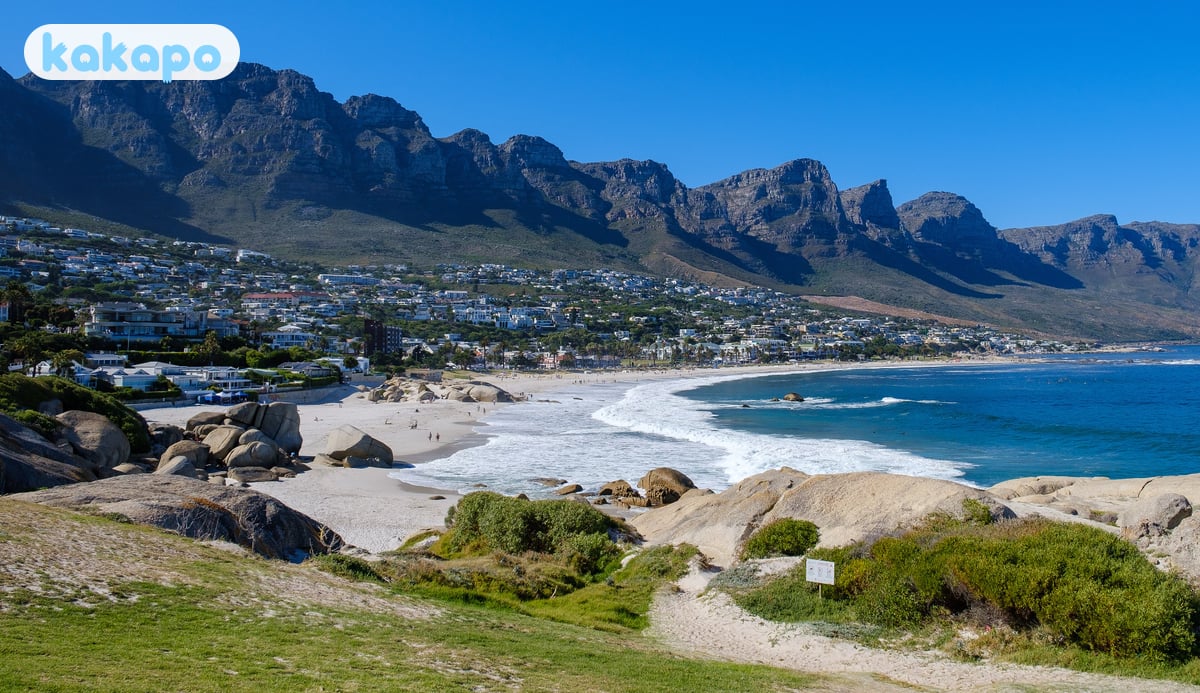
Comfortable for tourists: V&A Waterfront (gated tourist enclave, very safe), Camps Bay (Atlantic Seaboard beachfront, restaurants, safe), Sea Point (residential, lively promenade, broadly safe), Bantry Bay / Clifton (upscale residential, very safe), De Waterkant (gentrified, cafes), Bo-Kaap (the colourful Cape Malay neighbourhood — very safe by day, fine by evening), Constantia (wine farms, residential, very safe).
Lively + tourist-active, requires standard awareness: City Bowl / Long Street (nightlife strip — fine, just busy and drunk late), Kloof Street, Bree Street, Gardens.
Don't walk to / through after dark: Woodstock (gentrifying mixed neighbourhood — daytime fine for the Old Biscuit Mill, evening less so), most of the southern Cape Flats (Mitchells Plain, Manenberg, Khayelitsha) — these are residential township areas with high reported crime; tourists should only visit on organised tours, not independently.
Township tours: legitimate when run by reputable operators (Uthando, Khaltsha Cycles, Cape Town Sightseeing). The "drive-through township" experience without engaging is criticised as voyeuristic. Operators that work with community organisations are the better choice.
Cape Peninsula day trips (Hout Bay, Chapman's Peak, Simon's Town, Cape Point): all very safe by day. Drive yourself with awareness, or use a tour.
Smash-and-grab — the most-reported tourist incident
The single most-frequent tourist-affecting crime is smash-and-grab from cars at red lights:
- The pattern: a window is broken, a phone or bag visible on the passenger seat is grabbed, the thief runs. Most incidents at major urban intersections (M3/M5 entrances, Sea Point Main Road, City Bowl).
- Don't leave anything visible in your car. Phones, bags, sunglasses — all in the boot or under the seat.
- Don't sit with a phone visible at red lights. Tinted windows help; some rental cars have them, ask.
- Lock your doors while driving. Hijackings, while rare, do happen.
- If something happens: don't resist. Hand over the phone/wallet. Drive to the nearest petrol station and call 10111 (police).
Table Mountain — the most-injured tourist spot
Hiking Table Mountain is one of Cape Town's signature experiences and the most-frequent reason tourists need rescue services:
- Weather changes fast. The "tablecloth" cloud can wrap the summit in 30 minutes. Bring layers + waterproof shell.
- Use the marked trails: Platteklip Gorge is the standard direct ascent (3h up). Skeleton Gorge is gentler. Don't go off-trail — Cape Mountain Rescue's annual call-out list is full of "got lost in the fog."
- The cable car closes in high winds. Plan for this — coming down on foot in marginal weather is the dangerous combination.
- Don't hike alone on less-trafficked routes (India Venster). Robberies of solo hikers on lesser-used trails have happened, though rare.
- Lion's Head: easier hike, very popular for sunset/full-moon. Crowded — that's the safety. Last 50m involves chains/ladders.
- Cape Mountain Rescue: 021 480 7700. Free service, but plan to never need them.
Load shedding — the operational reality
South Africa has scheduled rolling power cuts ("load shedding") to manage grid demand. They affect every visitor logistically:
- Schedule: typically 2-6 hours per day, in 2-stage blocks. Stage 1 = 2h cuts, Stage 6 = 12h. Most days are Stage 2-4 in 2025-2026.
- EskomSePush app: the universal app for current load-shedding schedules by area.
- Hotels and major restaurants: have generators or solar/inverter systems. Their service continues.
- Traffic lights go out: drive intersections as 4-way stops. Be patient; minor accidents do increase.
- ATMs: don't work during cuts. Withdraw cash before scheduled cuts.
- Mobile signal: degrades during prolonged cuts. Most cell towers have backup batteries that last 4-8h.
- Day-trip impact: small towns can be load-shed harder than the city. Check before driving 2 hours for a meal.
Uber, rental cars, and Cape Town airport
- Uber and Bolt: both work and are the realistic visitor recommendation. Cheaper than US/EU.
- Street taxis (metered cabs): limited fleet; not as widely used. Most visitors use rideshare exclusively.
- Minibus taxis (the white-and-yellow shared minivans used by locals): not recommended for tourists — the routes are unintuitive and the safety bar is variable.
- Renting a car: very common for the Cape Peninsula, Garden Route trips. Avis, Bidvest, Europcar all have major presence. Tinted windows are worth specifying.
- Cape Town International (CPT) to V&A Waterfront / city centre: ~25 min by car/Uber. ~R250-350 by Uber. The MyCiTi airport bus is a budget option.
- Trains (Metrorail): not recommended for visitors. Theft and incidents are real.
Neighbourhood-by-neighbourhood breakdown
- V&A Waterfront — the gated tourist enclave at the harbour, the Aquarium, Time Out Market, Cape Wheel, ferry to Robben Island. Heavily patrolled, very safe day and night.
- Camps Bay, Clifton, Bantry Bay — Atlantic Seaboard beaches with the Twelve Apostles as backdrop. Calm, polished, very safe; some of the world's most beautiful beaches but the water is freezing year-round.
- Sea Point — promenade and residential, an excellent 4km coastal walk. Vibrant, mixed, broadly safe day and night; one of the city's best mid-priced restaurant strips.
- City Bowl (CBD, Long Street, Bree Street, Kloof Street) — the nightlife and cocktail-bar district. Busy and policed late on weekends; alone on a quiet Monday night the Long Street side streets feel empty. Use Uber for short hops.
- Bo-Kaap — the colourful Cape Malay neighbourhood on the slopes of Signal Hill. Very safe by day; fine by evening. Don't drive on photo-stop tour blocks (residents are increasingly fed up with the Instagram crowd blocking driveways).
- Gardens — residential between City Bowl and Table Mountain. The Company's Garden, museums, calm. Very safe.
- De Waterkant and Green Point — gentrified, LGBTQ+-friendly, cafés. Very safe day and night.
- Woodstock and Observatory — gentrifying mixed neighbourhoods. The Old Biscuit Mill Saturday market in Woodstock is excellent; the surrounding streets are improving but evening solo walks aren't recommended.
- Constantia, Tokai, Hout Bay — wealthy southern suburbs and wine farms. Very safe; this is where most Capetonians who can afford to actually live.
- Cape Flats (Mitchells Plain, Manenberg, Khayelitsha, Langa, Gugulethu) — residential townships east and south-east. High reported crime; do not visit independently. Reputable community tours (Uthando, Khaltsha Cycles) are safe and ethically run.
If it's your first time visiting
- Best arrival airport: Cape Town International (CPT), 20km east. Uber to V&A Waterfront/CBD is R250-350 ($14-20) in 25 minutes. MyCiTi airport bus is R110 in 35 minutes. Avoid the airport-touts offering "taxi" — use the official rank or pre-book.
- Pre-book Uber or Bolt for everything cross-city. Don't use street taxis or Metrorail trains. Inner-city Uber rides are R30-80; even cross-town to Camps Bay is rarely above R150.
- Best neighbourhood for your first night: V&A Waterfront for safety-and-convenience (but expensive and tourist-bubble-y); Camps Bay for beachfront luxury; Sea Point for mid-priced lively; the City Bowl/Gardens for restaurant proximity. Avoid booking deep in Woodstock or Observatory unless you know the area.
- Day 1, jet-lag friendly: walk the Sea Point promenade end-to-end (Mouille Point to Bantry Bay, ~4km flat oceanfront), lunch at the V&A Waterfront's Time Out Market, take in the Robben Island ferry the next morning. Low-key and lets you scan the city's actual energy.
- Common rookie mistakes: leaving valuables visible in a parked or stopped car (smash-and-grab at red lights is the #1 tourist crime — phone in the glove box or boot, bag off the seat); hiking Table Mountain in cotton without layers (the "tablecloth" weather can drop you to 5°C and 30m visibility in 20 minutes); using a Metrorail train (just don't); not paying car-guards at petrol stations and public lots (the R10-20 you give is the local protocol and they expect it); driving the M3 into the southern suburbs at 21:00 without locked doors and tinted windows; trying to walk from a restaurant in Long Street back to a hotel 8 blocks away at 23:00 (take the R40 Uber).
- Book Table Mountain cable car online with a flexible date. Tickets are date-flexible but the cable car closes in high winds — last 2-3 days of the trip is the smart backup-plan window. Hiking up via Platteklip Gorge is the alternative.
- Download EskomSePush and your hotel's load-shedding schedule. Stages 1-4 mean 2-8h blackouts; major hotels have generators or solar/inverters but small restaurants and shops can be dark.
- Plan a day in the Winelands. Stellenbosch or Franschhoek wine farms are 45-60 minutes' drive, and the Stellenbosch wine bus is a safe alternative to driving back after tastings.
Practical info — emergency numbers
- National emergency: 10111 (police) or 10177 (ambulance).
- Tourist police: stations at V&A Waterfront and major sites.
- Cape Mountain Rescue: 021 480 7700.
- Mediclinic Cape Town: +27 21 464 5500.
- Netcare Christiaan Barnard Memorial: +27 21 480 6111.
Bring: a card without foreign-transaction fees, an unlocked phone (Vodacom, MTN, Cell C prepaid SIMs at the airport), modest cash (rand, ZAR), the EskomSePush app, layered clothing for Table Mountain, and travel insurance documentation. Tap water in Cape Town is safe but during severe water restrictions (rare since 2018) bottled is universal.
Frequently asked questions
Is Cape Town safe to visit in 2026?
Yes, with practical adjustments. US State Department lists South Africa at Level 2 (exercise increased caution, citing crime, civil unrest, and kidnapping risk) and UK FCDO similarly warns about violent crime in some areas. For Cape Town's tourist core (V&A Waterfront, Atlantic Seaboard, City Bowl, southern peninsula), the practical day-to-day risk is moderate and most tourist-affecting crime is property — smash-and-grab from cars at red lights, phone theft — not violent. The genuine adjustments are using Uber/Bolt rather than street taxis, not leaving anything visible in cars, and not walking alone in unfamiliar areas after dark.
Is Cape Town safe at night?
Selectively, yes. V&A Waterfront is gated, patrolled, and safe late. Camps Bay, Sea Point promenade, Long Street nightlife strip, Kloof Street, and Bree Street are busy and well-policed late. Walking solo more than 1-2 blocks off main thoroughfares after dark is not advised — that's where reported tourist muggings concentrate. Always take an Uber back to your hotel rather than walking long distances, even short ones if the route is unlit. Avoid Woodstock and Observatory side-streets at night. Do not use Metrorail trains at any hour.
Is Cape Town safe for solo female travellers?
Yes for the tourist core, with the same practical adjustments local women make. V&A Waterfront, Camps Bay, Sea Point, and the wine farms in Constantia/Stellenbosch are comfortable. Always use Uber or Bolt rather than street taxis or Metrorail. Don't walk alone at night, including short walks back from restaurants in City Bowl — taxis are cheap. Group day-hikes are safer than solo hikes on less-trafficked Table Mountain routes (Platteklip and Lion's Head are crowded enough to be fine). Most South African private hospitals are world-class if anything happens.
Can you drink tap water in Cape Town?
Yes. Cape Town's tap water is treated to drinking standards and routinely consumed by residents. Restaurants serve tap by default. The 2018 'Day Zero' drought crisis is over (current dam levels are healthy as of 2026) but water-saving habits remain visible in restaurants and hotels. Bottled water is widely available if you prefer.
What's the biggest scam to avoid in Cape Town?
Honestly, the bigger threat than scams is smash-and-grab from cars at red lights — phones and bags visible on the passenger seat are the target. Keep everything in the boot, lock doors while driving, and don't sit with a phone visible at major urban intersections (M3/M5 entrances, Sea Point Main Road). Among actual scams: unmarked 'taxi' touts at Cape Town airport quoting 3-4x the real fare (use the official taxi rank, MyCiTi airport bus, or pre-booked Uber); ATM 'helpers' at petrol-station ATMs who skim cards (use bank-branch ATMs during daylight); and unlicensed 'Cape Point' day-tour operators with poorly-maintained vehicles.
Are township tours safe and ethical?
Safe when run by reputable operators, and the ethics depend on the operator. Don't visit townships (Khayelitsha, Langa, Gugulethu, Mitchells Plain) independently. Use operators that work with community organisations and pay-forward into the township — Uthando, Khaltsha Cycles, and Cape Town Sightseeing's community tours are the better-regarded options. The 'drive-through township' experience without engaging is widely criticised as voyeuristic. A good tour involves a local guide who lives in the area, visits to community projects (creches, art collectives), and a meal in a township shebeen or kitchen. Crime rates in townships are statistically high but operators take you through areas they know — solo tourist exploration is not the same risk profile.
Recent travel news for Cape Town
All travel news →Sources
Run a business in Cape Town?
Show visitors your Cape Town business is a safe choice. The free Verified by Kakapo badge puts Cape Town's live safety score on your website, links back to your verified page, and updates itself. No cost.
Get the free badge →