


Is Stellenbosch, South Africa Safe? A 2026 Travel Safety Guide
The wine-route drink-drive trap, the road from Cape Town, summer heat and wildfires, and the realistic risks of South Africa's prettiest wine town.

Stellenbosch is one of the safer South African tourist towns. The historic centre is small, walkable, and well-maintained; the wine farms are private and tightly-managed. Crime against tourists in the immediate town is uncommon.
The realistic risks for visitors are the wine-route drink-drive trap (South African DUI is enforced; private drivers are essentially mandatory for serious tasting days), the road from Cape Town (the N1/N2/R310 are fine but transit areas have higher crime statistics), summer heat (32°C+) and the very real Western Cape wildfire season (January-March), and the broader South Africa context that visitors must keep in perspective.
South Africa sits at Level 2 on the US State Department's advisory list ("exercise increased caution due to crime"). Stellenbosch and the Cape Winelands are at the safer end of that spectrum. UK FCDO is similar.
The honest framing for first-time visitors: Stellenbosch is small (~155,000), 50 km east of Cape Town, the heart of the wine country. The Cape Dutch architecture, the historic centre, the surrounding wine estates (Boschendal, Spier, Delaire Graff, Tokara, Waterford, Rust en Vrede), Stellenbosch University, and Franschhoek (a 30-min drive east — sometimes called "France in South Africa") are the visitor anchors.
| Night safety | 49/100 |
|---|---|
| Scam / petty-crime risk | Medium |
| Violent crime (tourists) | Low |
| Most common scams | smash-and-grab from cars; ATM-skimming; independent walking in Kayamandi and Cloetesville |
| Safer neighbourhoods | Town centre, Vredenheim, Franschhoek village |
| Data sources cited | 4 |
| Last verified |
What the score means — 75/100
- Air quality (88) — clean except wildfire days.
- Healthcare (84) — Mediclinic Stellenbosch is excellent private; serious cases evacuate to Cape Town.
- Personal safety (80) — high in town; lower in transit areas.
- Transport (76) — pulled down by SA-wide road context; Stellenbosch town is walkable.
The wine route — and the drink-drive issue
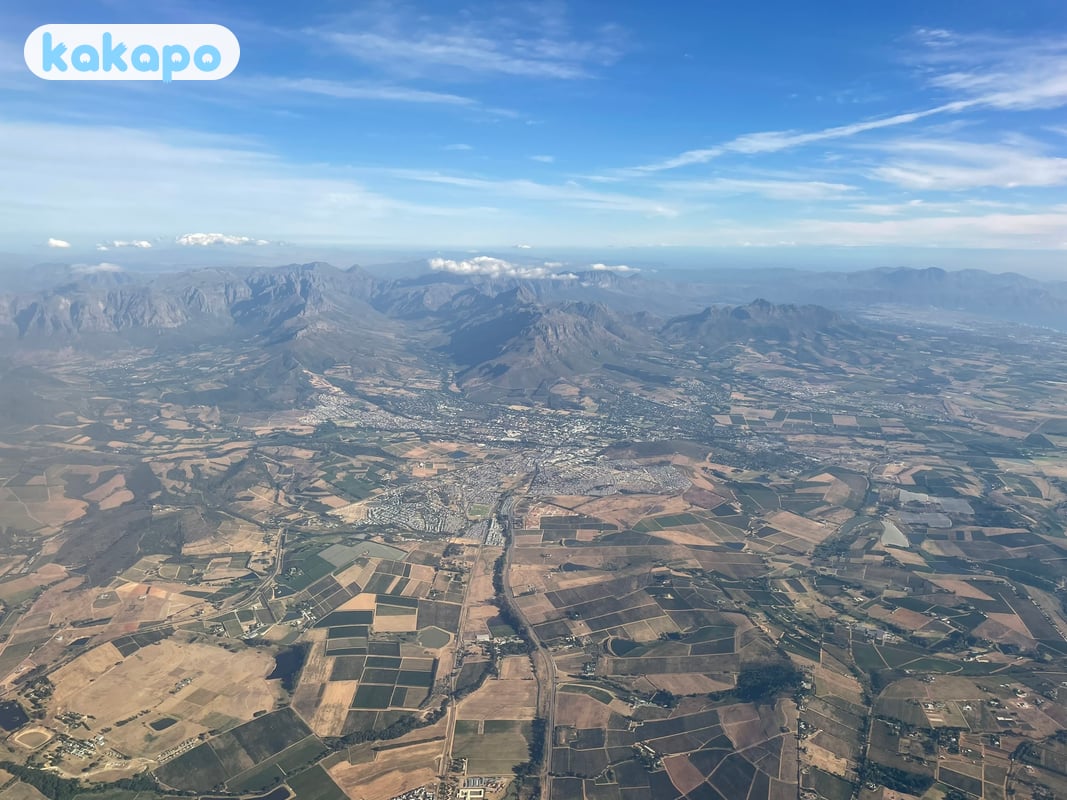
- The Cape Winelands: hundreds of estates within 30 min of Stellenbosch. Tastings range R50-200 (~$3-12) per estate.
- Tasting at 3+ estates: cumulatively over the South African BAC limit (0.05 g/L general; 0.02 g/L professional drivers).
- Police enforcement: roadblocks routine, especially weekend evenings. Arrest is real.
- How to do it safely:
- Private driver / wine tour: ~R1,500-3,000/day for a small group. Standard. Cape Town Wine Tours, Wine Flies, African Eagle.
- Wine Tram in Franschhoek: hop-on/hop-off, ~R290 (~$15). Good way to do 5-7 estates without driving.
- Bicycle wine tour: physically demanding; some operators offer e-bike options.
- Designated driver: pre-agree.
- Don't try to drive yourself: even 2 tastings can put you over the limit, and the SAPS take it seriously.
The road from Cape Town
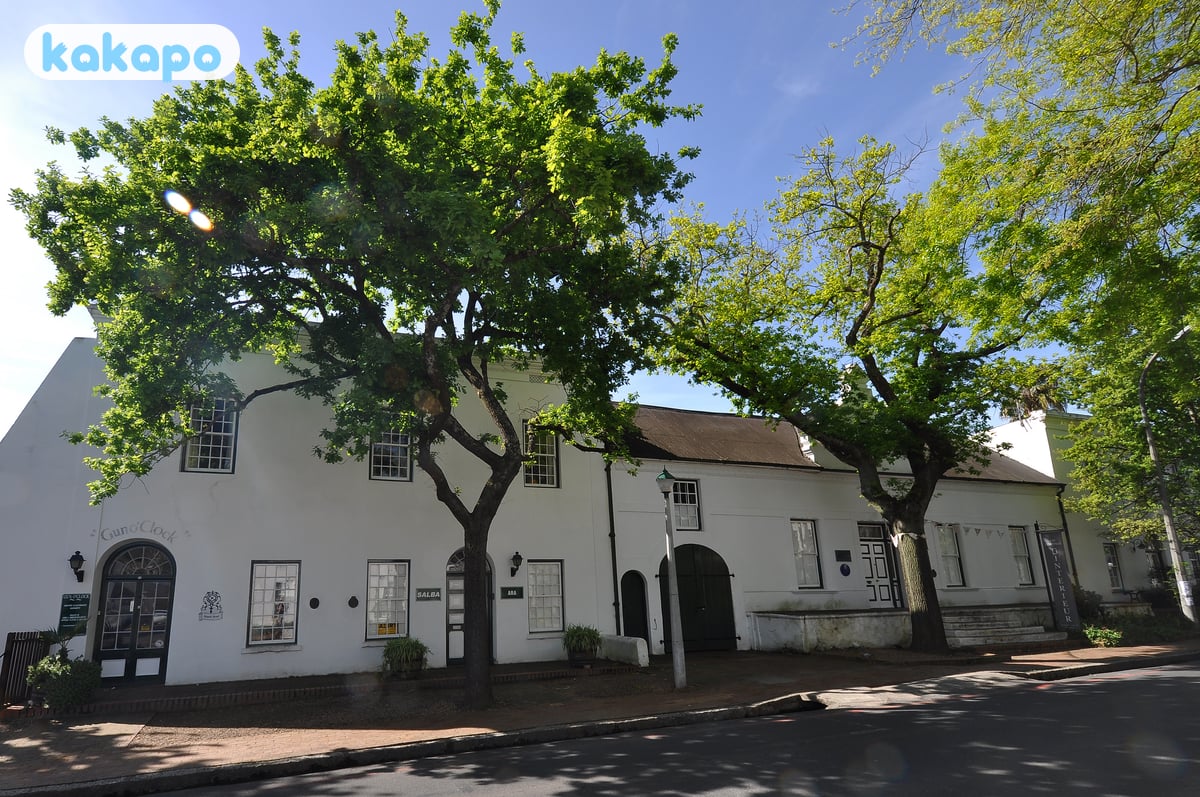
- R310 / R44 / N1: the standard routes from Cape Town. ~50 min drive in light traffic; 90 min in peak commute.
- Driving conditions: highway-quality. The challenge is the side-road experience and the broader urban-edge environment.
- Transit areas (Khayelitsha, parts of N2 corridor): higher-crime; tourists shouldn't stop there. Stay on the highway; don't pick up hitchhikers; don't get out for street vendors at lights.
- Smash-and-grab from cars: documented across Cape Town metro; happens occasionally on commuter roads. Lock doors; don't leave bags visible.
- Don't drive after dark: some sections have visibility issues; police checkpoints are routine.
- Don't leave valuables in parked car: smash-and-grab from rental cars is a Cape-region problem.
Western Cape wildfires
- Wildfire season: late December - early April. Hot, windy, dry.
- Major recent events: the 2017 Knysna fires (1,000+ structures), 2024 Stellenbosch-Helshoogte fires. Wine estates have lost vineyards.
- If a fire approaches: heed evacuation orders. Most wine estates have established fire protocols.
- Smoke: travels far. AQI alerts via SAEONet or local radio.
- Best season: October-November (spring) or April-May (autumn) for cooler, less-fire weather.
Areas — Town centre, Vredenheim, the surrounding farms
Recommended for visitors: Town centre (around Dorp Street, Church Street) — historic Cape Dutch core, very safe day and evening. The wine-estate corridor — Boschendal, Spier, Delaire Graff, etc., all gated and very safe. Franschhoek village — even more touristy; 30 min east.
Stay aware: around Stellenbosch railway station at night. Outer townships (Kayamandi, Cloetesville) — residential; visiting on a guided community tour is fine, casual independent walking is not.
Transport — taxis, the Wine Tram, Cape Town airport
- Walking: Stellenbosch town centre is fully walkable.
- Uber and Bolt: both work in Stellenbosch and Cape Town. The default tourist option.
- Don't use minibus taxis casually as a tourist — they're for daily commuters.
- Wine Tram (Franschhoek): R290 hop-on/hop-off, 5-7 wine estates, designated driver problem solved.
- Cape Town International Airport (CPT): 50 km west. Pre-booked transfer R600-900 (~$30-50).
- Don't drive after dark on Western Cape rural roads.
Money, food, the cost story
- Currency: South African rand (ZAR). $1 ≈ R18-19.
- Cards: universal. Tap-to-pay everywhere.
- ATMs: use ones inside bank branches; ATM-skimming reported.
- Tipping: 10-15% restaurants; 10% taxis; R10-20 for car-guards (the men who direct you to parking spaces).
- Cost: meals R200-450 per person at mid-range restaurants ($11-25). Wine cheap and excellent.
- Tap water: safe.
Stellenbosch and the wine valleys — where to base yourself
- Dorp Street + Church Street (Eikestad — the historic core) — the Cape Dutch white-gabled centre, oak-lined boulevards (Stellenbosch literally means "Stell's bush", planted by Simon van der Stel in 1679, the oaks are protected national monuments), the Village Museum, Toy and Miniature Museum, the Lutheran and Moederkerk churches. Restaurants on Dorp (De Volkskombuis, Decameron) and Bird Street (Tjing Tjing, Hudsons). Best base for first-timers wanting walkable town life (Coopmanhuijs, d'Ouwe Werf, Lanzerac on the eastern edge). Rooms R1,500-4,500.
- Stellenbosch University quarter — south of the centre, around Victoria Street, the Botanical Garden (free), the Sasol Art Museum. Coffee culture (Schoon Coffee, Tribe Coffee), student-friendly pricing. Quieter on weekends and outside term. The Adam Tas wine-tasting house is here.
- Spier + Vredenheim corridor (R310 west) — the wine-estate cluster on the road back to Cape Town. Spier (the family-friendly mega-estate with bird sanctuary, eagle encounters and wine tastings R80-150), Vredenheim, Polkadraai. Wide flat roads, easy first-day tasting circuit. Stay at Spier (R2,500-5,500) for the all-in-one experience.
- Helshoogte Pass + Banhoek Valley (R310 east toward Franschhoek) — the dramatic mountain pass, Tokara (the modern art-and-wine icon, tastings R150-300, restaurant R400-800/head), Delaire Graff (the David Graff diamond-money show estate, the most photographed view, R200-400 tasting and R600-1,500 lunch), Thelema. The 2024 Helshoogte wildfire burned vineyards here — fire-season awareness January-March.
- Jonkershoek Valley (east of town) — protected nature reserve at the valley head, hiking trails, the wine estates of Lanzerac, Neethlingshof, Bartinney. Quiet and mountainous; Lanzerac Hotel (R4,500-12,000) is the period luxury choice.
- Annandale + Blaauwklippen + Rust en Vrede corridor — south-east of town. The classic boutique estates: Rust en Vrede (one of South Africa's top reds, R200-450 tasting, R900-1,800 tasting menu), Waterford (chocolate-and-wine pairing R200), Stark-Condé. Best high-end tasting day.
- Franschhoek (30 min east over Helshoogte Pass) — the "French corner" valley, Huguenot heritage, Main Road restaurant strip (Reuben's, Le Quartier Français, La Petite Colombe). The Franschhoek Wine Tram (R290 hop-on/hop-off, the designated-driver solution for 5-7 estates). More tourist-saturated than Stellenbosch, can absorb a day-trip or a 1-2 night stay.
- Kayamandi + Cloetesville (townships) — historically Black and Coloured residential quarters on the western and northern edges. Visit only with a Tourism-registered township tour operator (Bites and Sites, Kayamandi Tours) — independent walking is not the move. The tours genuinely illuminate the post-apartheid Stellenbosch context and support resident-run businesses.
- Stellenbosch railway station + R44 north toward Klapmuts — the train link to Cape Town (Metrorail Southern Line, R20, 75 min — currently service is unreliable and not recommended for tourists). The streets around the station are uncomfortable after dark; don't walk solo to/from late trains. Klapmuts is the M+E retail node where Stellenbosch meets Paarl.
If it's your first time visiting
- Best arrival: Cape Town International (CPT) is 50 km west, ~50 min in light traffic via N1/R304 or N2/R310. Pre-book a transfer (R600-900 / ~$30-50) with a registered operator (Wine Flies, African Eagle, Cape Town Wine Tours). Uber from CPT works but is more expensive (R650-850) — and the airport-to-Stellenbosch run is fine. Don't take a "MyCiTi bus to a minibus taxi to Stellenbosch" combo as a casual tourist.
- Best neighbourhood for your first night: Dorp Street / historic core for the walkable Cape Dutch experience and dinner-on-foot (Coopmanhuijs, d'Ouwe Werf); Spier or Lanzerac for the wine-estate hotel experience (R2,500-12,000); Franschhoek Main Road if you want the prettier village vibe and the Wine Tram on your doorstep.
- Don't drive yourself for tasting days — it's the most important practical rule. South African DUI limit is 0.05 g/L (lower than US/UK 0.08) and even two estates' worth of tasting puts you over. Options: private driver (R1,500-3,000/day with a small group, the standard — Cape Town Wine Tours, Wine Flies, African Eagle); Franschhoek Wine Tram (R290 hop-on/hop-off across 5-7 Franschhoek estates, no driving); e-bike wine tour (R800-1,500, shorter and lower volume); designated driver within your group. SAPS roadblocks are routine on weekend evenings, arrests are real, and the consequences for international visitors (deportation, future visa bans) are significant.
- Wine tastings cost R50-300 per estate (~$3-17) — often refunded with a bottle purchase. Most estates: 4-5 wines, 30-45 minutes, no reservation needed off-peak. The top estates (Tokara, Delaire Graff, Rust en Vrede, Waterford) charge more and prefer bookings. Lunch at an estate restaurant (R400-800/head with wine pairing) is the classic mid-tasting break — Tokara, Delaire Graff Indochine, Babylonstoren are the bigger names.
- The 3-day classic: Day 1 the Spier-Vredenheim-Polkadraai R310 west corridor (flat roads, easy intro, family-friendly Spier lunch); Day 2 the Helshoogte-to-Franschhoek route over the pass (Tokara morning, Delaire Graff or Babylonstoren lunch, Franschhoek Wine Tram afternoon for 3-4 more estates); Day 3 the Annandale-Blaauwklippen-Rust en Vrede high-end estates south-east of town.
- Cash, cards, tipping: tap-to-pay works everywhere. Use ATMs inside bank branches only (Standard Bank, FNB, ABSA, Nedbank — ATM skimming is reported at street machines). Tip 10-15% at restaurants; 10% taxis and Uber; R10-20 for car-guards (the men who direct you to parking spots — fair, not the R100 sometimes demanded). Don't tip on top of an auto-added service charge — check the bill.
- Cape Town day-trips back the other way: 50 min by car. Combine with V&A Waterfront, Table Mountain (if cableway is running), or the Cape Peninsula day-loop (Boulders Beach penguins, Cape of Good Hope, Chapman's Peak Drive). Don't try to do Stellenbosch tasting + Table Mountain same day — choose one.
- Wildfire and heat season: late December to early April is hot (32°C+), dry and windy. The 2024 Helshoogte fires burned vineyards visible from Tokara and Delaire Graff. October-November (spring) or April-May (autumn) are the cooler, less-fire shoulder seasons and arguably the best time to visit. Check City of Cape Town disaster management and Working on Fire alerts before any inland hike.
- Common rookie mistakes: driving yourself after three tastings (arrests are real); walking into Kayamandi independently without a township tour operator; using Stellenbosch railway station at night; leaving valuables visible in a parked car at any wine estate or restaurant (smash-and-grab is a Cape-region pattern); booking the Metrorail train from Cape Town (service unreliable); stopping for street vendors at robots (traffic lights) on the N2 corridor; underestimating the South African sun (SPF50, hat, hydrate).
Practical info — emergency numbers
- Police (SAPS): 10111.
- Ambulance: 10177.
- Tourist Police (Stellenbosch): contact via SAPS hotline.
- Mediclinic Stellenbosch: +27 21 861 2000.
- Cape Town wildfire alerts: City of Cape Town disaster management.
Bring: a hat, sunscreen, a contactless card, an unlocked phone (Vodacom, MTN, Cell C SA prepaid SIMs at the airport), travel insurance. Don't drive yourself for tasting days; book a private driver or use the Franschhoek Wine Tram.
Frequently asked questions
Is Stellenbosch safe to visit in 2026?
Yes — Stellenbosch is one of the safer South African tourist towns. US State Department lists South Africa at Level 2 (exercise increased caution, citing crime) and UK FCDO is similar, but Stellenbosch and the Cape Winelands sit at the safer end of the country spectrum. The historic centre is small, walkable, and well-maintained; the wine estates are gated and tightly managed. Crime against tourists in town is uncommon. The realistic risks are wine-route drink-driving (private drivers are essentially mandatory), the road from Cape Town, summer wildfires, and the standard Cape-region smash-and-grab caution on transit roads.
Is Stellenbosch safe at night?
Yes — the historic town centre around Dorp Street and Church Street is well-lit, busy with restaurants and university crowds, and comfortable to walk into the evening. The wine estates that host evening dinners are gated and run their own security. Avoid the area around Stellenbosch railway station at night and don't walk into the outer townships (Kayamandi, Cloetesville) independently. Use Uber or Bolt for the few rides you'll need; don't drive after dark on rural Western Cape roads if you've been tasting.
Is Stellenbosch safe for solo female travellers?
Yes, among the easiest South African towns for solo women. The town centre and wine estates are essentially Western-standard during the day and early evening. Use Uber or Bolt for transfers rather than walking long stretches at night. Wine tours are mixed-group experiences with private drivers and feel comfortable solo. The Franschhoek Wine Tram is a popular and safe solo option — hop-on/hop-off across 5-7 estates for R290 with no driving worries.
Can you drink tap water in Stellenbosch?
Yes. Stellenbosch's tap water is treated to drinking standards and safe to drink. The Western Cape supply has been reliable since the 2018 Day Zero crisis ended. Restaurants and wine estates serve tap by default. Bottled water is widely available if you prefer.
What's the biggest scam to avoid in Stellenbosch?
Honestly, the wine-route DUI risk is the bigger threat than scams — South African enforcement is real and even two estates of tasting can put you over the 0.05 g/L limit. Always use a private driver (R1,500-3,000/day), the Franschhoek Wine Tram, or designated-driver arrangements. Among actual scams: car-guard intimidation in town parking lots (R10-20 is fair, not the R100 sometimes demanded), ATM-skimming at street machines (use only bank-branch ATMs), and unlicensed 'wine tour' touts approaching at Cape Town airport (book a Tourism-registered operator like Cape Town Wine Tours, Wine Flies, or African Eagle in advance). Always lock valuables in the boot before parking at any farm or restaurant.
How do I actually do a tasting day without getting arrested?
Don't drive yourself. The realistic options: a private driver for the day (R1,500-3,000 for a small group, the standard and most flexible option — operators like Cape Town Wine Tours, Wine Flies, African Eagle); the Franschhoek Wine Tram (R290 hop-on/hop-off across 5-7 estates, no driving required); an e-bike wine tour for shorter distances and lower tasting volumes; or a designated driver pre-agreed within your group. South African DUI roadblocks are routine on weekend evenings, the BAC limit is 0.05 g/L (lower than the US/UK 0.08), and even moderate tasting at three estates will exceed it. Arrest is real and the consequences for international visitors (deportation, bans) are significant.
Sources
Run a business in Stellenbosch?
Show visitors your Stellenbosch business is a safe choice. The free Verified by Kakapo badge puts Stellenbosch's live safety score on your website, links back to your verified page, and updates itself. No cost.
Get the free badge →