


Is Baku, Azerbaijan Safe? A 2026 Travel Safety Guide
Baku is one of the safer Caspian capitals. The honest concerns: summer heat, the boulevard wind, conservative legal code, regional context, and the visa pre-arrangement.

Baku is one of the safer Caspian cities by ordinary-crime measures. Petty theft is mild and visible police presence is heavy in tourist zones. The realistic concerns are environmental and regulatory: summer heat regularly tops 40°C, the Caspian boulevard wind ("khazri") gusts to 100+ km/h on certain days, the legal code is conservative (drugs zero-tolerance, public alcohol restricted), the Nagorno-Karabakh / Armenia-border situation has been politically charged since the 2020 + 2023 conflicts (no tourist-area relevance day to day), and Azerbaijan requires e-visa pre-arrangement for most foreign visitors.
Azerbaijan sits at Level 2 on the US State Department's advisory list (border-area warnings). UK FCDO advises against travel near the Armenian border + Nagorno-Karabakh. The honest framing for visitors: Baku itself is calm, modern, and safer than most major European capitals by visible-crime metrics. The 2024 COP29 climate conference and oil-money urban development have produced a polished tourist core. Visitors fly in, see Old City + Flame Towers + boulevard, and leave with positive impressions.
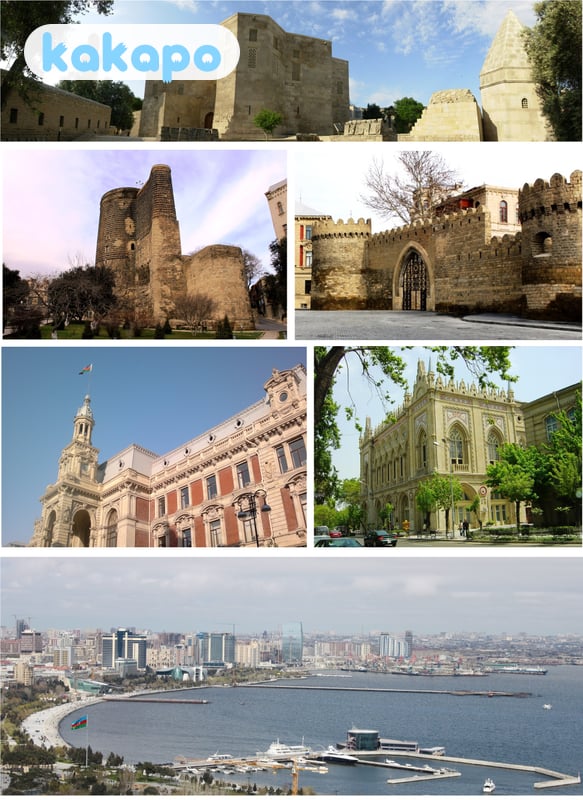
The defining experiences: Old City (İçərişəhər) UNESCO walled town, the Maiden Tower, the Flame Towers, Heydar Aliyev Center (Zaha Hadid masterpiece), Baku Boulevard along the Caspian, and the Absheron Peninsula day trips (Yanar Dag, Ateshgah Fire Temple).
City layout matters here because Baku's tourist core is unusually compact. The UNESCO walled Old City (İçərişəhər) sits on the south slope above the Caspian; immediately north of its walls is Fountains Square and the pedestrianised Nizami Street, the social and shopping spine. The Flame Towers sit higher up on the hill behind, visible from almost anywhere in the centre. Baku Boulevard runs the length of the seafront south from the Old City for roughly 25 km past the Crystal Hall (Eurovision 2012 venue) and the Carpet Museum. Most visitor activity happens in a 1.5 km radius of the Maiden Tower; outside that the city becomes Soviet-era apartment blocks, modern shopping malls, and the oil-industry suburbs.
| Night safety | 67/100 |
|---|---|
| Scam / petty-crime risk | Low |
| Violent crime (tourists) | Low |
| Safer neighbourhoods | Fountains Square, Nizami Street |
| Data sources cited | 4 |
| Last verified |
What the score means — 81/100
- Personal safety (84) — high. Heavy police presence + low petty crime in tourist zones.
- Transport (84) — 3-line metro, dense buses, plentiful taxis (Bolt + local "Yandex" Uber-style apps).
- Healthcare (78) — Modern Hospital, Mediland Hospital handle international patients; complex care occasionally referred to Turkey or Europe.
- Air quality (78) — moderate; oil-industry + traffic; sea breeze helps.
E-visa + entry
- Most Western nationals: need an e-visa via evisa.gov.az before arrival. ASAN visa portal; 3-business-day processing standard, 3-hour express available. ~$26 standard.
- Validity: 30 days, single entry typical.
- The Armenia entry-stamp issue: visitors with an Armenian visa stamp or stamps from Nagorno-Karabakh have historically faced extra scrutiny. Tensions reduced post-2023 but the issue still exists. If you've recently visited Armenia, expect questions; carry no Karabakh-related materials.
- Registration: stays over 15 days require migration registration; hotels do this automatically.
- Currency import: undeclared cash > $10,000 equivalent is a customs issue.
- Photography of police, military, oil rigs: prohibited. Real consequences if caught.
Conservative legal code — what to know
- Drugs: zero tolerance. Even small possession of cannabis can mean prison. Don't.
- Alcohol: legal + widely available. Public drinking (street, parks) restricted; restaurants + hotels fine.
- Drink-driving: 0.0% blood-alcohol. Severe fines + jail.
- Public displays of affection: discouraged; same-sex couples discreet (homosexuality legal but socially conservative).
- Dress code: secular Muslim country; smart-casual fine in Baku, more conservative inland. Mosques: shoulders + knees + hair (women) covered.
- Photography: people OK with permission; police, military, government buildings, oil installations strictly forbidden.
- Solo women: comfortable in central Baku at most hours. Catcalling exists but is rarely escalated.
Summer heat + the khazri wind
- July-August: 30-37°C standard, occasional 40°C+. Caspian humidity adds to perceived heat.
- The khazri (north wind): cold dry wind from the Caucasus. Strongest autumn-winter; can hit 100+ km/h gusts.
- The gilavar (south wind): humid + hot summer wind from Iran.
- What the wind does: knocks down umbrellas, halts ferry crossings to Türkmenistan, makes the boulevard uncomfortable.
- Best months: April-June, September-October.
- Hydration: tap water is treated but locally drunk only filtered/bottled. Bottled cheap.
Regional context — Karabakh + the borders
- 2020 + 2023 conflicts: Azerbaijan retook Nagorno-Karabakh in late 2023. Region remains restricted; no tourist access except by special arrangement.
- What this means for Baku visitors: zero day-to-day relevance. The capital is calm + tourism-promoting.
- Border-zone restrictions: don't travel close to the Armenian border (UK FCDO advises against). Iranian + Russian borders fine in normal times but sensitive.
- Discussing Armenia: locals are passionate; safest to listen rather than offer opinions.
- Photography of war monuments: many post-2023 in Baku. Fine to photograph, but don't make jokes.
Old City, Flame Towers, Boulevard
- Old City (İçərişəhər): UNESCO 12th-century walled city. Maiden Tower (₼15), Shirvanshah's Palace (₼15). Cobbled lanes; sturdy shoes.
- Flame Towers: 3 LED-lit skyscrapers; iconic Baku silhouette. Best viewed from the boulevard at sunset/night.
- Heydar Aliyev Center: Zaha Hadid building. ₼25 entry; spectacular architecture.
- Baku Boulevard: 25 km Caspian-side promenade. Free + safe day or night; bike rental available.
- Carpet Museum: ₼7. World-class.
- Pickpockets: low. Heavy police presence.
Transport, day trips, money
- Heydar Aliyev Airport (GYD): 25 km east. H1 bus to centre ₼1.30, ~30 min via BakıKart. Taxi ~₼25-30 (use Bolt).
- Metro: 3 lines, ₼0.50 single. BakıKart card.
- Buses: dense; BakıKart only (no cash).
- Currency: Azerbaijani manat (AZN/₼). 1 EUR ≈ 1.85 AZN.
- Cards: widely accepted; small markets cash.
- Day trips: Yanar Dag (the burning hillside, 25 km north), Ateshgah Fire Temple (30 km east), Gobustan petroglyphs + mud volcanoes (60 km south).
- Driving: Baku traffic is challenging. Bolt + Yandex apps are cheap and easier.
Neighbourhoods + day-trip targets
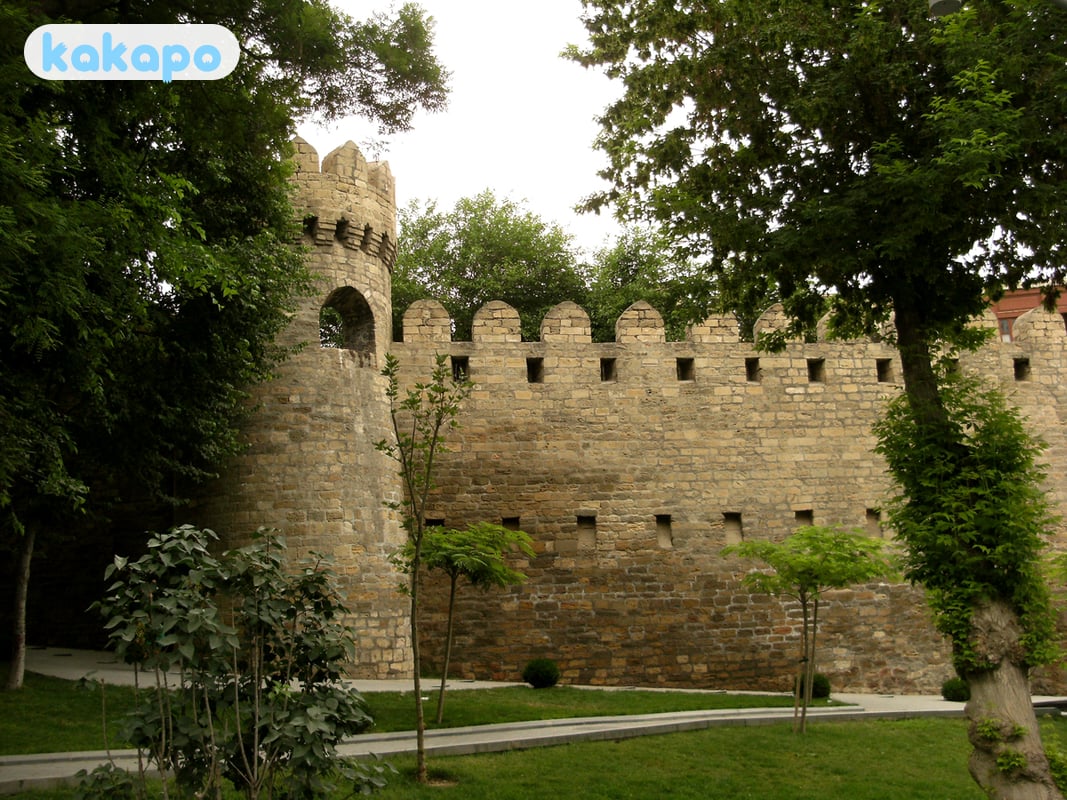
- İçərişəhər (Old City) — the 12th-century UNESCO walled town with the Maiden Tower (Qız Qalası, ₼15), Shirvanshah's Palace (₼15), and a warren of cobbled lanes. Carpets, caviar, jewellery shops; the better restaurants tucked inside (Şirvanşah Museum Restaurant, Mugham Club). Cobbles are uneven; sturdy shoes. Closed to most cars; safest part of the city at any hour.
- Fountains Square + Nizami Street — pedestrianised central zone immediately outside the Old City walls. The Eclectic 19th-century buildings (the former Hajinski mansion, the puppet theatre), café terraces, the Park Bulvar mall. Nizami Street is the main shopping spine running 1.5 km north — Aşağı (lower) and Yuxarı (upper) Nizami have the bigger chains.
- Baku Boulevard (Dənizkənarı Milli Park) — the 25-km Caspian-side promenade running south from the Old City past the Crystal Hall and the Carpet Museum. Free, safe, families until late, with the Mini Venice canal-boat ride, the Ferris wheel, and the open-air gym. The boulevard is the standard sunset-walk Flame-Towers-photo route.
- Flame Towers + Highland Park — the three LED-clad skyscrapers on the hill west of the Old City, with the Fairmont Hotel inside the central tower. Highland Park (Şəhidlər Xiyabanı) on the same hill is the Martyrs' Cemetery and the eternal flame for the 1990 January 20 victims and the 2020/2023 Karabakh dead. Walk respectfully; no smoking.
- Heydar Aliyev Center (Yasamal district) — Zaha Hadid's wave-form 2012 building, 5 km north of the centre. Metro 28 May then bus, or a ₼5 Bolt ride. ₼25 entry; the exhibitions are mediocre but the architecture justifies the trip.
- Sahil + the embassy quarter — the streets south of Fountains Square (Bülbül, Rəsul Rza, Üzeyir Hacıbəyov) house most embassies, the State Philharmonic, and the upscale restaurants (Chinar, Sea Breeze, Şahdaq). Sahil metro is the closest stop.
- Yanar Dağ (the burning hillside) — 25 km north on the Absheron Peninsula. A natural gas seep that has been burning continuously for at least 65 years; ₼9 entry, best at dusk. Combine with Ateshgah Fire Temple (Zoroastrian sanctuary, 30 km east, ₼9). Bolt round-trip ₼50-70 with waiting.
- Gobustan + the mud volcanoes — 60 km south. UNESCO petroglyphs (₼10), then the lunar mud-volcano field (separate ₼5 + 4×4 transfer ₼20-30; rough track). Half-day trip; book a tour (₼60-100/person) or Bolt outstation (₼80-120 round-trip).
- Qobustan / Şamaxı + the wine country — 90 km west toward the Caucasus. Şamaxı's 743 AD Juma Mosque, Yeddi Gümbəz tombs. A long day-trip and the bridge between Baku and the mountain north.
- Quba + Qusar (the mountain north) — 3-3.5 hours north toward the Russian border. Şahdağ ski resort December-March; Khinalug village (one of Europe's highest at 2,300m) accessible only by 4×4 or summer paved road.
If it's your first time visiting
- Apply for the e-visa first — evisa.gov.az, $26 standard (3 business days) or $46 express (3 hours), 30-day single entry. Print or save the PDF; AZAL airline and most carriers won't board you without it. Stays over 15 days require migration registration but hotels handle this on check-in.
- Getting in — Heydar Aliyev International Airport (GYD) is 25 km east. H1 Express bus to the 28 May metro station is ₼1.30 (purchase the BakıKart at the airport kiosk; ₼2 card + top-up), every 30 min, 35-45 min. Bolt taxi ₼20-30, ~30 min. Skip the airport taxi rank — fixed-price quotes start at ₼45.
- Apps before arrival — Bolt (taxis, dominant; Uber doesn't operate here), Yandex Go (alternative), 2GIS (offline maps with Cyrillic + Latin signage). Roaming or local SIM (Bakcell or Azercell at the airport, ₼10-20 for 30 days of data).
- Best base neighbourhoods: Fountains Square / Nizami Street for walkability (Hilton Baku, Boulevard Hotel, JW Marriott Absheron); Old City for atmospheric boutique (Sultan Inn, Old Gates Hotel); near the Flame Towers for the view (Fairmont Baku Flame Towers). Stay south of the Old City rather than in the northern Yasamal sprawl.
- Cash + cards — Azerbaijani manat (AZN/₼); ~1.85 to the euro, ~1.70 to the USD. Kapital Bank, PASHA Bank, and Unibank ATMs give the best rates; airport Euronets are punishing. Cards work everywhere central; cash for taxis, small shops, and the Old City carpet bargains. Always pay in AZN when DCC asks.
- Metro orientation — 3 lines, ₼0.50 a ride with BakıKart. The Red Line (M1) and Green Line (M2) cross at 28 May station — the practical centre. Sahil station for the Old City and Fountains Square; İçəri Şəhər for the Old City east gate. Last trains around 00:00.
- The Armenia stamp question — if you've visited Armenia recently or have any Karabakh-related material on your phone/laptop, expect extra GYD immigration questioning. Tensions reduced after the 2023 reunification but the issue persists. Don't volunteer it; answer factually if asked.
- Drink-drive law is 0.0% — zero tolerance for any blood alcohol when driving. Severe fines and jail. Use Bolt for any evening that involves wine or beer.
- Food orientation — Azerbaijani staples are plov (rice with saffron + dried fruit + lamb), dolma (stuffed vine leaves), kebab on charcoal, and dovga (yoghurt-herb soup). Şirvanşah and Mugham Club inside the Old City are the dressed-up Azerbaijani spots; Chinar (Pan-Asian fusion) is the celebration restaurant; Sea Breeze and Sahil pier for boulevard dining. The black "balıq" (Caspian fish, including sturgeon) is the local specialty.
- Common rookie mistakes — arriving without the e-visa (boarding refused); photographing oil rigs from the boulevard or any police/military/government building (real consequences); paying airport taxi flat rates; buying caviar in the Old City to take home (CITES export issues — buy at duty-free GYD); cycling boulevard on a khazri-wind day (gusts knock you down); planning Yanar Dağ as a morning trip (the burning hillside is most spectacular at dusk); confusing manat with Russian rubles when reading price tags.
Practical info — emergency numbers
- Unified emergency: 112.
- Police: 102.
- Ambulance: 103.
- Modern Hospital Baku: +994 12 404 04 00.
- Mediland Hospital: +994 12 404 04 30.
Bring: layered clothing (khazri wind), sturdy shoes for cobbles, sun protection, a windproof jacket, a contactless card, a printed e-visa copy, and travel insurance.
Frequently asked questions
Is Baku safe to visit in 2026?
Yes. Baku scores 82/100 here, one of the safer Caspian capitals by ordinary-crime measure. Azerbaijan sits at US State Department Level 2 (border-area warnings). UK FCDO advises against travel near the Armenian border and Nagorno-Karabakh — neither of which are anywhere visitors normally go. Heavy police presence in tourist zones keeps central crime low, and the 2024 COP29 climate conference and oil-money urban development have produced a polished tourist core. Real risks are environmental and regulatory: 40°C+ summer heat, the khazri downburst wind (gusts to 100+ km/h), a conservative legal code (drugs zero-tolerance, public alcohol restricted), and the requirement to pre-arrange an e-visa via evisa.gov.az for most Western nationals.
Is Baku safe at night?
Yes. Fountains Square, the Old City (İçərişəhər) walled town, and the 25 km Baku Boulevard along the Caspian are comfortable and heavily policed late. The Flame Towers are illuminated and best viewed from the boulevard at night. Solo walking from a Nizami Street dinner back to a Sahil-area hotel is routine. Drink-driving is zero-tolerance (0.0%) so taxis are the right call after any alcohol — use Bolt or Yandex Go for transparent metered fares. Public drunken behaviour will draw police attention; alcohol in licensed venues is fine but street drinking is restricted.
Is Baku safe for solo female travellers?
Yes, with sensible adjustments. Baku is comfortable for solo women in central districts at most hours — Azerbaijan is a secular Muslim country and dress is largely Western in the capital, though slightly more conservative than Tbilisi or Yerevan. Catcalling exists but is rarely escalated and Old City / boulevard areas have visible police. Modest dress is essential at mosques (cover hair, knees, shoulders — abayas usually loaned at major mosques). Public displays of affection are discouraged. Same-sex couples should be discreet — homosexuality is legal but socially conservative. Use Bolt for late-night rides.
Can you drink tap water in Baku?
Officially treated to drinking standards, but locally drunk only filtered or bottled because of older plumbing in many buildings. Bottled water is cheap (AZN 0.50-1 for 1.5L) and ubiquitous. The summer heat (30-37°C standard, occasional 40°C+) plus Caspian humidity means you need 2-3L water per day. On Absheron Peninsula day trips (Yanar Dag, Ateshgah, Gobustan) bring bottled water — there's limited infrastructure on the petroglyph and mud-volcano route.
What's the biggest scam to avoid in Baku?
Honestly, Baku has fewer tourist scams than most regional capitals — heavy police presence and a controlled tourism economy keep the visible scene clean. The recurring patterns: unmetered taxi flat-rate quotes at Heydar Aliyev Airport (use Bolt, or take the H1 bus to the centre via BakıKart for AZN 1.30); DCC card-reader markups (always pay in AZN); Euronet ATMs near the Old City with high fees (use bank-branch ATMs at Kapital Bank, PASHA Bank, or Unibank); and 'tax-free carpet export' pressure pitches in Old City shops similar to the Jaipur gem scam. Photography of police, military, oil installations, or government buildings is strictly forbidden — real consequences if caught, not a scam but worth knowing.
How does the Armenia-Karabakh situation actually affect Baku visitors?
Day to day, not at all. Baku itself is calm and tourism-promoting. The 2020 and 2023 conflicts ended with Azerbaijan retaking Nagorno-Karabakh; the region remains restricted and inaccessible to tourists. UK FCDO advises against travel near the Armenian border zones (mostly Nakhchivan exclave and Tartar/Aghdam-area). The one practical implication for visitors: those with recent Armenian visa stamps or any Karabakh-related materials have historically faced extra entry-questioning. Tensions reduced post-2023 but the issue still exists — if you've recently been in Armenia, expect questions at GYD immigration. Don't carry Karabakh-related materials, don't engage local debates about Armenia (Azerbaijanis are passionate), and avoid photographing war monuments with humour.
Sources
Run a business in Baku?
Show visitors your Baku business is a safe choice. The free Verified by Kakapo badge puts Baku's live safety score on your website, links back to your verified page, and updates itself. No cost.
Get the free badge →